

ファウストの夢
ファウストの夢: A Vision of Temptation in Falero’s Brushstrokes
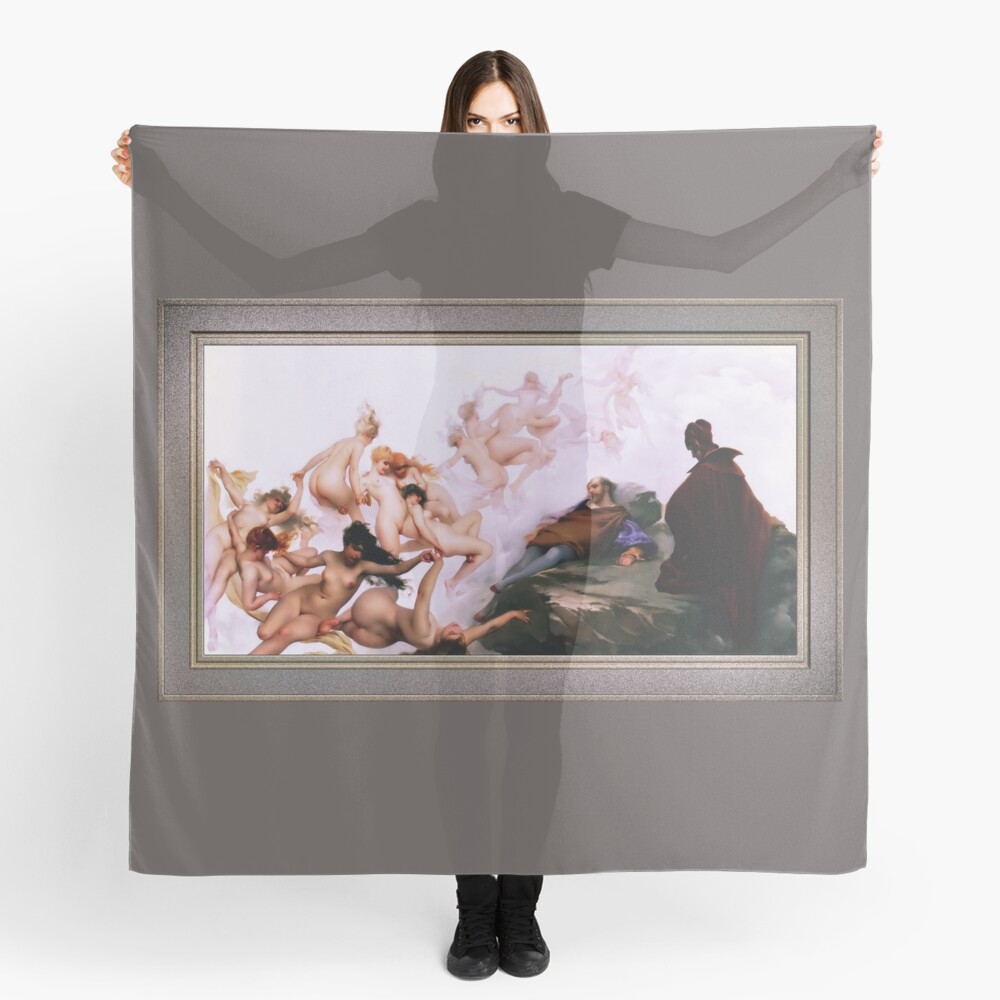
ルイス・リカルド・ファレロ’s “Faust’s Dream,」絵を描いた 1880, is a captivating work that draws heavily from Goethe’s dramatic poem, Faust. The painting depicts a pivotal moment within the narrative – Faust’s dream sequence where he is presented with an alluring vision of sensual pleasure and fleeting beauty. Falero masterfully translates this literary concept into a visually arresting scene filled with movement, ライト, and a palpable sense of yearning. This piece exemplifies the academic style prevalent in late 19th-century Spanish painting, showcasing technical skill alongside a dramatic narrative sensibility.

目次
構成構造 & 物語の焦点
The composition is dominated by two distinct zones: an ethereal upper realm populated by numerous figures and a more grounded lower section where Faust himself resides. The arrangement immediately establishes a hierarchical relationship between the dream world and the protagonist’s reality. Faust, depicted in dark robes, occupies the right foreground, his back largely to the viewer, emphasizing his passive role as an observer of this unfolding spectacle.
He is positioned on a rocky outcrop that rises from a swirling mist, creating a visual barrier between him and the dreamscape above. The figures within the dream are arranged in dynamic groupings, their bodies intertwined in poses suggesting both playful abandon and seductive allure. 全体的な効果は、制御されたカオスのようなものです; a vibrant swirl of forms contained within a carefully structured frame.
図 & Their Representation
The central focus of the painting lies with the numerous nude female figures that populate the dreamscape. They are not portrayed as individuals but rather as embodiments of sensual delight, their bodies rendered with meticulous anatomical detail and a soft, idealized beauty characteristic of academic art. Their poses range from languid reclining positions to graceful leaps and swirling dances, all contributing to the sense of movement and fleeting pleasure.
The figures are bathed in a luminous light that highlights their forms and creates an otherworldly atmosphere. Their expressions are largely ambiguous – some appear serene, others playful, but none convey a sense of individual personality or narrative depth. They function as archetypes representing temptation and ephemeral beauty.
One figure lies prone at the base of the rocky outcrop, seemingly reaching towards Faust, while others float and dance above. The arrangement suggests an invitation, a beckoning toward a world of fleeting gratification. The sheer number of figures contributes to the overwhelming nature of the dream, emphasizing its seductive power and potential for distraction from more meaningful pursuits.
カラーパレット & 照明効果
ファレロの色の使用は、絵画の全体的な効果に不可欠です. A predominantly warm palette – dominated by pinks, クリーム, 金, and pale blues – creates a sense of warmth and sensuality. The lighting is dramatic and theatrical, with strong contrasts between light and shadow that accentuate the forms of the figures and create a heightened emotional atmosphere. The dreamscape itself appears to be illuminated from within, giving it an ethereal glow that sets it apart from Faust’s more grounded reality. The dark tones of Faust’s robes further emphasize his separation from this alluring vision.
芸術的な影響 & スタイル
“ファウストの夢” reflects the influence of several artistic traditions. The academic style is evident in the meticulous rendering of anatomy, the idealized beauty of the figures, and the overall emphasis on technical skill. The painting also draws inspiration from classical mythology and Renaissance art, particularly in its depiction of nude figures within a fantastical setting. Falero’s work shares affinities with the works of artists like Jean-Léon Gérôme and William-Adolphe Bouguereau, who were known for their large-scale historical paintings and allegorical scenes. The dramatic lighting and swirling composition also echo the Baroque tradition, particularly the works of Peter Paul Rubens.
技術的な実行 & ブラシワーク
Falero’s technical skill is evident in every detail of the painting. The brushwork is smooth and controlled, with a focus on creating realistic textures and subtle gradations of tone. The figures are rendered with remarkable anatomical accuracy, while the background details – the rocky outcrop, the swirling mist – are painted with a delicate touch. Despite the complexity of the composition, the painting maintains a sense of visual harmony and balance. The artist’s mastery of oil paint is apparent in his ability to create luminous highlights and deep shadows that enhance the dramatic impact of the scene.
解釈 & 遺産
“ファウストの夢” offers a compelling visual interpretation of Goethe’s exploration of human desire, 誘惑, そして知識の追求. The painting captures the allure of fleeting pleasure while also hinting at its potential for deception and ultimately, 失望. Falero’s work remains an important example of late 19th-century Spanish academic art, demonstrating the artist’s technical skill and his ability to translate complex literary themes into a visually compelling narrative. It serves as a testament to the enduring power of Faustian themes in Western culture.
アーティストのバイオ派生 Wikipedia.org
ファレロはグラナダで生まれ、もともとスペイン海軍でのキャリアを追求しました, しかし、彼の両親の失望にそれをあきらめました; 彼がパリに旅行することを決めたとき, 彼が芸術を学んだ場所, 化学および機械工学.
化学と機械工学の研究中です; 彼は自分が行わなければならなかった実験は危険すぎると考えました, したがって、彼は絵画だけに注意を向けるようになりました.
その結果、彼はフランスのポートレートペインターとオリエンタリストのガブリエル-ジョセフ-マリー-オーガスティンフェリエの学生になりました (1847 – 1914). パリの後, 彼はロンドンに引っ越した, ここで彼は勉強を続けました, そして最終的に解決した.
ファレロは天文学に特に興味を持っており、彼の作品の多くに天体の星座を取り入れました, そのような “彗星の結婚” そして “ツインスター”. 彼の天文学への関心と知識はまた、カミーユ・フラマリオンの作品を説明するように彼を導きました.
に 1896, 彼の死の年, モードハーベイは父親のためにファレロを訴えた. 訴訟は、ファレロがハーベイを誘惑したと主張した 17, 最初に彼のメイドを務めた, そして彼のモデル. 彼が彼女が妊娠していることを発見したとき, 彼は彼女を解雇した.
彼女は事件に勝ち、子供を支援するために週に5シリングを授与されました. ファレロはユニバーシティカレッジ病院で亡くなりました, ロンドン, 歳の時に 45
ファウストの夢は、パブリック ドメインの画像を修正したデジタル アートの古いマスター作品であり、オンラインで購入できます。 ロールドキャンバスプリント.