

Amser Bwydo
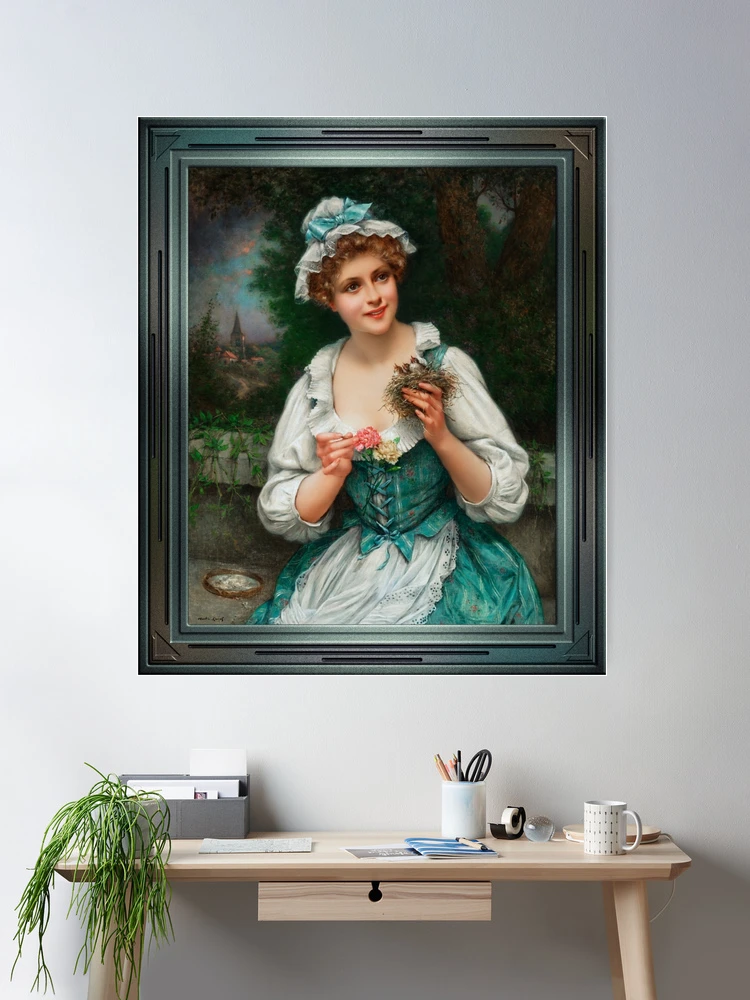
“Amser Bwydo,” paentiwyd ar ddiwedd y 19eg ganrif gan yr arlunydd Ffrengig enwog François Martin-Kavel (1861 – 1931), yn olygfa hudolus a thawel sy'n cyfuno elfennau o realaeth yn feistrolgar â meddalwch rhamantiaeth. Mae gwaith Martin-Kavel yn aml yn archwilio themâu ieuenctid, natur, a bywyd domestig, ac nid yw'r darn hwn yn eithriad. Mae'r paentiad yn portreadu merch ifanc mewn lleoliad bugeiliol, sefyll mewn gardd neu gae gwyrddlas, dal nyth gydag adar bach yn ofalus. Mae'r artist yn cyfleu ei rhyngweithio tyner â natur, gan ennyn naws o dawelwch, diniweidrwydd, a chytgord rhwng dynolryw a'r amgylchedd.
Tabl Cynnwys
Prif Bwnc: Y Wraig a'i Chysylltiad â Natur
Y ffigwr canolog yn “Amser Bwydo” is a young woman, dressed in a period-specific, delicate ensemble. She wears a light turquoise gown, adorned with lace trimmings and a satin ribbon, which adds texture and a sense of femininity. Her white blouse with ruffled sleeves contrasts beautifully with the soft, muted colors of the gown. The details of the dress reveal the artist’s careful attention to fabric texture, creating a sense of realism in the way the light interacts with the fabric. On her head, she wears a white lace bonnet, which is elegantly tied with a soft blue ribbon, further enhancing her gentle appearance.
Yn ei dwylo, the woman cradles a small bird’s nest, a significant object within the composition. The nest, filled with small birds, symbolizes new life, diniweidrwydd, and nurturing. It is a powerful symbol of the cyclical nature of life and the bond between the natural world and humankind. Her delicate touch as she holds the nest demonstrates a deep respect and care for the creatures she tends to. The birds, though not the main focus, are an integral part of the scene, emphasizing the tenderness of the moment and the artist’s thematic exploration of human interaction with nature.
Gwrthrychau: Y Nyth, Blodau, a Symbolau Ychwanegol
The nest is not just a prop in the artwork, but a central symbol of life and care. The small birds inside appear to be receiving nourishment from the woman, underscoring the nurturing role of the female figure. The nest is placed against her chest, where it seems to be almost cradled like a child. This act of care and feeding is also mirrored by the woman’s other hand, sy'n dal blodyn pinc yn ysgafn, rhosyn neu gnawdoliaeth o bosibl. Mae'r blodyn yn ychwanegu ychydig o liw i'r olygfa ac yn atgyfnerthu motiff bywyd, harddwch, and nurturing. Mae'n awgrymu cysylltiad cynnil â natur, gyda'r fenyw ei hun yn gweithredu fel pont rhwng y byd naturiol a dynol.
Mae cefndir y paentiad yn cynnwys cipolwg ar dirwedd bell, gardd neu ddôl o bosibl, wedi'i orchuddio â meddal, niwl tawel. Gallai'r ffigurau yn y pellter fod yn arwydd o dref neu bentref cyfagos, er nad ydynt yn brif ffocws. Mae'r olygfa bell hon yn ychwanegu dyfnder a phersbectif i'r paentiad, seilio'r olygfa fwy cartrefol mewn lleoliad naturiol ehangach. Cyfosodiad y raddfa fach, rhyngweithio cain yn y blaendir yn erbyn y mwyaf, more expansive natural landscape amplifies the idea that the harmony of the human world is inextricably linked to nature.
Tirwedd: Gardd Dawel neu Leoliad Bugeiliol
The scene is set outdoors, possibly in a garden or a lush, green pasture, as evidenced by the vibrant foliage and the gentle roll of the landscape in the background. The garden is likely a symbol of tranquility and beauty, providing a natural, peaceful environment in which the central character can engage with nature. Y golau, which filters through the leaves of trees in the background, bathes the scene in a warm glow, further enhancing the serenity and calmness of the moment. The artist uses subtle, natural lighting to highlight the key elements of the composition, giving the painting an ethereal quality.
The terrain is rich in color, with green hues predominating the background and surrounding foliage. The play of light and shadow creates a soft, awyrgylch bron yn freuddwydiol, inviting the viewer to imagine themselves in this peaceful, bucolic setting. The scene evokes a sense of timelessness, suggesting that moments like these, where humanity is in harmony with nature, are universal and unchanging.
Arddull, Thema, a Mood of the Artwork
François Martin-Kavel’s style in “Amser Bwydo” is rooted in realism, with a touch of romanticism that infuses the scene with an idealized beauty. The meticulous rendering of fabric, golau, and textures demonstrates the artist’s skill in capturing the intricate details of his subjects. Y meddal, almost blurred rendering of the background, with the gentle portrayal of the young woman, creates a contrast that enhances the clarity and focus on the central figure.
Mae thema'r paentiad yn ymwneud â meithrin, diniweidrwydd, a'r berthynas agos rhwng bodau dynol a natur. Mae rhyngweithio gofalgar y ferch ifanc â nyth adar yn arwydd o fersiwn delfrydol o fenyweidd-dra a mamolaeth., a ddathlwyd yn fynych yng nghelfyddyd yr oes. Nid cynrychioliad o rôl menyw ym myd natur yn unig yw’r olygfa, ond hefyd yn adlewyrchiad o gyfnod lle roedd y cysylltiad rhwng dynoliaeth a'r amgylchedd yn cael ei barchu. Y berthynas gytûn hon sy'n gosod naws y paentiad - tawelwch, thawel, ac yn dyner ddelfryd.
Mae'r hwyliau yn ddiamau yn heddychlon a llawen, cyfleu ymdeimlad o hapusrwydd sy'n deillio o syml, gweithredoedd naturiol. Mae mynegiant y fenyw yn dawel ac yn fodlon, ac y mae ei hosgo yn awgrymu addfwynder a nerth. She is not merely a passive figure in this scene; she actively engages with the birds, suggesting that she is a part of the natural cycle, fostering life and growth.
Nghasgliad
“Amser Bwydo” by François Martin-Kavel is a stunning example of 19th-century French realism blended with romantic elements. The painting captures a serene and intimate moment of human interaction with nature, highlighting themes of nurturing, benyweidd-dra, and the beauty of the natural world. Through meticulous attention to detail and a masterful use of light and texture, Martin-Kavel evokes a timeless mood that invites the viewer to pause and reflect on the delicate balance between humanity and nature.
Mae hwn yn atgynhyrchiad hen feistri celf ddigidol wedi'i atgynhyrchu o ddelwedd parth cyhoeddus.
Bio artist yn deillio o Artnet.com
Arlunydd genre o Ffrainc oedd François Martin-Kavel sy'n fwyaf adnabyddus am ei bortreadau delfrydol o ferched ifanc hardd, yr oedd yn aml yn ei ddarlunio mewn gwisgoedd egsotig neu mewn cyflyrau dadwisgo dadwisgo.
Yn aml roedd Martin-Kavel yn paentio ei bortreadau benywaidd mewn cyfansoddiadau canolog a oedd wedi'u hamgylchynu gan gefndiroedd ffabrig tywyll, ac wedi'i oleuo'n theatrig fel petai gan chwyddwydr yn disgleirio ar y model.
Er bod François yn adnabyddus am ei bortreadau ffigwr benywaidd poblogaidd, roedd hefyd yn adnabyddus am ei waith celf blodau llonydd a'i baentiadau tirwedd; ac roedd yn arddangoswr rheolaidd yn y Salon des Artistes Français.
Fel aelod o'r salon, dyfarnwyd medal iddo am ei gyfraniadau artistig yn 1881.