

Feeding Time
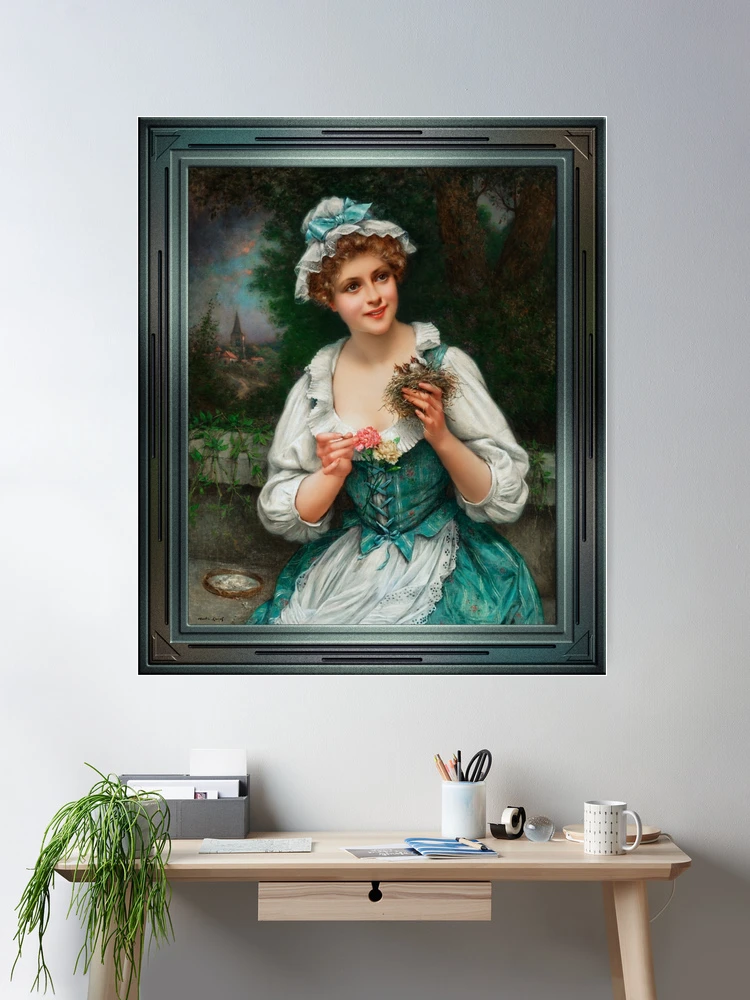
“Feeding Time,” painted in the late 19th century by the renowned French artist François Martin-Kavel (1861 – 1931), is a captivating and serene scene that masterfully blends elements of realism with the softness of romanticism. Martin-Kavel’s work frequently explores themes of youth, Naturo, and domestic life, kaj ĉi tiu peco ne estas escepto. The painting portrays a young woman in a pastoral setting, standing in a lush garden or field, gently holding a nest with small birds. The artist captures her tender interaction with nature, evoking a mood of peacefulness, Senkulpeco, and harmony between humankind and the environment.
Enhavtabelo
Ĉefa temo: The Woman and Her Connection to Nature
La centra figuro en “Feeding Time” is a young woman, dressed in a period-specific, delicate ensemble. She wears a light turquoise gown, adorned with lace trimmings and a satin ribbon, which adds texture and a sense of femininity. Her white blouse with ruffled sleeves contrasts beautifully with the soft, muted colors of the gown. The details of the dress reveal the artist’s careful attention to fabric texture, creating a sense of realism in the way the light interacts with the fabric. On her head, she wears a white lace bonnet, which is elegantly tied with a soft blue ribbon, further enhancing her gentle appearance.
En ŝiaj manoj, the woman cradles a small bird’s nest, a significant object within the composition. The nest, filled with small birds, symbolizes new life, Senkulpeco, and nurturing. It is a powerful symbol of the cyclical nature of life and the bond between the natural world and humankind. Her delicate touch as she holds the nest demonstrates a deep respect and care for the creatures she tends to. The birds, though not the main focus, are an integral part of the scene, emphasizing the tenderness of the moment and the artist’s thematic exploration of human interaction with nature.
Objektoj: The Nest, Floroj, and Additional Symbols
The nest is not just a prop in the artwork, but a central symbol of life and care. The small birds inside appear to be receiving nourishment from the woman, underscoring the nurturing role of the female figure. The nest is placed against her chest, where it seems to be almost cradled like a child. This act of care and feeding is also mirrored by the woman’s other hand, which gently holds a pink flower, possibly a rose or carnation. The flower adds a touch of color to the scene and reinforces the motif of life, beleco, and nurturing. It suggests a subtle connection to nature, with the woman herself acting as a bridge between the natural and human worlds.
The background of the painting includes a glimpse of a distant landscape, possibly a garden or meadow, shrouded in a soft, muted haze. The figures in the distance could be indicative of a nearby town or village, though they are not the main focus. This distant view adds depth and perspective to the painting, grounding the more intimate scene in a broader natural setting. The juxtaposition of the small-scale, delicate interaction in the foreground against the larger, more expansive natural landscape amplifies the idea that the harmony of the human world is inextricably linked to nature.
Tereno: A Quiet Garden or Pastoral Setting
The scene is set outdoors, possibly in a garden or a lush, green pasture, as evidenced by the vibrant foliage and the gentle roll of the landscape in the background. The garden is likely a symbol of tranquility and beauty, providing a natural, peaceful environment in which the central character can engage with nature. The light, which filters through the leaves of trees in the background, bathes the scene in a warm glow, further enhancing the serenity and calmness of the moment. The artist uses subtle, natural lighting to highlight the key elements of the composition, giving the painting an ethereal quality.
The terrain is rich in color, with green hues predominating the background and surrounding foliage. The play of light and shadow creates a soft, preskaŭ reveca etoso, inviting the viewer to imagine themselves in this peaceful, bucolic setting. The scene evokes a sense of timelessness, suggesting that moments like these, where humanity is in harmony with nature, are universal and unchanging.
Stilo, Temo, and Mood of the Artwork
François Martin-Kavel’s style in “Feeding Time” is rooted in realism, with a touch of romanticism that infuses the scene with an idealized beauty. The meticulous rendering of fabric, lumo, and textures demonstrates the artist’s skill in capturing the intricate details of his subjects. La mola, almost blurred rendering of the background, with the gentle portrayal of the young woman, creates a contrast that enhances the clarity and focus on the central figure.
The theme of the painting revolves around nurturing, Senkulpeco, and the close relationship between humans and nature. The young woman’s caring interaction with the nest of birds signifies an idealized version of femininity and motherhood, which was often celebrated in the art of the time. The scene is not just a representation of a woman’s role in nature, but also a reflection of an era where the connection between humanity and the environment was revered. This harmonious relationship is what sets the mood of the painting—calm, serena, and gently idealized.
The mood is undeniably peaceful and joyful, conveying a sense of happiness derived from simple, natural acts. The woman’s expression is serene and content, and her posture suggests both gentleness and strength. She is not merely a passive figure in this scene; she actively engages with the birds, suggesting that she is a part of the natural cycle, fostering life and growth.
Konkludo
“Feeding Time” by François Martin-Kavel is a stunning example of 19th-century French realism blended with romantic elements. The painting captures a serene and intimate moment of human interaction with nature, highlighting themes of nurturing, Femineco, and the beauty of the natural world. Through meticulous attention to detail and a masterful use of light and texture, Martin-Kavel evokes a timeless mood that invites the viewer to pause and reflect on the delicate balance between humanity and nature.
Ĉi tio estas retuŝita cifereca arto malnova majstra reproduktaĵo de publika domajno bildo.
Artisto Bio derivita de Artnet.com
François Martin-Kavel estis franca ĝenropentristo kiu estas plej konata pro siaj idealigitaj portretoj de belaj junaj virinoj, kiujn li ofte bildigis en ekzotikaj kostumoj aŭ en timigaj statoj de senvestiĝo.
Martin-Kavel precipe ofte pentris siajn inajn portretojn en centritaj kunmetaĵoj kiuj estis ĉirkaŭitaj de malhelaj ŝtoffonoj., kaj teatre lumigita kvazaŭ per spotlumo brilanta sur la modelo.
Eĉ se François lia konata pro siaj popularaj virinfiguro-portretoj, li ankaŭ estis konata pro sia ankoraŭ-viva flora artaĵo kaj pejzaĝpentraĵoj; kaj estis regula ekspozicianto ĉe la Salon des Artistes Français.
Kiel membro de la salono, al li estis premiita medalo por liaj artaj kontribuoj en 1881.