

Nu Femení, Vista posterior
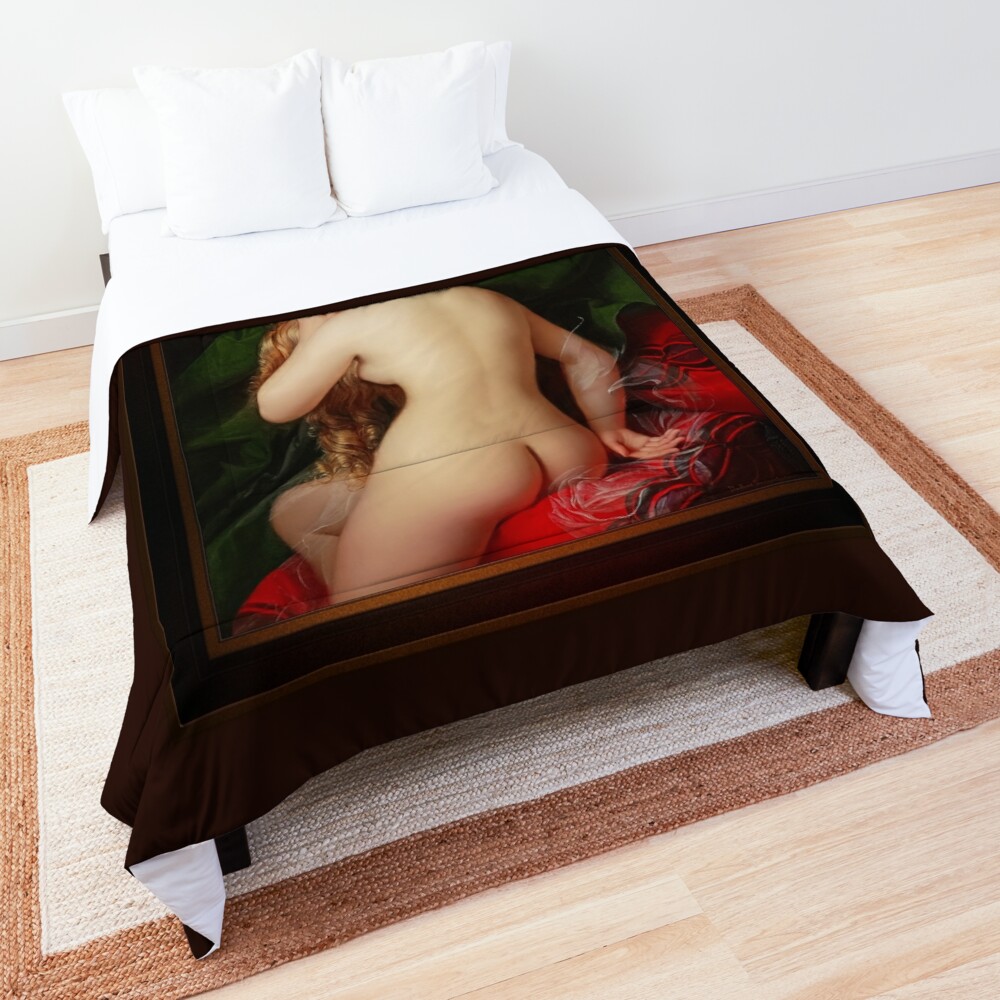
A l'obra d'art titulada Nu Femení, Vista posterior (c. 1831) de l'artista francès Alexandre-Jean Dubois-Drahonet (1791 – 1834), se'ns presenta un estudi sensual i delicat de la forma humana, emfatitzant la gràcia i la bellesa del cos femení. Dubois-Drahonet, conegut pel seu domini de la figura humana, capta amb habilitat l'elegància del nu femení en una composició que demostra tant les tècniques clàssiques de la seva època com la sensualitat subjacent del tema..
La figura central d'aquesta retrat és una dona jove, plantejada des d'una perspectiva lleugerament inclinada d'esquena a l'espectador. La seva forma esvelta queda capturada en suau, línies fluides que evoquen una sensació de vulnerabilitat i elegància. Els cabells de la model, que cau en llarg, ones soltes, és una rossa daurada impressionant, accentuant encara més les corbes naturals de les espatlles i l'esquena. L'atenció acurada de l'artista als detalls en la representació del seu cabell afegeix una textura suau que contrasta molt bé amb la suavitat de la seva pell., creant una harmonia visual que atrau la mirada de l'espectador a través de la peça.
Taula de continguts
El tema principal i la postura
La figura de la dona és el punt central de la composició. El seu cos, col·locat en una postura semi-reclinada, es centra dins la pintura. Té l'esquena cap a l'espectador, i té el cap lleugerament inclinat, amb la mà dreta alçada per tocar-li suaument els cabells. La subtil inclinació del seu cap afegeix una delicada sensació d'introspecció i gràcia, mentre la seva postura, encara que natural, is slightly contrived in the classical tradition of the female nude.
Her skin is depicted in soft, luminous tones, capturing the smoothness and porcelain-like quality often found in academic paintings of the period. The positioning of her arms and legs contributes to an overall sense of harmony, as the curves of her back, cintura, and hips are rendered with great attention to anatomical accuracy. The depiction of her body suggests both the strength and fragility of the female form, underscoring the artist’s technical skill in rendering human anatomy.
La configuració i el fons
The setting of the painting is minimalistic, with the background serving as a contrast to the figure’s organic curves. A deep, velvety green drapery falls behind the subject, creating a rich, almost theatrical backdrop that heightens the formality and grandeur of the composition.
The deep green tones of the fabric draw attention to the contours of the woman’s body, while also creating a visual depth that accentuates the model’s delicate features. To the lower right of the painting, there is a subtle, muted red fabric that hints at the luxurious, opulent environment in which the figure is placed. This interplay of rich, jewel-toned fabrics contributes to a sense of refinement, reinforcing the notion of the figure as an idealized representation of beauty.
The fabric folds themselves are painted with a remarkable attention to texture and light, their soft, cascading forms adding depth and dimensionality to the work. While not overtly detailed, the background’s fabrics serve to enhance the figure’s ethereal quality and emphasize her almost otherworldly presence.
This focus on the human form, set against the understated but rich textures of the fabrics, mirrors the Neoclassical tradition, where the human subject is often placed within an idealized environment, isolated from any specific time or place.
L'estat d'ànim i el tema
L'estat d'ànim de la pintura és contemplatiu i serè. The subtle pose of the model, the softness of the lighting, and the lack of any overt narrative create an atmosphere of quiet intimacy. The lack of facial expression, with the model’s face partially obscured, allows the viewer to focus entirely on the body itself, emphasizing its beauty and vulnerability. This is a theme that was often explored in academic art of the period, particularly in the works of French artists, where the female nude was used to explore ideas of purity, gràcia, i sensualitat.
The gentle, almost melancholic atmosphere of the work is further underscored by the delicate handling of light and shadow, which emphasizes the smooth texture of the skin and the gentle curves of the figure. The light appears to gently caress the woman’s form, highlighting the soft planes of her back and shoulders, while the darker shadows add depth and mystery, inviting the viewer to appreciate the form from multiple perspectives.
Dubois-Drahonet’s treatment of the female body reflects a certain reverence for the natural world and the classical tradition. Unlike some of the more overtly sensual nudes of the period, this work suggests a quiet dignity and emotional restraint, elevating the human figure to an almost mythological status. The choice of pose and the lack of overt sexualization in the work reflect a more refined and intellectual approach to the theme of the nude.
Conclusió
En Nu Femení, Vista posterior, Alexandre-Jean Dubois-Drahonet demonstrates his mastery of the human form through the depiction of a poised and elegant female figure. The painting reflects the Neoclassical tradition, where the human body is treated as both an aesthetic object and a symbol of beauty and purity. The simplicity of the background, the soft play of light and shadow, and the carefully executed folds of fabric all work together to create an atmosphere of quiet introspection, highlighting the subject’s beauty without distraction. The work invites the viewer to engage with the figure on a deeper level, explorant la relació matisada entre el cos humà, llum, i forma.
Es tracta d'una reproducció d'antics mestres d'art digital remasteritzada d'una imatge de domini públic que està disponible com a impressió de tela en línia.