

Dona amb abric c1871
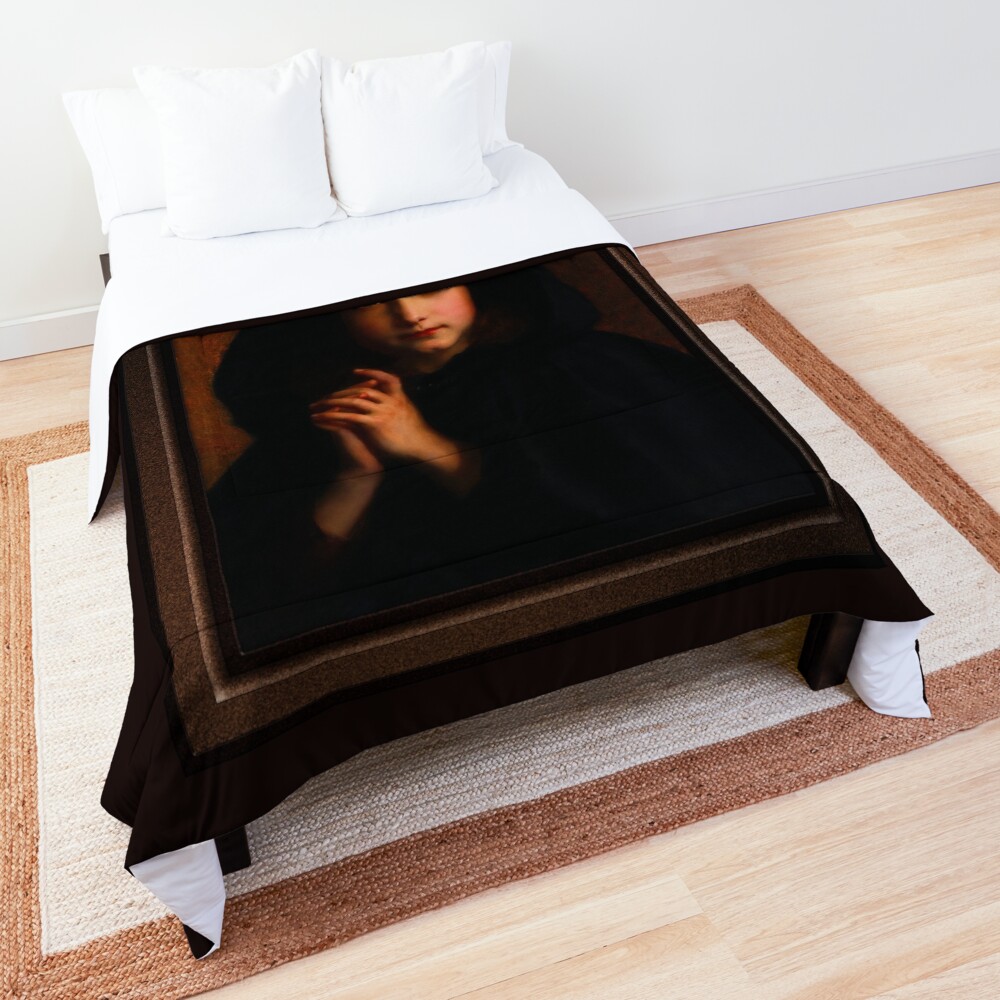
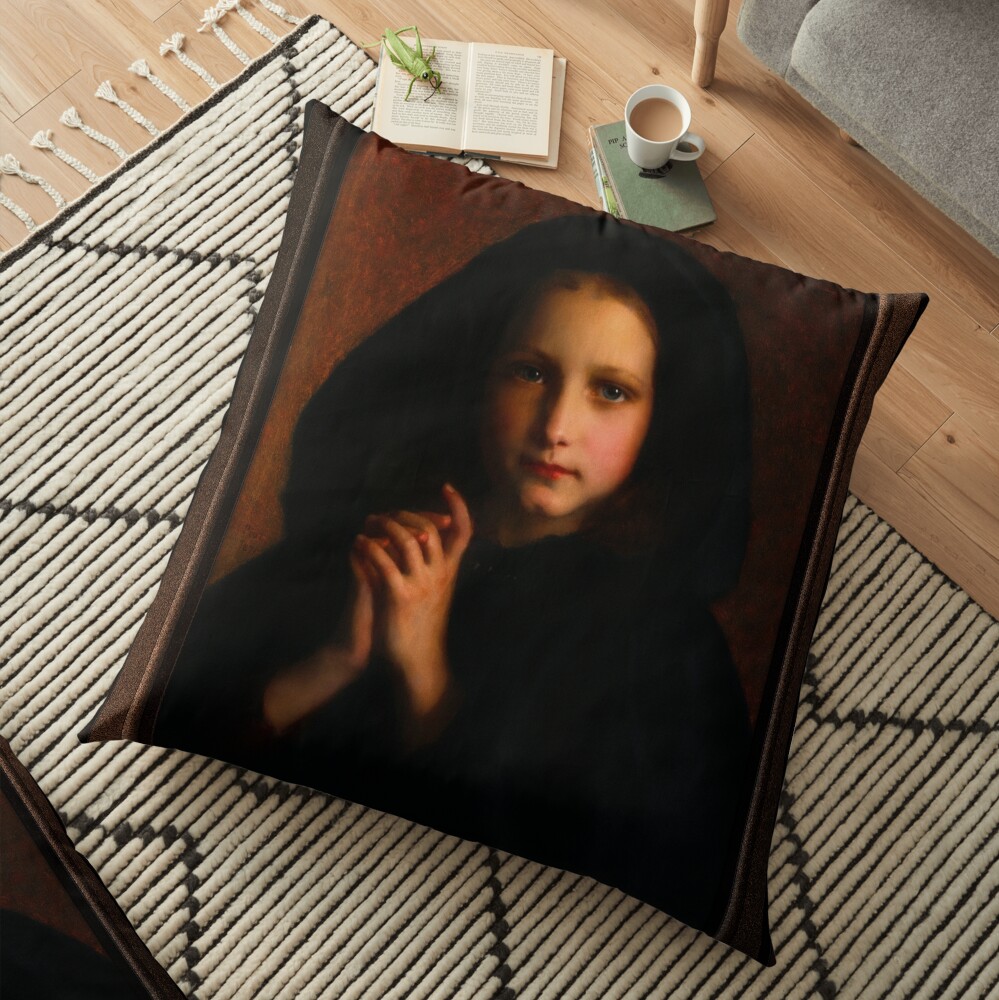
“Dona amb abric,” pintat a 1871 de l'artista francès Adolphe Piot (1825 – 1910), és una obra exquisida que recull l'essència del retrat clàssic amb una finura notable. Aquest quadre representa una noia jove, embolcallat amb una capa negra amb caputxa, amb les mans suaument juntes davant d'ella, la delicada suavitat de la seva cara i les seves mans contrastant amb el pes de la seva vestimenta.
Adolphe Piot era conegut pel seu enfocament sensible del retrat, sovint centrant-se en representacions detallades de figures en estats reflexius o contemplatius, i aquesta peça és un bon exemple de la seva habilitat. A través de la seva pinzellada meticulosa i l'ús ric de la llum i l'ombra, Piot evoca un estat d'ànim d'introspecció tranquil·la.
Taula de continguts
Tema principal: La dona de la capa
La figura central del quadre és una noia, la seva innocència i bellesa tranquil·la es transmeten a través de la seva postura i expressió suaus. Ella es queda quieta, com atrapat en un moment de contemplació serena. La capa fosca que l'envolta no només la protegeix del món sinó que també posa de manifest la vulnerabilitat del subjecte..
La capa amb caputxa, que li cobreix el cap, és un motiu clàssic que s'utilitza sovint en el retrat per significar modèstia o misteri, donant un aire de tranquil·la dignitat al tema. Les seves mans estan delicadament col·locades davant del seu pit, plegat en un gest que podria significar la pregària, reflexió, o repòs tranquil. Aquest petit, encara íntim, gesture invites the viewer to consider the subject’s emotional and spiritual state.
The facial features of the woman are finely detailed, with her smooth, pale skin and delicate lips evoking a sense of innocence. Her eyes are large, soulful, and deeply expressive, drawing the viewer’s attention as they seem to look directly into the soul of the observer. The eyes are perhaps the most poignant part of the composition, conveying a mixture of introspection and an almost melancholic sense of longing or thoughtfulness.
El fons i la configuració
The background of the painting is rendered with a soft, warm glow that contrasts with the dark tones of the cloak. The use of deep, muted browns and reds in the background emphasizes the subject’s figure, allowing the girl to stand out as the focal point of the composition. The blurred nature of the background creates a sense of depth, making the viewer’s gaze naturally shift toward the central figure. There are no specific objects or landscape elements in the background, which further draws attention to the purity and stillness of the subject. The absence of extraneous details keeps the focus firmly on the woman, her posture, and her expression.
Estil i tècnica
Piot’s technique in this piece reflects his classical training, and he adheres closely to the traditions of 19th-century portraiture. His use of soft brushstrokes to define the textures of the fabric and the smoothness of the skin demonstrates his keen attention to detail. The folds of the cloak are rendered in soft, línies fluides, creating a sense of motion within the stillness of the portrait.
The light is carefully controlled, creating gentle shadows on the woman’s face, enhancing the dimensionality and realism of the piece. Piot’s use of chiaroscuro, employing contrasts between light and dark, serves to emphasize the form of the subject, giving the figure a lifelike quality while also imparting a quiet, contemplative mood to the overall composition.
The tonal qualities of the painting—deep, rich darks against subtle, warm highlights—speak to Piot’s expertise in using color to build atmosphere. The limited palette serves to enhance the subject’s isolation, as the dark cloak and the somber background create a sense of personal introspection that is not disturbed by external forces. There is an elegant simplicity in Piot’s approach, yet it is an approach that speaks volumes about the emotional world of the subject.
Estat d'ànim i tema
L'estat d'ànim de “Dona amb abric” is one of quiet reflection, if not solitude. There is an air of mystery surrounding the subject, as the artist does not reveal much about her identity. The woman is left alone in a dark, nearly barren space, and the lack of context only heightens the sense of emotional depth. The viewer is left to wonder about her inner world, what is she thinking? Is she lost in prayer, pena, or simply reflective? The painting’s atmosphere evokes a profound sense of stillness and introspection, inviting the viewer to share in the subject’s quiet moment.
The theme of solitude is central to this piece, as the figure is physically isolated, not only by her hooded cloak but also by her distance from the world around her. Aquesta solitud es pot interpretar de diverses maneres: pot representar l'aïllament d'un individu concret o una contemplació més universal de la introspecció humana. El focus en les mans de la dona, agafada i descansant suaument davant del seu pit, emfatitza encara més aquest tema de la reflexió interna tranquil·la.
Aquesta pintura reflecteix la sensibilitat de Piot davant la ressonància emocional d'un moment solitari. El comportament compost però fràgil de la dona suggereix una sensació de força personal, però també vulnerabilitat. És un bell i commovedor retrat del món emocional i intel·lectual d'una noia, capturat en un moment fugaç.
Conclusió
“Dona amb abric” by Adolphe Piot is a powerful example of 19th-century portraiture that combines technical mastery with emotional depth. Through his careful rendering of the subject’s figure and the thoughtful use of light and shadow, Piot captures the quiet, reflective nature of the woman in the painting. The piece speaks to themes of solitude, introspecció, i contemplació tranquil·la, offering the viewer a glimpse into the inner world of the subject. Piot’s skillful use of chiaroscuro and his attention to detail in both the figure and the cloak elevate this portrait beyond a mere representation of a woman; it becomes a meditation on the nature of emotional and spiritual solitude.
Es tracta d'una reproducció retocada d'art digital antic d'una imatge de domini públic que està disponible en línia com a impressió artística de llenç enrotllat.
Artista Bio
Informació a continuació derivada de Wikipedia.org
Étienne-Adolphe Piot was born in Digoin, Saône-et-Loire, França. He moved to Paris and studied under Léon Cogniet, and first exhibited at the Paris Salon in 1850, so it is assumed that he was probably born in the mid 1820s.
En 1860 he was among the painters whose work was shown at the Exposition de Bourdeaux, i dins 1864 when he was living in New York City, he exhibited a portrait at the National Academy of Design.
Up until 1876 Piot exhibited his artwork under the name of Adolphe Piot, after this he began to also use the names Adolphe-Étienne Piot and Étienne-Adolphe Piot on his artwork.
Piot was very successful commercially, taking advantage of the increasing demand for portraits from wealthy Parisians. During the Belle Époque every debutante had to have her portrait painted, and Piot was skilled in creating the captivating portraits young ladies sought.
Piot became a member of the Société des Artistes Français in 1883, i dins 1890 received an honorable mention for the work he exhibited at the 1889 Exposició Universal. His last Salon entry seems to have been submitted in 1909, a year before his death.