

Fille Au Citronnier
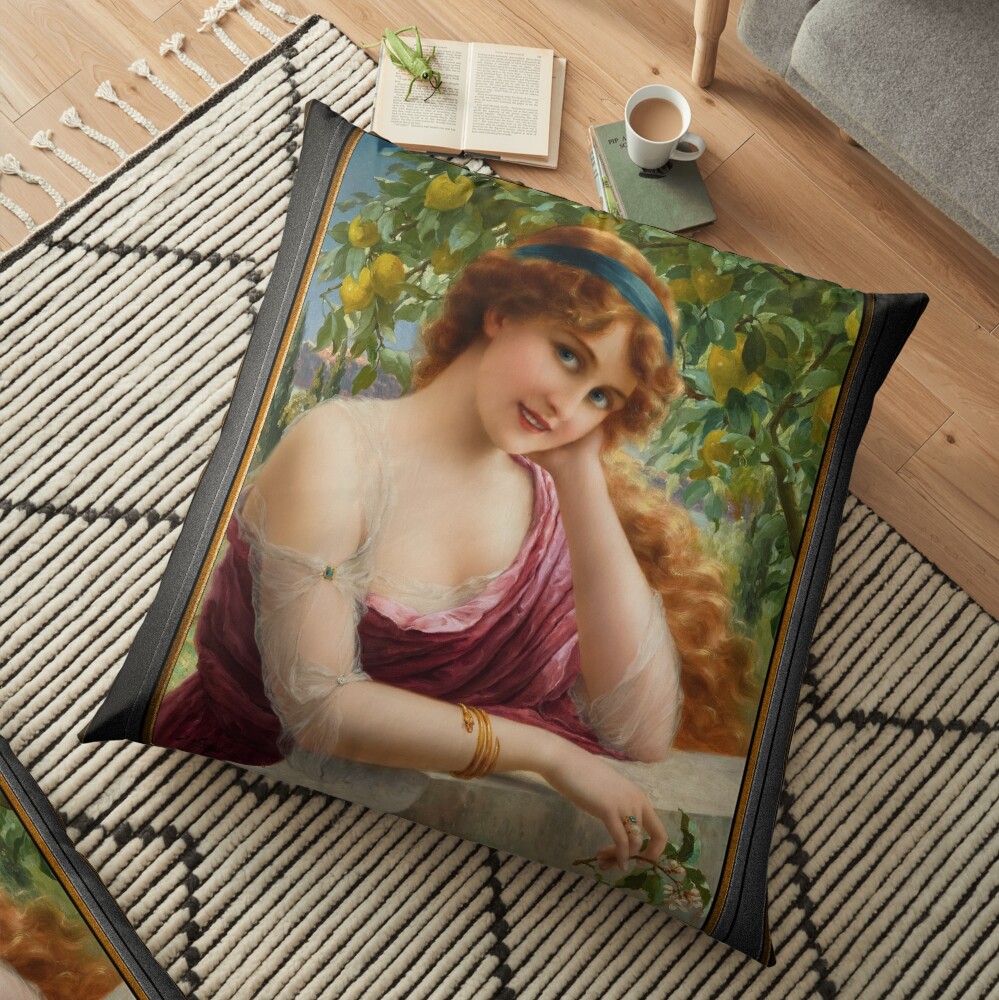
“Fille Au Citronnier (Lemon Tree Girl),” vytvořeno v 1913 by the French artist Emile Vernon (1872-1919), is an exquisite portrayal of feminine beauty, nevinnost, and natural harmony. As one of Vernon’s signature works, this painting showcases a young woman against a serene backdrop of a lemon tree, capturing the essence of French romanticism through rich colors, Jemné štětce, and a tender, intimate subject. The scene is idyllic, imbued with the charm and vibrancy of the early 20th century, a period characterized by a growing fascination with both idealized beauty and nature’s simple pleasures.
Obsah
Předmět a kompozice
At the heart of the artwork is the figure of a young woman, whose soft features and graceful posture immediately captivate the viewer. Je oblečená do splývavých hlubokých šatů, tlumená červená, která krásně kontrastuje s jejím světlem, světlou pleť. Její dlouhé, kaštanové vlasy, kaskádové ve volných vlnách, je jemně orámována tmavě modrou stuhou, která jejímu celkovému vzhledu dodává jemný nádech elegance. Žena sedí, její pravá ruka jemně položená na kamenné římse, zatímco si levá ruka podpírá bradu, její výraz byl zamyšlený, ale vyrovnaný.
Její pohled směřuje mírně do strany, naznačující chvíli tichého rozjímání. Zdá se, že se ztratila v klidu svého okolí, které zahrnují svěží zelené listí citroníku, které rámuje její postavu. Tato uvolněná, ale půvabná póza umocňuje atmosféru míru, vyzvat diváka, aby se ponořil do scény. Rysy obličeje mladé ženy, zejména její široká, expressive eyes and the slight hint of a smile, convey a sense of youthful innocence, delicacy, a nadčasová krása.
Pozadí a nastavení
Behind the central figure is the lush landscape that complements the mood of the painting. The lemon tree, with its vibrant green leaves and yellow fruit, stands out as a prominent feature. The lemons symbolize both freshness and fertility, their bright color providing a lively contrast to the soft pastels of the woman’s attire and the surrounding foliage. The tree is placed in the foreground, creating a harmonious balance between the subject and the natural elements of the scene.
The background features rolling hills, fading into a soft, almost dreamlike horizon that suggests a Mediterranean setting, characteristic of the French Riviera or southern France. Tato bujná, sunlit landscape adds to the overall sense of peace and natural beauty. Měkký, distant mountain ranges, bathed in warm sunlight, contribute to the serene, tranquil mood of the painting. The gentle colors of the foliage, together with the warm golden light illuminating the scene, evoke feelings of calm, contentment, a nostalgie.
Styl a technika
Émile Vernon’s painting style is emblematic of the Post-Impressionist and Belle Époque movements. His brushwork is both detailed and fluid, capturing the fine textures of the woman’s gown and hair, as well as the soft, rippling leaves of the lemon tree. The rendering of light and shadow is particularly notable; Vernon uses a technique of delicate gradation to convey depth and warmth, subtly highlighting the woman’s skin and the contours of her face. The textures in the painting, such as the soft fabric of the woman’s dress and the smooth surfaces of the lemons, are meticulously detailed, showcasing the artist’s skillful ability to render both the figure and the environment.
The color palette of the painting is warm and inviting, dominated by soft hues of red, zlato, zelená, and pale blues. Vernon skillfully blends these tones to create a harmonious composition, where the bright, almost luminous yellows of the lemons contrast with the cooler shades of the woman’s clothing and the surrounding greenery. This interplay of colors not only enhances the natural beauty of the scene but also reflects the vibrancy of life and the quiet joy of being surrounded by nature.
The mood of the artwork is one of tranquility, klid, and timeless elegance. There is an ethereal quality to the piece, as though the woman and her surroundings exist in a moment suspended in time. The subject’s poised yet relaxed demeanor evokes a sense of calm and contentment, while the natural setting further amplifies this mood. The entire composition speaks to a harmonious balance between human beauty and nature’s bounty, with the lemon tree acting as both a literal and symbolic anchor to the scene.
Symbolism and Theme
The central theme of “Fille Au Citronnier” is the connection between woman and nature, a motif that was popular in late 19th and early 20th-century French art. The lemon tree, with its vibrant fruit and lush green leaves, is not just a decorative element; it serves as a symbol of fertility, abundance, a obnovy. This tree, often associated with Mediterranean climates, also hints at themes of life’s cyclical nature, connecting the natural world with the cyclical beauty of the human experience.
Mladá žena, with her innocence and gentle beauty, represents the purity and grace of youth. She seems to embody the qualities of the natural world around her — serene, untroubled, and in perfect harmony with her environment. The pairing of the woman with the lemon tree, a symbol of natural abundance, suggests themes of femininity and fertility, both of which were often explored in art during this period.
The interaction between the subject and her environment, captured in such a peaceful moment, conveys an overarching theme of simplicity and the joy found in life’s everyday pleasures. The painting reflects a romanticized vision of life where beauty and nature coexist in perfect harmony, a theme that resonated deeply with audiences of the Belle Époque era.

Závěr
“Fille Au Citronnier (Lemon Tree Girl)” is a masterpiece of French academic painting from the early 20th century, offering a stunning depiction of feminine beauty in the context of a peaceful, přírodní nastavení. Émile Vernon’s meticulous attention to detail, his mastery of color, and his ability to capture both the physical and emotional essence of his subject make this work a true representation of the romanticism and elegance of the Belle Époque. The harmonious blending of figure and landscape, along with the symbolic use of the lemon tree, invites viewers to reflect on themes of beauty, ženskost, and the intimate connection between humanity and nature.
Toto je remasterovaná reprodukce starých mistrů digitálního umění obrázku ve veřejné doméně, který je dostupný jako a tisk na plátno online.
Tato digitální umělecká tvorba, stejně jako všechna umělecká díla, která lze nalézt na webu Xzendor7, je k dispozici ke koupi online v různých materiálových formátech včetně tisků na plátno, akrylové tisky, kovové potisky, otisky dřeva, zarámované tisky, plakáty, a jako rolované obrazy na plátně v různých velikostech od 12 palce až 72 palce v závislosti na velikosti skutečného uměleckého díla a obchodu s tiskem na vyžádání, ve kterém se rozhodnete umění koupit.
Umělecká díla jsou k dispozici také na široké škále pánského a dámského oblečení, hrnky, totes, šátky, sešity a deníky a mnoho produktů pro domácí dekoraci.
O umělci
Info níže z Galerie Ary Jan
Émile Vernon byl studentem školy výtvarných umění v Tours, kde získal první cenu za kreslení 1888; poté byl mentorován William Bouguereau a Auguste Truphème.
Pak v 1898 později se zúčastnil výstavy výtvarných umění a dekorativního umění v Tours, na výstavě francouzských umělců a pravidelně zde vystavoval své práce 1898 na 1913; prezentace portrétů, krajiny, scény z Bretaně, kytice zátiší, které namaloval akvarelem, stejně jako ženské postavy, která se později stala specialitou.
Émile vynikal ve svých obrazech jemně nasvícených, rozkošné postavy dětí a elegantních mladých žen, se kterým si často spojoval mazlíčka, jako je kočka, pes nebo pták, a své obrazy zdobil girlandami nebo kyticemi květin, po celou svou kariéru; ale byl také velmi všestranným umělcem, který uměl malovat s přísností a silou, jako v jeho dílech portrét Madame Vernon a Sous la Lampe. (Pod lampou).