

Knabino kun la Citronarbo
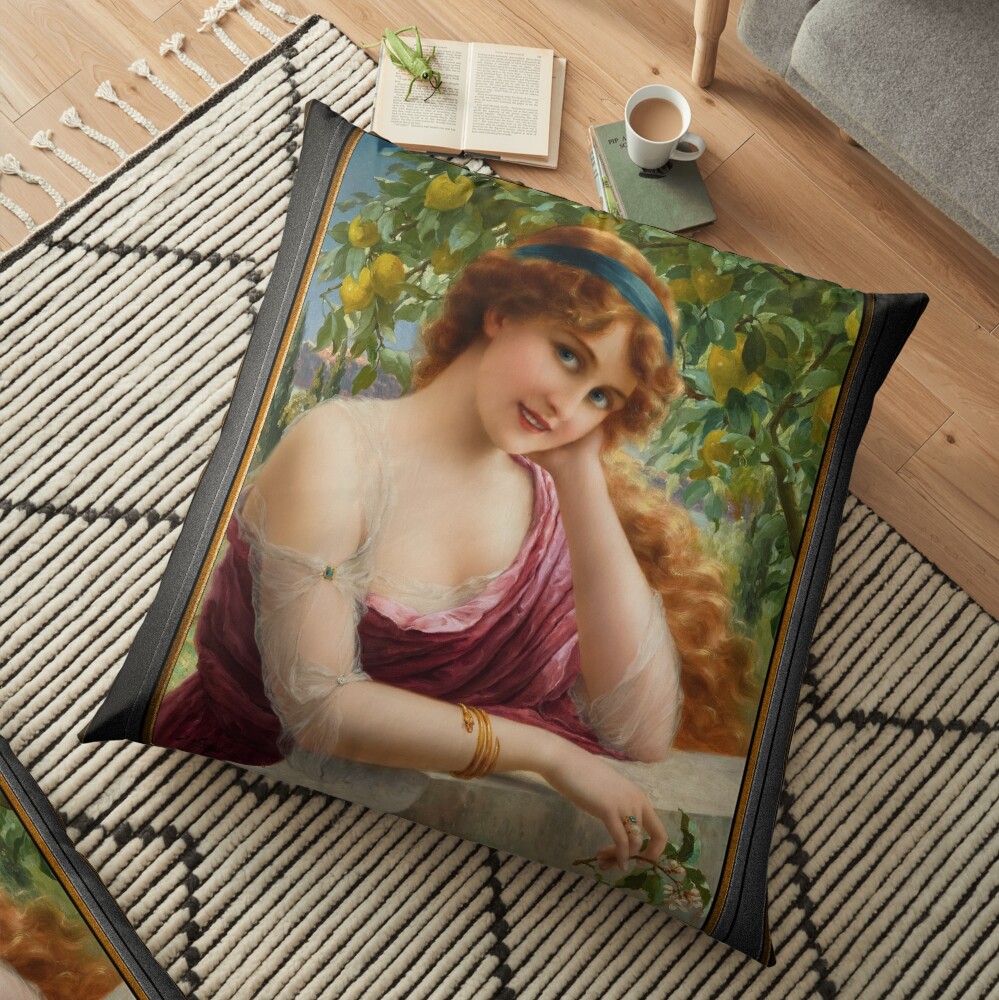
“Knabino kun la Citronarbo (Citronarba Knabino),” kreita en 1913 de la franca artisto Emile Vernon (1872-1919), estas delikata portretado de ina beleco, Senkulpeco, kaj natura harmonio. Kiel unu el la subskribaj verkoj de Vernon, ĉi tiu pentraĵo montras junan virinon kontraŭ serena fono de citronarbo, kaptante la esencon de franca romantismo per riĉaj koloroj, delikata peniko, kaj mola, intima temo. La sceno estas idilia, trapenetrita de la ĉarmo kaj vigleco de la frua 20-a jarcento, periodo karakterizita de kreskanta fascino kun kaj idealigita beleco kaj la simplaj plezuroj de la naturo.
Enhavtabelo
Temo kaj Komponado
Ĉe la koro de la artaĵo estas la figuro de juna virino, kies molaj trajtoj kaj gracia pozo tuj allogas la spektanton. She is dressed in a flowing gown of deep, muted red, which contrasts beautifully with her light, fair complexion. Ŝi longe, auburn hair, cascading in loose waves, is softly framed by a dark blue ribbon that adds a subtle touch of elegance to her overall appearance. The woman is seated, her right hand gently resting on a stone ledge, while her left hand supports her chin, her expression thoughtful yet serene.
Her gaze is directed slightly to the side, suggesting a moment of quiet contemplation. She seems lost in the tranquility of her surroundings, which include the lush green foliage of the lemon tree that frames her figure. This relaxed yet graceful pose enhances the atmosphere of peacefulness, inviting the viewer to become immersed in the scene. The facial features of the young woman, notably her wide, expressive eyes and the slight hint of a smile, convey a sense of youthful innocence, delikateco, kaj sentempa beleco.
Fono kaj Agordo
Behind the central figure is the lush landscape that complements the mood of the painting. The lemon tree, with its vibrant green leaves and yellow fruit, stands out as a prominent feature. The lemons symbolize both freshness and fertility, their bright color providing a lively contrast to the soft pastels of the woman’s attire and the surrounding foliage. The tree is placed in the foreground, creating a harmonious balance between the subject and the natural elements of the scene.
The background features rolling hills, fading into a soft, almost dreamlike horizon that suggests a Mediterranean setting, characteristic of the French Riviera or southern France. This lush, sunlit landscape adds to the overall sense of peace and natural beauty. La mola, distant mountain ranges, bathed in warm sunlight, contribute to the serene, tranquil mood of the painting. The gentle colors of the foliage, together with the warm golden light illuminating the scene, evoke feelings of calm, contentment, kaj nostalgio.
Stilo kaj Tekniko
Émile Vernon’s painting style is emblematic of the Post-Impressionist and Belle Époque movements. His brushwork is both detailed and fluid, capturing the fine textures of the woman’s gown and hair, as well as the soft, rippling leaves of the lemon tree. The rendering of light and shadow is particularly notable; Vernon uses a technique of delicate gradation to convey depth and warmth, subtly highlighting the woman’s skin and the contours of her face. The textures in the painting, such as the soft fabric of the woman’s dress and the smooth surfaces of the lemons, are meticulously detailed, showcasing the artist’s skillful ability to render both the figure and the environment.
The color palette of the painting is warm and inviting, dominated by soft hues of red, oro, Verda, and pale blues. Vernon skillfully blends these tones to create a harmonious composition, where the bright, almost luminous yellows of the lemons contrast with the cooler shades of the woman’s clothing and the surrounding greenery. This interplay of colors not only enhances the natural beauty of the scene but also reflects the vibrancy of life and the quiet joy of being surrounded by nature.
The mood of the artwork is one of tranquility, serenity, kaj sentempa eleganteco. There is an ethereal quality to the piece, as though the woman and her surroundings exist in a moment suspended in time. The subject’s poised yet relaxed demeanor evokes a sense of calm and contentment, while the natural setting further amplifies this mood. The entire composition speaks to a harmonious balance between human beauty and nature’s bounty, with the lemon tree acting as both a literal and symbolic anchor to the scene.
Simboleco kaj Temo
La centra temo de “Knabino kun la Citronarbo” is the connection between woman and nature, a motif that was popular in late 19th and early 20th-century French art. The lemon tree, with its vibrant fruit and lush green leaves, is not just a decorative element; it serves as a symbol of fertility, abundance, kaj renovigo. This tree, often associated with Mediterranean climates, also hints at themes of life’s cyclical nature, connecting the natural world with the cyclical beauty of the human experience.
La juna virino, with her innocence and gentle beauty, represents the purity and grace of youth. She seems to embody the qualities of the natural world around her — serene, untroubled, and in perfect harmony with her environment. The pairing of the woman with the lemon tree, a symbol of natural abundance, suggests themes of femininity and fertility, both of which were often explored in art during this period.
The interaction between the subject and her environment, captured in such a peaceful moment, conveys an overarching theme of simplicity and the joy found in life’s everyday pleasures. The painting reflects a romanticized vision of life where beauty and nature coexist in perfect harmony, a theme that resonated deeply with audiences of the Belle Époque era.

Konkludo
“Knabino kun la Citronarbo (Citronarba Knabino)” is a masterpiece of French academic painting from the early 20th century, offering a stunning depiction of feminine beauty in the context of a peaceful, natura medio. Émile Vernon’s meticulous attention to detail, his mastery of color, and his ability to capture both the physical and emotional essence of his subject make this work a true representation of the romanticism and elegance of the Belle Époque. The harmonious blending of figure and landscape, along with the symbolic use of the lemon tree, invites viewers to reflect on themes of beauty, Femineco, and the intimate connection between humanity and nature.
Ĉi tio estas readaptita cifereca arta reproduktaĵo de malnovaj majstroj de publika domajna bildo disponebla kiel a tolo presaĵo rete.
Ĉi tiu cifereca arta kreaĵo, kiel kun ĉiuj artaĵoj, kiuj troveblas en la retejo de Xzendor7, estas aĉetebla interrete en diversaj materialaj formatoj inkluzive de kanvasaj presaĵoj., akrilaj presaĵoj, metalaj presaĵoj, lignaj presaĵoj, enkadrigitaj presaĵoj, afiŝoj, kaj kiel rulitaj kanvasaj presaĵoj en diversaj grandecoj de 12 colojn al 72 coloj depende de la grandeco de la reala artaĵo kaj la presaĵo laŭpeta butiko, de kiu vi elektas aĉeti la arton.
La artaĵo ankaŭ haveblas sur larĝa gamo de vestaĵoj de viroj kaj virinoj, tasoj, totoj, koltukoj, kajeroj kaj ĵurnaloj kaj multaj hejmornamaj produktoj.
Pri La Artisto
Informoj Malsupre De Galerio Ary Jan
Émile Vernon estis studento en la Belarta lernejo en Tours kie li gajnis la unuan premion por tirado enen 1888; poste li tiam estis mentoreita fare de William Bouguereau kaj Auguste Truphème.
Tiam en 1898 li partoprenis la Tours-ekspozicion de Belartoj kaj Decorative Arts kaj poste tiun jaron, en la Franca Artisto-Ekspozicio kaj regule ekspoziciis ties verkojn de 1898 al 1913; prezentante portretojn, pejzaĝoj, scenoj el Bretonio, ankoraŭ-vivaj bukedoj, kiujn li pentris en akvarelo, same kiel inajn figurojn, kiu poste fariĝis estas specialaĵo.
Émile elstaris en siaj pentraĵoj de milde lumigitaj, adorindaj figuroj de infanoj kaj elegantaj junaj virinoj, kun kiu li ofte asociis dorlotbeston kiel kato, hundo aŭ birdo, kaj ornamis siajn bildojn per girlandoj aŭ florbukedoj, dum sia kariero; sed li ankaŭ estis tre diverstalenta artisto kiu povis pentri kun rigoro kaj potenco kiel en liaj verkoj la portreto de Madame Vernon kaj Sous la Lampe (Sub la lampo).