

レモンツリーガール
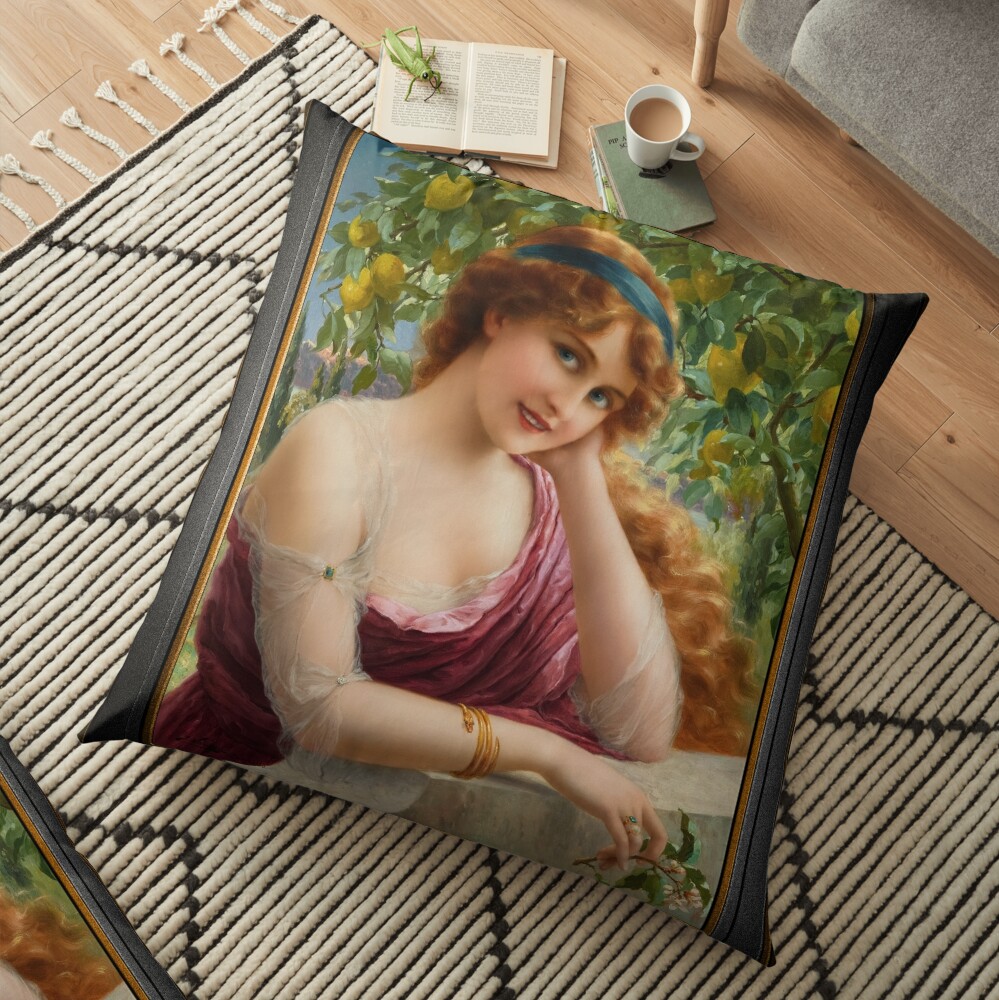
“レモンツリーガール (レモンツリーガール),” に作成されました 1913 フランスの芸術家によって エミールヴァーノン (1872-1919), is an exquisite portrayal of feminine beauty, イノセンス, and natural harmony. As one of Vernon’s signature works, this painting showcases a young woman against a serene backdrop of a lemon tree, capturing the essence of French romanticism through rich colors, delicate brushwork, and a tender, intimate subject. The scene is idyllic, imbued with the charm and vibrancy of the early 20th century, a period characterized by a growing fascination with both idealized beauty and nature’s simple pleasures.
目次
主題と構成
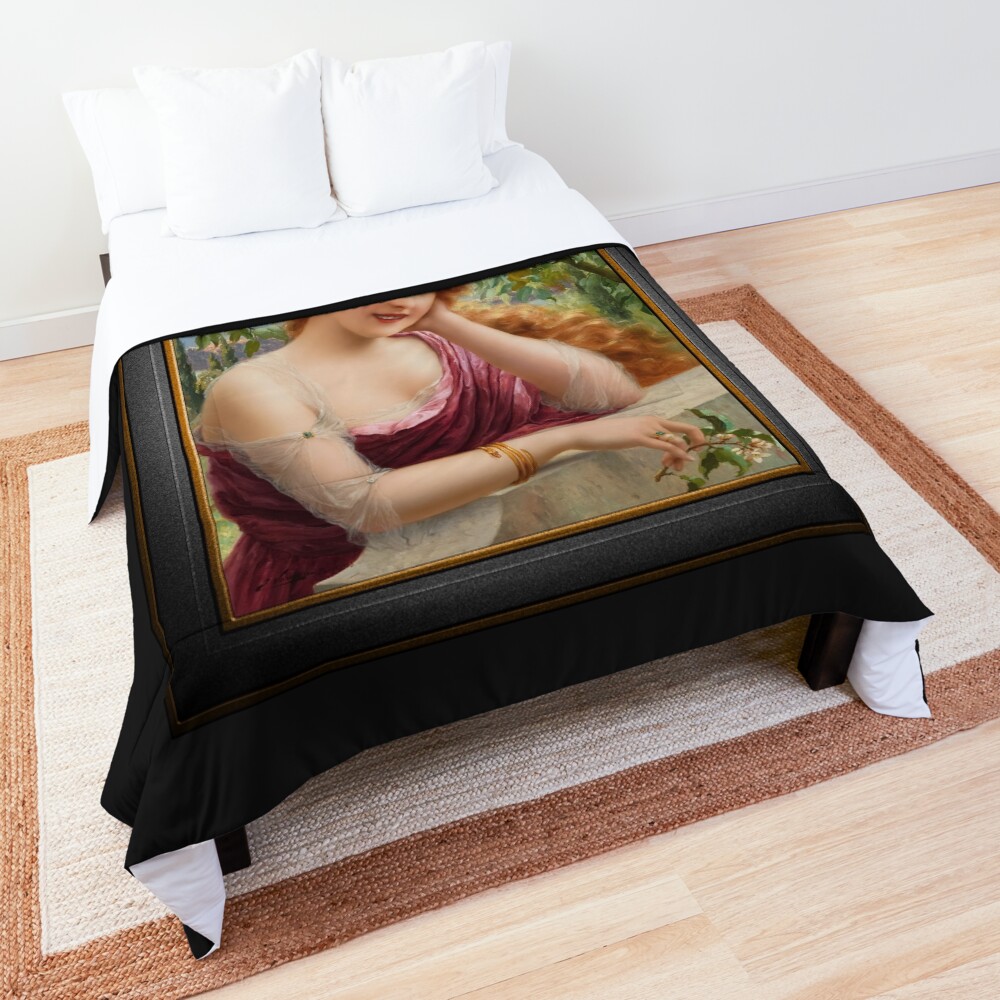
At the heart of the artwork is the figure of a young woman, whose soft features and graceful posture immediately captivate the viewer. She is dressed in a flowing gown of deep, muted red, which contrasts beautifully with her light, fair complexion. 彼女の長い, auburn hair, cascading in loose waves, is softly framed by a dark blue ribbon that adds a subtle touch of elegance to her overall appearance. The woman is seated, her right hand gently resting on a stone ledge, while her left hand supports her chin, her expression thoughtful yet serene.
Her gaze is directed slightly to the side, suggesting a moment of quiet contemplation. She seems lost in the tranquility of her surroundings, which include the lush green foliage of the lemon tree that frames her figure. This relaxed yet graceful pose enhances the atmosphere of peacefulness, inviting the viewer to become immersed in the scene. The facial features of the young woman, notably her wide, expressive eyes and the slight hint of a smile, convey a sense of youthful innocence, delicacy, そして時代を超越した美しさ.
背景と設定
Behind the central figure is the lush landscape that complements the mood of the painting. The lemon tree, with its vibrant green leaves and yellow fruit, stands out as a prominent feature. The lemons symbolize both freshness and fertility, their bright color providing a lively contrast to the soft pastels of the woman’s attire and the surrounding foliage. The tree is placed in the foreground, creating a harmonious balance between the subject and the natural elements of the scene.
The background features rolling hills, fading into a soft, almost dreamlike horizon that suggests a Mediterranean setting, characteristic of the French Riviera or southern France. この緑豊かな, sunlit landscape adds to the overall sense of peace and natural beauty. ソフト, distant mountain ranges, bathed in warm sunlight, contribute to the serene, tranquil mood of the painting. The gentle colors of the foliage, together with the warm golden light illuminating the scene, evoke feelings of calm, contentment, and nostalgia.
スタイルとテクニック
Émile Vernon’s painting style is emblematic of the Post-Impressionist and Belle Époque movements. His brushwork is both detailed and fluid, capturing the fine textures of the woman’s gown and hair, as well as the soft, rippling leaves of the lemon tree. The rendering of light and shadow is particularly notable; Vernon uses a technique of delicate gradation to convey depth and warmth, subtly highlighting the woman’s skin and the contours of her face. The textures in the painting, such as the soft fabric of the woman’s dress and the smooth surfaces of the lemons, are meticulously detailed, showcasing the artist’s skillful ability to render both the figure and the environment.
The color palette of the painting is warm and inviting, dominated by soft hues of red, 金, 緑, and pale blues. Vernon skillfully blends these tones to create a harmonious composition, where the bright, almost luminous yellows of the lemons contrast with the cooler shades of the woman’s clothing and the surrounding greenery. This interplay of colors not only enhances the natural beauty of the scene but also reflects the vibrancy of life and the quiet joy of being surrounded by nature.
The mood of the artwork is one of tranquility, 静けさ, そして時代を超えたエレガンス. There is an ethereal quality to the piece, as though the woman and her surroundings exist in a moment suspended in time. The subject’s poised yet relaxed demeanor evokes a sense of calm and contentment, while the natural setting further amplifies this mood. The entire composition speaks to a harmonious balance between human beauty and nature’s bounty, with the lemon tree acting as both a literal and symbolic anchor to the scene.
Symbolism and Theme
の中心テーマ “レモンツリーガール” is the connection between woman and nature, a motif that was popular in late 19th and early 20th-century French art. The lemon tree, with its vibrant fruit and lush green leaves, is not just a decorative element; it serves as a symbol of fertility, 豊富, そしてリニューアル. This tree, often associated with Mediterranean climates, also hints at themes of life’s cyclical nature, connecting the natural world with the cyclical beauty of the human experience.
若い女性, with her innocence and gentle beauty, represents the purity and grace of youth. She seems to embody the qualities of the natural world around her — serene, untroubled, and in perfect harmony with her environment. The pairing of the woman with the lemon tree, a symbol of natural abundance, suggests themes of femininity and fertility, both of which were often explored in art during this period.
The interaction between the subject and her environment, captured in such a peaceful moment, conveys an overarching theme of simplicity and the joy found in life’s everyday pleasures. The painting reflects a romanticized vision of life where beauty and nature coexist in perfect harmony, a theme that resonated deeply with audiences of the Belle Époque era.
結論
“レモンツリーガール (レモンツリーガール)” is a masterpiece of French academic painting from the early 20th century, offering a stunning depiction of feminine beauty in the context of a peaceful, 自然環境. Émile Vernon’s meticulous attention to detail, his mastery of color, and his ability to capture both the physical and emotional essence of his subject make this work a true representation of the romanticism and elegance of the Belle Époque. The harmonious blending of figure and landscape, along with the symbolic use of the lemon tree, invites viewers to reflect on themes of beauty, 女性らしさ, and the intimate connection between humanity and nature.
これは、リマスターされたデジタルアートのオールドマスターであり、パブリックドメインの画像を複製したものです。 キャンバスプリントオンライン.
このデジタルアート作品は、, Xzendor7 Web サイトにあるすべてのアートワークと同様に、キャンバス プリントを含むさまざまな素材形式でオンラインで購入できます。, アクリルプリント, メタルプリント, 木版, 額入りプリント, ポスター, ロール状のキャンバス プリントとしてさまざまなサイズでご利用いただけます。 12 インチから 72 インチは、実際のアートワークのサイズと、アートを購入するために選択したオンデマンド プリント ショップによって異なります。.
このアートワークは、幅広いメンズおよびウィメンズのアパレルでも利用可能です, マグカップ, トートバッグ, スカーフ, ノートや日記帳、その他多くの室内装飾品.
アーティストについて
以下の情報から ギャラリーと1月
エミール・ヴァーノンはトゥールの美術学校の学生で、ドローイングで一等賞を受賞しました。 1888; その後、彼はウィリアム・ブーグローとオーギュスト・トルフェームから指導を受けました。.
その後、 1898 彼は美術と装飾芸術のツアー展に参加し、その年の後半に, フランスの芸術家展に参加し、定期的にそこから彼の作品を展示しました 1898 に 1913; 肖像画を提示する, 風景, ブルターニュのシーン, 彼が水彩で描いた静物ブーケ, フェミニンなフィギュアだけでなく, 後になって専門になりました.
エミールは柔らかな照明の彼の絵に優れていました, 子供とエレガントな若い女性の愛らしい姿, 彼は猫などのペットとよく付き合っていました, 犬や鳥, 花輪や花束で彼のイメージを飾りました, 彼のキャリアを通して; しかし、彼はまた、彼の作品のようにマダムバーノンとスーラランペの肖像画のように、厳格さと力で描くことができる非常に用途の広い芸術家でした (ランプの下).