

Девушка лимонного дерева
“Девушка лимонного дерева (Девушка лимонного дерева),” создано в 1913 французского художника Эмиль Вернон (1872-1919), is an exquisite portrayal of feminine beauty, невиновность, and natural harmony. As one of Vernon’s signature works, this painting showcases a young woman against a serene backdrop of a lemon tree, capturing the essence of French romanticism through rich colors, тонкая кисть, and a tender, intimate subject. The scene is idyllic, imbued with the charm and vibrancy of the early 20th century, a period characterized by a growing fascination with both idealized beauty and nature’s simple pleasures.
Оглавление
Тема и состав
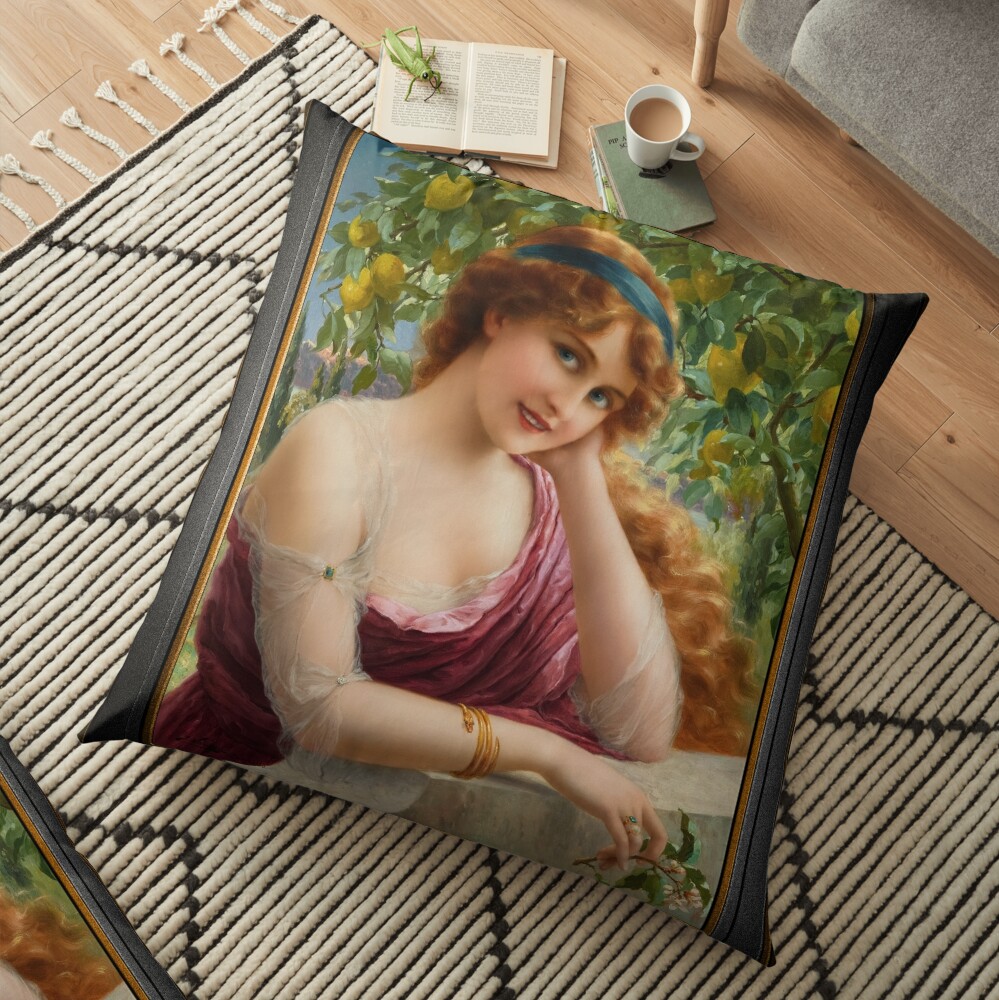
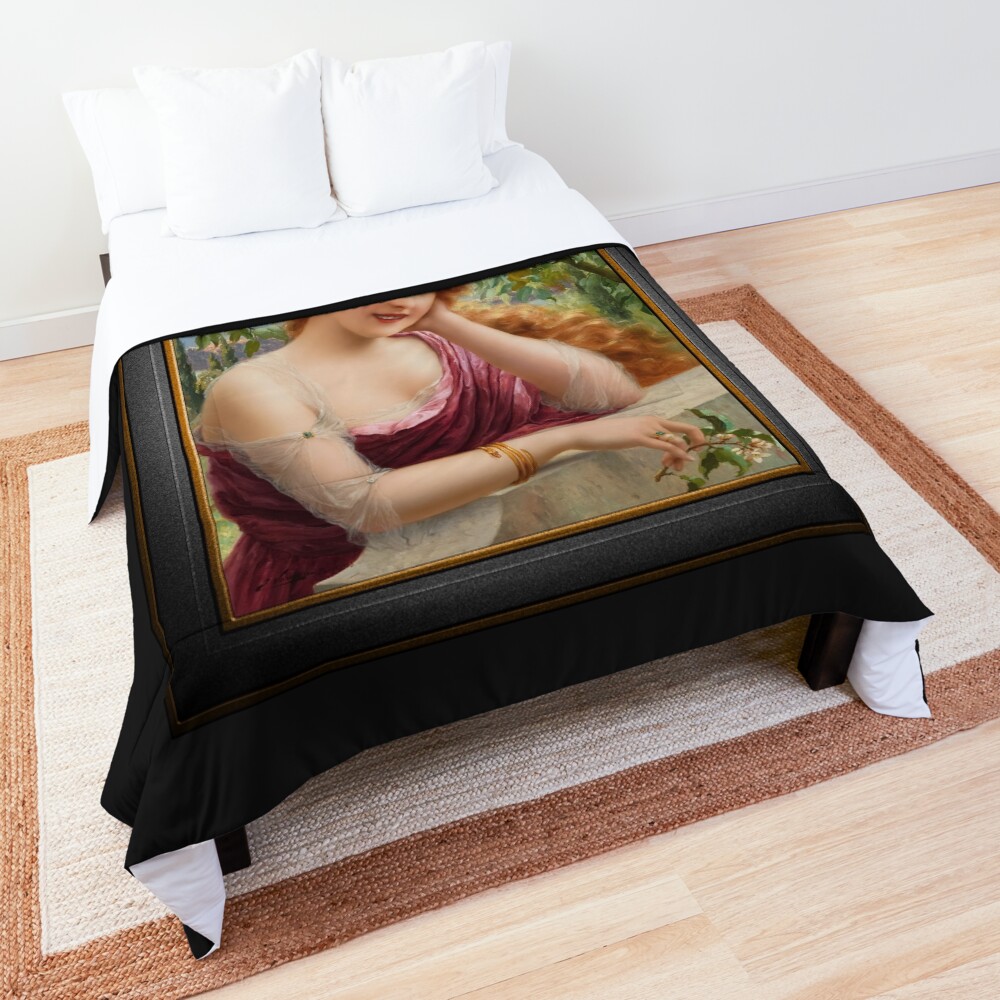
At the heart of the artwork is the figure of a young woman, whose soft features and graceful posture immediately captivate the viewer. She is dressed in a flowing gown of deep, muted red, which contrasts beautifully with her light, fair complexion. Ее длинный, auburn hair, cascading in loose waves, is softly framed by a dark blue ribbon that adds a subtle touch of elegance to her overall appearance. The woman is seated, her right hand gently resting on a stone ledge, while her left hand supports her chin, her expression thoughtful yet serene.
Her gaze is directed slightly to the side, suggesting a moment of quiet contemplation. She seems lost in the tranquility of her surroundings, which include the lush green foliage of the lemon tree that frames her figure. This relaxed yet graceful pose enhances the atmosphere of peacefulness, inviting the viewer to become immersed in the scene. The facial features of the young woman, notably her wide, expressive eyes and the slight hint of a smile, convey a sense of youthful innocence, delicacy, и вневременная красота.
Предыстория и обстановка
Behind the central figure is the lush landscape that complements the mood of the painting. The lemon tree, with its vibrant green leaves and yellow fruit, stands out as a prominent feature. The lemons symbolize both freshness and fertility, their bright color providing a lively contrast to the soft pastels of the woman’s attire and the surrounding foliage. The tree is placed in the foreground, creating a harmonious balance between the subject and the natural elements of the scene.
The background features rolling hills, fading into a soft, almost dreamlike horizon that suggests a Mediterranean setting, characteristic of the French Riviera or southern France. This lush, sunlit landscape adds to the overall sense of peace and natural beauty. Мягкий, distant mountain ranges, bathed in warm sunlight, contribute to the serene, tranquil mood of the painting. The gentle colors of the foliage, together with the warm golden light illuminating the scene, evoke feelings of calm, contentment, и ностальгия.
Стиль и техника
Émile Vernon’s painting style is emblematic of the Post-Impressionist and Belle Époque movements. His brushwork is both detailed and fluid, capturing the fine textures of the woman’s gown and hair, а также мягкий, rippling leaves of the lemon tree. The rendering of light and shadow is particularly notable; Vernon uses a technique of delicate gradation to convey depth and warmth, subtly highlighting the woman’s skin and the contours of her face. The textures in the painting, such as the soft fabric of the woman’s dress and the smooth surfaces of the lemons, are meticulously detailed, showcasing the artist’s skillful ability to render both the figure and the environment.
The color palette of the painting is warm and inviting, dominated by soft hues of red, золото, зеленый, and pale blues. Vernon skillfully blends these tones to create a harmonious composition, where the bright, almost luminous yellows of the lemons contrast with the cooler shades of the woman’s clothing and the surrounding greenery. This interplay of colors not only enhances the natural beauty of the scene but also reflects the vibrancy of life and the quiet joy of being surrounded by nature.
The mood of the artwork is one of tranquility, умиротворенность, и вневременная элегантность. There is an ethereal quality to the piece, as though the woman and her surroundings exist in a moment suspended in time. The subject’s poised yet relaxed demeanor evokes a sense of calm and contentment, while the natural setting further amplifies this mood. The entire composition speaks to a harmonious balance between human beauty and nature’s bounty, with the lemon tree acting as both a literal and symbolic anchor to the scene.
Символизм и тема
Центральная тема “Девушка лимонного дерева” is the connection between woman and nature, a motif that was popular in late 19th and early 20th-century French art. The lemon tree, with its vibrant fruit and lush green leaves, это не просто декоративный элемент; it serves as a symbol of fertility, избыток, и обновление. This tree, often associated with Mediterranean climates, also hints at themes of life’s cyclical nature, connecting the natural world with the cyclical beauty of the human experience.
Молодая женщина, with her innocence and gentle beauty, represents the purity and grace of youth. She seems to embody the qualities of the natural world around her — serene, untroubled, and in perfect harmony with her environment. The pairing of the woman with the lemon tree, a symbol of natural abundance, suggests themes of femininity and fertility, both of which were often explored in art during this period.
The interaction between the subject and her environment, captured in such a peaceful moment, conveys an overarching theme of simplicity and the joy found in life’s everyday pleasures. The painting reflects a romanticized vision of life where beauty and nature coexist in perfect harmony, a theme that resonated deeply with audiences of the Belle Époque era.
Заключение
“Девушка лимонного дерева (Девушка лимонного дерева)” is a masterpiece of French academic painting from the early 20th century, offering a stunning depiction of feminine beauty in the context of a peaceful, естественная обстановка. Émile Vernon’s meticulous attention to detail, his mastery of color, and his ability to capture both the physical and emotional essence of his subject make this work a true representation of the romanticism and elegance of the Belle Époque. The harmonious blending of figure and landscape, along with the symbolic use of the lemon tree, invites viewers to reflect on themes of beauty, женственность, and the intimate connection between humanity and nature.
Это обновленная цифровая репродукция старых мастеров изображения, являющегося общественным достоянием, которое доступно в качестве Все эти ремастерированные изображения старых мастеров цифрового искусства, являющиеся общественным достоянием, доступны как.
Это творение цифрового искусства, как и все произведения искусства, которые можно найти на веб-сайте Xzendor7, они доступны для покупки в Интернете в различных форматах материалов, включая отпечатки на холсте., акриловые принты, металлические отпечатки, гравюры на дереве, отпечатки в рамке, плакаты, и в виде рулонных отпечатков на холсте различных размеров от 12 дюймов до 72 дюймов в зависимости от размера фактического произведения искусства и магазина печати по запросу, в котором вы решили купить произведение искусства..
Эти изображения также доступны на широком ассортименте мужской и женской одежды., кружки, сумки, шарфы, блокноты и журналы, а также многие товары для домашнего декора..
О художнике
Информация ниже от Галерея И Ян
Эмиль Вернон учился в школе изящных искусств в Туре, где получил первый приз за рисунок в 1888; впоследствии его наставниками были Вильям Бугро и Огюст Трюфем..
Затем в 1898 он участвовал в выставке изобразительного и декоративного искусства в Туре, а позже в том же году, на Выставке французских художников и регулярно выставлял там свои работы из 1898 к 1913; представление портретов, пейзажи, сцены из Бретани, натюрморты с букетами, которые он нарисовал акварелью, а также женские фигуры, который впоследствии стал специальностью.
Эмиль преуспел в своих картинах с мягким освещением., очаровательные фигурки детей и элегантных молодых женщин, с кем он часто ассоциировал домашнее животное, такое как кошка, собака или птица, и украшал свои изображения гирляндами или букетами цветов, на протяжении всей своей карьеры; но он также был очень разносторонним художником, который мог рисовать со строгостью и силой, как, например, в своих работах портрет мадам Вернон и Су-ла-Ламп. (Под лампой).