

Fleurs du Mal c1920
“Fleurs du Mal c1920” is a captivating work created by the Peruvian artist תמונת מציין מיקום של אלברטו ורגאס, נוֹלָד בְּ 1896 ועובר פנימה 1982. This iconic painting was completed during a period when Vargas was renowned for his pin-up art, which exuded sensuality and elegance. היצירה, titled after Charles Baudelaire’s famed collection of poems, evokes a mix of sensual allure and melancholy, יצירת אינטימית, yet sophisticated narrative. The work reflects Vargas’s characteristic style, marked by the mastery of feminine form, intricate detailing, and an impeccable use of color and composition.
תוכן העניינים
נושא עיקרי והרכב
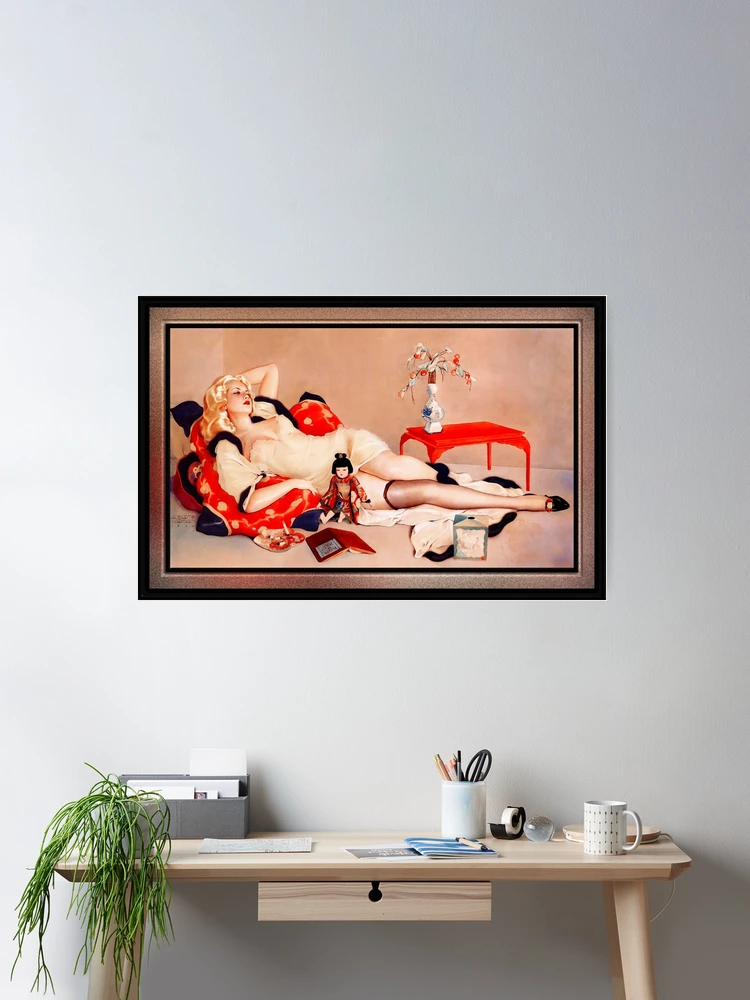
At the center of the painting lies a sultry and sensuous female figure, whose allure is both graceful and powerful. She reclines on a plush, red and white patterned cushion, exuding a relaxed yet provocative aura. Her golden blonde hair cascades around her shoulders, styled in soft waves that frame her face. הביטוי שלה שלווה, almost detached, with eyes gazing downward, which enhances the intimate atmosphere of the scene. The figure is draped in an off-white fabric that subtly hints at the contours of her body, reinforcing the sensuality of the piece without overtly revealing too much.
הדמות שלה, slender yet soft, epitomizes the idealized beauty often depicted in Vargas’s pin-up art. The careful rendering of her exposed legs and stockings, combined with the meticulous shading and highlights, draws attention to the delicate balance between eroticism and refinement. The stockings, held up by garter straps, create a bold contrast against the otherwise soft tones of the painting. This contrast adds a sense of intrigue, inviting the viewer to explore both the vulnerability and confidence embodied by the subject.
Objects and Surroundings
In the backdrop of the painting, subtle yet meaningful details emerge, enhancing the narrative and mood. A small, red table stands near the reclining figure, contributing a touch of vibrant color to the otherwise muted palette. על השולחן, a delicate porcelain vase filled with what appears to be flowers adds a naturalistic element to the composition. The flowers themselves seem to embody the theme of sensuality and impermanence, reinforcing the reference to Baudelaire’s “Fleurs du Mal” (Flowers of Evil), which explores themes of beauty, decadence, and corruption.
A doll sits beside the woman, a figure with a traditional, almost Eastern, מראה חיצוני. The juxtaposition of this doll with the reclining woman, coupled with her seductive posture, hints at the duality of innocence and desire. The doll’s presence, seemingly innocent and detached from the sensuality of the main subject, acts as a contrast, making the viewer consider the boundaries between innocence and sensuality.
בנוסף, another object—a small box—sits just off to the side, adding another layer of narrative and symbolism to the scene. The exact nature of the box is unclear, but its presence within the composition may suggest the theme of mystery, with its closed, unexamined form inviting curiosity.
שטח וחומרים
The terrain on which the woman rests is a simple, smooth surface that helps focus the viewer’s attention entirely on the subject and surrounding objects. The colors in the background are kept neutral, which places all emphasis on the figure and the accessories that accompany her. This choice in terrain reflects Vargas’s skillful use of space—creating a balanced composition where the figure remains the central point of attention without distraction.
Vargas’s meticulous use of oil paints brings depth to the scene, with a natural sheen on the skin of the woman and a softness that almost invites the viewer to touch the canvas. The delicate shading on the woman’s skin, contrasted with the bold, sharp highlights on the red cushion and table, enhances the three-dimensionality of the piece. Vargas uses light to sculpt the figure, highlighting the smoothness of her skin and the folds of her fabric in a way that creates a vivid realism, making the scene feel tangible and alive.
סִגְנוֹן, נוֹשֵׂא, ומצב רוח
The painting exudes the essence of Vargas’s pin-up art, which was characterized by idealized depictions of women, combining beauty, allure, and glamour. הציור הזה, למרות זאת, goes beyond simple eroticism, incorporating a subtle melancholy into its sensuality. The reference to Baudelaire’s “Fleurs du Mal” is not just an aesthetic choice; it is a reflection of the complex emotions encapsulated in the scene. The serene expression of the woman, coupled with her seductive pose, invokes a sense of longing and emotional depth, suggesting that beauty and desire are not merely fleeting, but tinged with sadness and imperfection.
The mood of the artwork balances between warmth and detachment. There is a clear invitation to indulge in the visual pleasure of the subject’s beauty, yet there is also a quiet recognition that this indulgence is transient. The juxtaposition of innocent objects, such as the doll and the vase, with the sultry reclining woman underscores the dual nature of the painting: it is both a celebration of feminine beauty and a meditation on the ephemeral nature of sensuality and youth.
מַסְקָנָה
“Fleurs du Mal c1920” by Alberto Vargas is a stunning piece that captures the essence of both sensuality and introspection. The artist’s ability to combine these elements with subtle references to literature and art history elevates the piece from mere pin-up art to a deeper exploration of beauty and impermanence. The woman at the center of the painting, surrounded by carefully chosen objects, embodies a world where sensuality is not just an aesthetic pursuit but also a reflection of inner complexity.
Fleurs du Mal c1920 by Peruvian Artist תמונת מציין מיקום של אלברטו ורגאס (1896 – 1982); על אמנות ה-pin-up girl המושכת והמעולה שלו ונחשבת למפורסמת ביותר בז'אנר ה-pin-up artist.
Depiction of a reclining woman in lingerie (wearing one stocking) surrounded by oriental objects, an ashtray with cigarettes, vase with flowers, Asian doll, Asian table, decorative box, and opened book “Fleurs du Mal”.
זהו רפרודוקציה של אמנות דיגיטלית משופרת ותיקים של תמונה של נחלת הכלל.
ביו אמן
מידע למטה מ Wikipedia.org
נולד בארקיפה, פרו, הוא היה בנו של הצלם הפרואני המפורסם מקס טי. ורגאס. אלברטו ורגאס עבר לארצות הברית 1916 לאחר לימודי אמנות באירופה, ציריך, וז'נבה לפני מלחמת העולם הראשונה.
בזמן שהותו באירופה הוא הגיע למגזין הצרפתי La Vie Parisienne, עם כריכה מאת רפאל קירשנר, שלדבריו הייתה השפעה רבה על עבודתו.
הקריירה המוקדמת שלו בניו יורק כללה עבודה כאמן עבור ה- Ziegfeld Follies ועבור אולפנים הוליוודיים רבים. זיגפלד תלה את הציור שלו של אוליב תומאס בתיאטרון, והיא נחשבה לאחת מבנות ורגאס המוקדמות ביותר.
ורגאס’ היצירה המפורסמת ביותר של עבודת הסרט הייתה עבור הפוסטר של ה 1933 הסרט "חטאה של נורה מורן"., אשר מציגה זיטה יוהאן כמעט עירומה בתנוחת ייאוש. הכרזה מכונה לעתים קרובות אחת מכרזות הסרטים הגדולות ביותר שנעשו אי פעם.
הוא זכה לציון נרחב בשנות ה-40 של המאה ה-20 כיוצר ה-pin-אפים האיקוניים של תקופת מלחמת העולם השנייה עבור מגזין Esquire הידוע בשם “בנות ורגאס.” בֵּין 1940 ו 1946 ורגאס מיוצר 180 ציורים למגזין.
אמנות האף של מטוסים רבים ממלחמת העולם השנייה של אמריקאים ובעלות הברית נוצרה בהשראת והותאמות מהסיכות הללו של Esquire, כמו גם אלה של ג'ורג' פטי, ואמנים נוספים.