

Flora
“Flora,” created by Austrian artist Hans Zatzka (1859 – 1945); einnig þekktur sem P. Ronsard, Pierre de Ronsard, eða H. Zabateri og hann skrifaði undir mörg verka hans sem Joseph Bernard, J. Bernard, eða Bernard Zatzka til að forðast refsingar vegna hemlunarsamninga sem takmarkaðu hversu mörg verk hann gæti selt. The artwork is a breathtaking example of 19th-century European Romanticism, a style that emphasizes the beauty of nature, the ethereal qualities of the human spirit, and the joyous celebration of femininity and innocence. The painting captures a serene and idyllic scene, where both mythological and natural elements are harmoniously interwoven to evoke a sense of peace and harmony.
Efnisyfirlit
Aðalviðfangsefnið
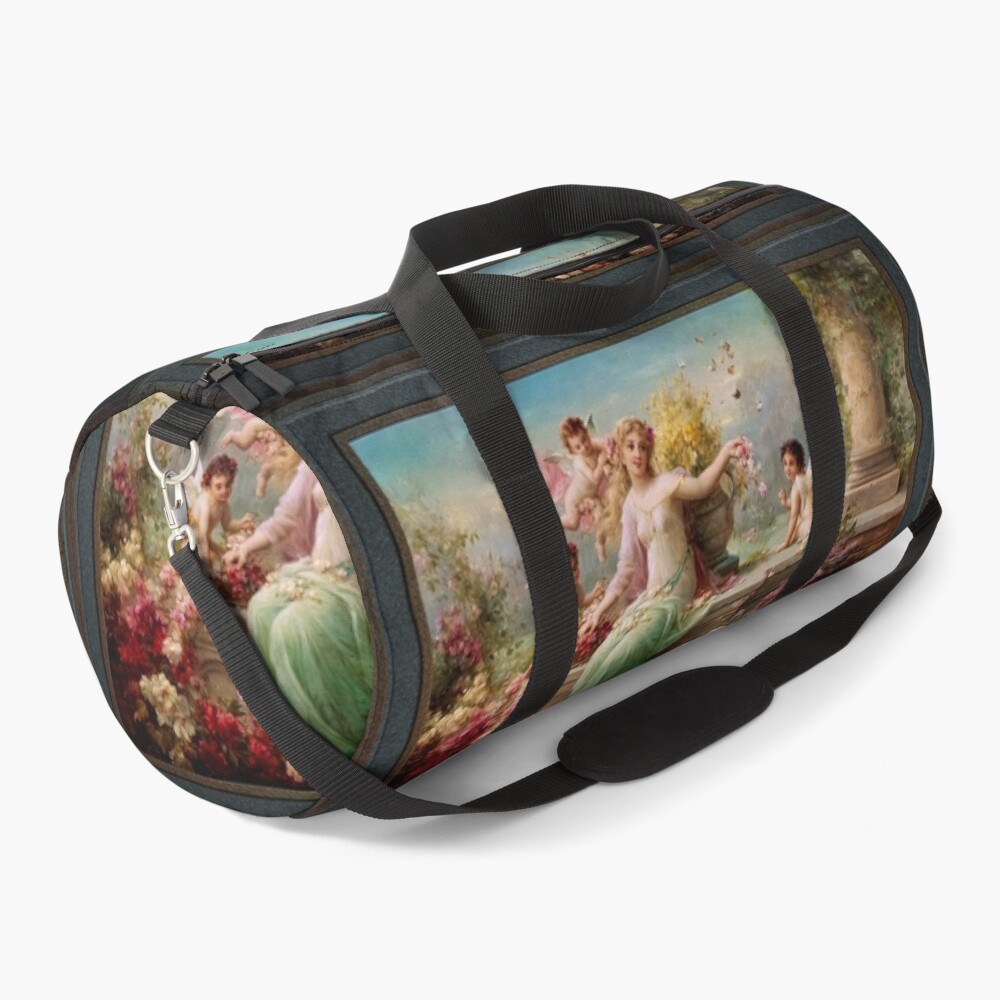
At the heart of the composition is a figure representing Flora, the Roman goddess of flowers and spring. She is depicted as an ethereal, young woman sitting serenely on a stone ledge, surrounded by an abundance of vibrant, blossoming flowers. Flora’s delicate, angelic figure is clad in a flowing gown made of soft pastel shades, predominantly green and pale pink, which complements the surrounding natural elements. The gown seems to ripple gently, as though caught in a soft breeze. Flora’s flowing hair is light, cascading down her back in loose, golden waves, further enhancing her connection to nature and the earth.
Stilling hennar, graceful and relaxed, radiates serenity as she gently scatters flowers into the wind. A variety of blossoms tumble from her hands, carried away by a breeze that stirs the surrounding environment. Her gaze is soft and inviting, directed toward the small winged cherubs, or putti, who surround her. Flora’s expression conveys peace and the joyful energy of spring, exuding both the vitality of nature and the quiet gentleness of a goddess connected to the earth’s rebirth.
The Cherubs and their Interaction
The painting features two cherubic figures who interact with Flora in playful yet innocent ways. The first cherub is perched on a nearby stone column, holding a small bouquet of flowers. His wings are delicate and transparent, shimmering in the sunlight. He appears to be watching Flora with wide, innocent eyes, eagerly awaiting the flowers she scatters into the air. His small, rounded form enhances the childlike purity and joy of the painting, adding a touch of innocence to the scene.
The second cherub, located nearer Flora, is seated on the ground, clutching a small cluster of flowers in one hand. His gaze is directed towards Flora, with a subtle, curious expression. Both figures are angelic in their appearance, with their wings spread out behind them, glowing as though illuminated by soft light. Their presence imbues the work with a sense of divine innocence, reinforcing the natural theme of birth and growth.
The Landscape and Terrain
Bakgrunnur af “Flora” is bathed in the soft light of a late afternoon, with a vast, lush garden stretching into the distance. Surrounding Flora are a rich array of colorful flowers—roses, daisies, liljur, and violets—all in full bloom. These vibrant colors are echoed throughout the painting, contributing to the lively yet harmonious atmosphere that dominates the composition.
A stone wall with a classical column on the right side of the painting creates a sense of depth, anchoring the figures in a defined space. The column’s intricate details—though not overtly emphasized—suggest a connection to classical architecture, a typical feature in Zatzka’s work, where mythological and historical references are often subtly integrated into the scene. The wall itself, which is covered in creeping ivy, evokes a timeless quality, blending both manmade and natural elements seamlessly.
The gentle rolling hills in the distance are bathed in soft, Golden Light, suggesting the dawn of spring. The sky is filled with delicate, wispy clouds, further enhancing the tranquil, idyllic mood of the painting. There is a distinct sense of harmony between Flora, the cherubs, and the surrounding environment, as if all are part of a divine cycle of nature.
Efni og tækni
Hans Zatzka was known for his skillful use of oil paints, og þetta verk er engin undantekning. The artist’s meticulous attention to detail is evident in every element of the painting, from the fine texture of Flora’s gown to the soft rendering of the cherubs’ skin and delicate wings. Zatzka’s use of light and shadow is masterful, creating a sense of depth and dimension within the composition. Ljósið, which seems to emanate from an unseen source, gently caresses the figures, illuminating their features and enhancing the ethereal atmosphere of the work.
Zatzka’s approach to color is also noteworthy. The soft pastel palette he employs is characteristic of the Romantic period, where naturalistic yet idealized colors were used to convey emotion and mood. The use of light greens, soft pinks, and pale yellows throughout the piece creates a warm, aðlaðandi andrúmsloft, further emphasizing the spring theme. The vibrancy of the flowers contrasts with the more subtle tones of the sky and stonework, enhancing the focus on Flora and her companions.
The background landscape is painted with a softness that suggests a dreamlike quality. The flowers and ivy are rendered with both precision and an airy lightness, further emphasizing the contrast between the detailed foreground figures and the slightly more abstract background. The fine brushstrokes and layering of paint add texture to the flora and fauna, enhancing the sense of realism while maintaining the idealized qualities typical of Zatzka’s work.
Stíllinn, Þema, og skap
“Flora” is a quintessential example of the Symbolist and Romantic styles that characterized much of European art in the late 19th century. The painting embodies the era’s fascination with mythological themes, the idealization of nature, and the portrayal of feminine beauty as a symbol of purity and divine grace. The presence of Flora as the central figure emphasizes this connection to the natural world and the divine, while the cherubs, with their angelic innocence, reinforce the themes of rebirth and renewal.
The overall mood of the painting is one of tranquility and joy. Mjúkt, dreamlike atmosphere invites the viewer into a serene and harmonious world where nature, fegurð, and mythological beings coexist peacefully. There is no sense of conflict or disturbance within the scene; í staðinn, there is an overarching sense of calm and joy, capturing the timeless essence of spring and the cycle of life.
Zatzka’s “Flora” offers a window into a world of idealized beauty, a world where nature’s rejuvenation is celebrated through the graceful figures of Flora and the cherubs who accompany her. The artwork is a perfect representation of the Romantic desire to capture the beauty of the natural world while also elevating it to a spiritual and timeless plane.
Þetta er endurgerð stafræn list af gömlum meistara eftirgerð af mynd sem er í almenningseign sem er fáanleg sem striga, akrýl, metal and wood print online.
Listamaður Bio fenginn frá Wikipedia.org
Hans Zatzka var stundum þekktur sem P. Ronsard, Pierre de Ronsard, eða H. Rafhlaða, og áritaði mörg verka hans sem Joseph Bernard, J. Bernard, eða Bernard Zatzka.
Tilgangur hinnar miklu dulnefna Zatzka var að forðast viðurlög vegna samningsrofs sem takmarkaði magn listaverka sem hann gæti selt..
Þetta hefur valdið því að sumir listgagnagrunnar hafa blandað saman verkum Zatzka undir dulnefninu Joseph Bernard við franska myndhöggvarann með sama nafni..
Hans Zatzka fæddist þann 8 mars 1859 í Vínarborg. Faðir hans Bartholomaüs var byggingarverkamaður, og móðir hans var Marie Karpischek Zatzka.
Milli 1877 og 1882, hann stundaði nám við Academie des Beaux-Arts, undir stjórn Christian Griepenkerl, Carl Wurzinger, og Karl von Blaas.
Zatzka gat aflað sér lífsviðurværis með framleiðslu á freskum fyrir kirkjur og aðrar stofnanir.
Í 1885, Zatzka var falið að búa til loftfresku The Naiad of Baden í Kurhaus Baden.
Mörg verka Zatzka voru trúarleg málverk og altarisstykki helguð ýmsum kirkjum í Austurríki..
Hins vegar, hann er þekktari fyrir myndir sínar af konum, álfar, og aðrar stórkostlegar senur.
Oft, hann myndi sækja innblástur í verk Richards Wagners og ævintýrum Grímsbræðra.
Í lok 19. og byrjun 20. aldar, nokkur verk eftir Zatzka voru ljósmynduð og gerð að póstkortum sem hægt er að safna fyrir.
Á 1920, Stíll Zatzka varð valinn skreytingur um alla Evrópu. Auk þess, Þrjátíu árin þar á undan héldu Zatzka uppreisn æru.