

Blodyn 1897: Campwaith Celf Nouveau
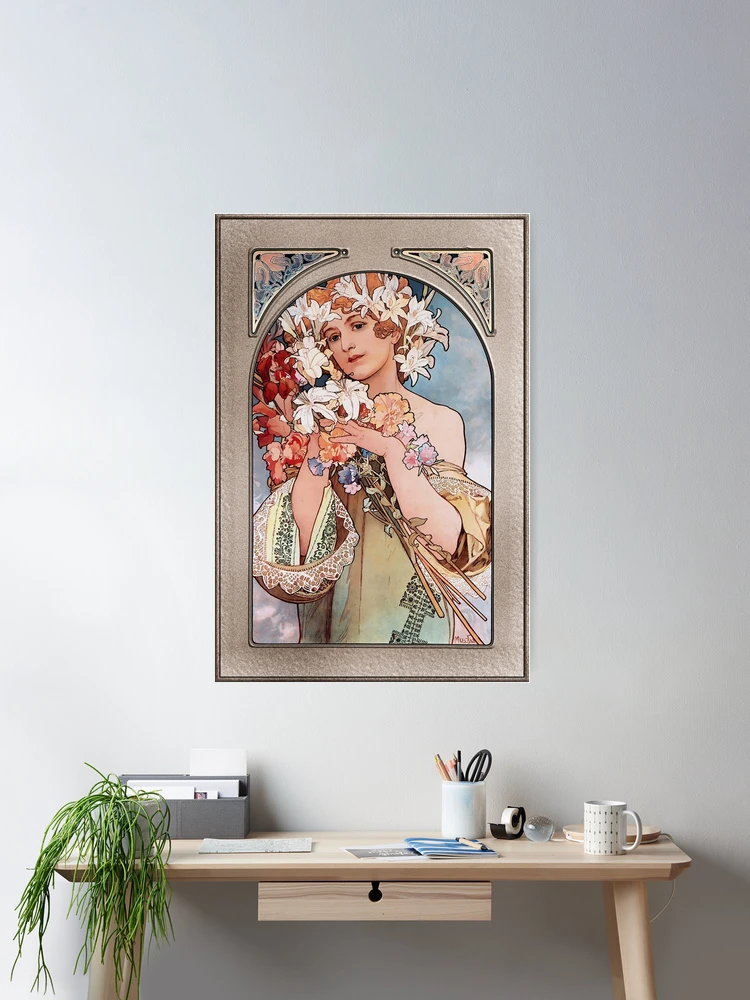
Blodyn 1897 yn waith rhagorol o gyfnod Art Nouveau, cyfuno ceinder, manylion addurniadol, a harddwch bron ethereal. Y darn, yn aml yn cael ei ystyried yn glasur yn ei gorff o waith, yn arddangos arddull nodedig Mucha a’i allu i asio’r byd naturiol â gras dynol. Alphonse Mucha (Alfons Maria Mucha: 1868 – 1938), peintiwr Tsiec, Daeth yn un o artistiaid mwyaf eiconig y mudiad Art Nouveau. Yn y naratif hwn bydd yn archwilio'r gwahanol elfennau yn Blodeuyn c1897, o'r prif bwnc i'r cefndir, defnyddiau, a naws y paentiad.
Tabl Cynnwys
Y prif bwnc: Gwraig mewn Cytgord â Natur
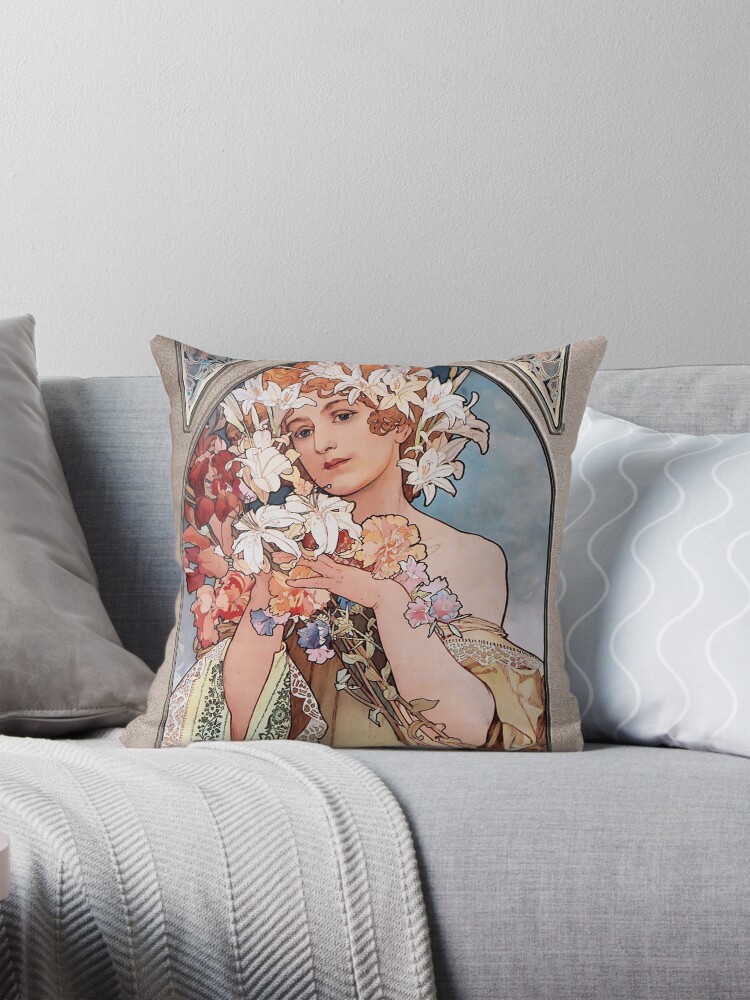
At the center of the painting is a beautiful woman, whose gentle and serene expression embodies the graceful qualities of femininity that were often idealized in Mucha’s work. She is the personification of spring and nature, a symbol of life, twf, ac adnewyddu. The woman holds an armful of blossoms, with flowers carefully arranged around her, creating a halo-like effect. Ei hir, flowing hair is adorned with flowers, further emphasizing the connection between her and the natural world. The combination of her delicate features, flowing attire, and floral adornment evokes a sense of purity, tranquility, and timeless beauty.
The woman’s attire is simple yet intricate, featuring soft, flowing fabrics with ornate lace detailing around her neckline and shoulders. This level of attention to the delicate textures of her garments speaks to Mucha’s commitment to creating a highly detailed, visually rich composition. The floral motifs on her clothing blend seamlessly with the flowers in her hair, reinforcing the theme of harmony between the human form and nature.
Symbolaeth Blodau: Blodau fel Iaith Bywyd
The flowers themselves play a crucial role in this painting, not just as decorative elements, but as symbols. Mucha was well-known for using flowers to represent different aspects of life, seasons, and even specific human emotions. Yn Blodyn 1897, the blossoms in the woman’s arms are lilies and other varieties, each carrying its own symbolic meaning. Lilies, er enghraifft, often symbolize purity and renewal, reinforcing the themes of spring and new beginnings.
The flowers are not merely an accessory to the figure but are integral to the composition, adding layers of meaning. They bring life and vibrancy to the painting, creating a connection between the seasons and the figure of the woman. The variety of colors in the flowers—ranging from the soft whites and yellows of the lilies to the rich reds and pinks of other blossoms—adds an element of dynamic contrast while still remaining harmonious in the overall composition.
Y cefndir: Ceinder Addurnol Art Nouveau
The background of the painting is distinctly Art Nouveau in style, characterized by its organic forms, llinellau llifo, and intricate detail. Unlike traditional landscapes, the background in Blodyn 1897 is not a natural scene but a decorative design that blends with the figure of the woman. The soft blues and greens behind her create a peaceful atmosphere, enhancing the overall sense of calm and serenity that the painting exudes.
The border around the painting is adorned with stylized floral patterns, echoing the motif of the flowers in the foreground. This frame not only serves as a visual boundary for the work but also as a continuation of the natural forms within the composition. The use of floral motifs in the border is a hallmark of Mucha’s style, where the frame itself becomes a part of the narrative, enveloping the figure and integrating the design into a cohesive whole.
Deunyddiau a Thechnegau: Manwl a Manwl
Mucha’s Blodyn 1897 was created using oil on canvas, a medium that allowed him to achieve the fine details that are so characteristic of his work. The smooth application of paint creates a delicate surface, giving the artwork a soft and luminous quality. The precision with which Mucha paints the lace, blodau, and the textures of the fabrics shows his mastery of the medium, capturing even the smallest details with remarkable skill.
The colors used in this painting are soft yet rich, with pastel tones contrasting with deeper, more vibrant hues. This creates a harmonious balance between light and shadow, with the use of muted tones in the background serving to emphasize the bright, lively colors of the flowers and the woman’s features. The overall composition is one of balanced beauty, with every detail carefully considered to contribute to the whole.
Thema: Prydferthwch Tragwyddol Natur a Benyweidd-dra
The primary theme of Blodyn 1897 is the timeless beauty of nature, as embodied by the figure of the woman. Mucha often depicted women in his paintings as symbols of idealized beauty and grace, ac nid yw'r darn hwn yn eithriad. Fodd bynnag, this painting also speaks to the connection between femininity and the natural world. The woman is not merely a figure placed amidst flowers; she is one with nature, her form and the blooms surrounding her blending in perfect harmony.
This theme is common in Art Nouveau, which sought to break away from rigid, traditional forms of art and instead celebrate the organic, flowing lines of nature. The fluidity of the lines in both the figure and the background creates a sense of movement and life, as though the painting itself is alive. The mood is peaceful and uplifting, cyfleu ymdeimlad o optimistiaeth a'r addewid o adnewyddiad a ddaw yn sgil newid y tymhorau.
Hwyliau: Serenity and Grace
Mae naws cyffredinol o Blodyn 1897 yn un o dawelwch a gras. Y meddal, mynegiant tyner y wraig, ynghyd â'r cefndir tawelu a blodau bywiog, yn creu awyrgylch heddychlon. Mae'r gwaith hwn yn gwahodd y gwyliwr i oedi a myfyrio, gan ennyn ymdeimlad o dawelwch a myfyrdod. Mae'r cydbwysedd rhwng yr elfennau blodeuog manwl a ffigwr cain y fenyw yn cyfleu ymdeimlad o harmoni, fel petai’r paentiad ei hun yn ymgorfforiad o gydbwysedd perffaith natur.
Nghasgliad
Blodyn 1897 gan Alphonse Mucha yn enghraifft syfrdanol o Art Nouveau ar ei orau. Mae'n dangos gallu'r artist i gyfuno harddwch, symbolaeth, a manylder cywrain yn gyfansoddiad cydlynol sy'n dathlu prydferthwch natur a benyweidd-dra. Trwy ei ddefnydd meistrolgar o liw, gwead, a symbolaeth, Mucha creates a work that continues to resonate with audiences, evoking feelings of tranquility, adnewyddu, and timeless beauty.
Mae hwn yn atgynhyrchiad hen feistri celf ddigidol wedi'i atgynhyrchu o ddelwedd parth cyhoeddus.
Y greadigaeth gelfyddyd ddigidol hon, fel gyda'r holl waith celf sydd i'w gael ar wefan Xzendor7 ar gael i'w brynu ar-lein mewn amrywiaeth o fformatau deunydd gan gynnwys printiau cynfas, printiau acrylig, printiau metel, printiau pren, printiau wedi'u fframio, posteri, ac fel printiau cynfas wedi'u rholio mewn amrywiaeth o feintiau o 12 modfedd i 72 modfeddi yn dibynnu ar faint y gwaith celf gwirioneddol a'r siop argraffu ar alw y byddwch yn dewis prynu'r celf ohoni.
Mae’r gwaith celf hefyd ar gael ar ystod eang o ddillad dynion a merched, mygiau, totes, sgarffiau, llyfrau nodiadau a chyfnodolion a llawer o gynhyrchion addurno cartref.