

Flùr 1897: A Masterpiece of Art Nouveau
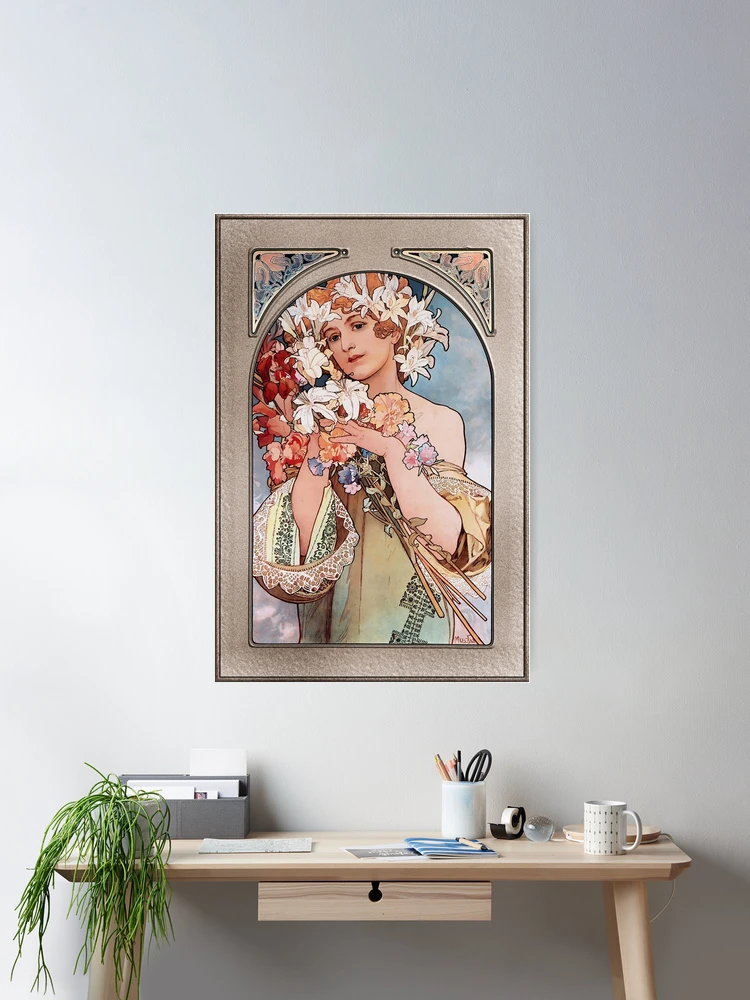
Flùr 1897 is an exemplary work of the Art Nouveau era, combining elegance, decorative detail, and an almost ethereal beauty. Am pìos, often regarded as a classic in his body of work, showcases Mucha’s distinctive style and his ability to fuse the natural world with human grace. Alphonse Mucha (Alfons Maria Mucha: 1868 – 1938), a Czech painter, became one of the most iconic artists of the Art Nouveau movement. In this narrative will explore the various elements in Flower c1897, from the main subject to the background, materials, and the mood of the painting.
Clàr-innse
Am Prìomh Chuspair: A Woman in Harmony with Nature
At the center of the painting is a beautiful woman, whose gentle and serene expression embodies the graceful qualities of femininity that were often idealized in Mucha’s work. She is the personification of spring and nature, a symbol of life, fàs, agus ùrachadh. The woman holds an armful of blossoms, with flowers carefully arranged around her, creating a halo-like effect. A h-o chionn fhada, flowing hair is adorned with flowers, further emphasizing the connection between her and the natural world. The combination of her delicate features, flowing attire, and floral adornment evokes a sense of purity, suaimhneas, agus bòidhchead gun ùine.
The woman’s attire is simple yet intricate, featuring soft, flowing fabrics with ornate lace detailing around her neckline and shoulders. This level of attention to the delicate textures of her garments speaks to Mucha’s commitment to creating a highly detailed, visually rich composition. The floral motifs on her clothing blend seamlessly with the flowers in her hair, reinforcing the theme of harmony between the human form and nature.
Floral Symbolism: Flowers as Life’s Language
The flowers themselves play a crucial role in this painting, not just as decorative elements, but as symbols. Mucha was well-known for using flowers to represent different aspects of life, seasons, and even specific human emotions. Ann an Flùr 1897, the blossoms in the woman’s arms are lilies and other varieties, each carrying its own symbolic meaning. Lilies, mar eisimpleir, often symbolize purity and renewal, reinforcing the themes of spring and new beginnings.
The flowers are not merely an accessory to the figure but are integral to the composition, adding layers of meaning. They bring life and vibrancy to the painting, creating a connection between the seasons and the figure of the woman. The variety of colors in the flowers—ranging from the soft whites and yellows of the lilies to the rich reds and pinks of other blossoms—adds an element of dynamic contrast while still remaining harmonious in the overall composition.
An Cùl-fhiosrachadh: Art Nouveau’s Decorative Elegance
The background of the painting is distinctly Art Nouveau in style, characterized by its organic forms, loidhnichean sruthadh, and intricate detail. Unlike traditional landscapes, the background in Flùr 1897 is not a natural scene but a decorative design that blends with the figure of the woman. The soft blues and greens behind her create a peaceful atmosphere, enhancing the overall sense of calm and serenity that the painting exudes.
The border around the painting is adorned with stylized floral patterns, echoing the motif of the flowers in the foreground. This frame not only serves as a visual boundary for the work but also as a continuation of the natural forms within the composition. The use of floral motifs in the border is a hallmark of Mucha’s style, where the frame itself becomes a part of the narrative, enveloping the figure and integrating the design into a cohesive whole.
Stuthan agus dhòighean: Precision and Detail
mòran Flùr 1897 was created using oil on canvas, a medium that allowed him to achieve the fine details that are so characteristic of his work. The smooth application of paint creates a delicate surface, giving the artwork a soft and luminous quality. The precision with which Mucha paints the lace, flùraichean, and the textures of the fabrics shows his mastery of the medium, capturing even the smallest details with remarkable skill.
The colors used in this painting are soft yet rich, with pastel tones contrasting with deeper, more vibrant hues. This creates a harmonious balance between light and shadow, with the use of muted tones in the background serving to emphasize the bright, lively colors of the flowers and the woman’s features. The overall composition is one of balanced beauty, with every detail carefully considered to contribute to the whole.
Cuspair: The Eternal Beauty of Nature and Femininity
The primary theme of Flùr 1897 is the timeless beauty of nature, as embodied by the figure of the woman. Mucha often depicted women in his paintings as symbols of idealized beauty and grace, agus tha am pìos seo mar eisgeachd. Ach, this painting also speaks to the connection between femininity and the natural world. The woman is not merely a figure placed amidst flowers; she is one with nature, her form and the blooms surrounding her blending in perfect harmony.
This theme is common in Art Nouveau, which sought to break away from rigid, traditional forms of art and instead celebrate the organic, flowing lines of nature. The fluidity of the lines in both the figure and the background creates a sense of movement and life, as though the painting itself is alive. The mood is peaceful and uplifting, conveying a sense of optimism and the promise of renewal that comes with the changing of seasons.
Mood: Serenity and Grace
An fhaireachdainn iomlan de Flùr 1897 is one of serenity and grace. Am bog, gentle expression of the woman, coupled with the calming background and vibrant flowers, creates a peaceful atmosphere. This work invites the viewer to pause and reflect, evoking a sense of calm and contemplation. The balance between the detailed floral elements and the delicate figure of the woman conveys a sense of harmony, as though the painting itself is an embodiment of nature’s perfect balance.
Co-dhùnadh
Flùr 1897 by Alphonse Mucha is a stunning example of Art Nouveau at its finest. It showcases the artist’s ability to combine beauty, samhlachadh, and intricate detail into a cohesive composition that celebrates the beauty of nature and femininity. Through his masterful use of color, inneach, agus samhlaidheachd, Mucha creates a work that continues to resonate with audiences, a’ togail faireachdainnean de shàmhchair, ath-nuadhachadh, agus bòidhchead gun ùine.
Is e seo ath-riochdachadh seann mhaighstirean ealain didseatach ath-riochdachadh de ìomhaigh raon poblach.
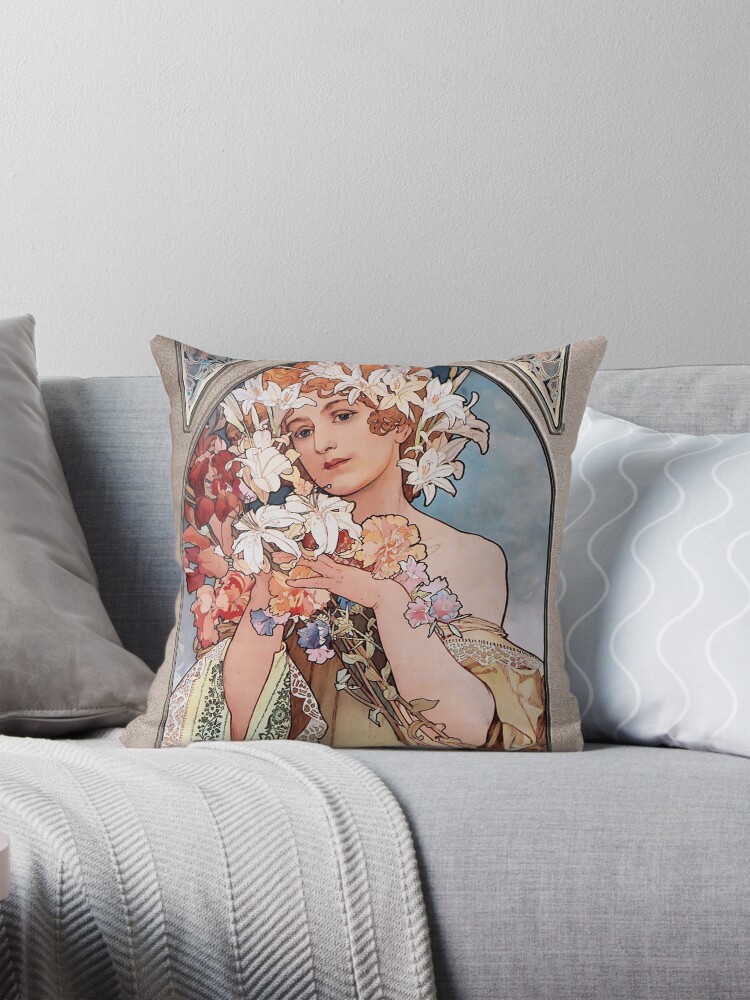
An cruthachadh ealain didseatach seo, mar a tha leis a h-uile obair-ealain a gheibhear air làrach-lìn Xzendor7 ri fhaighinn airson a cheannach air-loidhne ann an grunn chruthan stuth a’ gabhail a-steach clò-bhualaidhean canabhas, dealbhan acrylic, clò-bhualaidhean meatailt, clò-bhualaidhean fiodha, lèileagan frèam, postairean, agus mar clò-bhualaidhean canabhas rollaichte ann an caochladh mheudan bho 12 òirlich gu 72 òirlich a rèir meud an fhìor obair-ealain agus a’ bhùth clò-bhualaidh air iarrtas a thaghas tu airson an ealain a cheannach.
Tha an obair-ealain cuideachd ri fhaighinn air raon farsaing de dh’ aodach fireannaich is boireannaich, mugaichean, toitean, sgarfaichean, leabhraichean notaichean agus irisean agus mòran stuthan sgeadachaidh dachaigh.