

Bláthanna Gairdíní
Réamhrá don Saothar Ealaíne
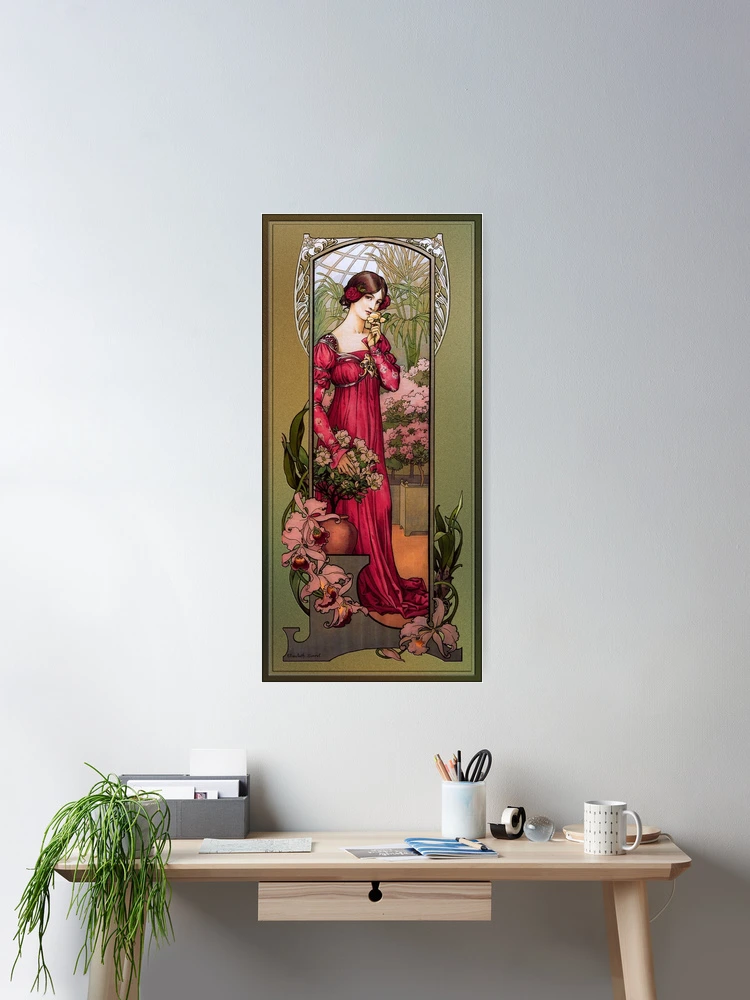
An phéintéireacht dar teideal Bláthanna Gairdíní, cruthaithe timpeall 1900 ag ealaíontóir Francach Elisabeth Sonrel, mar eiseamláir de stíl Art Nouveau lena chumasc scagtha den dúlra agus den ghrásta baininscneach. Elisabeth Sonrel (1874–1953) péintéir cumasach a bhí ann, cosúil le healaíontóirí eile a linne, rinne sí iarracht na healaíona maisiúla agus gnéithe nádúrtha a chomhtháthú ina cuid oibre, ag cruthú léirithe suaimhneacha idéalaithe de mhná ar aon dul lena dtimpeallacht. Bláthanna Gairdíní mar theist ar an máistreacht atá ag Sonrel ar áilleacht a ghabháil, i bhfoirm dhaonna agus sa domhan nádúrtha araon, laistigh de chreat an-stílithe.
Sa phíosa seo, Cuireann an t-ealaíontóir bean óg i láthair i measc gairdín breá lán le bláthanna faoi bhláth, ag cruthú braistint na síochána, bog, agus elegance timeless. Baineann an saothar leis an idirthréimhse ó dheireadh an 19ú haois agus tús an 20ú haois, nuair a thosaigh ealaíontóirí ag triail le heilimintí níos maisiúla ina gcuid oibre, ag socrú an stáitse le go dtiocfaidh rath ar ghluaiseacht Art Nouveau.
Clár na nÁbhar
An Fíor Lárnach: An Bhean sa Ghairdín
Is í an bhean ghalánta pointe fócasach an phéinteáil, atá ina seasamh i measc gairdín de phlandaí faoi bhláth. Súil sí beagán go dtí an taobh, go réidh a bhfuil bláth ar a liopaí. Smaoineamh ciúin is ea a léiriú, beagnach amhail is dá mba rud é go bhfuil sí caillte sa smaoineamh, ag déanamh ar an lucht féachana machnamh a dhéanamh ar cad a d'fhéadfadh sí a bheith ag smaoineamh. Úsáideann an t-ealaíontóir bog, línte sreabhach chun an figiúr íogair a chruthú, accentuating a cairde agus áilleacht. Tá a posture maorga, fós suaimhneach, mar cé go bhfuil sí ar cheann leis na bláthanna timpeall uirthi.
Tá an bhean gléasta i gúna sileadh de bándearg domhain, rud a chuireann lena rómánsúil, cuma beagnach ethereal. An gúna, lena fillteacha casta agus fabraic bhog, Comhlánaíonn sí a gnéithe íogair. Muinchí fada a gúna, a bhailiú beagán ag na chaol na láimhe, femininity milis ach scagtha a mholadh, agus cuireann na bláthanna íogair ar dhath na rósaí ina cuid gruaige sraith bhreise de rómánsachas agus nasc leis an timpeallacht bhláthanna. Tá tuiscint ar easpa ama fúithi, mar cé go bhféadfadh sí a bheith ann in aon ré, ag cuimsiú idéalach na háilleachta agus na suanachta a d'fhéach Sonrel lena léiriú.
An Suíomh Bláthach agus Luibheolaíoch
An suíomh gairdín i Bláthanna Gairdíní tá lush agus mionsonraithe, agus tá ról ríthábhachtach aige maidir le téama foriomlán an phéintéireachta a fheabhsú. Timpeall an fhigiúr lárnach tá líon mór bláthanna ag céimeanna éagsúla den bhláth. Cóngaracht na mná do na plandaí seo, mar aon lena idirghníomhú tairisceana leo, suggests a deep connection between the human and natural worlds. The flowers, though not named specifically, are painted with exquisite detail, and they seem to spring to life with every brushstroke. Their delicate petals, some of which are white or pale pink, contribute to the overall softness of the scene, reinforcing the tranquility of the moment.
The garden setting itself is depicted as a tranquil, slightly enclosed space, with the glass structure in the background resembling a greenhouse or garden conservatory. The latticework of the glass and the intertwining plants visible through it provide a sense of depth and structure within the composition. The background setting, with its muted greens and beiges, contrasts with the vibrant colors of the flowers and the woman’s gown, aird a tharraingt ar an bhfigiúr lárnach gan ró-chumhacht a dhéanamh ar an ardán.
Ag coirnéil íochtair an phéinteáil, blásanna móra - b'fhéidir magairlíní - cuir ciseal eile castachta agus spéise leis an bpíosa. Léiriú casta de na bláthanna seo, lena gcuar sinuous agus foirm galánta, macalla línte sileadh gúna agus gruaig na mná, eilimintí daonna agus nádúrtha a chumasc tuilleadh.
Ábhair agus Teicníc
Teicníc Sonrel i Bláthanna Gairdíní léiríonn sí a scil chun comhréiteach a chruthú idir dathanna, líne, agus foirm. Tá an phéintéireacht rindreáilte le bog, línte sreafa atá tipiciúil i stíl Art Nouveau, is minic a bhíonn i bhfabhar cruthanna orgánacha agus béim ar mhaisiú. Úsáid toin pastel - bándearg bog, glasaigh, agus buí geal - cruthaíonn sé serene, atmaisféar beagnach dreamlike. Cuireann gile an pailéad dathanna le mothú íogaireacht agus elegance, amhail is dá mbeadh an comhdhéanamh iomlán ann i reverie síochánta.
Tá láimhseáil solais agus scáth an ealaíontóra caolchúiseach ach éifeachtach. Tugann an scáthú bog timpeall an fhigiúir agus na bláthanna cúlra le fios go bhfuil sé milis, foinse solais idirleata, mar go bhfuil an bhean sáite faoi sholas na gréine tráthnóna déanach. Fágann easpa scáthanna crua an phéintéireacht bog, ag tabhairt cuireadh do cháilíocht, ag treisiú an giúmar suaimhneach.
An Meon agus an Téama
An giúmar de Bláthanna Gairdíní ar cheann de chéile, grásta, agus machnamh. Béim an ealaíontóra ar bhean óg i ngairdín síochánta, timpeallaithe ag bláthanna faoi bhláth, labhraíonn sé le téamaí níos leithne na háilleachta nádúrtha agus idéalú na feimineach. Cruthaíonn Sonrel timpeallacht atá ní hamháin taitneamhach ó thaobh amhairc ach atá allabhrach go mothúchánach. Tugtar cuireadh don lucht féachana sos agus machnamh a dhéanamh ar áilleacht nádúrtha an domhain, agus an bealach inar féidir leis an duine idirghníomhú leis an domhan nádúrtha agus meas a bheith aige uirthi ar bhealach íogair, bhealach beagnach spioradálta.
Tá téama na femininity i réim ar fud an tsaothair ealaíne, agus an bhean léirithe mar an figiúr lárnach na háilleachta agus cairde. Ní hamháin gur ábhar éighníomhach admhála í ach ina ionad sin tá sí gafa go gníomhach lena timpeallacht, ag coinneáil bláth amhail is dá mba síneadh í féin é. Tugann an idirghníomhaíocht seo le fios go bhfuil baint níos doimhne aige leis an dúlra, téama a fhaightear go minic i saothair ealaíontóirí Art Nouveau.
Tá cáilíocht gan teorainn ag péinteáil Sonrel freisin, amhail is dá mba le haon ré ina raibh cáil ar áilleacht agus ar nádúr. An gairdín, lena siombalachas saibhir, tagraíonn sé do théamaí fáis, athnuachan, agus timthriallta na beatha, while the woman’s elegant pose conveys a sense of enduring beauty that transcends time.
Conclúid
Élisabeth Sonrel’s Bláthanna Gairdíní is a masterful representation of Art Nouveau’s emphasis on beauty, nádúr, and the female form. The artist’s ability to capture the soft harmony between the woman and her floral surroundings speaks to her deep understanding of both the natural world and human grace. The painting evokes a mood of serenity and timeless elegance, offering the viewer a moment of reflection and appreciation for the simple yet profound beauty of nature. Through her skillful use of color, líne, agus foirm, Sonrel invites us to experience a world where beauty is both delicate and enduring, where humans and nature exist in a perfect, harmonious balance.
Is éard atá i Flowers Of Gardens ná seanmháistrí ealaíne digiteacha atá in-atáirgthe ar íomhá fearainn phoiblí.
Faoin Ealaíontóir
Eolas Thíos Cúirtéis Wikipedia.org
Elisabeth Sonrel (1874 Turais - 1953 Séalaí) péintéir agus maisitheoir Francach i stíl Art Nouveau a bhí ann. I measc a cuid saothar bhí ábhair chomhréireacha, misteachas agus siombalachas, portráidí agus tírdhreacha.
Ba iníon í le Nicolas Stéphane Sonrel, péintéir ó Turais, agus fuair sí a luathoiliúint uaidh. Le haghaidh tuilleadh staidéir chuaigh sí ar aghaidh go Páras mar mhac léinn le Jules Lefebvre ag an Ecole des Beaux-Arts.
I 1892 phéinteáil sí a cuid oibre dioplóma, ‘Pax et Labour’, saothar le feiceáil ag an Musée des Beaux-Arts de Tours. As sin amach chuir sí taispeántas ag an Salon des Artistes Français idir 1893 agus 1941, uiscedhathanna móra a bhí ina píosaí sínithe ar bhealach Réamh-Raphaelite, a ghlac sí tar éis turas go Florence agus an Róimh, ag fáil amach péintéirí na hAthbheochana – cuid de a cuid oibre le huaireanta soiléire Botticelli. Ba mhinic a spreag a cuid pictiúr rómánsaíocht Airtéanach, Coiméide Dhiaga Dante Alighieri’ agus 'An Saol Nua', téamaí Bhíobla, agus finscéalta meánaoiseacha. I measc a cuid saothar mistéireach tá ‘Ames errantes’ (Salon de 1894) agus ‘Biotáille an Abyss’ (Salon de 1899) agus "Bean óg leis an taipéis".
Ag an Exposition Universelle de 1900, Art Nouveau an príomhthéama a bhí aige, léi 1895 ag péinteáil ‘Codladh na Maighdine’ (Codladh na Maighdine), bronnadh bonn cré-umha air, agus duais Henri Lehmann de 3000 franc le Acadamh na nEalaíon Mín.[3] Ó 1900 ar aghaidh chuir sí a péintéireacht teoranta do phortráidí, tírdhreacha áille sa Bhriotáin, agus an staidéar bláthanna ó am go chéile.
Thug sí turais phéintéireachta rialta go dtí an Bhriotáin, spreagtha ag foraois Brocéliande, agus ó 1910 chuig áiteanna éagsúla ar an gcósta mar Concarneau, Plougastel, Pont-l'Abbé agus Loctudy, go minic ag fanacht i dtithe ósta agus in éineacht le mac léinn nó dhó. Phéinteáil sí roinnt saothar i Le Faouët sular thóg sí Villa i La Baule sna 1930idí. Ag obair go príomha i uiscedhath agus gouache, fuair sí soláthar réidh samhlacha i measc cailíní óga an cheantair, agus fuair siad go raibh Bretons cairdiúil go ginearálta, macánta agus féinmhuiníneach.
Bhí a taispeántas deiridh ag an Salon i 1941 ag aois 67. Tá taifead ann freisin gur thaispeáin sí i Learpholl. Ina blianta tosaigh chuir Sonrel póstaeir ar fáil, cártaí poist agus léaráidí, i stíl Art Nouveau.