

פרחי גנים
מבוא ליצירות האמנות
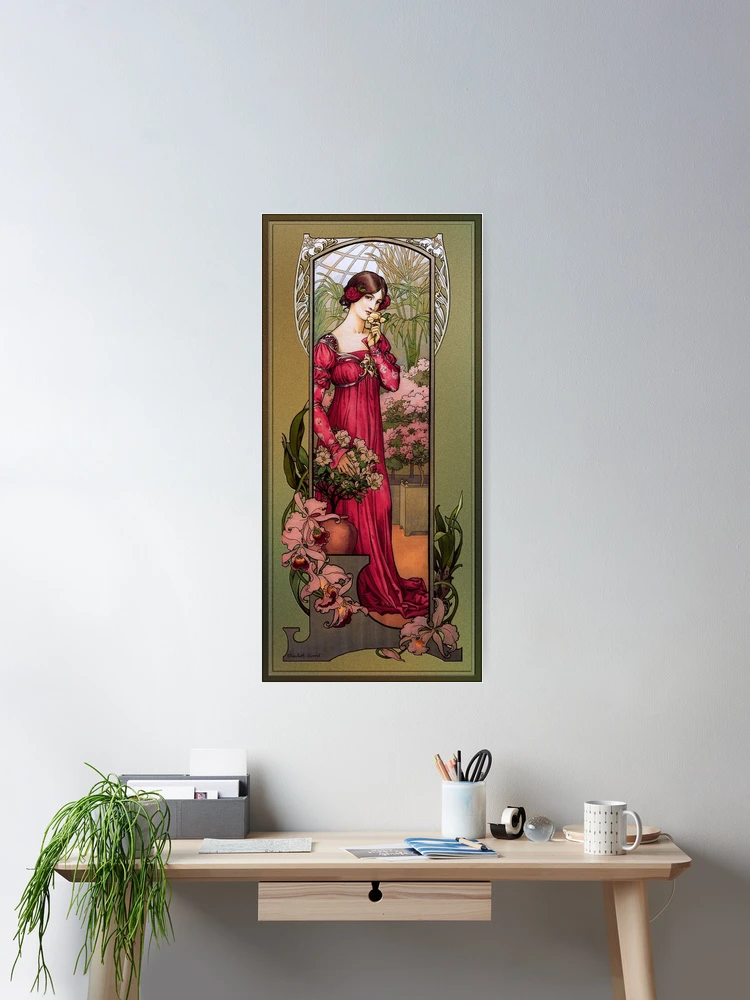
הציור שכותרתו פרחי גנים, נוצר מסביב 1900 מאת אמן צרפתי אליזבת סונרל, מדגים את סגנון הארט נובו עם השילוב המעודן שלו של טבע וחן נשי. אליזבת סונרל (1874-1953) היה צייר מוכשר ש, בדומה לאמנים אחרים בתקופתה, ביקשה לשלב אומנויות דקורטיביות ואלמנטים טבעיים בעבודתה, יצירת תיאורים שלווים ואידיאליים של נשים בהרמוניה עם סביבתן. פרחי גנים מהווה עדות לשליטה של סונרל בלכידת היופי, הן בצורת האדם והן בעולם הטבע, בגבולות של מסגרת מסוגננת ביותר.
בקטע הזה, האמנית מציגה אישה צעירה בתוך גן שופע מלא בפרחים פורחים, ליצור תחושת שלווה, רוֹך, ואלגנטיות נצחית. היצירה שייכת לתקופת המעבר של סוף המאה ה-19 ותחילת המאה ה-20, when artists began to experiment with more decorative elements in their work, setting the stage for the Art Nouveau movement to flourish.
תוכן העניינים
הדמות המרכזית: The Woman in the Garden
The focal point of the painting is the elegant woman, who stands poised amidst a garden of flourishing plants. She gazes slightly off to the side, gently holding a flower to her lips. Her expression is one of quiet contemplation, almost as if she is lost in thought, making the viewer ponder what she may be contemplating. The artist uses soft, fluid lines to create the delicate figure, accentuating her grace and beauty. Her posture is stately, yet relaxed, as though she is one with the flowers around her.
The woman is dressed in a flowing gown of deep pink, which enhances her romantic, almost ethereal appearance. השמלה, with its intricate folds and soft fabric, complements her delicate features. The long sleeves of her dress, which gather slightly at the wrists, suggest a gentle yet refined femininity, while the delicate rose-colored flowers in her hair add an extra layer of romanticism and connection to the floral surroundings. There is a sense of timelessness about her, as though she could exist in any era, embodying the ideal of beauty and serenity that Sonrel sought to portray.
The Floral and Botanical Setting
The garden setting in פרחי גנים is lush and detailed, and it plays a crucial role in enhancing the overall theme of the painting. Surrounding the central figure is a profusion of flowers in various stages of bloom. The woman’s proximity to these plants, coupled with her tender interaction with them, suggests a deep connection between the human and natural worlds. הפרחים, though not named specifically, are painted with exquisite detail, and they seem to spring to life with every brushstroke. Their delicate petals, some of which are white or pale pink, contribute to the overall softness of the scene, reinforcing the tranquility of the moment.
The garden setting itself is depicted as a tranquil, slightly enclosed space, with the glass structure in the background resembling a greenhouse or garden conservatory. The latticework of the glass and the intertwining plants visible through it provide a sense of depth and structure within the composition. The background setting, with its muted greens and beiges, contrasts with the vibrant colors of the flowers and the woman’s gown, drawing attention to the central figure without overpowering the scene.
At the lower corners of the painting, large blooms—perhaps orchids—add another layer of complexity and interest to the piece. The intricate depiction of these flowers, with their sinuous curves and graceful form, echoes the flowing lines of the woman’s gown and hair, further blending human and natural elements.
חומרים וטכניקה
Sonrel’s technique in פרחי גנים reflects her skill in creating harmony between color, קַו, וצורה. The painting is rendered with soft, flowing lines typical of the Art Nouveau style, which often favors organic shapes and an emphasis on decoration. The use of pastel tones—soft pinks, יְרָקוֹת, and pale yellows—creates a serene, אווירה כמעט חלומית. הקלילות של פלטת הצבעים מוסיפה לתחושת העדינות והאלגנטיות, כאילו הקומפוזיציה כולה קיימת בהוויה שלווה.
הטיפול של האמן באור ובצל הוא עדין אך יעיל. ההצללה הרכה סביב הדמות ופרחי הרקע מרמזים על עדין, מקור אור מפוזר, כאילו האישה רוחצת בזוהר של שמש מאוחרת אחר הצהריים. היעדר צללים קשים נותן לציור רך, איכות מזמינה, מחזק את מצב הרוח הרגוע.
מצב הרוח והנושא
מצב הרוח של פרחי גנים הוא אחד של הרמוניה, חן, והשתקפות. הדגש של האמנית על אישה צעירה בגן שליו, מוקף בפרחים פורחים, מדבר על הנושאים הרחבים יותר של יופי טבעי ואידיאליזציה של נשיות. Sonrel יוצר סביבה שהיא לא רק מהנה ויזואלית אלא מעוררת רגשית. The viewer is invited to pause and reflect on the natural beauty of the world, and the way in which human beings can interact with and appreciate the natural world in a delicate, almost spiritual way.
The theme of femininity is prevalent throughout the artwork, with the woman portrayed as the central figure of beauty and grace. She is not merely a passive object of admiration but is instead actively engaged with her surroundings, holding a flower as if it were an extension of herself. This interaction suggests a deeper connection with nature, a theme often found in the works of Art Nouveau artists.
Sonrel’s painting also carries a timeless quality, as if the scene could belong to any era in which beauty and nature were revered. The garden, with its rich symbolism, alludes to themes of growth, הִתחַדְשׁוּת, and the cycles of life, while the woman’s elegant pose conveys a sense of enduring beauty that transcends time.
מַסְקָנָה
Élisabeth Sonrel’s פרחי גנים is a masterful representation of Art Nouveau’s emphasis on beauty, טֶבַע, and the female form. The artist’s ability to capture the soft harmony between the woman and her floral surroundings speaks to her deep understanding of both the natural world and human grace. The painting evokes a mood of serenity and timeless elegance, offering the viewer a moment of reflection and appreciation for the simple yet profound beauty of nature. Through her skillful use of color, קַו, וצורה, Sonrel invites us to experience a world where beauty is both delicate and enduring, where humans and nature exist in a perfect, harmonious balance.
Flowers Of Gardens הוא רפרודוקציה של אומנות דיגיטלית עתיקת יומין של תמונה ברשות הרבים.
על האמן
מידע למטה באדיבות Wikipedia.org
אליזבת סונרל (1874 סיורים - 1953 כלבי ים) היה צייר ומאייר צרפתי בסגנון אר -נובו. עבודותיה כללו נושאים אלגוריים, מיסטיקה וסמליות, דיוקנאות ונופים.
היא הייתה בתו של ניקולא סטפן סונרל, צייר מטורס, וקיבלה ממנו את ההכשרה המוקדמת שלה. להמשך לימודיה המשיכה לפריז כסטודנטית של ז'ול לפבר בבית הספר לאמנויות.
ב 1892 היא ציירה את עבודות הדיפלומה שלה, 'Pax et Labor', יצירה שניתן לראות במוזיאון לאמנויות דה טורס. מכאן ואילך הציגה בסלון דה ארטס פרנסאי בין 1893 ו 1941, יצירות החתימה שלה הן צבעי מים גדולים באופן טרום רפאלי, אותו אימצה לאחר טיול בפירנצה ורומא, לגלות את ציירי הרנסנס – חלק מעבודותיה בעלות צללים ברורים של בוטיצ'לי. הציורים שלה היו לעתים קרובות בהשראת רומנטיקה ארתורית, הקומדיה האלוהית של דנטה אליגיירי’ ו"החיים החדשים ", נושאים מקראיים, ואגדות מימי הביניים. עבודותיה המיסטיות כוללות את 'איימס errantes'’ (סלון של 1894) ו'רוחות התהום '’ (סלון של 1899) ו"צעירה עם השטיח ".
ב- Universelle התערוכה של 1900, הנושא העיקרי שלו היה ארט נובו, שֶׁלָה 1895 ציור "שנת הבתולה"’ (שינה של הבתולה), זכתה במדליית ארד, ופרס אנרי להמן של 3000 פרנק על ידי האקדמיה לאמנויות יפות.[3] מ 1900 ואילך הגבילה את ציוריה לדיוקנאות, נופי בריטני מרהיבים, ומחקר פרחים מדי פעם.
היא ערכה טיולי ציור קבועים לבריטני, בהשראת היער ברוסליאנדה, ומ 1910 למקומות שונים בחוף כגון קונקרנו, פלוגסטל, Pont-l'Abbé ו- Loctudy, מתארחים לעתים קרובות בפונדקים ומלווים על ידי סטודנט אחד או שניים. היא ציירה מספר עבודות בלה פאואה לפני שבנתה וילה בלה באולה בשנות השלושים. עובד בעיקר בצבעי מים וגואש, היא גילתה היצע מוכן של דוגמניות בקרב נערות צעירות באזור, ומצאו שברטונים בדרך כלל ידידותיים, כנה ובטוחה בעצמה.
התערוכה האחרונה שלה בסלון הייתה ב 1941 בגיל 67. יש גם תיעוד שהיא הציגה בליברפול. בשנותיה הראשונות ייצרה סונר כרזות, גלויות ואיורים, בסגנון ארט נובו.