

Fruit
Wstęp
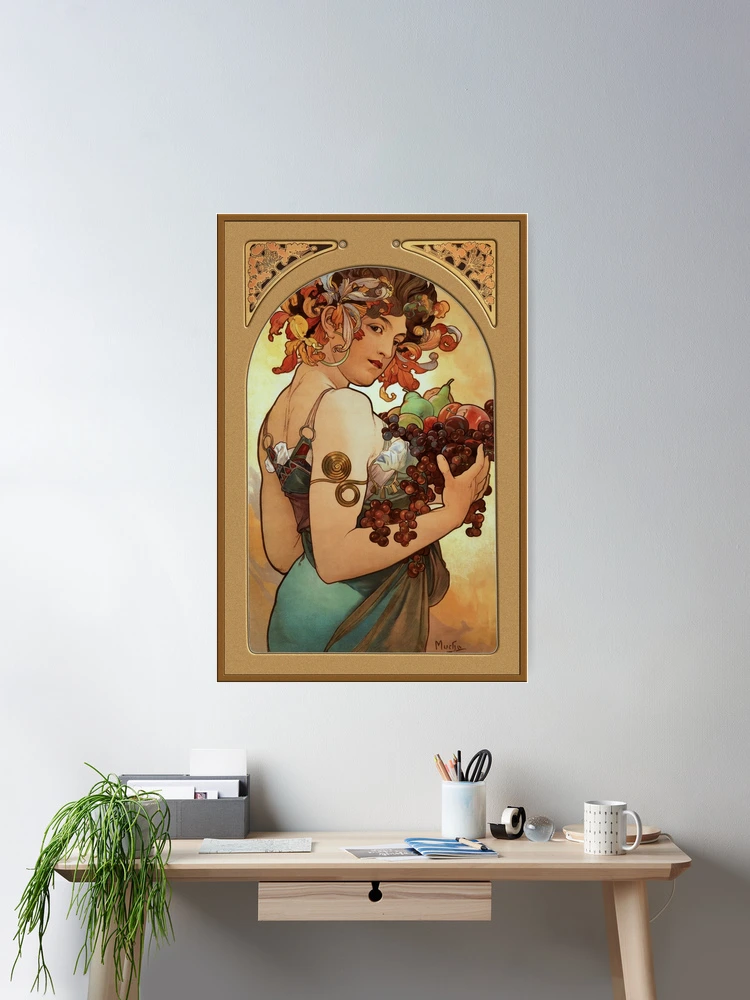
“Fruit” is one of the notable works of Czech painter and illustrator Alphonse Mucha (1860 – 1939), stworzony w 1897 during the height of his involvement with the Art Nouveau movement. Mucha’s work in this period is a perfect reflection of the artistic ideals of the late 19th century, łącząc piękno, harmonia, and the celebration of natural elements through flowing forms and intricate designs. The piece exemplifies Mucha’s distinctive style, blending decorative art with rich symbolism and a deep connection to the natural world.
Spis treści
Styl i technika
Mucha’s art is often recognized by its elegant, płynne linie, vivid colors, and ornate compositions. ten “Fruit” painting is no exception. The piece features Mucha’s signature use of harmonious color palettes, with subtle transitions from earth tones to vibrant jewel hues. The painter has carefully balanced the subjects of the piece, surrounding the central figure with fruits and natural elements, all rendered with delicate detail.
The use of flat, flowing lines is typical of the Art Nouveau style, where the natural world is often interpreted in stylized forms that emphasize beauty and organic rhythm. Mucha incorporates decorative elements around the figure of the woman, creating a design that is both a portrait and a celebration of nature. The result is a unified composition where form and function complement each other. Mucha’s talent for bringing depth to the scene, despite the use of a relatively shallow space, is also a notable feature of his work.
Główny temat: Kobieta i jej związek z naturą
The central figure of the painting is a young woman, who stands at the intersection of human beauty and nature’s bounty. She gazes serenely over her shoulder, her face partially turned, inviting the viewer to contemplate both her and the world of fruit that she holds. Włosy kobiety, a cascade of rich, warm hues, mimics the flow of natural elements, resembling foliage or even the swirl of winds. These elements further reinforce the theme of fertility and abundance that is central to the painting.
Dressed in a gown that flows with elegant curves, the woman’s attire, although simple, is designed with attention to detail. The design of her garment echoes the same swirling and floral motifs that characterize the Art Nouveau style, further blurring the lines between her figure and the surrounding natural world. The intricate swirls in her clothing tie her to the overarching design, suggesting a symbiosis between her and the fruit.
The Fruits: Symbols of Abundance and Sensuality
Mucha’s focus on fruit in this work is not merely decorative but deeply symbolic. Fruits, in art, have historically represented abundance, płodność, and the pleasures of the earth. W tym kawałku, Mucha places clusters of ripe grapes, jabłka, and pears in the woman’s embrace, directly linking her to the earth’s bounty. The fruits, painted with great care and precision, are imbued with vitality and warmth. The glossy skins of the fruits seem almost tactile, inviting the viewer to imagine their texture and scent.
The use of fruit in the composition can be seen as a celebration of life’s pleasures, but it also reflects Mucha’s interest in the cycles of nature—how growth and decay coexist. Winogrona, a symbol of abundance, can also imply the passage of time, particularly in the context of the changing seasons. Such symbolism aligns with the overall mood of the painting, where the lushness of the harvest is acknowledged alongside the inevitability of nature’s cycles.
The Composition and Mood
The composition of “Fruit” is carefully constructed to draw attention to the main figure while allowing the surrounding elements to come together in harmony. The framing of the piece, reminiscent of an ornate, decorative border, is typical of Mucha’s work. The circular shape, combined with floral motifs, enhances the idea of nature as a self-contained cycle, emphasizing the circular movement of life and growth. The woman’s positioning within this frame strengthens her connection to the earth and its cycles.
The overall mood of the painting is one of peace, płodność, and abundance. Miękkie, warm colors evoke a sense of comfort, while the smooth, almost ethereal lines give the piece a dreamlike quality. There is a gentle yet confident strength in the figure of the woman, kto, despite being surrounded by a rich display of fruits, is not overwhelmed by them. Zamiast , she appears to embody the qualities of the harvest, as though she herself is the personification of nature’s fecundity.
The Border and Decorative Elements
The border surrounding the central image is a key aspect of the artwork’s aesthetic. It features intricate patterns that weave through floral motifs and curved forms. These elements help reinforce the organic themes of the piece, as they mirror the fluidity of the woman’s pose and the natural world that she inhabits. The gold background of the frame also adds an air of luxury and timelessness, a hallmark of Mucha’s designs, especially in his decorative works intended for posters and advertisements.
The use of ornate design around the central image draws the viewer’s eyes back to the subject, framing her and the fruit in a way that enhances their importance. The gilded and delicate nature of the border helps elevate the overall composition, giving the impression of a precious artwork, a celebration of life’s abundant beauty.
Wniosek
Alphonse Mucha’s “Fruit” is a striking example of the Art Nouveau style, merging the beauty of the natural world with the elegance of human form. Through the depiction of a young woman surrounded by the bounty of fruits, Mucha explores themes of abundance, zmysłowość, and the eternal cycles of nature. The artwork captures the viewer’s attention through its intricate details, harmonious composition, and the warmth of its colors, creating a work that transcends mere decoration to become a tribute to the beauty of life itself.
Jest to retuszowana reprodukcja starych mistrzów sztuki cyfrowej będąca własnością publiczną.
To dzieło sztuki cyfrowej, podobnie jak wszystkie dzieła sztuki, które można znaleźć na stronie internetowej Xzendor7, można kupić online w różnych formatach materiałów, w tym odbitki na płótnie, wydruki akrylowe, metalowe nadruki, druki na drewnie, wydruki w ramkach, plakaty, oraz jako zwinięte wydruki na płótnie w różnych rozmiarach od 12 cale do 72 cale w zależności od rozmiaru rzeczywistej grafiki i sklepu z drukiem na żądanie, w którym zdecydujesz się kupić sztukę.
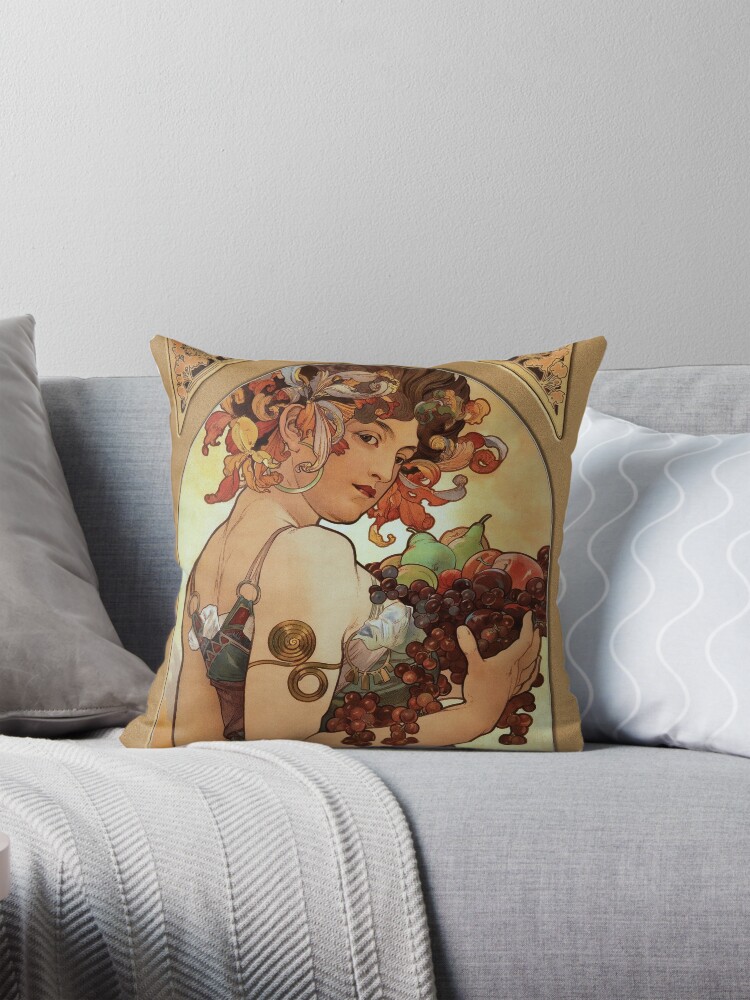
Grafika jest również dostępna na szerokiej gamie odzieży męskiej i damskiej, kubki, torby, szaliki, notesy i czasopisma oraz wiele produktów do dekoracji wnętrz.