

Gentlemen Prefer Blondes c1948
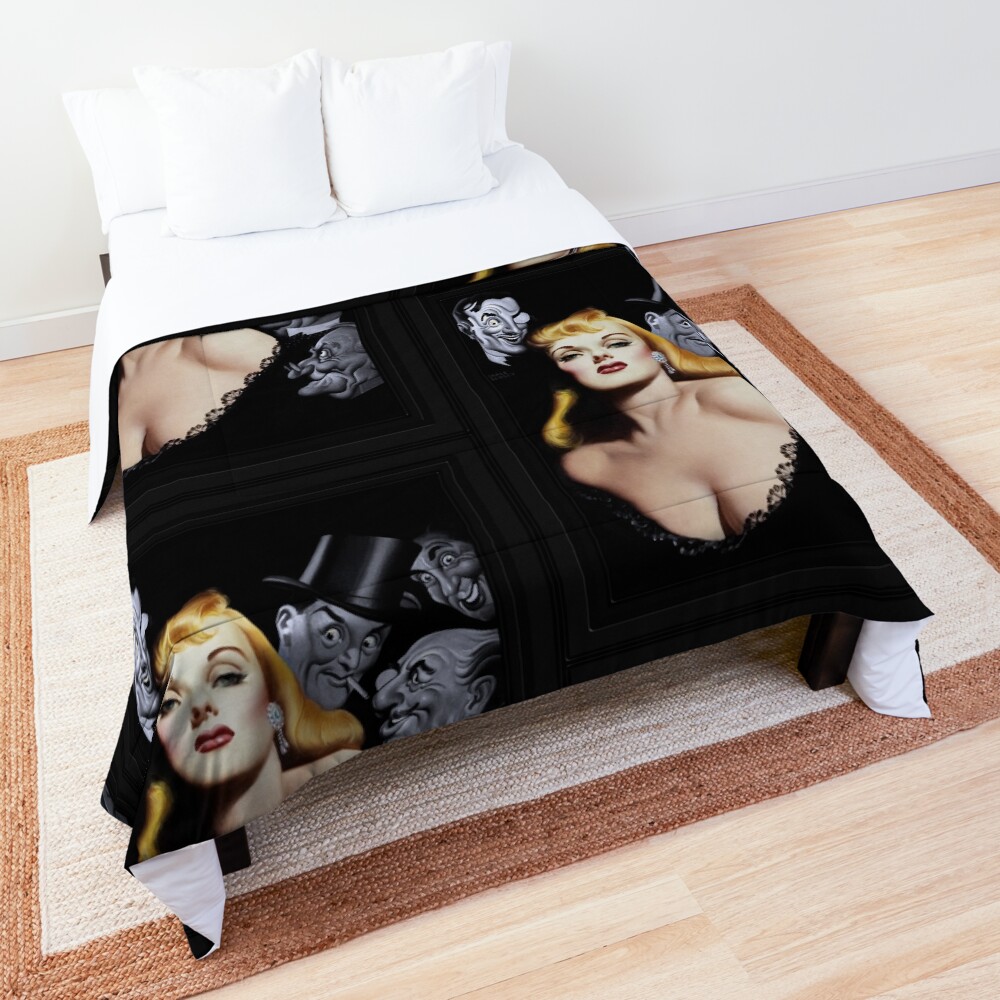
“Jauntxoek nahiago dituzte ilehoriak,” sortua 1948 Earle Kulp Bergey ilustratzaile estatubatuar ospetsuaren eskutik (1901 – 1952), mendearen erdialdeko pop kultura amerikarraren erakargarritasuna eta Hollywoodeko glamour-aren urrezko aroa jasotzen ditu. Bergey, emakumezkoen irudikapen ikaragarri eta iradokitzaileengatik ezaguna, garaiko izpiritua bideratzen du pieza ikoniko honen bitartez, Bigarren Mundu Gerraren osteko garaiko pin-up estilo klasikoa adierazten duena. Artelanak glamourra dauka, irudi lodia bere muinean, gizon karismatiko ugariz alboan, izenburuaren zein gaiaren izpiritua gorpuzten duena. Sentsualitatearen garaia islatzen du konposizioak, adimen, eta amodio arina, mendearen erdialdeko ezaugarria.
Edukien taula
Gai nagusia
Erdiko irudia “Jaunak nahiago Blondes” is a strikingly beautiful woman, her posture suggestive of confidence and allure. Zuzenean begiratzen dio ikusleari, her full, plump lips slightly parted, giving her an air of both mystery and command. Her platinum blonde hair cascades in soft waves, its texture smooth and flowing, contributing to the feminine, almost ethereal quality of her appearance. A pair of dangling earrings shimmer beneath her delicate ear, catching the viewer’s eye, reinforcing the notion of opulence and beauty.
Bere janzkera, a deep black dress trimmed with lace, accentuates her curves and frames her décolletage in a way that is both elegant and provocative. The dress’s high neckline contrasts with the plunging scoop at the front, revealing her fair, porcelain-like skin. This balance between modesty and sensuality creates an enticing juxtaposition that was a hallmark of pin-up art during this period.
In stark contrast to the polished, statuesque beauty of the woman, a collection of mischievous, almost caricature-like men encircle her. Zifra hauek, with exaggerated facial expressions, evoke the playful, sometimes mischievous nature of male attention toward the female subject. Each man is drawn with exaggerated features—wide, almost cartoonish eyes, upturned lips in sly grins, and arched brows, giving them a whimsical, slightly sinister look. The men’s appearance is intentionally stylized, designed to enhance the seductive aura of the central woman while injecting an element of humor and farce.
Objektuak eta sinbolismoa
Bergey’s use of minimal yet impactful objects within the composition serves both to elevate the central figure and to add a sense of narrative depth. The woman is adorned with sparkling diamond earrings, signifying wealth, erakargarritasuna, and status. These accessories, though small, function as symbols of desirability, further emphasizing the woman’s exalted position in society. Bere soinekoa, with its fine lace details, hints at the sophistication of the time, a time when women’s fashion was both a form of self-expression and a tool for empowerment.
The men surrounding the woman, though depicted with exaggerated features, seem to be captivated by her presence. They lean in toward her, each trying to attract her attention in their own exaggerated manner. Their various expressions—from the coy, almost shy smile of one to the playful, knowing grin of another—evoke the humor and complexity of romantic dynamics. This interaction between the woman and her male admirers is emblematic of the playful flirtation that often defined the post-war era’s art, reflecting a world where women were both objects of admiration and, at times, the arbiters of their own fate.
Estiloa eta Teknika
Earle Kulp Bergey’s artistic style in this piece reflects his mastery of the pin-up genre, a style known for its vibrant use of color, argiztapen dramatikoa, and exaggerated forms. Bergey employs a combination of realism and stylization, creating figures that are at once recognizable yet idealized. The smooth contours of the woman’s face and body are rendered with soft, almost ethereal shading, contributing to the sensuality of her form. The men, hala ere, are depicted with more caricatured, angelu-ezaugarriak, a stark contrast that emphasizes their roles as playful bystanders to the woman’s commanding presence.
The artist’s use of deep, contrasting shadows heightens the drama of the piece. The background is dark, a subtle gradient of blacks and greys, providing the ideal backdrop to highlight the illuminated woman in the foreground. This contrast between light and dark adds depth to the painting, creating a sense of both intimacy and drama. The lighting itself is warm and soft, giving the entire composition a slightly dreamlike quality, as if the viewer is witnessing a moment suspended in time, frozen in a world of fantasy.
Gaia eta Aldartea
Gaia “Jauntxoek nahiago dituzte ilehoriak” is unmistakably tied to the notion of beauty, xarma, and the dynamics of attraction. The title itself alludes to the cultural perception of blonde women as desirable, an idea that was perpetuated by media and cinema during the time. The artwork plays with this perception, offering a playful yet biting commentary on how women, particularly those fitting the ideal of the time, were revered and sought after. The exaggerated expressions of the men around the woman reveal both their admiration and the absurdity of their pursuit, making the piece a light-hearted yet pointed commentary on the dynamics of flirtation and romantic attention.
The mood of the artwork is a blend of sensuality, umorea, eta misterioa. The central woman exudes confidence and allure, yet her expression remains somewhat distant, leaving the viewer wondering whether she is truly engaged with the men around her or merely indulging in their attention. The men, aldi berean, are caught in a state of animated anticipation, suggesting a whimsical pursuit that is unlikely to reach any serious conclusion. This playful exchange between the sexes gives the piece a feeling of both joy and whimsy, reflecting the carefree nature of the era and the idea of unattainable yet desirable beauty.
Hau arte digitala ukituta dagoen domeinu publikoko irudi baten erreprodukzioa da.
Arte digitalaren sorkuntza hau, Xzendor7 webgunean aurki daitezkeen artelan guztiak bezala sarean erosteko eskuragarri dago hainbat material formatutan, mihise inprimatuak barne., estanpatu akrilikoak, metal estanpatuak, egur estanpatuak, marko estanpatuak, kartelak, eta ijetzitako mihise estanpatu gisa hainbat tamainatan 12 zentimetroetara 72 hazbeteko artelanaren eta artea erosteko aukeratzen duzun eskaeraren arabera inprimatzeko dendaren tamainaren arabera.
Artelana gizonezkoen eta emakumezkoen arropa sorta zabal batean ere eskuragarri dago, katiluak, totes, zapiak, koadernoak eta aldizkariak eta etxeko dekorazio produktu ugari.
Artistari buruz
Beheko informazioa Wikipedia.org
Earle K. Bergey (Abuztu 26, 1901 – Iraila 30, 1952) artista eta ilustratzaile estatubatuarra izan zen, pulp fiction aldizkari eta paperezko milaka libururen azalak margotu zituena. mendeko pulp fiction-eko artista emankorrenetako bat, Bergeyri ezaguna da Gentlemen Prefer Blondes for Popular Library-ren azala ikonikoa sortzeagatik, bere ibilbidearen gorenean. 1948.
Bergeyk paperezko ilustratzaile estatubatuar gisa eragin handiko ibilbideari hasiera emanez, bonba-pintura honek Anita Loosen superprodukzioaren paperezko portada masiboa egin zuen, Jauntxoek nahiago dituzte ilehoriak (Herri Liburutegia bezala argitaratua #221).
Earle K. Bergeyren azaleko pintura Gentlemen Prefer Blondes, inguru 1948.
Bergey Filadelfian jaio zen, Pennsylvaniara A. Frank eta Ella Kulp Bergey. Pennsylvaniako Arte Ederren Akademian parte hartu zuen 1921 to 1926, udaberrian Akademiako ikasketa formalak amaitzea 1926. Hasieran Filadelfiako egunkarietako arte sailetan lan egin zuen Public Ledger barne, eta Deb Days komiki-tira marraztu zuen 1927. Bere ibilbidearen hasieran, Bergey-k Fiction House argitaletxeko pulp aldizkarietan azala asko lagundu zituen.
1930eko hamarkadaren erdialdera, Bergeyk etxebizitza eta estudio bat egin zituen Bucks County-n, Pennsylvania, eta bertan ezkondu zen 1935.
1930eko hamarkada osoan, Bergeyk freelance lan egin zuen hainbat argitaletxetan.
Bere margolan deigarriak pulp aldizkari ugariren azal gisa agertu ziren batez ere, amodioa barne (Maitasun zirraragarria, Maitasun Herrikoia, Maite erromantzeak) baita detektibea ere, abentura, abiazio, eta mendebaldekoak. Bergey-k argitalpen nagusiak ilustratu zituen, esaterako, The Saturday Evening Post, garai honetan.
1940ko hamarkadan zehar, Bergeyk erromantizismorako azalak margotzen jarraitu zuen, kirolak, eta detektibe pulp aldizkariak, eta zientzia-fikziozko aldizkari batzuetan lanean hasi zen, Argitalpen estandarrak barne’ Istorio Bitxiak, Ipuin harrigarriak, eta Captain Future, eta geroago Fantastic Story Magazinerako.
Bergeyren arte ederren prestakuntzak eta anatomia irudikatzeko dohain nabarmenak mugimendu dramatikoko eszenak behar zituen genero aniztasun ezberdinetan artista aproposa bihurtu zuen., Mickey Cochrane barne kirolari ospetsuen kirol erretratu foto-errealistak, Lou Gehrig, eta Jim Thorpe-ri Depresioan zehar eta Bigarren Mundu Gerrako zientzia-fikziozko agertokietan agertu zen bere sinadura Bergey Girls..
Espazioan bizirik irauten duten emakume gutxi jantzita egindako artistak Leia printzesaren esklabo-neska jantzirako inspirazio gisa balio izan zuten Return of the Jedi-n., bere kolorea eta ebakia ere, eta Madonnaren txaranga konikoa. Bergeyren zientzia fikziozko azalak, batzuetan bezala deskribatzen da “Bim, ONGI, Bum,” normalean Bug-Eyed Monster batek mehatxatzen zuen emakume bat agertzen zen, arrotza, edo robota, Gizonezko astronauta heroiko bat bere laguntzara etorriz.
Bergey neskek erabiltzen zituzten bikini-topek maiz kobrezko metalaren antza zuten, esaldiari hasiera emanez “txarangako neska,” mota honetako arteari erreferentzia eginez erabiltzen da. Telebistako eta zinemako ikuskariek eragina izan dute Bergeyren lanak; Gene Roddenberry, adibidez, Star Trek-erako bere ekoizpen-diseinatzailea Bergey-ren mami-azala futuristaren adibideak eman zizkion.
In 1948, Bergeyk azkar hedatzen ari zen paperezko liburuen industriarako trantsizioa egin zuen Rudolph Belarski bezalako pulp artistekin batera., zeinen lana Bergeyrenarekin nahasten da askotan. Hil arte mami-estalkiak margotzen jarraitzen zuen bitartean.