

Gentlemen Prefer Blondes c1948
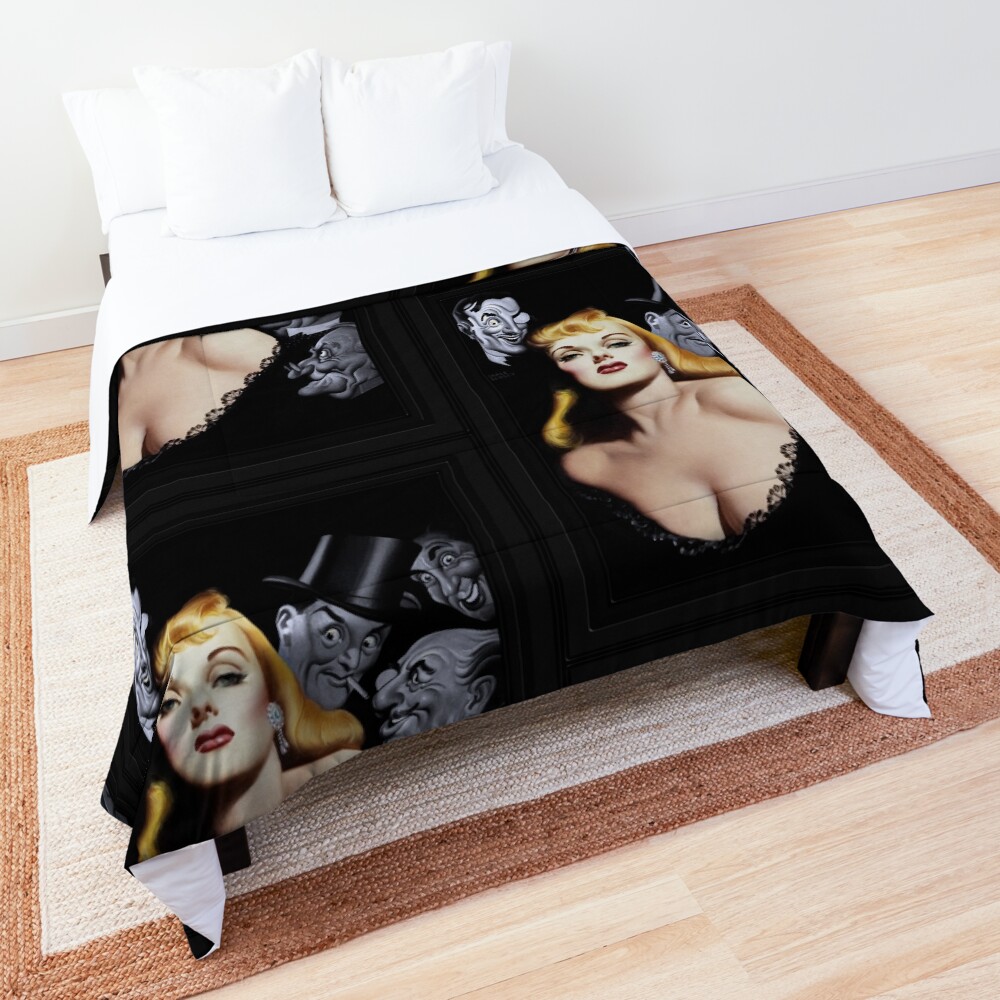
“Is fheàrr le daoin' uaisle blonde,” air a chruthachadh a-steach 1948 by the renowned American illustrator Earle Kulp Bergey (1901 – 1952), captures the allure of mid-century American pop culture and the golden age of Hollywood glamour. Bergey, known for his sultry and evocative depictions of women, channels the spirit of the era through this iconic piece, which epitomizes the classic pin-up style of the post-World War II era. The artwork features a glamorous, bold figure at its core, flanked by an array of charismatic men, embodying the spirit of both the title and the theme. The composition reflects an era of sensuality, eirmseachd, and lighthearted romance, characteristic of the mid-20th century.
Clàr-innse
Am Prìomh Chuspair
Am figear sa mheadhan “Is fheàrr le daoine uaisle Blondes” is a strikingly beautiful woman, her posture suggestive of confidence and allure. She gazes directly at the viewer, her full, plump lips slightly parted, giving her an air of both mystery and command. Her platinum blonde hair cascades in soft waves, its texture smooth and flowing, contributing to the feminine, càileachd cha mhòr ethereal a coltas. A pair of dangling earrings shimmer beneath her delicate ear, a’ glacadh sùil an neach-amhairc, reinforcing the notion of opulence and beauty.
A h-èideadh, a deep black dress trimmed with lace, accentuates her curves and frames her décolletage in a way that is both elegant and provocative. The dress’s high neckline contrasts with the plunging scoop at the front, revealing her fair, craiceann coltach ri porcelain. This balance between modesty and sensuality creates an enticing juxtaposition that was a hallmark of pin-up art during this period.
In stark contrast to the polished, statuesque beauty of the woman, a collection of mischievous, almost caricature-like men encircle her. Na figearan seo, with exaggerated facial expressions, evoke the playful, sometimes mischievous nature of male attention toward the female subject. Each man is drawn with exaggerated features—wide, almost cartoonish eyes, upturned lips in sly grins, and arched brows, giving them a whimsical, slightly sinister look. The men’s appearance is intentionally stylized, designed to enhance the seductive aura of the central woman while injecting an element of humor and farce.
Rudan agus samhlachas
Bergey’s use of minimal yet impactful objects within the composition serves both to elevate the central figure and to add a sense of narrative depth. The woman is adorned with sparkling diamond earrings, signifying wealth, aoibhneas, and status. These accessories, Ged a tha e beag, function as symbols of desirability, further emphasizing the woman’s exalted position in society. A h-aodach, with its fine lace details, hints at the sophistication of the time, a time when women’s fashion was both a form of self-expression and a tool for empowerment.
The men surrounding the woman, though depicted with exaggerated features, seem to be captivated by her presence. They lean in toward her, each trying to attract her attention in their own exaggerated manner. Their various expressions—from the coy, almost shy smile of one to the playful, knowing grin of another—evoke the humor and complexity of romantic dynamics. This interaction between the woman and her male admirers is emblematic of the playful flirtation that often defined the post-war era’s art, reflecting a world where women were both objects of admiration and, a’ coimhead ann am filmichean agus ann am meadhanan eile a’ sanasachd mar bhuaireadh bho bhòidhchead nàdair, the arbiters of their own fate.
Stoidhle agus innleachd
Earle Kulp Bergey’s artistic style in this piece reflects his mastery of the pin-up genre, a style known for its vibrant use of color, solais dràmadach, and exaggerated forms. Bergey employs a combination of realism and stylization, creating figures that are at once recognizable yet idealized. The smooth contours of the woman’s face and body are rendered with soft, almost ethereal shading, contributing to the sensuality of her form. Na fir, ge-tà, are depicted with more caricatured, angular features, a stark contrast that emphasizes their roles as playful bystanders to the woman’s commanding presence.
The artist’s use of deep, contrasting shadows heightens the drama of the piece. The background is dark, a subtle gradient of blacks and greys, providing the ideal backdrop to highlight the illuminated woman in the foreground. This contrast between light and dark adds depth to the painting, creating a sense of both intimacy and drama. The lighting itself is warm and soft, giving the entire composition a slightly dreamlike quality, as if the viewer is witnessing a moment suspended in time, frozen in a world of fantasy.
Cuspair agus mood
Cuspair “Is fheàrr le daoin' uaisle blonde” is unmistakably tied to the notion of beauty, seun, and the dynamics of attraction. The title itself alludes to the cultural perception of blonde women as desirable, an idea that was perpetuated by media and cinema during the time. The artwork plays with this perception, offering a playful yet biting commentary on how women, particularly those fitting the ideal of the time, were revered and sought after. The exaggerated expressions of the men around the woman reveal both their admiration and the absurdity of their pursuit, making the piece a light-hearted yet pointed commentary on the dynamics of flirtation and romantic attention.
The mood of the artwork is a blend of sensuality, humor, agus dìomhaireachd. The central woman exudes confidence and allure, yet her expression remains somewhat distant, leaving the viewer wondering whether she is truly engaged with the men around her or merely indulging in their attention. Na fir, Aon às deidh aon, are caught in a state of animated anticipation, suggesting a whimsical pursuit that is unlikely to reach any serious conclusion. This playful exchange between the sexes gives the piece a feeling of both joy and whimsy, reflecting the carefree nature of the era and the idea of unattainable yet desirable beauty.
Is e seo ath-riochdachadh seann mhaighstirean ealain didseatach ath-riochdachadh de ìomhaigh raon poblach.
An cruthachadh ealain didseatach seo, mar a tha leis a h-uile obair-ealain a gheibhear air làrach-lìn Xzendor7 ri fhaighinn airson a cheannach air-loidhne ann an grunn chruthan stuth a’ gabhail a-steach clò-bhualaidhean canabhas, dealbhan acrylic, clò-bhualaidhean meatailt, clò-bhualaidhean fiodha, lèileagan frèam, postairean, agus mar chlò-bhualadh canabhas air a roiligeadh ann an grunn mheudan bho 12 òirlich gu 72 òirlich a rèir meud an fhìor obair-ealain agus a’ bhùth clò-bhualaidh air iarrtas a thaghas tu airson an ealain a cheannach.
Tha an obair-ealain cuideachd ri fhaighinn air raon farsaing de dh’ aodach fireannaich is boireannaich, mugaichean, toitean, sgarfaichean, leabhraichean notaichean agus irisean agus mòran stuthan sgeadachaidh dachaigh.
Mu dheidhinn an Neach-ealain
Fiosrachadh gu h-ìosal bho Wikipedia.org
Earl K. Bergey (An Lùnastal 26, 1901 - An t-Sultain 30, 1952) na neach-ealain agus dealbhadair Ameireaganach a pheant ealain còmhdaich airson mìltean de irisean ficsean pulp agus leabhraichean pàipear-taice. Fear de na luchd-ealain ficsean pulp as adhartaiche san 20mh linn, Tha Bergey aithnichte airson a bhith a’ cruthachadh an còmhdach suaicheanta de Gentlemen Prefer Blondes for Popular Library aig àirde a chùrsa-beatha ann an 1948.
A’ comharrachadh toiseach ruith buadhach Bergey mar dhealbhadair pàipear-taice Ameireaganach, rinn an dealbh spreadhaidh seo an còmhdach mòr de phàipear-naidheachd Anita Loos, Is fheàrr le daoin' uaisle blonde (fhoillseachadh mar Popular Library #221).
Earl K. Dealbh còmhdaich Bergey airson Gentlemen Prefer Blondes, mu thimcheall 1948.
Rugadh Bergey ann am Philadelphia, Pennsylvania gu A. Frank agus Ella Kulp Bergey. Chaidh e gu Acadamaidh Ealain Fine Pennsylvania bho 1921 gu 1926, a’ crìochnachadh sgrùdaidhean foirmeil Acadamaidh as t-earrach 1926. An toiseach chaidh e a dh’ obair ann an roinnean ealain phàipearan-naidheachd Philadelphia, nam measg Public Ledger, agus tharruing e an comaig Deb Days a steach 1927. Tràth na dhreuchd, Chuir Bergey mòran chòmhdach ri irisean pulp an fhoillsichear Fiction House.
Ro mheadhan nan 1930an, Rinn Bergey dachaigh agus stiùidio ann am Bucks County, Pennsylvania, agus phòs e stigh 1935.
Air feadh nan 1930an, Bha Bergey ag obair leis fhèin airson grunn thaighean foillseachaidh.
Bha na dealbhan tarraingeach aige air an nochdadh sa mhòr-chuid mar chòmhdaichean air raon farsaing de irisean pulp, gabhail a-steach romansa (Love Thrilling, Gràdh mòr-chòrdte, Romance gaoil) a bharrachd air detective, dànachd, itealain, agus Westerns. Sheall Bergey foillseachaidhean prìomh-shruthach, leithid The Saturday Evening Post, rè na h-ùine seo.
Anns na 1940an, Lean Bergey air a’ peantadh còmhdach airson romansa, spòrs, agus irisean pulp detective, agus thòisich e ag obair air grunn irisean ficsean-saidheans, nam measg Foillseachaidhean Coitcheann’ Sgeulachdan neònach, Sgeulachdan Tòiseachaidh, agus Captain Future, agus nas fhaide air adhart airson Iris Fantastic Story.
Rinn trèanadh ealain mhionaideach Bergey agus tiodhlac iomchaidh airson a bhith a’ sealltainn anatomy air a dhèanamh na neach-ealain tarraingeach thar measgachadh de ghnèithean a dh’ fheumadh seallaidhean le gluasad iongantach., bho dhealbhan spòrs fìor-dhealbhan de lùth-chleasaichean ainmeil, nam measg Mickey Cochrane, Lou Gehrig, agus Jim Thorpe chun ainm-sgrìobhte aige Bergey Girls a nochd air pulps risque tron Ìsleachadh agus ann an suidheachaidhean ficsean saidheans bhon Dàrna Cogadh.
Bha dealbhan an neach-ealain de bhoireannaich le glè bheag de chòmhdach a’ mairsinn san fhànais a-muigh na bhrosnachadh airson aodach nighean-tràille a’ Bhana-phrionnsa Leia ann an Return of the Jedi, eadhon a dath agus a ghearradh, agus umha bideanach Madonna. Tha ficsean-saidheans Bergey a’ còmhdach, uaireannan air a mhìneachadh mar “Bim, UAIR, Bùm,” mar as trice bha boireannach air a bagairt le Uilebheist Bug-Eyed, coimheach, no robot, le speuradair fireann gaisgeil a’ tighinn ga cuideachadh.
Gu tric bha na bikini-mullaich air an caitheamh le nigheanan Bergey coltach ri meatailt copair, ag adhbhrachadh an fhacail “a' chaileag anns a' bhràighe umha,” air a chleachdadh airson iomradh a thoirt air an t-seòrsa ealain seo. Thug obair Bergey buaidh air seallaidhean ann an Tbh agus film; Gin Roddenberry, mar eisimpleir, thug e eisimpleirean don dealbhaiche riochdachaidh aige airson Star Trek de chòmhdaichean pulp teachdail Bergey.
Ann an 1948, Rinn Bergey an gluasad gu gnìomhachas leabhraichean bog a bha a’ leudachadh gu luath còmhla ri luchd-ealain pronnadh sgileil mar Rudolph Belarski, aig a bheil obair gu tric air a mheasgadh le obair Bergey. Fhad ‘s a bha e a’ leantainn air a ’peantadh còmhdaichean pronnadh gus an do chaochail e.