

Gezicht op de Kerk te Sloten in de Winter – Veduta della chiesa di Sloten in inverno
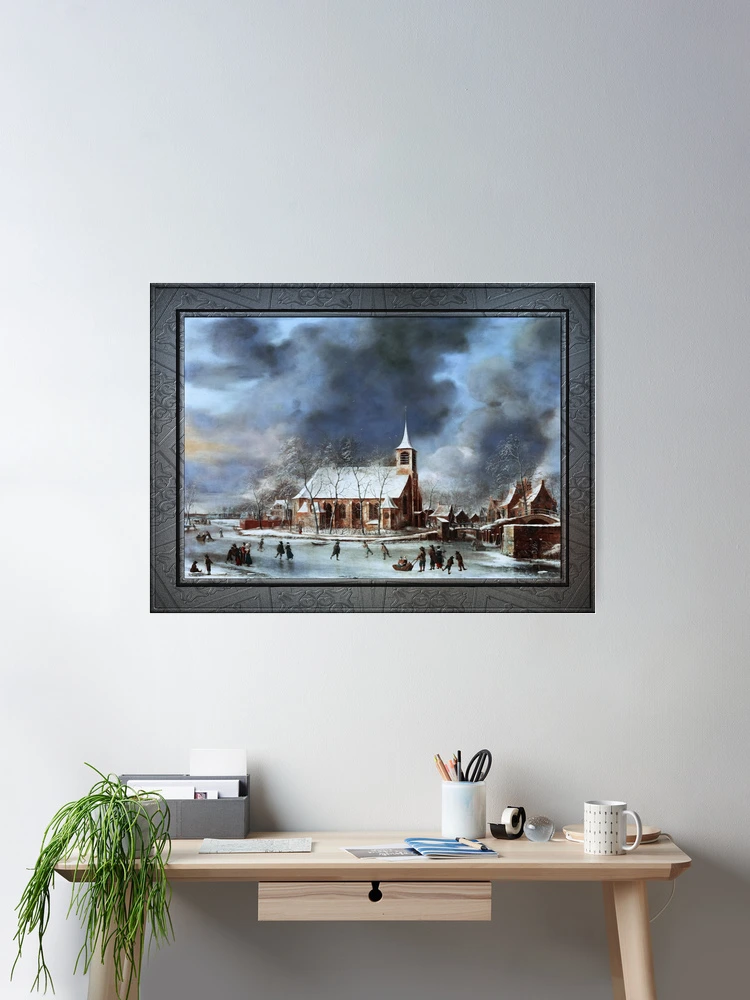
Vista della chiesa di Sloten in inverno (Veduta della chiesa di Sloten in inverno), creato intorno 1640 per 1666 di Jan Abrahamsz Beerstraaten (1622 – 1666), a Dutch Golden Age painter, is renowned for his remarkable winter landscapes that capture the essence of the season with vibrant realism. In questo dipinto, Beerstraaten demonstrates his mastery of light, ombra, and atmosphere, immersing the viewer in the stark beauty of a frozen Dutch landscape. Questo lavoro, which perfectly embodies the cold, crisp winter day, also captures the activity and life that existed in these harsh conditions, offering a stunning snapshot of daily life during the 17th century.
Sommario
The Church and Architecture
At the heart of this composition is the church, a central feature in the village of Sloten. Beerstraaten positions the building slightly to the left of the frame, allowing it to anchor the composition while giving plenty of space to the surrounding natural landscape.
The church’s distinct steeple rises above the snow-covered rooftops, its architecture typical of the Dutch Renaissance, with red brick walls that contrast sharply with the wintry white surroundings. The church serves as both a physical and cultural landmark, symbolizing the enduring presence of faith and community in a rural Dutch town.
The small houses and structures scattered around the church suggest a quiet, self-sufficient settlement, typical of the period. Each building is covered in a thick blanket of snow, lending the scene a peaceful, almost serene quality despite the biting cold.
Winter Activity and Figures
In primo piano, Beerstraaten fills the icy scene with life. The frozen waterway serves as a gathering place for the villagers, who are depicted skating, walking, and engaging in various activities. Some figures glide across the ice gracefully on skates, while others push sleds laden with goods.
Their clothing, heavy and layered, includes fur-lined coats, cappelli, and boots, indicating the frigid temperatures. The painter captures the subtle interaction between the figures and the landscape, with careful attention to how their bodies move through the snow and ice.
The lively scene is a testament to the resilience of the Dutch people, Chi, despite the harsh winter conditions, continue with their daily routines. Le cifre, although small in scale, add a sense of realism to the painting, reminding the viewer that winter was both a challenge and an opportunity for recreation and commerce.
The Frozen Landscape and Light
Beerstraaten’s treatment of light and shadow in this painting is nothing short of extraordinary. The bright white snow, which blankets the ground and coats the buildings, reflects the dim winter sunlight, creating a soft, almost ethereal glow throughout the scene. Il cielo, which is filled with dense, swirling clouds, suggests that the weather is both dynamic and unpredictable.
There are moments of light breaking through the clouds, casting brief illuminations on parts of the scene, such as the rooftops or the skaters below. The juxtaposition of light and shadow contributes to the painting’s mood, creating an atmosphere of both tranquility and tension. The dark clouds overhead imply that a storm may be approaching, yet the activity of the villagers continues unabated.
Composizione e stile
Beerstraaten’s style is characterized by a meticulous attention to detail, especially in his rendering of textures. The snow is not just a uniform white mass but is painted with delicate gradations of light and shadow that suggest the varied texture of freshly fallen snow. The ice on the frozen canal is similarly detailed, with patches of darker shadows indicating areas of wear, where the skaters have glided.
The surrounding trees, their branches bare and etched in sharp lines against the sky, add to the starkness of the winter scene. Beerstraaten’s use of atmospheric perspective further enhances the depth of the painting, drawing the viewer’s eye from the foreground to the distant horizon.
In terms of composition, the balance between the church, the village, and the people is carefully maintained. Beerstraaten does not allow any single element to dominate the scene; Invece, he allows each part of the painting to contribute to the overall sense of harmony. The icy landscape, with its soft, muted colors, is contrasted with the more solid forms of the church and the figures. The church acts as a point of rest for the eye, giving the viewer a place to pause amidst the visual busyness of the figures and the swirling clouds above.
Umore e tema
L'umore di Vista della chiesa di Sloten in inverno is one of quiet reflection. Despite the activity taking place on the ice and the heavy clouds above, the scene feels serene and contemplative. The villagers move with purpose, but their interactions with the environment seem harmonious, as if the cold is simply a natural part of life to be accepted.
The muted colors of the sky and the reflective quality of the snow create a subdued, almost melancholic tone, yet there is also a sense of life and vitality. Beerstraaten encapsulates the essence of winter in the Netherlands, where the season is harsh but not without its moments of beauty and liveliness. The work speaks to the resilience of the human spirit, the coexistence of community with the natural world, and the unbroken continuity of life despite seasonal hardships.
Conclusione
Jan Abrahamsz Beerstraaten’s Vista della chiesa di Sloten in inverno is a masterful depiction of a Dutch winter landscape that captures both the harshness and beauty of the season. Through his careful rendering of the architecture, figures, and icy terrain, Beerstraaten creates a scene that is at once lively and tranquil, cold yet warm with human activity. The painting stands as a testament to his skill as a landscapist and his ability to convey the timeless rhythm of daily life, even in the most challenging of environments.
Questa è una riproduzione ritoccata di arte digitale dei vecchi maestri di un'immagine di pubblico dominio.
Questa creazione di arte digitale, come tutte le opere d'arte che si possono trovare sul sito Web di Xzendor7 è disponibile per l'acquisto online in una varietà di formati di materiali, comprese le stampe su tela, stampe acriliche, stampe in metallo, stampe su legno, stampe incorniciate, manifesti, e come stampe su tela arrotolata in una varietà di formati da 12 pollici a 72 pollici a seconda delle dimensioni dell'opera d'arte effettiva e del negozio di stampa su richiesta da cui scegli di acquistare l'arte.
L'opera d'arte è disponibile anche su un'ampia gamma di abbigliamento da uomo e da donna, tazze, borse, sciarpe, quaderni e diari e tanti prodotti per l'arredamento della casa.
Informazioni sull'artista
Di seguito le informazioni di cortesia Wikipedia.org
C'è una certa confusione sull'identità di quattro paesaggisti di nome Beerstraaten; Johannes, questo Jan Abrahamsz, Abramo, e Anthony. Jan Abrahamsz, pittore, sposato ad Amsterdam il 30 agosto 1642.
Da questo matrimonio nacquero undici figli, e quando si sposò una seconda volta in 1665, è nata una figlia. Attualmente, L'RKD registra Johannes come la stessa persona, e Abraham Beerstraaten è considerato il suo figlio maggiore.
Anthonie Beerstraaten era imparentato con questo pittore. L'RKD ha registrato due dipinti firmati Anthonie van Beerstraten: uno è una vista di un porto meridionale da 1664 (posizione attuale Enkhuizen) and the other a view of a church in Aarlanderveen in the former city hall of Alphen aan den Rijn. Based on these two paintings C.
Hofstede de Groot an early Dutch art historian, classified paintings signed A. Beerstraaten as by Anthonie if they were a poorer grade than ones already attributed to Abraham.