

Nighean ann an aodach buidhe
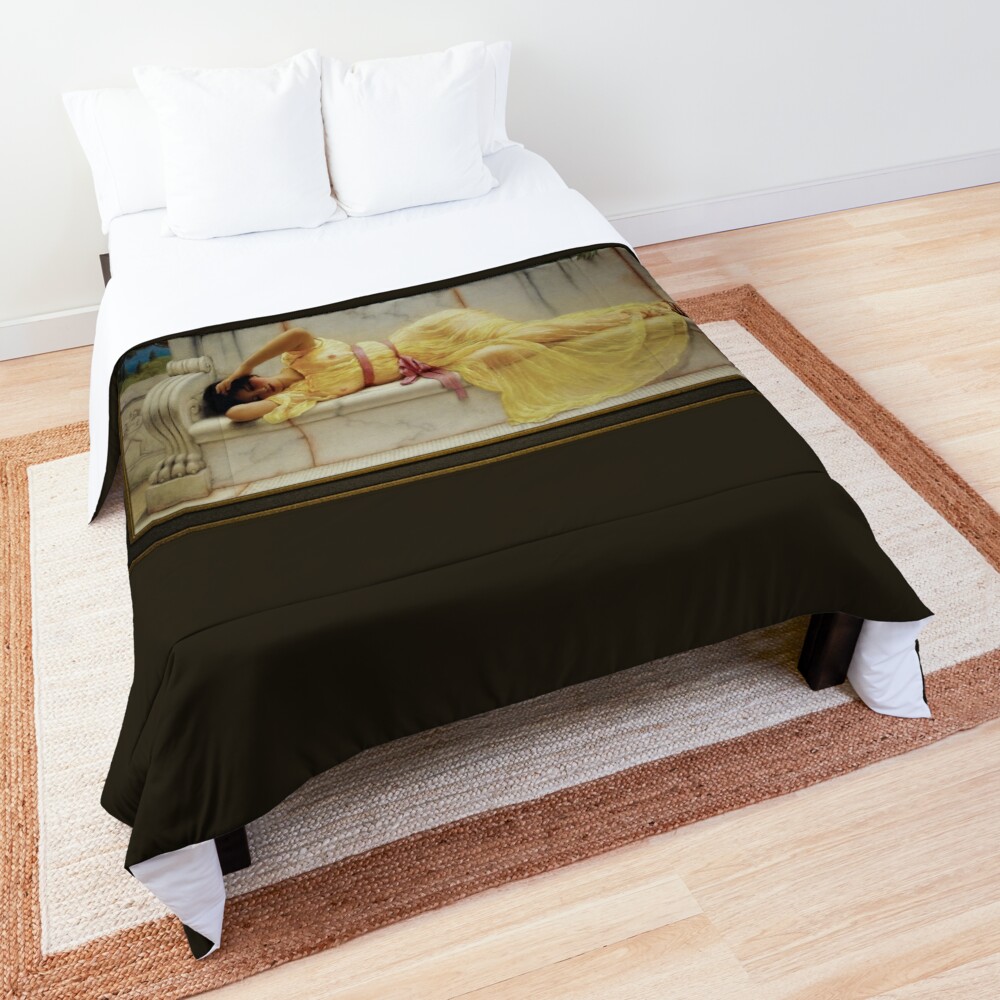
Iain Uilleam Godward “Nighean ann an aodach buidhe,” air a chruthachadh a-steach 1901, a 'toirt seachad dealbh iongantach de bhòidhchead clasaigeach, air a thoirt seachad le mion-fhiosrachadh sàr-mhath. Godward, neach-ealain ainmeil airson na chuir e ris an Neo-chlasaigeach stoidhle, ghlac e gràs gun ùine an t-seann t-saoghail ann an dòigh a chuireas cuideam air co-sheirm, bòidhchead, agus serenity. Godward's (1861 – 1922) bidh obraichean gu tric a’ nochdadh an spèis mhòr a th’ aige do ealain na seann Ròimhe agus na Grèige, a’ measgachadh chruthan boireann air leth freagarrach le eileamaidean ailtireil is nàdarra an t-saoghail chlasaigeach. An penchant aige airson palettes dath fìnealta, còmhla ris a sgil ann a bhith a’ cruthachadh inneach beò, follaiseach anns an dealbh seo.
Clàr-innse
Am Prìomh Chuspair: Figear cadail de Serenity
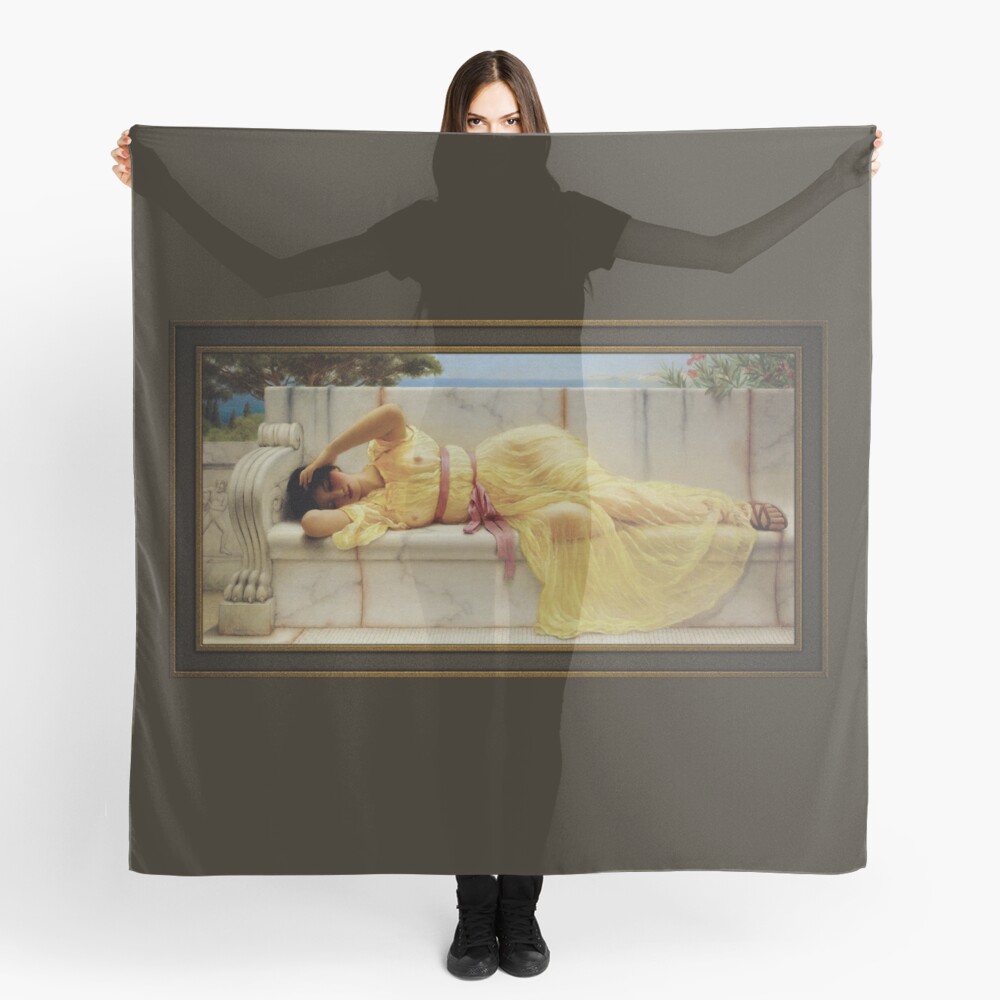
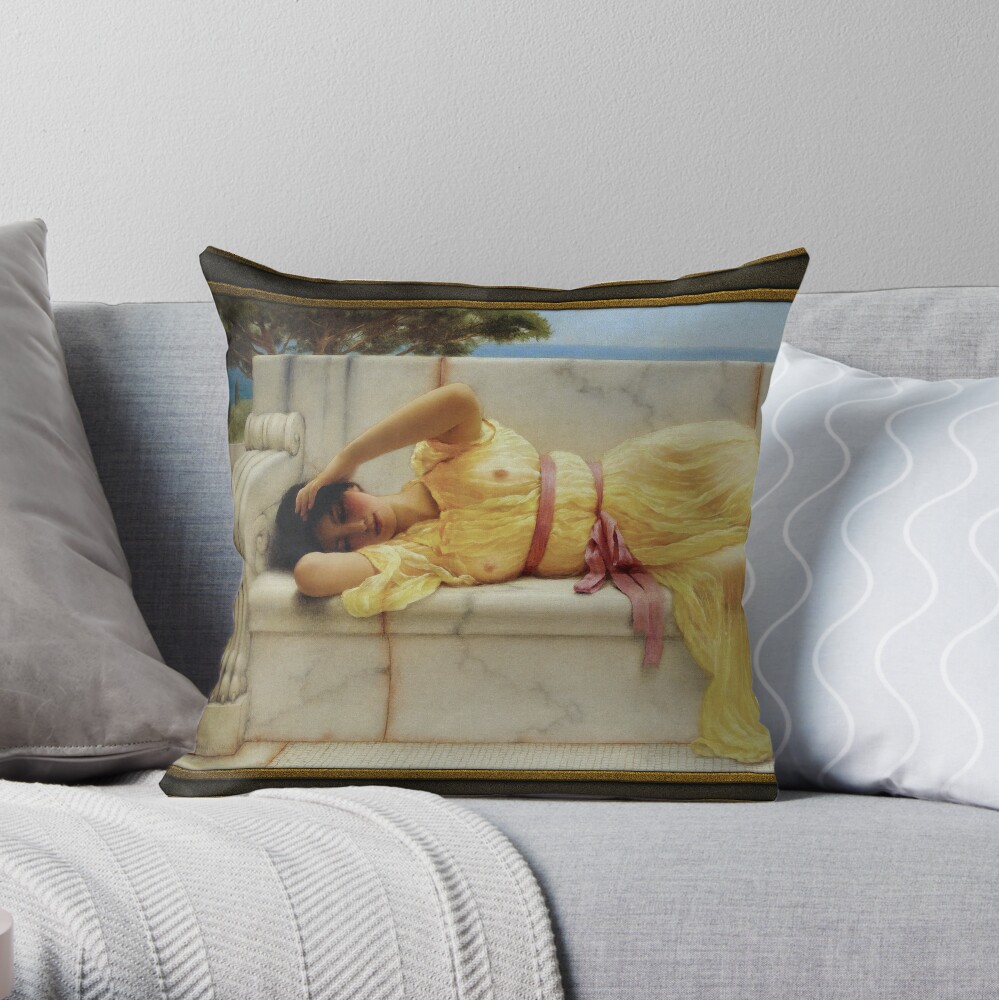
Aig cridhe an deilbh tha boireannach òg a tha na laighe ann am bog, a 'sruthadh gùn buidhe a tha gu math eadar-dhealaichte an aghaidh na tìre ciùin. Tha an nighean tha suidheachadh a’ nochdadh mionaid de thàmh sàmhach, a ceann gu socair a' gabhail fois air a gàirdean fhad 's a tha a làmh eile na laighe tarsainn a h-aodann, a rèir coltais a’ dìon a sùilean bhon t-solas bog.
Tha an cruth corporra aice air a ghlacadh le fìnealtas iongantach, rithe aghaidh tha e sàmhach agus air a dhealbhadh gu foirfe, a' nochdadh an bòidhchead air leth freagarrach bha sin na chomharradh air obair Dhia. Tha an gùn buidhe bàn a bhios oirre èadhar, cha mhòr tar-shoilleir, a' sruthadh gu socair mu'n cuairt mar gu'm biodh i air a cur fo chùram le gaoth bhog. An t-aodach, ged a tha e fìnealta agus aotrom ann an dath, a’ giùlan leis mothachadh air cuideam agus doimhneachd, na theisteanas air sgrùdadh faiceallach an neach-ealain air aodach agus anatomy.
An Atmosphere: Sàmhach agus gun ùine
Tha faireachdainn an deilbh mar aon de shàmhchair, gun ùine, agus gràs. Tha e coltach gu bheil am figear ann an staid domhainn, is dòcha ann am meadhan nap no bruadar latha, gun suathadh ri draghan an t-saoghail a-muigh. Tha an bogachd de a h-aodach agus suidheachadh socair a bodhaig a’ dùsgadh àile de shuain shìtheil, fhad ‘s a tha dìth faireachdainn no gnìomh follaiseach a’ fàgail an neach-coimhead gus eòlas fhaighinn air an t-sealladh mar chuireadh stad agus meòrachadh. Godward, ann a bhith a’ glacadh na h-ìre seo, a 'cruthachadh sàmhchair sàmhach, far a bheil coltas gu bheil ùine air a chuir dheth.
An Ailtireachd: Buaidh clasaigeach
Air cùlaibh an fhigear, tha an sealladh air a dhealbhadh le clasaig being cloiche a tha a’ ceangal a’ chuspair ri saoghal nan seann shìobhaltachdan. Tha an marmor being, le beagan aimsir air, colbhan eireachdail agus obair-scrollaidh, mar chuimhneachan air an dualchas chlasaigeach a thug buaidh air mòran de dh’ obair Dhè. Tha aire an neach-ealain gu mion-fhiosrachadh ailtireil iongantach, le inneach na cloiche air a chur an cèill gu soilleir anns na faileasan seòlta agus faileasan aotrom. Tha an colbhan, air a dhealbhadh anns an stoidhle Corintianach, a’ moladh saoghal cultarach is inntleachdail àrdaichte, a’ cur ri càileachd an dealbh gun ùine.
An Cruth-tìre Nàdarra: Calma agus farsaing
Air a 'chùl, chì an neach-coimhead sealladh sìtheil a tha a’ sìneadh a-mach seachad air a’ bheing cloiche. Tha an cruth-tìre air a lasadh le solas bog, a’ sealltainn air fàire far a bheil a’ mhuir a’ coinneachadh ris an speur. Ged tha dathan nan speur air an cuir sìos, an nàdar farsaing den t-sealladh a’ toirt faireachdainn de àite, a’ moladh fosgladh, saoghal ciùin a tha gu math eadar-dhealaichte ri dlùth-chàirdeas an fhigear. Craobhan le measgachadh de uaine uaine cuir ris a’ mhothachadh air socair, tha an duilleach aca a’ nochdadh blàths seann aimsir Mheadhan-thìreach.
Meadhanach agus Teicnigeach: Mion-fhiosrachadh mionaideach agus inneach
Tha comas teignigeach Godward ri fhaicinn anns a’ mhion-fhiosrachadh eireachdail air an dà chuid figear agus na h-eileamaidean mun cuairt. Tha cho bog sa tha gùn buidhe na boireannaich a’ dol an aghaidh a’ chruaidh, càileachd cha mhòr tactile de na colbhan marmoir agus a’ bheing. Tha cleachdadh solas is dubhar air an aodach a’ cur cuideam air cho fìnealta, nàdar a’ sruthadh fhad ‘s a tha craiceann an fhigear a’ nochdadh cha mhòr mar bheatha na thòn nàdarra. Tha innleachd Dhè ann a bhith a’ measgachadh solas is dubhar a’ cur ri mothachadh air fìor-eòlas agus doimhneachd, a’ toirt buaidh air an obair le càileachd cha mhòr trì-thaobhach. An dealbh mhionaideach a rinn e air na h-inneach — co dhiubh is e so rèidh na cloiche, follaiseachd an aodach, no seadh nàdurra a' chraicinn — a' nochdadh a mhaighstir air soluis agus inneach.
Stoidhle agus Cuspairean Dhè: Bòidhchead Clasaigeach air ath-sgrùdadh
An stoidhle aig “Nighean ann an aodach buidhe” a’ toirt a-steach na bun-bheachdan de Neoclassicism, gluasad a bha a’ feuchainn ri bòidhchead agus beachdan na seann Ghrèig agus na Ròimhe ath-bheothachadh. Tha an stoidhle seo air a chomharrachadh le fòcas air bòidhchead air leth freagarrach, foirmean rèidh, agus cuideam air co-roinn agus co-sheirm. Tha obair Dhé air a lionadh gu domhainn leis na prionnsabalan sin, gu h-àraidh anns an dealbh aige de fhigear boireann, a tha gu tric air leth freagarrach agus air a chuir gu socair, suidheachaidhean socair. Tha na cuspairean aige gu tric air an sealltainn ann an cruthan-tìre lusach no suidheachaidhean ailtireil clasaigeach, mar a chithear sa phìos seo. An dealbh seo, Gu sònraichte, a’ gabhail a-steach an ùidh a th’ aig Godward ann am bòidhchead boireann agus àrsachd chlasaigeach.
An cuspair a figear sìnte, gu tric mar shamhla air an dà chuid sensuality agus repose, a’ daingneachadh tuilleadh dealas an neach-ealain airson co-sheirm a chruthachadh, saoghal ciùin anns na h-obraichean aige. Chan e dìreach ìomhaigh cadail a tha san ìomhaigh den bhoireannach òg ann am peantadh Godward; tha e na shealladh air socair agus foirfeachd, air a sgaradh bho dhraghan an t-saoghail agus suidhichte ann an àrainneachd gun ùine. Is e cuireadh a th’ ann don neach-coimhead a dhol a-steach gu àite far a bheil bòidhchead agus sàmhchair a’ riaghladh.
Co-dhùnadh: Dìleab mhaireannach Obair Dhé
Iain Uilleam Godward “Nighean ann an aodach buidhe” na dheagh eisimpleir de dhealas an neach-ealain don stoidhle Neoclassical, a’ nochdadh a sgil ann a bhith a’ taisbeanadh bòidhchead air leth freagarrach agus an spèis mhòr a th’ aige do chruthan ealain clasaigeach. Tro bhith a 'dealbhadh an ìomhaigh gu cùramach, na h-eileamaidean ailtireachd, agus an saoghal nàdair, Tha Godward a’ cruthachadh sealladh de eireachdas ciùin a tha air leantainn air adhart a’ tarraing luchd-èisteachd fada às deidh a chruthachadh. A chomas air faireachdainn de shìth gun ùine a dhùsgadh, còmhla ris an ìre theicnigeach aige, a’ dèanamh cinnteach gu bheil an dealbh seo fhathast na obair chudromach ann an eachdraidh ealain Bhreatainn.
Tha Girl in Yellow Drapery na ath-riochdachadh seann mhaighstirean ealain didseatach de ìomhaigh fearann poblach a tha ri fhaighinn mar clò-bhualadh canabhas air-loidhne.
An cruthachadh ealain didseatach seo, mar a tha leis a h-uile obair-ealain a gheibhear air làrach-lìn Xzendor7 ri fhaighinn airson a cheannach air-loidhne ann an grunn chruthan stuth a’ gabhail a-steach clò-bhualaidhean canabhas, dealbhan acrylic, clò-bhualaidhean meatailt, clò-bhualaidhean fiodha, lèileagan frèam, postairean, agus mar chlò-bhualadh canabhas air a roiligeadh ann an grunn mheudan bho 12 òirlich gu 72 òirlich a rèir meud an fhìor obair-ealain agus a’ bhùth clò-bhualaidh air iarrtas a thaghas tu airson an ealain a cheannach.
Tha an obair-ealain cuideachd ri fhaighinn air raon farsaing de dh’ aodach fireannaich is boireannaich, mugaichean, toitean, sgarfaichean, leabhraichean notaichean agus irisean agus mòran stuthan sgeadachaidh dachaigh.
Neach-ealain Bio
Fiosrachadh gu h-ìosal bho Wikipedia.org
B 'e John William NicBward am fear as sine de chòig chloinne, agus chaidh ainmeachadh air athair Eòin agus seanair Uilleam.
Sheall e aig an Acadamaidh Rìoghail bho 1887. Nuair a ghluais e dhan Eadailt le aon de na modalan aige a-steach 1912, Bhris a theaghlach a h-uile conaltradh ris agus eadhon gearradh an ìomhaigh aige bho dhealbhan teaghlaich. Thill Diaward a Shasainn a-steach 1921, bhàsaich e ann an 1922, agus tha e air a thiodhlacadh ann an cladh Brumpton, Lunnainn an Iar.
Is e aon de na dealbhan as ainmeil aige Dolce Far Niente (1904), a chaidh a cheannach airson cruinneachadh Anndra Lloyd Webber ann an 1995. Mar a tha ann an cùis grunn dhealbhan eile, Pheant Godward barrachd air aon dreach; sa chùis seo, na bu thràithe (agus nach eil cho aithnichte) 1897 dreach le dreach eile 1906 dreach.
Chuir e às dha fhèin aig aois 61 agus thathar ag ràdh gun do sgrìobh e a bhith a 'toirt cunntas fèin-mharbhadh sin “Chan eil an saoghal mòr gu leòr airson [an dà chuid] mi fhìn agus picasso”.
An teaghlach aige, nach robh air aontachadh mu bhith na neach-ealain, bha nàire air a fèin-mharbhadh agus loisg e na pàipearan aige. Chan eil ach aon dealbh de dhath a 'mairsinn beò.
Bha Godward na Neo-chlasaigeach Bhictorianach, agus uime sin, ann an teòiridh, neach-leantainn Frederic Leighton. Ach, tha e nas dlùithe ann an stoidhle ri Sir Lawrence Alma-Tadema, leis an robh e a ’co-roinn penchant airson ailtireachd Clasaigeach a thoirt seachad - gu sònraichte, feartan cruth-tìre statach air an togail le marmor.
Tha a ’mhòr-chuid de na h-ìomhaighean a tha ann an Godward a’ nochdadh boireannaich ann an èideadh clasaigeach air an cur an aghaidh feartan cruth-tìre; ged a tha cuid de fhigearan leth-nude agus làn nude air an toirt a-steach don oeuvre aige, eisimpleir sònraichte a bhith “Anns an Tepidarium c1913”.
Tiotal a chaidh a cho-roinn le dealbh connspaideach Alma-Tadema den aon chuspair a tha a ’fuireach anns an “Gailearaidh Ealain Lady Lever”. Tha na tiotalan a ’nochdadh stòr brosnachaidh Godward; a bha na shìobhaltachd clasaigeach, gu sònraichte an Ròimh Àrsaidh; Cuspair a 'ceangal dìochuimhne gu dlùth gu h-ealana gu h-ealanta.
Leis gu robh sgoilearachd clasaigeach nas sgaoilte am measg an luchd-èisteachd a dh 'fhaodadh a bhith ann airson na dealbhan aige fad a bheatha na anns an latha a dh' fhalbh na san latha a th 'ann an latha an-diugh, Bha rannsachadh mion-fhiosrachadh failteus cudromach gus neach-ealain fhaighinn san ghnothach seo.
Bha Alma-Tadema na arc-eòlaiche a bharrachd air peantair, a bha a 'frithealadh làraich eachdraidheil agus artifacts a chaidh an cleachdadh a-rithist anns na dealbhan aige: Godward, cuideachd, Rinn e sgrùdadh air mion-fhiosrachadh mar ailtireachd agus èideadh, gus dèanamh cinnteach gum biodh stampa na fìreantachd air na rinn e.
A bharrachd air, Thug Godward seachad feartan cudromach eile anns na dealbhan aige gu cùramach agus gu faiceallach, craiceann bheathaichean às a bheil na dealbhan “Rest Noon Day c1910” agus “Retreat fionnar c1910” tha eisimpleirean ann de leithid de riochdachadh a bharrachd air flùraichean fiadhaich “Nerissa c1906” agus “Flùraichean Samhraidh c1903”.
Bidh coltas boireannaich brèagha a chaidh a sgrùdadh ann an uimhir de chnabh-cana-cheannaiche droma a 'toirt mòran de dhaoine ùra air a sheòrsachadh gu mearachdach mar a bhith rop-raphelite, gu h-àraidh leis gu bheil am paileas aige gu math dathach beòthail. An roghainn cuspair (seann shìobhaltas an aghaidh, mar eisimpleir, Uirsgeul Arthurian) nas freagarraiche na Neo-chlasaigeach Bhictorianach.
Coltach ri grunn pheantairean co-aimsireil leis, Bha Godward na ‘High Victorian Dreamer’, a ’dèanamh ìomhaighean de shaoghal air leth freagarrach agus romansach a, ann an cùis an dà chuid Godward agus Alma-Tadema, a chàineadh mar shealladh cruinne de Bhictòrianaich ann an togas.
Godward “stèidhich e cliù gu luath airson na dealbhan aige de bhoireannaich òga ann an suidheachadh clasaigeach agus a chomas a bhith a ’cur an cèill le cugallachd agus maighstireachd teignigeach faireachdainn inneach eadar-dhealaichte feòil, marmor, bian agus aodach.
Is dòcha gun tàinig penchant Godward airson a bhith a ’cruthachadh pìosan ealain a chaidh a shuidheachadh anns an ùine chlasaigeach bhon àm san do rugadh e; oir b ’e an ath-bheothachadh clasaigeach làn-sgèile mu dheireadh ann an dealbhan an iar, shoirbhich sin ann an Sasainn bho na 1860an suas gu na 1890an.