

Garota com cortina amarela
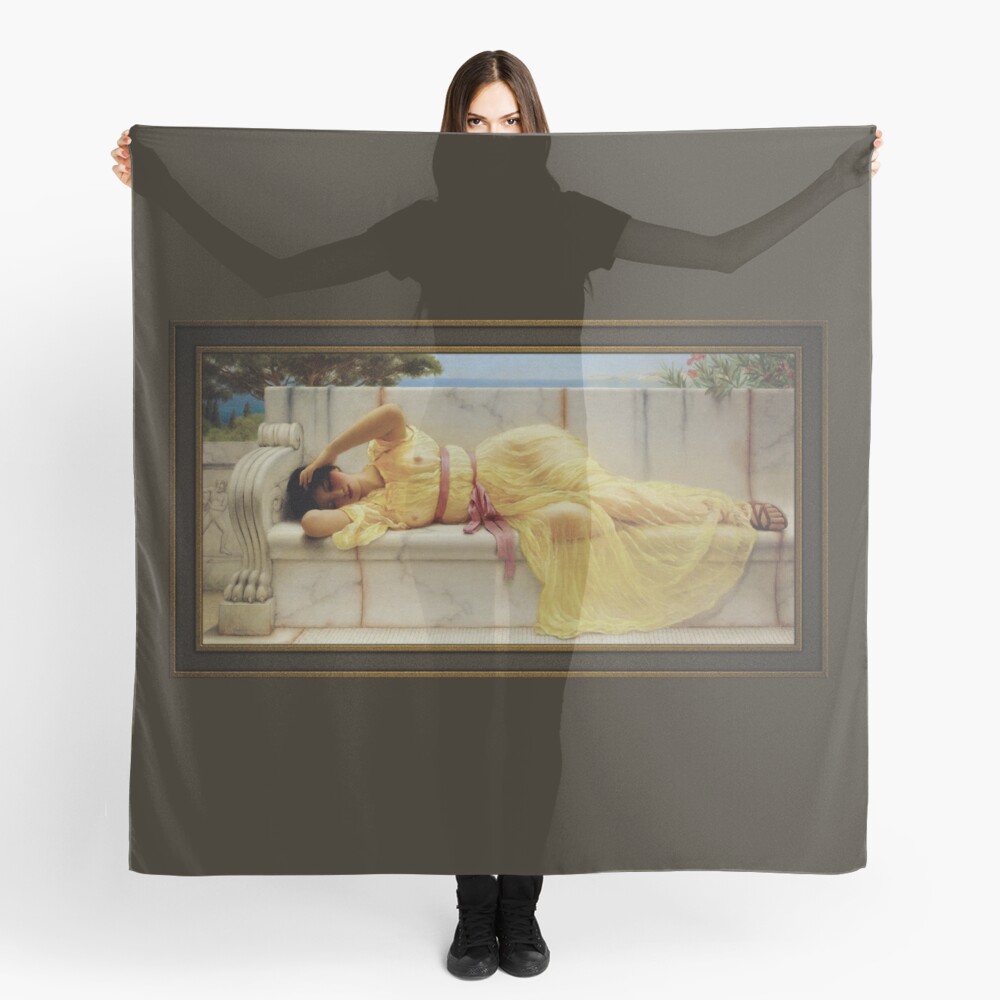
John William Godward “Garota com cortina amarela,” criado em 1901, apresenta uma representação impressionante da beleza clássica, renderizado com detalhes magistrais. Godward, um artista conhecido por suas contribuições para o Neoclássico estilo, capturou a graça atemporal do mundo antigo de uma maneira que enfatiza a harmonia, beleza, e serenidade. Godwardé (1861 – 1922) suas obras muitas vezes refletem sua profunda admiração pela arte da Roma e da Grécia antigas, misturando formas femininas idealizadas com os elementos arquitetônicos e naturais do mundo clássico. Sua propensão para paletas de cores delicadas, junto com sua habilidade em criar texturas realistas, fica evidente nesta pintura.

Índice
O assunto principal: Uma figura adormecida de serenidade
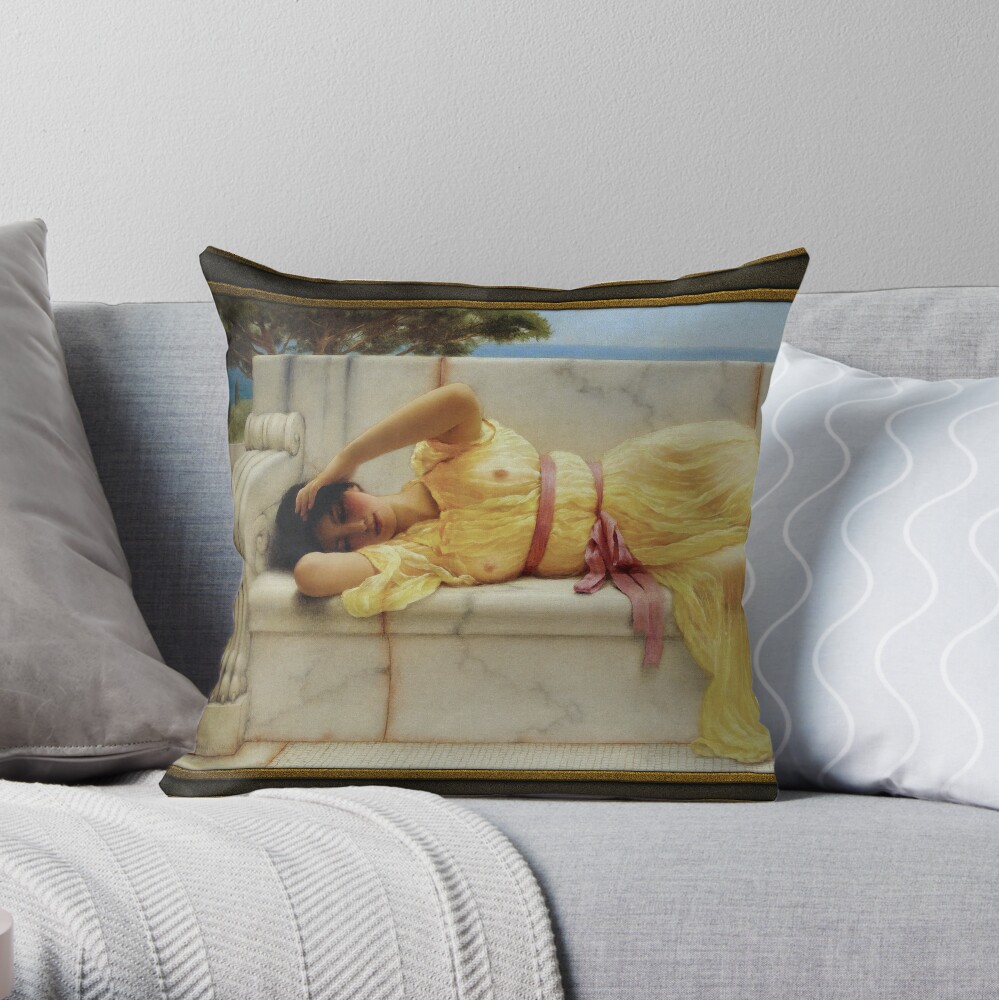
At the heart of the painting is a reclining young woman draped in a soft, flowing yellow gown that contrasts gracefully against the serene landscape. O girl’s pose suggests a moment of quiet rest, her head gently resting on her arm while her other hand lies across her forehead, seemingly shielding her eyes from the soft light.
Her physical form is captured with remarkable finesse, sua face is serene and perfectly sculpted, reflecting the beleza idealizada that was a hallmark of Godward’s work. The pale yellow gown she wears is airy, almost translucent, fluttering gently around her form as if caressed by a soft breeze. The drapery, though delicate and light in color, carrega consigo uma sensação de peso e profundidade, uma prova do estudo cuidadoso do artista sobre tecido e anatomia.
A atmosfera: Tranquilo e atemporal
O clima da pintura é de tranquilidade, atemporalidade, e graça. A figura parece estar em estado de profundo repouso, talvez no meio de uma soneca ou devaneio, intocado pelas preocupações do mundo exterior. O suavidade de sua cortina e a pose gentil de seu corpo evocam um ar de sono tranquilo, enquanto a ausência de qualquer emoção ou ação evidente faz com que o espectador experimente a cena como um convite para fazer uma pausa e refletir. Godward, em capturar este momento, cria uma quietude serena, onde o tempo parece suspenso.
A Arquitetura: Influência Clássica
Por trás da figura, a cena é emoldurada por um clássico banco de pedra que conecta o sujeito ao mundo da civilização antiga. O mármore banco, com seu leve desgaste, colunas elegantes e arabescos, serves as a reminder of the classical heritage that influenced much of Godward’s work. The artist’s attention to architectural detail is remarkable, with the texture of the stone clearly articulated in the subtle shadows and light reflections. O colunas, designed in the Corinthian style, suggest an elevated cultural and intellectual world, adding to the painting’s timeless quality.
A paisagem natural: Calm and Expansive
Em segundo plano, the viewer can see a peaceful vista that stretches out beyond the stone bench. The landscape is bathed in soft light, hinting at a horizon where the sea meets the sky. Although the colors of the sky are muted, a expansive nature of the scene provides a sense of espaço, suggesting an open, tranquil world that contrasts beautifully with the intimacy of the figure’s repose. Trees com uma variedade de vegetação exuberante aumentam a sensação de calma, sua folhagem sugerindo sutilmente o calor de um antigo clima mediterrâneo.
The Medium and Technique: Fine Detail and Texture
A habilidade técnica de Godward é evidente no detalhamento requintado tanto do figura e os elementos circundantes. A suavidade do vestido amarelo da mulher contrasta com a rigidez, qualidade quase tátil das colunas e bancos de mármore. O uso de luz e sombra no tecido enfatiza sua delicadeza, natureza fluida enquanto a pele da figura parece quase natural em seu tom natural. A técnica de Godward em misturar luz e sombra contribui para a sensação de realismo e profundidade, imbuindo o trabalho com uma qualidade quase tridimensional. Sua representação meticulosa das texturas – seja a suavidade da pedra, a transparência do tecido, ou o brilho natural da pele - demonstra seu domínio da luz e da textura.
Godward’s Style and Themes: Classical Beauty Revisited
O estilo de “Garota com cortina amarela” incorpora os ideais fundamentais de Neoclassicismo, um movimento que procurou reviver a estética e os ideais da Grécia e Roma antigas. Este estilo é caracterizado pelo foco na beleza idealizada, formas suaves, e uma ênfase na proporção e harmonia. O trabalho de Godward está profundamente infundido com estes princípios, especialmente em sua representação da figura feminina, que muitas vezes é idealizado e colocado em tranquilidade, ambientes descontraídos. Seus temas são frequentemente retratados em paisagens exuberantes ou ambientes arquitetônicos clássicos, como visto nesta peça. Esta pintura, em particular, encapsulates Godward’s fascination with female beauty and classical antiquity.
The theme of a reclining figure, often a symbol of both sensuality and repose, further emphasizes the artist’s commitment to creating a harmonious, serene world in his works. The image of the young woman in Godward’s painting is not merely of a sleeping figure; it is a vision of calm and perfection, disconnected from the worries of the world and set within a timeless environment. It’s an invitation for the viewer to step into a space where beauty and stillness reign.
Conclusão: The Enduring Legacy of Godward’s Work
John William Godward “Garota com cortina amarela” is a fine example of the artist’s dedication to the Neoclassical style, illustrating his skill in portraying idealized beauty and his deep admiration for classical art forms. Through the careful depiction of the figure, the architectural elements, E o mundo natural, Godward creates a scene of serene elegance that has continued to captivate audiences long after its creation. His ability to evoke a mood of timeless peace, combined with his technical precision, ensures that this painting remains a significant work in the history of British art.
Girl in Yellow Drapery is a remastered digital art old masters reproduction of a public domain image that is available as a impressão em tela on-line.
Esta criação de arte digital, assim como todas as obras de arte que podem ser encontradas no site do Xzendor7 estão disponíveis para compra on-line em uma variedade de formatos de materiais, incluindo impressões em tela, impressões acrílicas, estampas de metal, gravuras de madeira, impressões emolduradas, cartazes, e como impressões em tela enrolada em vários tamanhos, desde 12 polegadas para 72 polegadas, dependendo do tamanho da obra de arte real e da loja de impressão sob demanda em que você escolher comprar a arte.
A arte também está disponível em uma ampla variedade de roupas masculinas e femininas, canecas, bolsas, lenços, cadernos e diários e muitos produtos de decoração para casa.
Biografia do artista
Informações abaixo de Wikipedia.org
John William Godward was the eldest of five children, and was named after his father John and grandfather William.
He exhibited at the Royal Academy from 1887. When he moved to Italy with one of his models in 1912, his family broke off all contact with him and even cut his image from family pictures. Godward returned to England in 1921, died in 1922, and is buried in Brompton Cemetery, West London.
One of his best-known paintings is Dolce far Niente (1904), which was purchased for the collection of Andrew Lloyd Webber in 1995. As in the case of several other paintings, Godward painted more than one version; in this case, an earlier (and less well-known) 1897 version with a further 1906 version.
He committed suicide at the age of 61 and is said to have written in his suicide note that “the world is not big enough for [both] myself and a Picasso”.
His estranged family, who had disapproved of his becoming an artist, were ashamed of his suicide and burned his papers. Only one photograph of Godward is known to survive.
Godward was a Victorian Neo-Classicist, and therefore, in theory, a follower of Frederic Leighton. Contudo, he is more closely allied stylistically to Sir Lawrence Alma-Tadema, com quem compartilhava uma inclinação para a representação da arquitetura clássica - em particular, recursos de paisagem estáticos construídos em mármore.
The vast majority of Godward’s extant images feature women in classical dress posed against landscape features; although there are some semi-nude and fully nude figures included in his oeuvre, a notable example being “In The Tepidarium c1913”.
A title shared with a controversial Alma-Tadema painting of the same subject that resides in the “Lady Lever Art Gallery”. The titles reflect Godward’s source of inspiration; which was classical civilization, most notably that of Ancient Rome; a subject binding Godward closely to Alma-Tadema artistically.
Given that Classical scholarship was more widespread among the potential audience for his paintings during his lifetime than in the present day, meticulous research of detail was important in order to attain a standing as an artist in this genre.
Alma-Tadema was an archaeologist as well as a painter, who attended historical sites and collected artifacts he later used in his paintings: Godward, também, studied such details as architecture and dress, in order to ensure that his works bore the stamp of authenticity.
Além disso, Godward painstakingly and meticulously rendered other important features in his paintings, animal skins of which the paintings “Noon Day Rest c1910” e “A Cool Retreat c1910” contains examples of such rendition as well as wildflowers “Nerissa c1906” e “Summer Flowers c1903”.
The appearance of beautiful women in studied poses in so many of Godward’s canvases causes many newcomers to his works to categorize him mistakenly as being Pre-Raphaelite, particularly as his palette is often a vibrantly colorful one. The choice of subject matter (ancient civilization versus, por exemplo, Arthurian legend) is more properly that of the Victorian Neo-classicist.
In common with numerous painters contemporary with him, Godward was a ‘High Victorian Dreamer’, producing images of an idealized and romanticized world that, in the case of both Godward and Alma-Tadema, came to be criticized as a world-view of Victorians in togas.
Godward “quickly established a reputation for his paintings of young women in a classical setting and his ability to convey with sensitivity and technical mastery the feel of contrasting textures of flesh, mármore, fur and fabrics.
Godward’s penchant for creating works of art set in the classical period probably came from the time period in which he was born; as it was the last full-scale classical revival in western paintings, that flourished in England from the 1860s up until the 1890s.