

Seguiu el vostre camí c1833
“Segueix el teu camí (Passa el teu camí)” és un exquisit retrat dibuix creat pel pintor francès Henri Grevedon a 1833. Nascut a 1776 i morir en 1860, Grevedon va ser un artista destacat a principis del segle XIX, conegut per les seves obres detallades i emotives que sovint retrataven l'elegància i el refinament de l'època. Aquesta peça és un exemple magistral de la capacitat de Grevedon per capturar la gràcia i la subtilesa de la moda francesa i l'elegància punyent de les dones en el període romàntic..
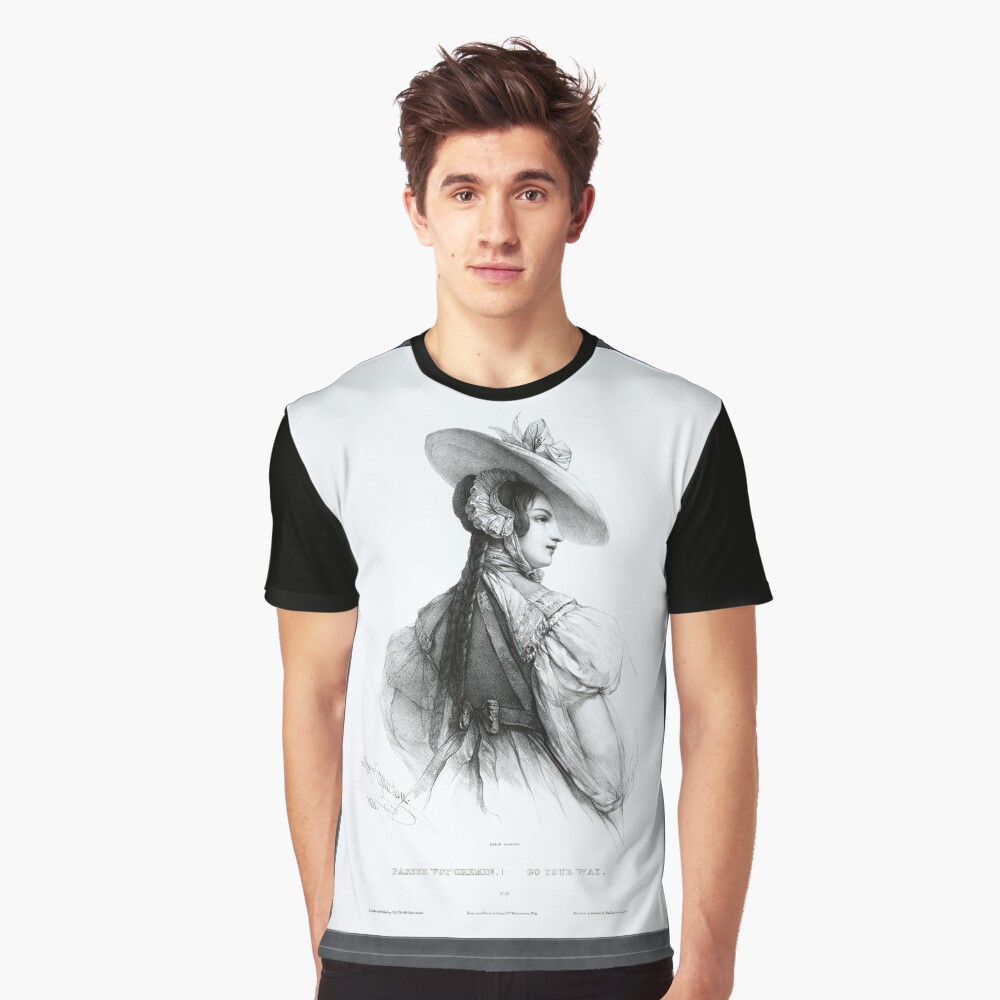
El dibuix retrata una dona vestida amb un conjunt elaborat, la seva figura capturada de perfil mentre mira per sobre de l'espatlla, la seva expressió enigmàtica. L'artista l'ha donat un aire d'independència i confiança, el tema subjacent de la peça suggereix una sensació d'alliberament o un viatge personal. El títol “Segueix el teu camí” suggereix una narració de l'apoderament individual, una afirmació d'autonomia davant les expectatives de la societat. La frase “Passa el teu camí,” que es tradueix a “Segueix el teu camí,” reforça aquesta interpretació, possiblement al·ludint a la idea d'una dona fent el seu propi camí al món.
Taula de continguts
El tema i la composició
El tema central de l'obra d'art és la dona elegantment vestida, que és retratat amb trets delicats i una postura graciosa. L'artista ha capturat acuradament el seu perfil, centrant-se en la suavitat de la seva complexió i la naturalesa fluida del seu vestit. Porta una gran mida, barret d'ala ampla adornat amb una cinta i un accent floral, que és un segell distintiu de la moda francesa del segle XIX. El seu vestit és un vestit luxós amb plecs complexos i detalls d'encaix, indicatiu dels teixits de luxe populars en aquella època. Els cabells que flueixen, ben trenada i caient en cascada per l'esquena, suggereix tant joventut com sofisticació, emfatitzant la seva bellesa refinada.
La postura de la dona és especialment sorprenent: el cap girat cap a un costat, suggerint una sensació de moviment o contemplació. Hi ha una narració subtil però inconfusible suggerida per la manera com sembla estar allunyant-se de l'espectador., com si estigués a punt d'allunyar-se o de marxar a la distància. Això crea una il·lusió de dinamisme a l'obra d'art, as though the subject is about to take her next step into the unknown.
Grevedon’s meticulous attention to detail is evident in the folds of the woman’s gown, each crease and shadow carefully drawn to indicate both texture and movement. El suau, sweeping lines of her dress contrast with the sharp, delicate details of her accessories and the sweeping floral decorations in her hat. This use of detail enhances the overall realism and depth of the drawing, ensuring that every element serves to highlight the subject’s grace.
Estil i Materials
The style of this work is characteristic of the Romantic period, un moviment que posava èmfasi en l'emoció, individualisme, i la bellesa del món natural. The focus on the feminine figure and the sensuous drapery of the gown are typical of Romantic art, which often celebrated the human form and the beauty of personal expression. L'elecció de Grevedon d'utilitzar llapis i tinta dóna a l'obra una suavitat, qualitat etèria, donant un sentit gairebé tàctil a les textures del vestit i les línies fluides del cabell de la dona. L'elecció del monocrom millora l'atenció als detalls complexos sense la distracció del color, permetent a l'espectador apreciar plenament l'ombra i el contorn delicats del subjecte.
L'estat d'ànim general de la peça és d'introspecció tranquil·la, combinat amb una sensació de moviment i un viatge personal. L'ombrejat delicat i la línia suau transmeten una tranquil·litat, quietud gairebé meditativa, mentre que la postura equilibrada de la dona i el lleuger gir del seu cos suggereixen anticipació i promesa d'acció. La crua, fons simple serveix per aïllar encara més el tema, placing all focus on the woman herself and her emotional narrative.
El tema i l'estat d'ànim
The theme of this artwork revolves around the idea of personal autonomy and the quiet strength of women during an era that often limited their freedom. El títol “Segueix el teu camí” can be interpreted as a statement of independence, urging the viewer to consider the subject’s path as one chosen for herself, rather than one dictated by society. La frase “Passa el teu camí” imbues the artwork with a sense of defiance and self-determination. Això, coupled with the composition and posture of the figure, suggests a woman who is contemplating her own future, perhaps on the cusp of making a life-altering decision.
The mood of the piece is subdued and contemplative. The soft lines and delicate rendering convey a sense of elegance, while the woman’s expression and posture evoke a quiet resilience. There is an almost mysterious quality to her demeanor, as if she is engaged in deep thought, yet prepared to step forward into her destiny. The lack of any overt narrative or context allows the viewer to project their own interpretation, making the artwork timeless in its exploration of personal journey and empowerment.
Conclusió
“Segueix el teu camí (Passa el teu camí)” is a remarkable example of 19th-century French art that combines technical mastery with deep emotional resonance. Henri Grevedon’s skill in rendering the details of fashion, textura, and emotion in a restrained and graceful manner captures the essence of the Romantic period while also exploring themes of individualism, empowerment, and the journey of life. The elegance of the subject, the careful attention to detail, and the evocative mood make this artwork a timeless reflection on the beauty of personal autonomy.
Es tracta d'una reproducció d'antics mestres d'art digital remasteritzada d'una imatge de domini públic que està disponible com a Impressió de tela en línia.
Artista Bio
Pierre Louis Henri Grevedon was a French painter, printmaker, lithographer and draughtsman who at the age of 13 studied at the workshop of French Painter Jean Baptiste Regnault (1754 – 1829) at the Ecole des Beaux-Arts de Paris and exhibiting at the Paris Salon from 1824 a 1859.
A l'edat de 30 dins 1806 he traveled to Russia, where he became an associate at the Academy of Saint Petersburg; where he stayed until 1812, at which time he traveled to Stockholm, Suècia; then on to London England and finally returning to Paris, França a 1816.
Shortly afterwards he devoted his talents to the art of lithography which better suited him than painting; making a name for himself in this endeavor; working mainly for the studio of French Lithographer and Printmaker Charles Motte (1785 – 1836) during the 1820s.
As his reputation grew he a gathered a list of personalities from the entertainment field, which included actresses and dancers such as La Malibran, Lucile Grahn, Fanny Elssler, Rachel ,Taglioni, Léontine Fay and many more.
Quan ell era 56 years old on January 1832, he was awarded with the title of Chevalier of the Legion of Honor; which is the highest French order of merit for both military personnel and civilians, which was established by Napoleon Bonaparte (1769 – 1821) dins 1802.