

Gottes Kreaturen
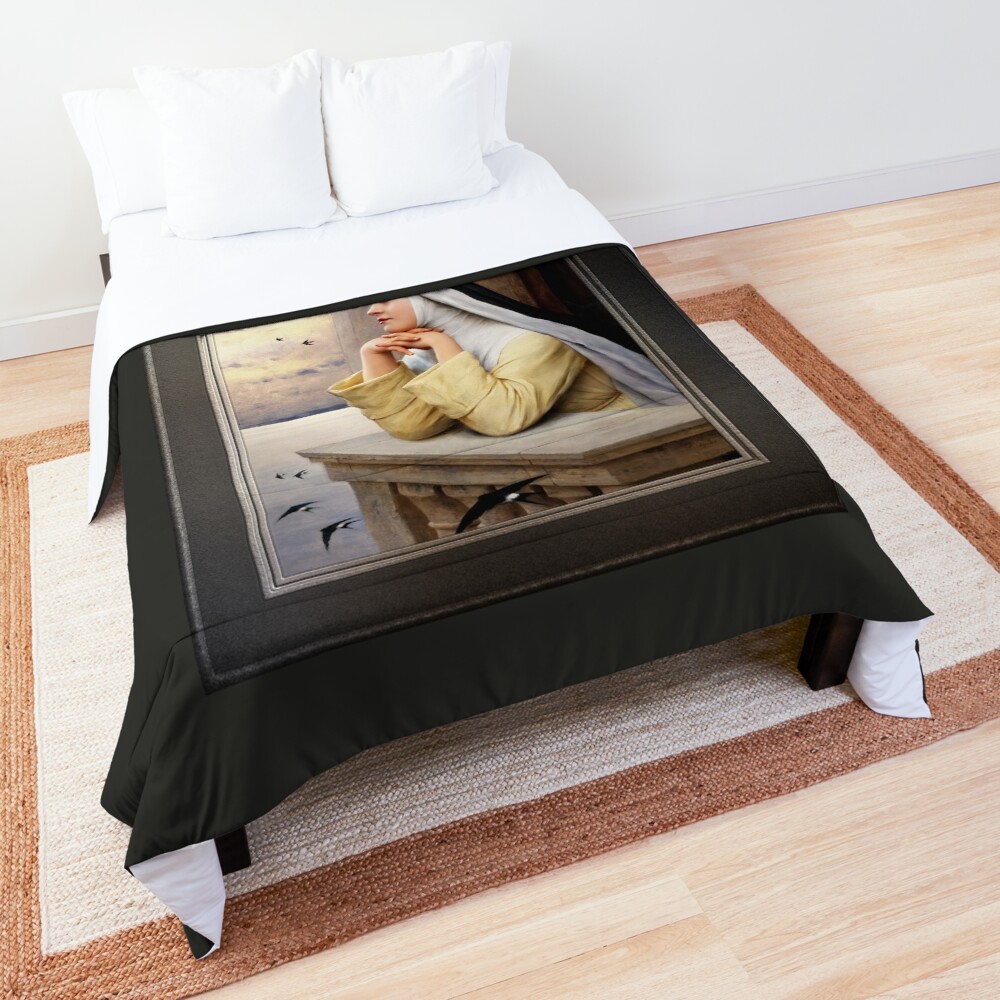
“Gottes Kreaturen,” erstallt an 1913 vum italienesche Kënschtler Eugen von Blaas (1843 – 1931), stellt eng kontemplativ a roueg Zeen vir, déi souwuel déi emotional wéi och spirituell Elementer typesch vu sengem Stil reflektéiert. Bekannt fir seng exquisite Technik an déiwe Fokus op mënschlech Emotiounen, De Blaas erfaasst e Moment vu friddlecher Reflexioun. Dëst reliéis Konschtwierk portraitéiert eng jonk Fra an enger kontemplativer Haltung, encadréiert vun enger oppener Fënster mat enger erweiderter Vue op den Himmel. Hir Ae si mëll no ënnen gegoss, am Gedanken verluer, während déi roueg Landschaft dobausse schaarf kontrastéiert mat der interner Stillheet déi se ausstraalt.
Inhaltsverzeechnes
Haaptthemium: Eng kontemplativ Figur
Am Kär vun der Zesummesetzung ass d'Figur vun enger jonker Fra, e Modell vu Rou an Eleganz, gekleet an engem fléissendem wäiss a giel Gewunnecht, typesch fir fréi 20. Joerhonnert reliéis Kleedung. Si schéngt déif a Gedanken ze sinn, mat hiren Hänn sanft zesummen an enger Haltung vu roueger Iwwerleeung. D'Bild konzentréiert sech net nëmmen op hir Erscheinung, mee op hiren emotionalen Zoustand, spigelt sech an de seriöen awer sombere Look op hirem Gesiicht. Hiren Ausdrock ass ee vun intern Fridden, awer mat engem ënnerierdesche Gefill vu Verlaangen, vläicht fir eng méi déif Verbindung mat der gëttlecher oder Natur.
Dem Blaas seng Handhabung mat de Gesiichtsmerkmale vun der Fra ass delikat a virsiichteg, erlaabt dem Zuschauer eng roueg Schwachstelle an hiren Aen a Haltung ze gesinn. Hir Jugendlechkeet, kombinéiert mat de sanft Falten vun hirem reliéise Kleed, lends an ethereal quality to her presence.
The face is rendered with exceptional realism, exhibiting fine detail in the skin tones, the subtle play of light and shadow on her features, and the soft texture of the fabric she wears. It is clear that Blaas’s intent was to evoke not just the appearance of a figure in a moment of stillness, but to express the feeling of solitude and contemplation that often accompanies moments of prayer and reflection.
Objeten an Terrain
De Kader vun “GOD’s Creatures” is as important as the figure itself. The woman is positioned at an open window, with the stone framework of the structure framing her profile. The window sill appears to be made of stone, possibly marble, and is decorated with faintly carved lines that echo the simplicity and elegance of the woman’s attire. De Steenwierk reflektéiert de spirituellen an historesche Kontext vum Kader, proposéiert eng Plaz vu Meditatioun oder e Réckzuch, méiglecherweis bannent engem Klouschter oder engem reliéisen Hellegtum.
Ausserhalb vun der Fënster, den Himmel ass voll mat mëll, bléist Wolleken, an eng Serie vu Villercher ginn iwwer d'Ausdehnung gesi gesinn. Dës Villercher, am delikaten Detail ofgeleet, schéngen Fräiheet a gëttlech Präsenz ze representéieren.
D'Villercher schéngen ouni Ustrengung iwwer den Himmel ze rutschen, hire Fluch symboliséiert d'Verbindung tëscht dem äerdlechen an dem göttleche, e widderhuelend Thema an der reliéiser a spiritueller Konscht. Den Kuliss vermëttelt e Gefill vu Wäisheet an der Schéinheet vun der Natur, wéi wann den Zuschauer invitéiert fir iwwer d'Grenze vun der Steenstruktur an an déi grenzlos Méiglechkeeten ze kucken, déi doriwwer eraus leien.
Dem Blaas säi Choix fir dës Villercher opzehuelen, ënnersträicht eng spirituell Verbindung mat Gottes Kreaturen, e Gefill vu Fridden an Respekt fir d'Naturwelt opruffen. Dës Inklusioun ass subtil awer bedeitend, d'Opmierksamkeet vum Betrachter op d'interwoven Relatioun tëscht Mënschheet an dem göttleche zéien.
Styl an Technik
Dem Eugen von Blaas säi Stil ass am akademesche Realismus verwuerzelt, an “GOD’s Creatures” weist seng Fäegkeet fir lieweg mënschlech Figuren an Ëmfeld ze kreéieren. Seng detailléiert Rendering vum Gesiicht vun der Fra, Uestpr), an Ëmgéigend weist seng technesch Meeschter um Liicht, Schied, an Textur.
D'Benotzung vum Kënschtler vu mëll, gemëschte Pinselstécker verbessert den atmosphäreschen Effekt, schafen eng Rou, dreamlike Qualitéit op d'Bild. De Kontrast tëscht den detailléierte, realistesch Rendering vun der Fra an déi liicht méi impressionistesch Behandlung vun der Landschaft ënnersträicht déi bannenzeg Welt vun der Figur weider, de Fokus op hiren emotionalen Zoustand plazéiert.
Den Hannergrond an de Virdergrond sinn net zevill beschäftegt, e Gläichgewiicht tëscht Realismus an Abstraktioun behalen. Dës subtil Mëschung tëscht der Figur an der Ëmwelt encouragéiert eng meditativ Äntwert vum Betrachter, invitéieren se fir d'Thema bannescht Liewen ze iwwerdenken, wärend se och déi natierlech Schéinheet ronderëm si schätzen.
D'Opmierksamkeet op Detailer an den Texturen vun der Fra Kleedung an de Steemetzerei suggeréiert en héije Niveau vun Handwierk., typesch vum Blaas senger Aarbecht, wou all Element mat engem déiwe Sënn vun Suergfalt a Präzisioun gemaach gëtt.
Thema a Stëmmung
D'allgemeng Thema vun “GOD’s Creatures” ass eng vu Reflexioun a spiritueller Rou. The title itself evokes a connection between the human figure and the divine creation of nature, with the woman symbolizing both the spiritual and human elements that are central to Blaas’s work.
The figure’s contemplative nature and the tranquil setting suggest a deep connection to faith, Natur, an d'helleg. The presence of birds outside the window reinforces the notion of God’s creatures and their role in the world, symboliséiert Rengheet, Fräiheet, a gëttlech Gnod.
D'Stëmmung vum Bild ass roueg an introspektiv. The soft tones, the serene expression on the woman’s face, and the expansive, peaceful sky outside create a quiet atmosphere of contemplation. This mood is reinforced by the restrained color palette, which uses warm, muted tones to convey a sense of calm, while the birds flying in the distance provide a subtle but important element of movement, d'Stille mat hirem Fluch briechen.
De Blaas erfaasst e Moment deen zäitlos fillt, d'Gefill opruffen datt dëse Moment vu roueger Reflexioun zu all Moment kéint existéieren, op all Plaz. D'Kombinatioun vun der Rou vun der Figur an der Ëmgéigend natierlech Schéinheet schaaft e Gefill vun Eenheet tëscht Mënschheet an dem göttleche, suggeréiert datt souwuel d'mënschlech Séil an d'Naturwelt an enger friddlecher Verbindung matenee verbonne sinn, harmonesch Existenz.
Conclusioun
An “GOD’s Creatures,” Den Eugen von Blaas huet e Konschtwierk erstallt, dat Theme vun der spiritueller Reflexioun wonnerschéin akapsuléiert, Verbindung mat der Natur, an emotional Rou. Duerch seng beherrscht Technik an duerchduechte Kompositioun, De Blaas invitéiert den Zuschauer an e meditative Raum, wou d'Fra vun der Fra souwuel als Individuum an als Vertrieder vun der breeder mënschlecher Erfahrung déngt..
D'Konschtwierk encouragéiert d'Kontemplatioun net nëmme vun der gëttlecher, awer och vun der natierlecher Welt, beliicht déi intim Relatioun tëscht der Mënschheet an de Kreaturen déi dës Welt deelen. Déi friddlech Stëmmung, kombinéiert mat der virsiichteg Opmierksamkeet op Detailer an der symbolescher Notzung vun Villercher, schaaft eng Aarbecht, déi zu der Séil schwätzt, e Gefill vu Rou a spiritueller Eenheet opruffen.
Dëst ass eng retouched digital Konscht al Master Reproduktioun vun engem Public Domain Bild dat online verfügbar ass als gewalzt Drécken.
Kënschtler Bio
Info Ënnen Vun Wikipedia.org
Hie gouf zu Albano gebuer, bei Roum, zu engem Tiroler Papp an italienescher Mamm. Säi Papp Karl, och moler, war säi Schoulmeeschter. Seng Mamm, Agnesina Auda, war eng räich réimesch Fra. D'Famill ass op Venedeg geplënnert wéi de Karl Professer op der Akademie vu Venedeg gouf. Hien huet dacks Szenen zu Venedeg gemoolt, awer och Portraiten a reliéis Biller.
Zu senge Wierker sinn d'Hochzäitsform an der Sakristei; Bingo zu Campielo zu Venedeg; Eng Zeen vu Marionetten an enger Schoul; an La Ninetta. De Konschtkritiker Luigi Chirtani, wéi d'Bild an der Mostra Nazionale di Venezia ausgestallt gouf, beschriwwen et als Schéin, verflaacht, flott, geklappt, gebotzt, ausgeräiften, Wäscherin an engem Bild vum Mr. Blase, de Liiblingsportraitist vu grousse venetianeschen Aristokraten, am Gala Satin gekleet, blénkeg Bijouen, Frisuren vun de Räichen.
Seng faarweg an éischter theatralesch Period Biller vun der venetianescher Gesellschaft, z.B. Um Balkon (1877; Privat Kollektioun), ware ganz anescht am Verglach zu delikate Pastell an Ätze vun den Haff, Balkon a Kanäl vum modernen Venedeg.
Eugène de Blaas’ Biller goufen an der Royal Academy ausgestallt, Fine Art Society, New Gallery an Arthur Tooth and Sons Gallery zu London, an och an der Walker Art Gallery zu Liverpool