

Head Of A Young Woman c1780s
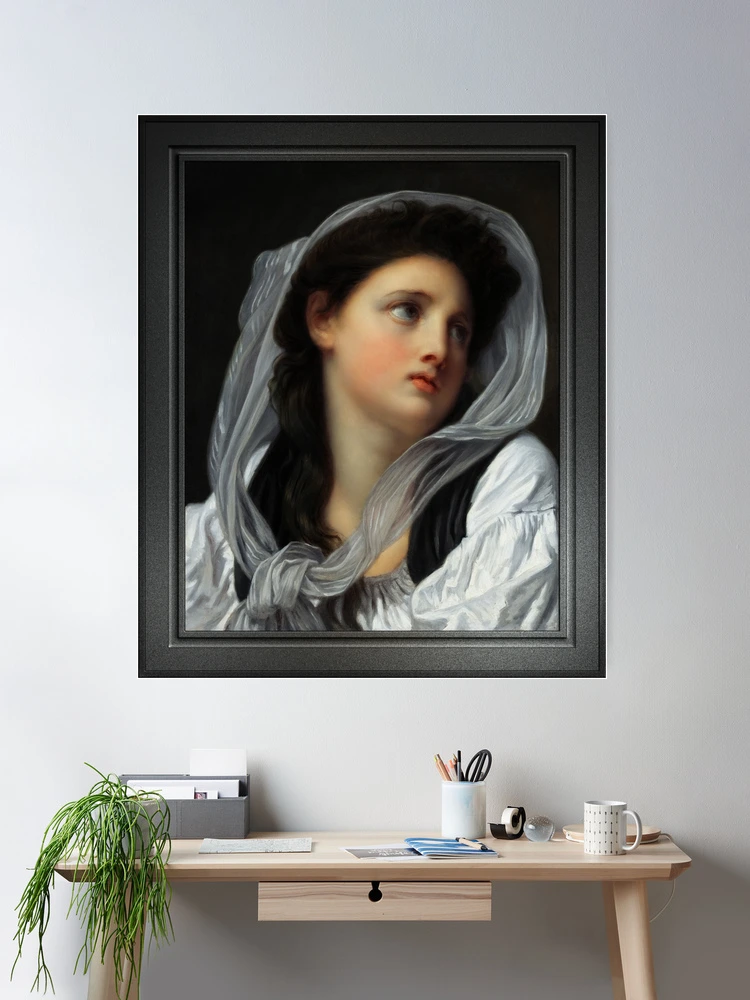
הגרפיקה “Head Of A Young Woman c1780s” was created by the renowned French artist ז'אן-בטיסט גרוז (1725 – 1805). GREUZE, a master of the Rococo and Neoclassical movements, has long been celebrated for his emotional portrayal of the human form, particularly in his genre scenes and portraiture. בציור הזה, Greuze presents a close-up view of a young woman, capturing her delicate features and emotional expression. The subject’s appearance and pose evoke a quiet sense of vulnerability and contemplation, typical of the artist’s focus on intimate, personal moments.
תוכן העניינים
הנושא: A Moment of Vulnerability
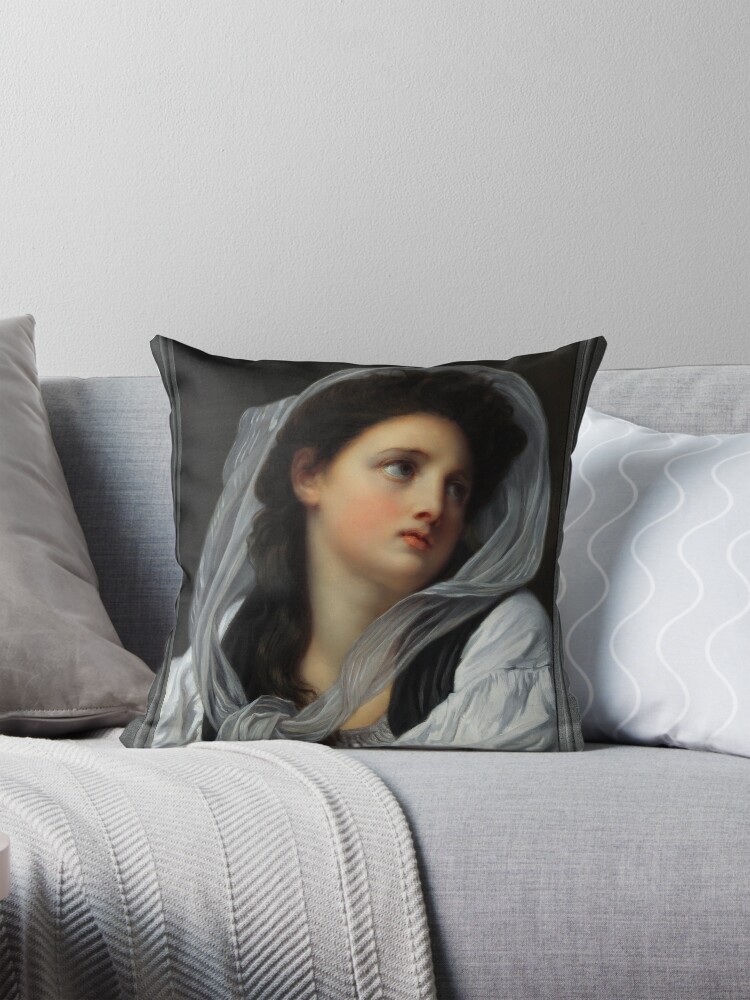
The young woman portrayed in this painting seems to be in a state of introspection, her gaze directed upward and slightly to the side, as though lost in thought or perhaps caught in a fleeting moment of emotion. Her head is slightly tilted, and her face, framed by flowing, בד רך, adds an element of delicacy to the composition. The transparent veil-like material, which drapes gently over her head and shoulders, creates a soft contrast to the more defined features of her face, enhancing the subject’s fragile and ethereal quality. The veil’s soft folds suggest an underlying sense of modesty and demureness, qualities often emphasized in Greuze’s portraits of young women.
Her pale complexion, highlighted by soft brushstrokes, adds to the overall gentle mood of the piece. העיניים שלה, slightly wide, exude a quiet vulnerability. The expression is not one of distress but rather one of thoughtful quietude, inviting the viewer to engage with her internal world, though it remains shrouded in mystery. The subtle play of light on her face further enhances her youthful innocence and purity, while the deep shadows surrounding her create a mood of melancholy, emphasizing her isolation in this intimate moment.
חומרים וטכניקות: A Masterful Rendering of Light and Texture
GREUZE, known for his meticulous attention to detail, employed traditional oil painting techniques to create a strikingly realistic and textured portrait. The rendering of the young woman’s face and veil shows the artist’s exceptional ability to manipulate light and shadow, particularly in his treatment of the skin’s texture and the translucent fabric.
The artist’s mastery of chiaroscuro – the contrast between light and dark – creates a deep sense of volume in the subject’s face, allowing each delicate contour to emerge. The pale tones of her face are subtly warmed by the naturalistic application of color, creating a softness that feels almost tangible. Greuze’s use of the fine details in her hair and the transparent veil elevates the portrait beyond a simple likeness, offering instead a nuanced representation of the subject’s emotional depth.
The veil, a key element in the composition, מבוצע בזהירות יוצאת דופן. Each fold and layer is crafted to suggest a sense of weight and fluidity, and its lightness contrasts with the more defined features of the young woman’s face. The contrast between the smoothness of her skin and the texture of the veil emphasizes the artist’s understanding of fabric as both an element of fashion and a device to enhance the mood and meaning of the composition.
The Emotional Tone and Psychological Depth
Greuze’s work is often praised for its emotional depth, and this portrait of the young woman is no exception. The expression on her face hints at complex psychological states: she appears to be caught in a moment of emotional tension, one that does not necessarily suggest joy or sorrow but rather a contemplative or pensive state. The choice to depict the subject in such a vulnerable moment rather than in a more formal or rigid pose adds an element of relatability to the viewer, drawing them into the scene and inviting them to interpret her emotional state.
The mood created by the painting is one of quiet introspection, heightened by the somber dark background that isolates the young woman from her surroundings. This dark backdrop allows the viewer’s focus to remain entirely on the subject, further deepening the emotional resonance of the portrait.
The juxtaposition of light and dark, along with the contrast between the soft skin and the flowing fabric, creates a feeling of fragility that permeates the entire composition. This exploration of emotional depth was characteristic of the Rococo period, where portraiture was often used to convey not only the physical likeness of a subject but also their inner emotional life.
מַסְקָנָה: A Timeless Portrait of Youth and Vulnerability
“Head of a Young Woman” stands as a remarkable example of Jean-Baptiste Greuze’s skill in portraying the emotional complexity of the human figure. Through his masterful handling of light, צֵל, ומרקם, Greuze captures a moment of delicate beauty and introspection, inviting the viewer to contemplate not only the external features of the subject but also her internal world. The artwork is a testament to the artist’s ability to evoke complex psychological and emotional states through the medium of oil paint, offering a portrait that transcends time and remains poignant even today.
יצירת אמנות דיגיטלית זו, כמו כל יצירות האמנות שניתן למצוא באתר Xzendor7 זמין לרכישה אונליין במגוון פורמטים חומריים כולל הדפסי קנבס, הדפסי אקריליק, הדפסי מתכת, הדפסי עץ, הדפסים ממוסגרים, עמוד הבית של Xzendor7, וכמו הדפסי קנבס מגולגלים במגוון גדלים מ 12 אינצ'ים ל 72 אינצ'ים בהתאם לגודל הגרפיקה בפועל ולחנות ההדפסה לפי דרישה ממנה תבחר לקנות את האמנות.
יצירות האמנות זמינות גם במגוון רחב של בגדי גברים ונשים, ספלים, טוטס, צעיפים, מחברות ויומנים ומוצרי עיצוב לבית רבים.
על האמן
המידע שלהלן נגזר מ NGA.gov
ז'אן נולד בטורנוס, צרפת ב 1725 כבנו השישי של אמן רעפים שזיהה את כישרונו בגיל מוקדם מאוד; שולחים אותו לליון, צרפת ללמוד אצל צייר הדיוקנאות הצרפתי צ'רלס גרנדון (1691 – 1762).
בערך בגיל של 30 הוא עזב את ליון, ונסע לפריז, צרפת ללמוד באקדמיה רויאל דה פיינטורה ופיסול או באקדמיה המלכותית לציור ופיסול; שהיה בזמנו מוסד האמנות המוביל של צרפת במהלך החלק האחרון של המשטר העתיק (משטר ישן ~1500 ל 1789), עד שהוא בוטל ב 1793 במהלך המהפכה הצרפתית.
אם כי מוכשר מאוד ומצליח מאוד במהלך שנות ה-60 וה-70, עם פטרונים של המרקיזה דה פומפדור (1721 – 1764), הקיסרית קתרין השנייה מרוסיה (ר. 1762 – 1796), ואנג' לורן מלה לייב דה ג'ולי (1725 – 1779); אופיו המרדני והעימותים עם פקידי האקדמיה והסלון יתגלו כאסון שלו; במיוחד לאחר נישואיו לאן מארי באבוטי ב 1759; מה שיתברר כאסון עבורו, כידוע שניהלה רומנים שונים עם תלמידיו ויושביו, מה שגרם לו לאובדן הכנסה ולהשפלה פומבית.
כשהנישואים הסתיימו 34 שנים לאחר מכן קיבלה אשתו פשרה משמעותית, מה שהשאיר אותו במצב כלכלי קשה ועד מותו ב 1805 בגיל 80 הוא כמעט היה שבור.