

Kaixo
Artelanaren aurkezpena
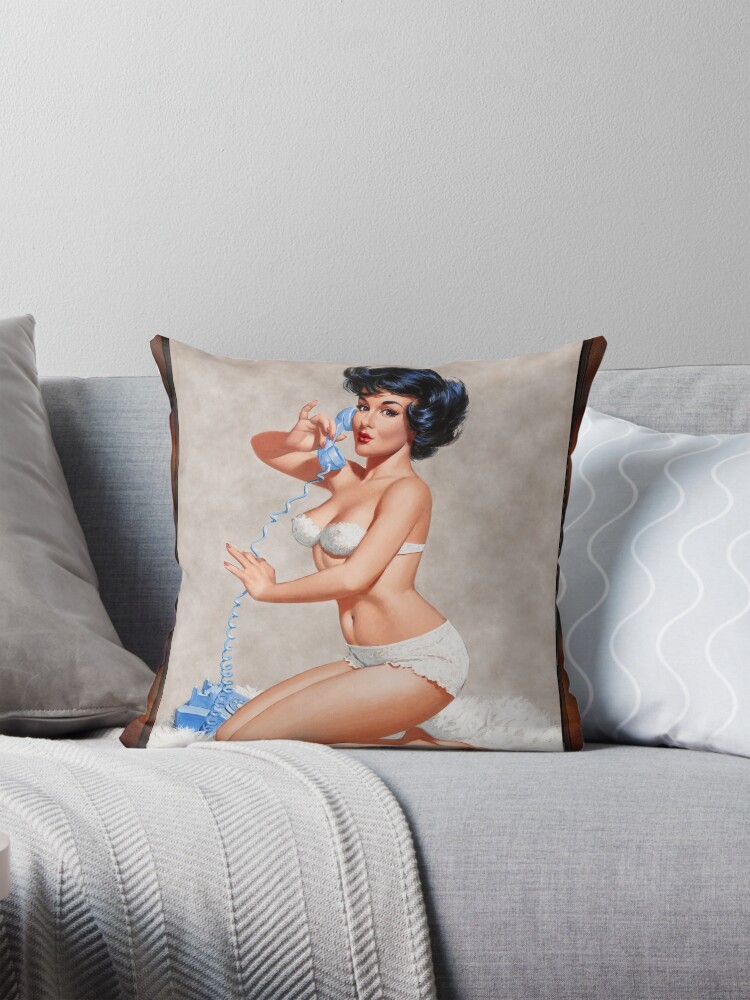
Arthur Sarnoffena(1912 – 2000) izenburua duen pintura “Kaixo” mendearen erdialdeko amerikarren adibidea den pieza liluragarria da pin-up artea. Jolasa harrapatzeko duen gaitasunagatik ezaguna, xarmaz eta izaeraz betetako eszena erakargarriak, Sarnoff margolari ospetsua izan zen pin-up artearen urrezko garaian. Artelan honek bere estilo bereizia jasotzen du, energia bizia xehetasunetarako arreta zorrotzarekin nahastuz.
Edukien taula
Gai nagusia
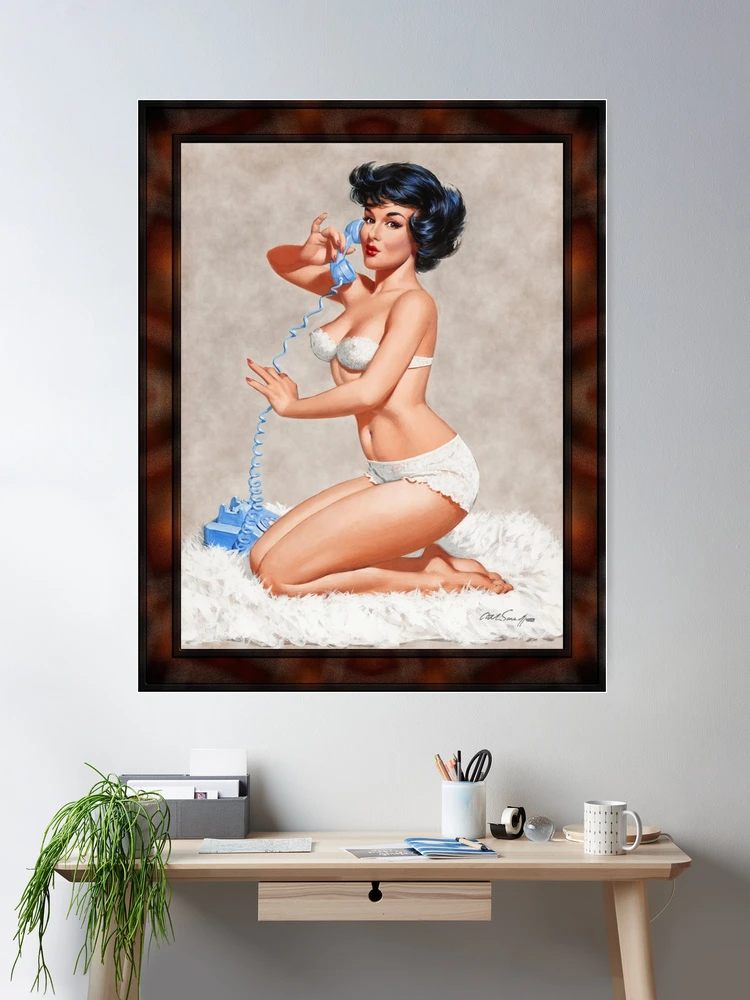
Margolanak bigun baten gainean belaunikatuta dagoen emakume morena dotorea irudikatzen du, alfonbra zuri dotorea, bere jarrera aura jostagarri eta koekin bat dariola. Bere ile iluna moda bolumentsua eta distiratsua da, 1950eko eta 1960ko hamarkadetako edertasun joeren tipikoa, bere aurpegi adierazgarria markatzen duten uhin leunetan jauzika. Bere ezaugarri delikatuak: bekain arkuak, eyeliner ausarta, eta ezpain osoek gorri bizia margotu zuten, pin-up arketipoaren erakargarritasun klasikoa islatzen dute.
Bere jantziak bat datorren lentzeria zuri-multzo batez osatuta dago, parpailaren antzeko ehundurak bere feminitatea nabarmentzen dutenak. Bere armairuaren sinpletasunak bere jarrera seguru eta dinamikoarekin kontrajartzen du, ikuslearen begia erakartzea bere keinu adierazgarrietara eta atrezzoarekin duen elkarrekintzara.
Objektuak eta Atrezzoak
Artelanaren euskarri nagusia telefono birakari urdin distiratsua da, emakumeak belarrira fin eta iradokitzailez eusten diona. Harildutako telefono-kablea lurrera jaisten da, konposizioari mugimendu eta energia sentsazioa gehitzea. Telefonoaren modernitatearen juxtaposizioa (bere garairako) larruzko alfonbraren leuntasunarekin eta modeloaren figurak ehundura eta formen nahasketa harmoniatsua sortzen du.
Telefono urdinak objektu praktiko gisa ez ezik, aingura bisual gisa ere balio du, margolanaren tonu epel nagusien kontrako kolore kontraste bat emanez. Bere gainazal distiratsuak argia sotilki islatzen du, piezari sakontasuna eta errealismoa gehituz.
Lurrak eta materialak
Atzeko planoa gutxietsia da, Gradiente beige leun bat, gaiari eta eszenako objektuekin duen interakzioari arreta osoa mantentzen diona. Atzealde neutro honek lehen planoko kolore eta ehundura biziak nabarmentzen ditu denborarik gabekoa sortzen duen bitartean, konposiziorako estudio itxurako giroa.
Gaiaren azpian dagoen larru zuriko alfonbra xehetasunei arreta handiz irudikatuta dago. Fluffa da, cloud-like texture contrasts beautifully with the smoothness of the model’s skin, the sleek telephone, and the polished surface of her lingerie. This interplay of textures—soft fur, smooth skin, and rigid plastic—creates an engaging visual experience.
Estiloa eta Teknika
Arthur Sarnoff’s work is a testament to the illustrative realism and playful charm characteristic of mid-20th-century pin-up art. His approach combines careful attention to anatomy and proportion with a lighthearted, whimsical tone. Biguna, luminous quality of the painting is achieved through subtle shading and highlights, which give the figure a lifelike three-dimensional presence.
The piece reflects the influence of commercial art trends prevalent during its creation. The crisp, clean lines and vivid, saturated colors suggest an intent to appeal to mass audiences while maintaining artistic sophistication. The painting’s polished finish and smooth transitions between light and shadow demonstrate Sarnoff’s mastery of his craft.
Gaia eta Aldartea
Gaia “Kaixo” centers around flirtation, edertasuna, eta modernitatea. The use of the telephone, a symbol of connection and communication, evokes a narrative of a casual yet enticing interaction. The woman’s posture and expression suggest she has just picked up the phone and is about to engage in a lighthearted, perhaps mischievous, conversation.
The mood is cheerful and inviting, with a touch of playful seduction. The artist’s choice of warm and bright colors, combined with the model’s coy expression, creates a sense of intimacy and lighthearted charm. The absence of excessive detail in the background ensures that the viewer’s attention remains focused on the subject and her dynamic presence.
Testuinguru kulturala
During the mid-20th century, pin-up art was a celebrated form of visual culture, often associated with advertising, aldizkariak, eta egutegiak. Artists like Arthur Sarnoff played a crucial role in shaping the idealized representations of femininity and beauty during this period. The depiction of glamorous, confident women became a hallmark of the era, blending art with elements of popular culture.
In “Kaixo”, Sarnoff encapsulates the optimism and playful spirit of the time, presenting a subject who is both approachable and aspirational. The artwork reflects societal ideals of the post-war period, when technological advancements (symbolized by the telephone) and a renewed emphasis on domestic leisure converged.
Bukaera
Arthur Sarnoffena “Kaixo” is a delightful representation of mid-century pin-up art, combining technical excellence with a playful narrative. The painting’s vivid details, engaging composition, and timeless charm ensure its enduring appeal as a classic of American illustration. Sarnoff’s ability to capture the essence of his era while infusing his work with universal themes of beauty and allure makes this piece a standout example of his artistic legacy.
Domeinu publikoko irudi baten erreprodukzioa da mihise inprimatu sarean.
Artistari buruz
Hemendik eratorritako informazioa behean Wikipedia.org
Arthur was an American illustrator and painter born in Brooklyn, New York in 1912 and that studied at the Industrial School and the Grand Central School of Art in New York City, AEB.
His art mentors were American Painter and Illustrator John Clymer (1907 – 1989) and American Realist Artist Andrew Newell Wyeth (1917 – 2009).
Sarnoff worked extensively in the commercial space create art for weekly magazines, advertising and cover art; and during his long career produced work for Redbook, American Weekly, McCall’s, Woman’s Home Companion, The American Magazine, Kosmopolita, Ezkutorea, Good Housekeeping, Lucky Strike, Coors, Vick’s and many other companies.