

막내 동생 (막내 동생)
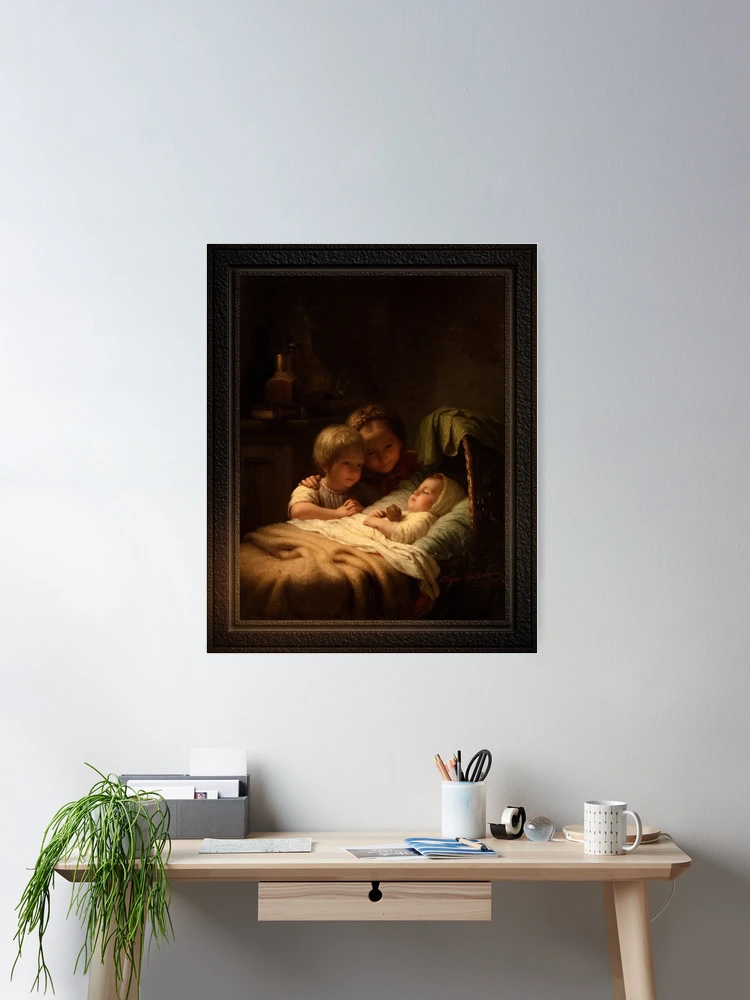
“막내 동생” (막내 동생), 그린 1854 by the German artist Johann Georg Meyer (1813 – 1886), captures a tender and intimate moment in a domestic setting, exemplifying the genre of sentimental realism that was prevalent in mid-19th century Europe. The painting portrays three children, their expressions imbued with innocence and affection, 소프트에 대해 설정, atmospheric backdrop that enhances the emotional weight of the scene. This quiet and serene composition highlights Meyer’s attention to the subtleties of childhood emotions and familial love, rendered with a softness and warmth that invite the viewer to reflect on themes of family, care, and fragility.
목차
Composition and Figures
In the center of the composition lies the youngest child, swaddled in a light white blanket, sleeping peacefully in a cradle. 부드러운, rounded features of the child, bathed in a gentle light, evoke a sense of tranquility and innocence. The sleeping infant, likely the subject of the painting’s title, is positioned as the focal point, symbolizing vulnerability and tenderness. Their eyes are closed, and their face is serene, creating a peaceful mood that contrasts with the more dynamic expressions of the surrounding children. The child’s tiny hand is curled around a small object, possibly a toy or comfort item, further enhancing the sense of peacefulness and contentment.
Flanking the cradle are two older siblings, their expressions filled with an affectionate interest and concern for the baby. The boy on the left, with his tousled blonde hair and wide eyes, gazes at the infant with a sense of deep love, while his hand rests on the edge of the cradle, gently touching the child. His posture is tender, suggestive of his role as a protective older sibling.
The girl on the right, with dark hair neatly styled in braids, leans forward with an expression of quiet joy, her lips slightly parted as though caught in a moment of reverence for the infant. The play of light and shadow on their faces suggests a shared emotional experience, one marked by familial devotion and a deep bond between the children.
Background and Atmosphere
The background of the painting is dark and indistinct, rendered with subtle brushstrokes that suggest a cozy, dimly lit room, likely part of a modest home. There are a few elements that offer hints about the interior, such as the faint outlines of a wooden cabinet or shelves, and an assortment of domestic objects, which create a sense of familiarity and comfort.
The background does not distract from the figures in the foreground, instead serving to amplify the emotional intimacy of the scene. The painter has skillfully used muted tones of brown, 금, and cream to craft an atmosphere that is both warm and quiet, invoking feelings of calm and security. The soft blending of light and shadow enhances the peacefulness of the moment, allowing the figures to emerge gently from the darkness.
Color Palette and Technique
Meyer’s use of color is restrained yet evocative. The palette of browns, soft greens, 크림, and muted yellows imbues the scene with a warm, almost golden hue, reflecting the calm and comforting nature of the subject matter. The light source seems to come from the left, casting a soft glow on the children’s faces and bodies while leaving parts of the room in shadow. This play of light and shadow emphasizes the forms and textures of the figures, particularly the softness of the children’s clothing and the delicate texture of the blankets. The choice of colors suggests a deep emotional warmth, heightening the viewer’s emotional connection to the scene.
The painting’s technique is notable for its fine detail and subtle realism. Meyer uses a soft, almost velvety brushwork to depict the textures of the children’s faces, their clothing, and the folds of the bedding, creating a smooth and tender finish. The artist has a masterful command of light, using it not just to illuminate the figures but to enhance the emotional tone of the painting. The light seems to symbolically embrace the children, highlighting their faces and bodies in a manner that suggests care, 보호, 그리고 사랑.
분위기와 테마
분위기 “막내 동생” is one of quiet reverence and emotional tenderness. The closeness of the siblings to the sleeping infant evokes a sense of familial love and protection, as well as a deep connection to the simple joys of childhood. 장면에는 시대를 초월한 품질이 있습니다., as though the act of watching over a younger sibling is a universal experience, one that transcends time and culture. The peaceful expressions of the children, coupled with the calm environment, convey a mood of safety and harmony, inviting the viewer to reflect on the precious nature of childhood and the bonds that tie families together.
The theme of childhood innocence is central to the painting, with the depiction of the infant’s peaceful sleep standing as a metaphor for the purity and vulnerability of early life. The two older children’s attentive gazes and their protective postures reinforce the idea of familial responsibility and love. Meyer’s careful rendering of the figures and their emotional expressions underscores the theme of care, making this work not only a representation of childhood but also an exploration of the intimate emotional connections between siblings.
결론
“막내 동생” stands as an exemplary work of 19th-century sentimental realism, capturing a deeply emotional moment within a domestic setting. Johann Georg Meyer’s painting transcends mere depiction, offering a narrative that speaks to the universal experiences of childhood and family. 그의 능숙한 빛의 사용을 통해, 색깔, and brushwork, Meyer evokes a sense of warmth and tenderness that resonates with viewers even today. 부드러운, peaceful scene reflects a bygone era when the bonds of family were cherished and protected, and childhood innocence was considered sacred.
막내 형님은 공공 도메인 아트 걸작 이미지를 수정한 디지털 노거인 복제품입니다..
이 디지털 아트 창작, Xzendor7 웹사이트에서 찾을 수 있는 모든 예술 작품과 마찬가지로 캔버스 인쇄를 포함한 다양한 재료 형식으로 온라인에서 구매할 수 있습니다., 아크릴 프린트, 금속 지문, 목판화, 액자 인쇄, 포스터, 그리고 압연 캔버스로 다양한 크기로 인쇄됩니다. 12 인치에 72 실제 작품의 크기와 작품을 구매하기로 선택한 주문형 인쇄소에 따라 인치.
이 작품은 다양한 남성복과 여성복에서도 볼 수 있습니다., 머그, 토트백, 스카프, 노트북, 저널 및 다양한 홈 데코 제품.
아티스트 소개
아래에서 파생된 정보 Wikipedia.org
Johann Meyer는 그의 예술 연구를 시작했습니다. 1834 세의 나이에 21, 뒤셀도르프에 가서 예술 아카데미에 입학했을 때, 독일 낭만주의 화가 프리드리히 빌헬름 샤도프가 운영한 (1789 – 1862), 독일-프로이센 조각가 요한 고트프리트 샤도프의 아들 (1764 – 1850).
7년 후 1841 뒤셀도르프에 있는 마이어 자신의 스튜디오, 그러나 나중에 베를린으로 옮겼다. 1853 그의 인기와 명성이 높아짐에 따라.
Meyer의 초기 관심은 성경에서 장면을 만드는 데 있었지만; 나중에 그는 일상 생활의 장르 장면을 만드는 데 관심을 돌렸습니다. , 헤센 농민을 중심으로, 그런 다음 가족 생활의 한심한 측면의 묘사에 대해.
1843년 '헤센 목사의 희년'과 같은 그림들, '크리스마스 이브,' '블라인드맨의 버프,' '군인의 귀환',' '침수' c1846, '회개하는 딸' 1852년경, "가난한 사람들의 단순한 연대기"에 대한 강렬한 동정심으로 가득 차 있습니다.
그는 어린 시절의 삶에서 영감을 얻은 다른 장면도 그렸습니다., '작은 꽃 소녀 c1853'이 포함된, '동화,' '블라인드맨즈 버프를 하는 아이들,' '할아버지와 손자,' 다른 사람.
그의 경력 후반에는 젊은 여성의 그림도 그렸습니다., 싱글 또는 그룹 포즈로; 여기에는 'Tryst'가 포함되었습니다., '연애편지'와 '편지' c1873.