

Histoire dune Comete (History Of A Comet) c1897
Luis Ricardo Falero's Molerei “Histoire d’une Comète” (Geschicht vun engem Koméit), erstallt an 1897, embodies the intersection of science, mythologie, a Sensualitéit, blending them into a narrative that speaks to the imagination of its time. Born in Spain in 1851 a passéiert an 1896, Falero was known for his romanticized depictions of the female figure, often intertwining her with celestial themes. His works were steeped in allegory and mysticism, exploring the interplay between the human form and the cosmic. “Histoire d’une Comète” ass keng Ausnahm; it is a captivating representation of a comet’s journey, personified in the form of a celestial woman, evoking both mystery and grandeur.
Inhaltsverzeechnes
Den Haaptthema a Kompositioun
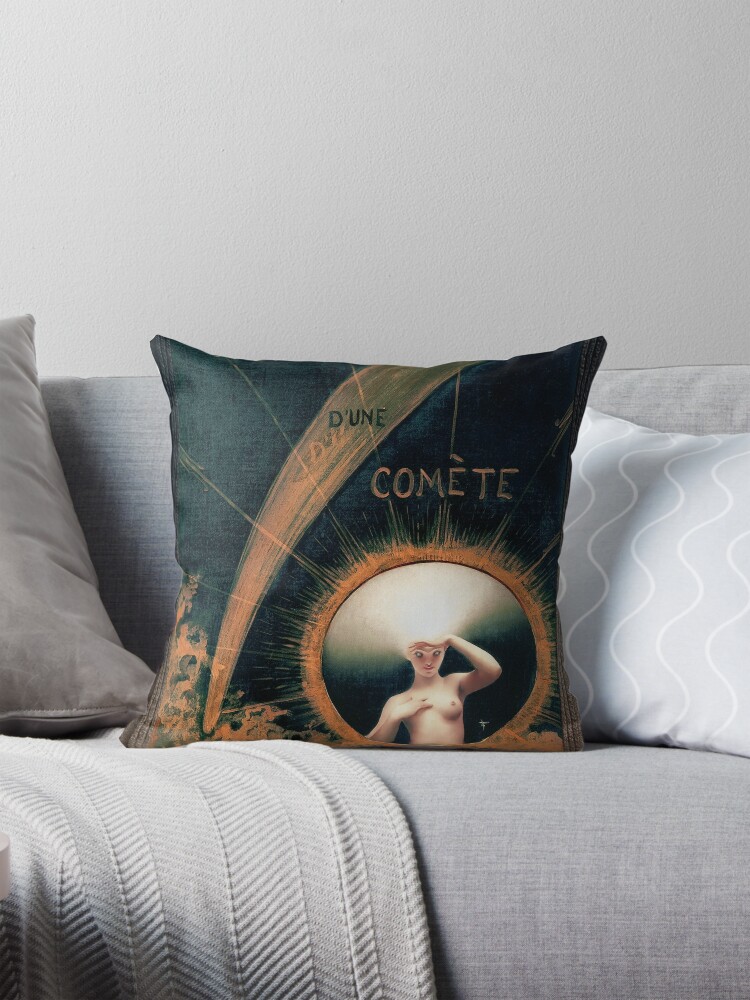
At the heart of the painting is a striking female figure, luminous and ethereal, who gazes out of the canvas, drawing the viewer into a surreal interaction. Hir Pose, with one arm raised to shield her eyes, suggests that she is a cosmic being, perhaps an embodiment of the comet herself. Dës Fra, naked and seemingly untouched by time, is framed by a glowing, anerweltlech Aura. Hir blass, almost ghostly complexion contrasts sharply with the dark, textured backdrop, emphasizing her luminous quality.
The subject’s features are soft and symmetrical, Charakteristesch fir Falero senger idealiséierter weiblecher Form. Hir Hoer sinn e sëlwerglänzend Halo, no baussen ausstrahlen, weider verstäerkt hir Himmelskierper Natur. D'Figur läit virun enger grousser, kreesfërmeg Beräich vun Däischtert, deen als Portal oder den Zentrum vum Koméiteschwanz déngt. Déi hell, geckeg Strahlen vum Koméit säi Schwanz strecken iwwer d'Leinwand, konvergéieren an der Form vun der Fra an beliichten hir Silhouette. De Koméit ass souwuel d'Thema wéi och d'Symbol vum Konschtwierk, bitt eng duebel narrativ vu wëssenschaftlecher Entdeckung a mythologescher Fantasi.
Objeten, Terrain, and Symbolism
Den Hannergrond vum Bild ass eng déif, Velvety gréng, déi an eng donkel Iwwergang, bal kosmesch blo wéi et no baussen beweegt, e Gefill vun Déift an Onendlechkeet ze kreéieren. Dës Faarfpalette proposéiert déi grenzlos Natur vum Universum, wou de Passage vum Koméit an d'ätheresch Präsenz vun der Fra d'Kräizung vum Bekannten an Onbekannten symboliséieren.
De Schwäif vum Koméit selwer gëtt a Schwäif gezeechent, feierlech Schlag, déi aus der ieweschter lénkser Ecke kommen, archéiert iwwer d'Leinwand op d'Fra. Dës Strécke sinn net nëmme kënschtleresch Verschmotzungen, awer déngen als direkt visuell Representatioun vum Koméit säi Wee duerch den Himmel. De Koméit ass souwuel e wuertwiertlech Objet am Bild an e Symbol vun der transienter Natur vun Zäit an Existenz. Et verkierpert Bewegung, änneren, an de konstante Passage vun Himmelskierper duerch de Kosmos.
Déi kierperlech Plakegkeet vun der Fra ass net nëmmen eng artistesch Wiel, awer eng bewosst Metapher. Et proposéiert Rengheet a Schwachstelle, mécht hir e Schiff fir kosmesch Kräften. Hiren opgehuewe Aarm, déi hir Aen schützt, rifft d'Iddi vun Offenbarung an Entdeckung op. Den Zuschauer, duerch hire Bléck, ass invitéiert fir d'Entfalung vun der Geschicht vum Koméit ze gesinn, sou wéi d'Astronomen duerch Teleskope kucken fir den Universum ze verstoen. D'Iddi vun der Offenbarung gëtt weider ënnersträicht vun den Ëmgéigend Elementer, wéi zum Beispill déi hannendrunne Sträifen vum Koméit, déi op d'Iddi vun enger narrativ, déi sech duerch d'Zäit entfalen, alludéieren.
Stil, Thema, a Stëmmung
Falero Technik an “Histoire d’une Comète” vermëscht Elementer vu Romantik a Symbolismus, eng Szen ze kreéieren déi souwuel dreemlech wéi och mat emotionaler Intensitéit gelueden ass. Déi iwwerdriwwen, bal mystesch Qualitéite vum Koméit an der Fra proposéiere en thematesche Fokus op dat Onbekannt an d'Exploratioun vun Himmelskierper. Atmosphäresch Qualitéit vum Bild, wou den Himmelskierch a Mënscheräich sech treffen, beréiert och Theme vum Schicksal a Schicksal.
D'Stëmmung vun der Molerei ass ee vu rouegen Iwwerleeung, awer et ass och mat engem Gefill vu Grandeur an Awe duerchgesat. Dem Fra säi rouegen Ausdrock an de Feierdeeg vum Koméit kreéieren eng anerweltlech Spannung tëscht dem Kosmeschen an dem Mënsch. D'Faarfkontrast - déi blass Figur géint den donkelen Hannergrond, de waarme Glanz vum Schwanz vum Koméit géint déi cool Téin vum Universum - verstäerkt dëst Gefill vun Dualitéit. Et gëtt eng onbestreideg Mystik un der Aarbecht, mam Zuschauer loosse sech iwwer déi richteg Natur vum Koméit an der Fra wonneren, an déi méi grouss kosmesch Kräften am Spill.
Dem Falero säi Choix fir den Himmelskierper als wëssenschaftlech a mythologesch Objet z'integréieren ënnersträicht d'Faszinatioun vum spéide 19. Joerhonnert mat der Astronomie an dem wuessenden Interessi un de Mystère vum Universum. D'Vermëschung vum Bild vun dësen Elementer ass e Markenzeechen vun der symbolistescher Bewegung, déi probéiert hunn méi déif Wourechten iwwer d'materiell Welt ze entdecken.
Materialien an Technik
A punkto Material, Falero huet méiglecherweis Uelegfaarwen op Leinwand beschäftegt, e Medium, deen déi räich Schichten a Liichtqualitéit erlaabt huet, déi d'Aarbecht definéiert. Seng Pinselstécker si béid delikat a bewosst, d'Textur an d'Tiefe fir de Koméiteschwanz an d'Fraenfigur ze addéieren. D'Kompositioun vum Bild ass héich kontrolléiert, mat der zentraler Figur suergfälteg vum Stralungsliicht vum Koméit encadréiert. Dës Kontroll iwwer d'Zesummesetzung füügt déi anerweltlech Präzisioun vum Wierk un, d'Gefill vun der kosmescher Uerdnung an der Harmonie erhéijen.
D'komplizéiert Detailer vum Bild vum Koméiteschwanz an d'Weichheet vun der Haut vun der Fra weisen op dem Falero seng Meeschterschaft vum Medium. Seng Mëschung vu Liicht a Schied ass besonnesch bemierkenswäert an der Aart a Weis wéi d'Strahlen vum Koméit de Kierper vun der Fra beliichten, en dramateschen Kontrast erstellen, deen op d'Figur opmierksam mécht a gläichzäiteg déi grouss suggeréiert, kosmesche Raum an deem se existéiert.
Histoire dune Comete ass eng retouched digital Konscht al Master Reproduktioun vun engem Public Domain Bild.
Kënschtler Bio ofgeleet Wikipedia.org
De Falero gouf zu Granada gebuer an huet ursprénglech eng Karriär an der spuenescher Marine verfollegt, awer huet et seng Elteren Enttäuschung opginn; wéi hien decidéiert huet op Paräis ze reesen, wou hien Konscht studéiert huet, Chimie a Maschinnebau.
Wärend ass Studien a Chimie a Maschinnebau; hien huet d'Experimenter als déi hien huet misse maachen ze geféierlech betruecht, sou datt hien dozou féiert seng Opmierksamkeet eleng op Molerei ze fokusséieren.
Als Resultat gouf hie Student vum franséische Portraitmoler an Orientalist Gabriel-Joseph-Marie-Augustin Ferrier (1847 – 1914). No Paräis, hien ass op London geplënnert, wou hie weider studéiert huet, a schliisslech niddergelooss.
De Falero hat e besonneschen Interêt un der Astronomie an huet Himmelskonstellatiounen a ville vu senge Wierker agebaut, sou wéi “D'Bestietnes vun engem Koméit” an “Zwilling Stars”. Säin Interesse a Wësse vun der Astronomie hunn hien och dozou bruecht d'Wierker vum Camille Flammarion ze illustréieren.
An 1896, d'Joer vu sengem Doud, De Maud Harvey huet de Falero wéinst Pappa verklot. De Kostüm behaapt datt de Falero den Harvey verféiert huet wéi se war 17, als éischt säin Heemechtsdéngscht, an duerno säi Modell. Wéi hien entdeckt hatt war schwanger, hien huet hatt entlooss.
Si huet de Fall gewonnen a gouf fënnef Shilling pro Woch ausgezeechent fir hir Kanner z'ënnerstëtzen. De Falero ass am University College Hospital gestuerwen, London, am Alter vun 45