

Idleness c1900
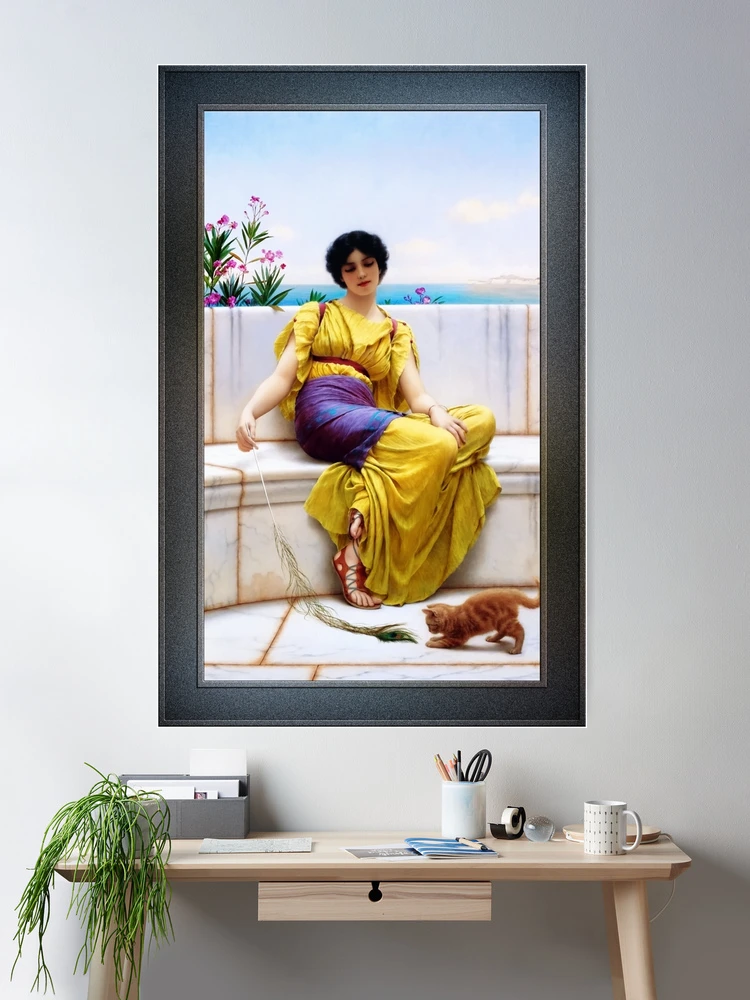
ジョンウィリアムゴッドワード, a prominent British painter known for his stunning depictions of the Classical world, created the artwork “怠惰” に 1900. ゴッドワード (1861 – 1922), celebrated for his mastery in portraying women in serene, timeless poses within classical and mythological settings, paints a poignant image of stillness and leisure in this particular work. 現場, though filled with vibrant color and serene composition, evokes a timeless mood that blends the antique with an almost dreamlike quality. Godward’s style, often associated with the Academic tradition, is on full display in this painting, where the skillful use of light, テクスチャ, and classical elements invites the viewer into a moment frozen in time.
目次
主題
中心に “怠惰” is the depiction of a young woman, sitting gracefully on a marble bench with a contemplative expression. Her delicate posture and the way she holds a long peacock feather, gently draped from her fingers, imply a quiet moment of repose, as she uses it to play with a kitten. 彼女の体, draped in flowing garments of rich yellow and purple, suggests a figure both in the midst of relaxation and deep thought. The colors of her attire, set against the cool tones of the surrounding environment, add an ethereal quality to her figure, elevating her presence to that of an idealized beauty.
The woman’s dark, short hair contrasts with the golden hues of her clothing, creating a visual balance that complements the soft and inviting mood of the piece. Her facial expression is peaceful, with her gaze lowered as if lost in thought or perhaps in idle contemplation. It is an image of tranquility, drawing the viewer’s attention to the subject’s serene beauty. The slowness and grace of her movements are accentuated by the absence of any evident action or hurry in her pose, fitting the title “怠惰” perfectly. Her limbs, languidly arranged, exude a sense of stillness that enhances the theme of leisure.
オブジェクトと資料
The bench on which the young woman rests is made of polished marble, its surface smooth and lustrous, contributing to the luxurious and timeless atmosphere of the artwork. The marble’s cool, pale tones contrast beautifully with the warmer hues of her attire. The surrounding scene includes delicate touches of floral elements, with vibrant pink flowers and green foliage sprouting from pots or planters that frame the scene. These natural elements serve to soften the otherwise pristine environment, adding a touch of liveliness to the otherwise tranquil setting.
The woman’s bare feet are visible, suggesting a connection to the earth beneath her, while her sandals are softly laced, further emphasizing her relaxed state. The twine she holds seems to gently cascade from her hand, a quiet object that contrasts with the elegance of her posture. The composition overall uses these subtle details, her clothing, the marble bench, the plants, and the twine, to evoke a sense of harmony between the subject and her environment, suggesting an idyllic escape from the demands of everyday life.
地形と背景
の背景 “怠惰” features a coastal vista, with a soft blue sky and distant views of the sea. The horizon appears calm, with gentle ripples on the water’s surface that mirror the peaceful stillness of the scene. This landscape, while not highly detailed, is nonetheless a crucial element in conveying the sense of serenity and escape. The background serves as a visual reminder of the natural world and its role in providing the perfect setting for the woman’s contemplative repose.
The architecture surrounding the subject, 最小限ではあるが, suggests an outdoor space—perhaps a garden or courtyard of some ancient villa. The use of white and light tones in the stonework is in harmony with the soft pastel colors of the sky, further enhancing the atmosphere of classical elegance and beauty. The gentle curves of the stonework lead the viewer’s eye towards the figure, focusing attention on the stillness of the subject amidst a tranquil, almost dreamlike, 設定.
スタイルとテクニック
Godward’s style is one rooted in the academic traditions of the 19th century, influenced by his early training under classical painters and his deep admiration for the ancient Roman and Greek worlds. に “怠惰,” his attention to detail is evident in the texture of the woman’s gown, the softness of her skin, and the lustrous quality of the marble. Each fold of the woman’s clothing is carefully modeled to convey the weight and flow of the fabric, while the skin is rendered with a soft glow that highlights the artist’s ability to capture the nuances of light.
The use of color is one of the defining features of Godward’s style. The warm yellow of the woman’s dress contrasts beautifully with the cooler blues of the sea and sky, creating a harmonious palette that exudes calm and contentment. The juxtaposition of purple and yellow further enhances the vibrant yet restrained mood of the painting. The choice of colors is not just aesthetically pleasing but serves to emphasize the classical theme of timeless beauty and the idea of idleness as an ideal state of mind.
Godward’s meticulous brushwork and mastery of light and shadow create a sense of depth and dimension within the composition. The sunlight that softly illuminates the woman’s face and the folds of her clothing enhances the sense of warmth in the scene. This soft rendering of light and shadow contrasts with the clarity of the background, making the figure appear almost ethereal in comparison. The careful application of paint, combined with Godward’s ability to capture the texture of different surfaces, such as the smooth marble, the softness of the woman’s skin, and the delicate fabric of her dress, demonstrates his exceptional skill as an artist.
気分とテーマ
の気分 “怠惰” is one of peacefulness, relaxation, and an almost reverent stillness. The figure of the young woman, with her contemplative pose and serene expression, captures the essence of the theme of idleness: a moment in time where nothing is required, and all that exists is the peaceful state of being. This sense of timeless leisure is further reinforced by the classical setting and the absence of any hurried motion in the scene. There is no sense of urgency or distraction in this moment, only the quiet, almost sacred, experience of simply being.
The theme of idleness, a concept often revered in classical art, suggests a harmonious balance between human beings and nature. It invites the viewer to reflect on the value of stillness and the simple pleasures of life. この作業で, Godward celebrates the beauty of leisure, not as a fleeting or wasteful moment, but as an ideal state of existence that connects the human figure with nature and the timeless, classical world.
Idleness は、パブリック ドメインの画像をリマスターしたデジタル アートの古いマスターの複製であり、 キャンバスプリントオンライン.
このデジタルアート作品は、, Xzendor7 Web サイトにあるすべてのアートワークと同様に、キャンバス プリントを含むさまざまな素材形式でオンラインで購入できます。, アクリルプリント, メタルプリント, 木版, 額入りプリント, ポスター, ロール状のキャンバス プリントとしてさまざまなサイズでご利用いただけます。 12 インチから 72 インチは、実際のアートワークのサイズと、アートを購入するために選択したオンデマンド プリント ショップによって異なります。.
このアートワークは、幅広いメンズおよびウィメンズのアパレルでも利用可能です, マグカップ, トートバッグ, スカーフ, ノートや日記帳、その他多くの室内装飾品.
アーティストについて
以下の情報から Wikipedia.org
ジョン・ウィリアム・ゴッドワードは5人兄弟の長男でした, 父のジョンと祖父のウィリアムにちなんで名付けられました.
彼はからロイヤルアカデミーに出展しました 1887. 彼がモデルの1人と一緒にイタリアに引っ越したとき 1912, 彼の家族は彼とのすべての接触を断ち切り、家族の写真から彼のイメージを切り取りました. ゴッドワードはイギリスに戻った 1921, で死亡しました 1922, そしてブロンプトン墓地に埋葬されている, 西ロンドン.
彼の最も有名な絵画の1つはドルチェファーニエンテです (1904), アンドルーロイドウェバーのコレクションのために購入されました 1995. 他のいくつかの絵画の場合のように, ゴッドワードは複数のバージョンを描いた; この場合, 以前 (あまり知られていない) 1897 さらにバージョン 1906 バージョン.
彼は何歳で自殺した 61 そして彼の遺書に次のように書いたと言われています “世界は十分な大きさではありません [両方] 私とピカソ”.
彼の疎遠な家族, 彼がアーティストになることを認めなかった人, 彼の自殺を恥じて、彼の書類を燃やした. ゴッドワードの写真は1枚だけ生き残ることが知られています.
ゴッドワードはビクトリア朝の新古典主義者でした, したがって, 理論的には, フレデリック・レイトンの信者. しかしながら, 彼は、ローレンス・アルマ・タデマ卿とスタイル的に密接に関連しています。, 彼は古典主義建築のレンダリングの傾向を共有しました–特に, 大理石で作られた静的な景観の特徴.
ゴッドワードの現存する画像の大部分には、風景を背景にポーズをとる古典的なドレスを着た女性が描かれています。; 彼の作品にはセミヌードやフルヌードの人物も含まれていますが、, 注目すべき例は “テピダリウムにて c1913”.
物議を醸している同じ主題を描いたアルマ・タデマの絵画と共通のタイトル。 “レディ レバー アート ギャラリー”. タイトルはゴッドワードのインスピレーションの源を反映しています; それは古典文明でした, 最も注目すべきは古代ローマのもの; ゴッドワードとアルマ・タデマを芸術的に密接に結びつけている主題.
彼の生涯においては、現代よりも古典的な学問が彼の絵画の潜在的な聴衆の間でより広く普及していたことを考えると、, このジャンルでアーティストとしての地位を確立するには、細部までの入念なリサーチが重要でした.
アルマ・タデマは考古学者であると同時に画家でもあった, 史跡を訪れ、後に絵画に使用した工芸品を収集した人: ゴッドワード, それも, 建築や服装などの細部を研究しました, 彼の作品が本物であることを保証するために.
加えて, ゴッドワードは、絵画の他の重要な特徴を丹念に、細心の注意を払って描写しました。, 絵に描かれている動物の皮 “正午の休息 c1910” そして “クールな隠れ家 c1910” 野生の花だけでなく、そのような演出の例も含まれています “Nerissa c1906” そして “夏の花 c1903”.
ゴッドワードのキャンバスの多くに研究されたポーズをとった美しい女性が登場するため、彼の作品に初めて触れる多くの人がゴッドワードをラファエル前派と誤って分類する原因となっています。, 特に彼のパレットは鮮やかなカラフルなものが多いので、. 主題の選択 (古代文明対, 例えば, アーサー王伝説) より適切には、ビクトリア朝の新古典主義者です。.
彼と同時代の多くの画家に共通すること, ゴッドワードは「ヴィクトリア朝の夢想家」だった, 理想化され、ロマンチック化された世界のイメージを生み出します。, ゴッドワードとアルマ・タデマの両方の場合, トーガにおけるヴィクトリア朝の世界観として批判されるようになった.
ゴッドワード “古典的な雰囲気の中で若い女性を描いた絵画と、対照的な肉の質感の感覚を感性と熟練した技術で伝える能力で、すぐに評判を確立しました。, 大理石, 毛皮と布地.
ゴッドワードが古典時代を舞台にした芸術作品を制作する傾向は、おそらく彼が生まれた時代に由来していると考えられます。; それは西洋絵画における最後の本格的な古典的復活だったからです。, 1860 年代から 1890 年代までイギリスで栄えた.