

In The Spotlight
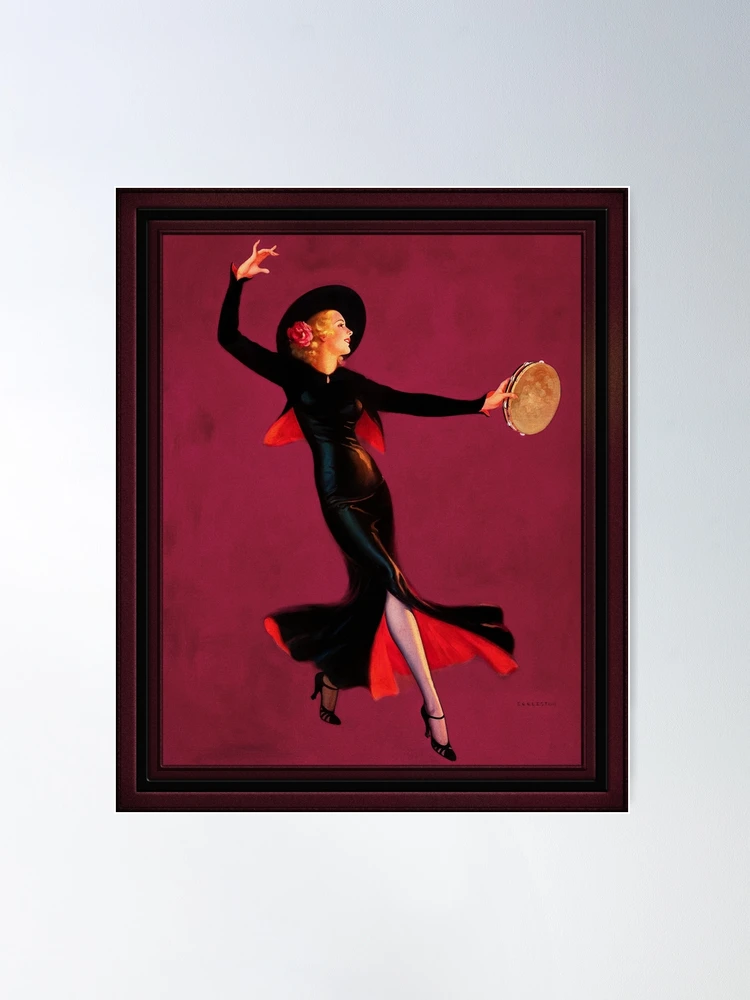
Edward Mason Eggleston’s artwork, In The Spotlight, 다음에서 생성됨 1937, captures the vibrant and energetic spirit of the era through a striking portrait of a dancer. 출생 1882 그리고 지나가는 것 1941, Eggleston’s work reflects the transition between the Art Deco and early modern movements. Known for his refined use of color and dynamic compositions, Eggleston uses this piece to explore themes of movement, 우아함, and the allure of performance. The woman depicted in the painting becomes the central character in a narrative that speaks to both her artistry and the timeless appeal of the stage.
목차
주제와 구성
The central figure of the piece is a woman, poised in mid-dance, dressed in an elegant and figure-flattering black gown. 그녀의 자세, with one arm raised high and the other extended forward holding a tambourine, suggests a vibrant, fluid motion, bringing her to life within the confines of the canvas. Her right leg is positioned in a graceful, almost balletic stance, emphasizing the energy of the dance. 이 포즈, along with her expression of enjoyment and concentration, conveys the joy of performing. Her head is tilted slightly back, and her gaze is directed toward the upper left of the canvas, suggesting an engagement with an invisible audience or an internal immersion in the music.
Her attire is key to the artwork’s aura of elegance. The black dress, which hugs her figure closely, is adorned with a vivid scarlet red lining visible at the back, adding a touch of drama to the figure’s silhouette. The woman’s hat, which features a black brim, is decorated with a single red rose, enhancing the contrast of colors while also contributing to the 1930s fashion sensibility. The black dress contrasts sharply with the bright red hue, intensifying the visual impact of the work, while the black heels and accessories further add to her polished, refined appearance.
Color Palette and Materials
Eggleston’s color palette in In The Spotlight is dominated by rich contrasts between dark, sultry tones and vivid accents of red. The deep crimson background envelops the subject in a saturated, almost theatrical environment, emphasizing the dancer’s energy and presence. The background’s simplicity, devoid of any extraneous elements, ensures that the woman remains the undivided focus of the painting. Her skin is rendered in light, soft tones that contrast with the surrounding dark hues, giving her an almost ethereal glow against the vibrant red backdrop. The rose in her hair and the lining of her dress serve as intentional color highlights, contributing to the visual drama and thematic connection to the dancer’s radiant performance.
Eggleston’s use of the smooth, almost glowing texture of the background against the lively, almost tactile depiction of the dancer’s clothing and accessories is a subtle yet powerful way to highlight the subject’s motion and energy. The careful blending of these hues enhances the emotional vibrancy of the painting, contributing to its dramatic atmosphere.
분위기와 테마
The mood of the painting is one of confidence, 매력, and artistic dedication. The woman in the painting is not merely a passive subject but an active participant in a dynamic performance. There is a sense of empowerment in her posture, as she exudes control over the tambourine and the dance she is performing. The tambourine itself serves as both a musical instrument and a symbol of rhythm and beat, adding a tactile element to the dancer’s movements. 그림, immersed in her performance, demonstrates the synergy between the body and the music, where the dance and the sound come together as a singular expression of creativity.
Eggleston’s portrayal of the dancer also reflects the broader themes of the 1930s, a time when the performing arts were crucial for the cultural climate. The dramatic presentation of the figure speaks to the era’s growing fascination with jazz, theater, and film. 이 그림, 그러므로, is not just a static portrait but a celebration of the dance and performance culture that flourished in this period. The spotlight, both literal and figurative, is placed squarely on the dancer, making her the embodiment of the performing arts of the time.
The painting’s theme revolves around the artist’s portrayal of both the physical and emotional dimensions of performance. The dancer’s flowing motion is mirrored by the smooth, fluid strokes of Eggleston’s brushwork, emphasizing the harmony between the dancer’s body and the space in which she performs. This connection suggests that the performer’s art is as much about movement and grace as it is about a deeper connection with the rhythm of life.
예술적 스타일
In The Spotlight can be viewed as a product of its time, reflecting Eggleston’s mastery of precision and mood-setting within the visual constraints of the 1930s. The work embodies aspects of the Art Deco style, evident in its elegant yet exaggerated forms, as well as the dynamic interplay of geometric shapes and contrasting colors. While not strictly conforming to all Art Deco ideals, the painting does exhibit the period’s celebration of glamour and stylized representation.
Eggleston’s skillful handling of light and shadow also invites comparisons to the broader realism movement, which sought to capture not only the form of its subjects but the emotional content beneath their surfaces. Through his emphasis on color, 빛, 그리고 운동, Eggleston’s rendering of the dancer moves beyond a simple depiction of her outward appearance to reveal something more ethereal, a moment of grace frozen in time. The soft lighting around the subject contrasts sharply with the angular, sharp details in the tambourine and dress, highlighting the sense of motion while still preserving the subject’s detailed form.
결론
Edward Mason Eggleston’s In The Spotlight remains a timeless exploration of performance, 움직임, and elegance. The artist’s masterful use of color and composition captures the essence of the dancer’s world, one of rhythm, 우아함, and exuberant expression. 이 작품을 통해, Eggleston invites the viewer to step into the world of the stage, where every motion is both a visual and emotional spectacle. 그렇게 할 때, he not only immortalizes the beauty of the performer but also the universal appeal of art itself, grounded in the power of movement and self-expression.
In The Spot Light is a retouched digital art old masters reproduction of a public domain image.
이 디지털 아트 창작, Xzendor7 웹사이트에서 찾을 수 있는 모든 예술 작품과 마찬가지로 캔버스 인쇄를 포함한 다양한 재료 형식으로 온라인에서 구매할 수 있습니다., 아크릴 프린트, 금속 지문, 목판화, 액자 인쇄, 포스터, 그리고 압연 캔버스 인쇄 부터 다양한 사이즈로 12 인치에 72 실제 작품의 크기와 작품을 구매하기로 선택한 주문형 인쇄소에 따라 인치.
이 작품은 다양한 남성복과 여성복에서도 볼 수 있습니다., 머그, 토트백, 스카프, 노트북, 저널 및 다양한 홈 데코 제품.
아티스트 약력
Info Below From Wikipedia.org
에드워드 메이슨 에글스턴 (22 십일월 1882 – 14 1 월 1941) 여성의 달력 초상화를 전문으로하는 미국 화가였습니다., 세련되고 환상적인.
그는 또한 Fisk Tire Company와 같은 회사에서 일하는 잘 알려진 상업 일러스트레이터였습니다., 펜실베니아 철도, 그리고 오대호 박람회.
콜럼버스의 콜럼버스 예술 학교에 다녔다., 오하이오를 거쳐 뉴욕으로 이사했습니다. 1915, 그가 잡지 표지를 설명하기 위해 일했던 곳, 여행 포스터, 광고와 달력.
그는 주로 캔버스에 유화로 작업했습니다., 그리고 파스텔로, 수채화, 그리고 구아슈.
Eggleston은 1930년대 대공황 기간 동안 현실 도피적 환상을 향한 미국의 경향을 이용했습니다..
로 서술 된 “스토리텔링,” 그의 달력 작업은 스타일리시하고 패셔너블한 드레스와 모자를 쓴 여성에 초점을 맞췄습니다., 수영복, 또는 아메리카 원주민 여성 복장, “이집트 여신,” 해적 소녀들, 그리고 피터팬 캐릭터의 여성들