

W centrum uwagi
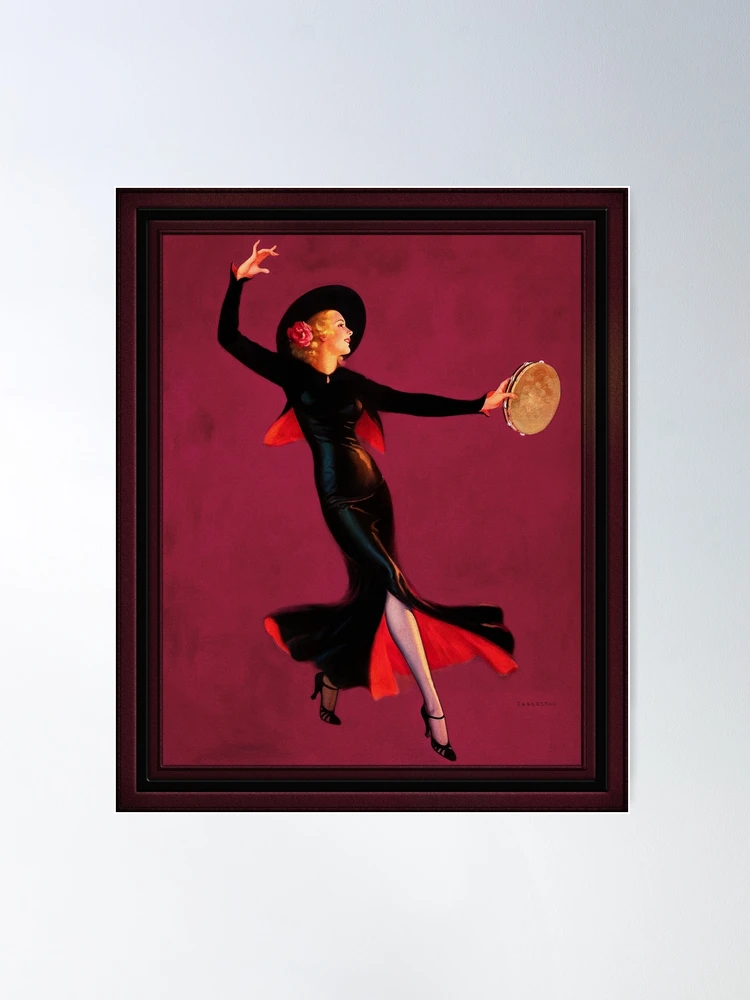
Grafika Edwarda Masona Egglestona, W centrum uwagi, stworzony w 1937, oddaje żywego i energetycznego ducha epoki poprzez uderzający portret tancerza. Urodzony w 1882 i odejście w 1941, Prace Egglestona odzwierciedlają przejście między Art Deco a ruchami wczesnomodernistycznymi. Znany z wyrafinowanego wykorzystania koloru i dynamicznych kompozycji, Eggston wykorzystuje ten utwór do eksploracji tematów ruchu, łaska, i urok wydajności. Kobieta przedstawiona na obrazie staje się centralną postacią narracji, która przemawia zarówno do jej kunsztu, jak i ponadczasowego uroku sceny.
Spis treści
Przedmiot i kompozycja
Centralną postacią dzieła jest kobieta, ustawiony w połowie tańca, dressed in an elegant and figure-flattering black gown. Jej postawa, with one arm raised high and the other extended forward holding a tambourine, suggests a vibrant, fluid motion, bringing her to life within the confines of the canvas. Her right leg is positioned in a graceful, almost balletic stance, emphasizing the energy of the dance. This pose, along with her expression of enjoyment and concentration, conveys the joy of performing. Her head is tilted slightly back, and her gaze is directed toward the upper left of the canvas, suggesting an engagement with an invisible audience or an internal immersion in the music.
Her attire is key to the artwork’s aura of elegance. The black dress, which hugs her figure closely, is adorned with a vivid scarlet red lining visible at the back, adding a touch of drama to the figure’s silhouette. The woman’s hat, which features a black brim, is decorated with a single red rose, enhancing the contrast of colors while also contributing to the 1930s fashion sensibility. The black dress contrasts sharply with the bright red hue, intensifying the visual impact of the work, while the black heels and accessories further add to her polished, refined appearance.
Paleta kolorów i materiały
Eggleston’s color palette in W centrum uwagi is dominated by rich contrasts between dark, sultry tones and vivid accents of red. The deep crimson background envelops the subject in a saturated, almost theatrical environment, emphasizing the dancer’s energy and presence. The background’s simplicity, devoid of any extraneous elements, ensures that the woman remains the undivided focus of the painting. Her skin is rendered in light, soft tones that contrast with the surrounding dark hues, giving her an almost ethereal glow against the vibrant red backdrop. The rose in her hair and the lining of her dress serve as intentional color highlights, contributing to the visual drama and thematic connection to the dancer’s radiant performance.
Eggleston’s use of the smooth, almost glowing texture of the background against the lively, almost tactile depiction of the dancer’s clothing and accessories is a subtle yet powerful way to highlight the subject’s motion and energy. The careful blending of these hues enhances the emotional vibrancy of the painting, contributing to its dramatic atmosphere.
Nastrój i motyw
The mood of the painting is one of confidence, nęcić, and artistic dedication. Kobieta na obrazie nie jest jedynie biernym podmiotem, ale aktywnym uczestnikiem dynamicznego performansu. Jej postawa daje poczucie siły, gdy emanuje kontrolą nad tamburynem i tańcem, który wykonuje. Sam tamburyn służy zarówno jako instrument muzyczny, jak i symbol rytmu i rytmu, dodanie elementu dotykowego do ruchów tancerza. Postać, zanurzona w jej występie, ukazuje synergię ciała i muzyki, gdzie taniec i dźwięk łączą się jako wyjątkowy wyraz kreatywności.
Portret tancerza autorstwa Egglestona odzwierciedla także szerszą tematykę lat trzydziestych XX wieku, czas, kiedy sztuki performatywne miały kluczowe znaczenie dla klimatu kulturalnego. Dramatyczna prezentacja postaci świadczy o rosnącej w epoce fascynacji jazzem, teatr, i film. Ten obraz, W związku z tym, to nie tylko statyczny portret, ale celebracja kultury tańca i performansu, która rozkwitła w tym okresie. Światło reflektorów, zarówno dosłownie, jak i w przenośni, jest umieszczony prosto na tancerce, czyniąc ją ucieleśnieniem sztuk performatywnych tamtych czasów.
Temat obrazu koncentruje się wokół przedstawienia przez artystę zarówno fizycznego, jak i emocjonalnego wymiaru performansu. Płynny ruch tancerza jest odzwierciedlony w gładkości, płynne pociągnięcia pędzla Egglestona, podkreślając harmonię ciała tancerki z przestrzenią, w której występuje. This connection suggests that the performer’s art is as much about movement and grace as it is about a deeper connection with the rhythm of life.
Styl artystyczny
W centrum uwagi can be viewed as a product of its time, reflecting Eggleston’s mastery of precision and mood-setting within the visual constraints of the 1930s. The work embodies aspects of the Art Deco style, evident in its elegant yet exaggerated forms, as well as the dynamic interplay of geometric shapes and contrasting colors. While not strictly conforming to all Art Deco ideals, the painting does exhibit the period’s celebration of glamour and stylized representation.
Eggleston’s skillful handling of light and shadow also invites comparisons to the broader realism movement, which sought to capture not only the form of its subjects but the emotional content beneath their surfaces. Through his emphasis on color, światło, i ruch, Eggleston’s rendering of the dancer moves beyond a simple depiction of her outward appearance to reveal something more ethereal, a moment of grace frozen in time. The soft lighting around the subject contrasts sharply with the angular, sharp details in the tambourine and dress, highlighting the sense of motion while still preserving the subject’s detailed form.
Wniosek
Edward Mason Eggleston’s W centrum uwagi remains a timeless exploration of performance, ruch, i elegancja. The artist’s masterful use of color and composition captures the essence of the dancer’s world, one of rhythm, łaska, and exuberant expression. Przez ten kawałek, Eggleston invites the viewer to step into the world of the stage, gdzie każdy ruch jest spektaklem zarówno wizualnym, jak i emocjonalnym. Robiąc to, uwiecznia nie tylko piękno wykonawcy, ale także uniwersalny urok samej sztuki, opiera się na sile ruchu i wyrażania siebie.
In The Spot Light to wyretuszowana cyfrowa reprodukcja starych mistrzów obrazu z domeny publicznej.
To dzieło sztuki cyfrowej, podobnie jak wszystkie dzieła sztuki, które można znaleźć na stronie internetowej Xzendor7, można kupić online w różnych formatach materiałów, w tym odbitki na płótnie, wydruki akrylowe, metalowe nadruki, druki na drewnie, wydruki w ramkach, plakaty, i jako zwijane wydruki na płótnie w różnych rozmiarach od 12 cale do 72 cale w zależności od rozmiaru rzeczywistej grafiki i sklepu z drukiem na żądanie, w którym zdecydujesz się kupić sztukę.
Grafika jest również dostępna na szerokiej gamie odzieży męskiej i damskiej, kubki, torby, szaliki, notesy i czasopisma oraz wiele produktów do dekoracji wnętrz.
Biografia artysty
Informacje poniżej z Wikipedia.org
Edward Mason Eggleston (22 listopad 1882 – 14 styczeń 1941) był amerykańskim malarzem, który specjalizował się w kalendarzowych portretach kobiet, modne i fantastyczne.
Był również znanym ilustratorem handlowym, pracującym dla firm takich jak Fisk Tyre Company, Pennsylvania Railroad, i Wystawa Wielkich Jezior.
Uczęszczał do Columbus Art School w Columbus, Ohio i przeniósł się do Nowego Jorku około 1915, gdzie pracował przy ilustrowaniu okładek czasopism, plakaty podróżnicze, ogłoszenia i kalendarze.
Pracował głównie z farbami olejnymi na płótnie, a także z pastelami, akwarele, i gwasz.
Eggleston wykorzystał amerykański trend w kierunku fantazji eskapistycznej w latach Wielkiego Kryzysu w latach 30. XX wieku.
Opisany jako “opowiadanie historii,” jego kalendarz skupia się na kobietach w stylowych i modnych sukienkach i kapeluszach, stroje kąpielowe, lub przebrani za rdzennych Amerykanów, “Egipskie Boginie,” pirackie dziewczyny, i kobiety w postaci Piotra Pana