

Samhradh Innseanach
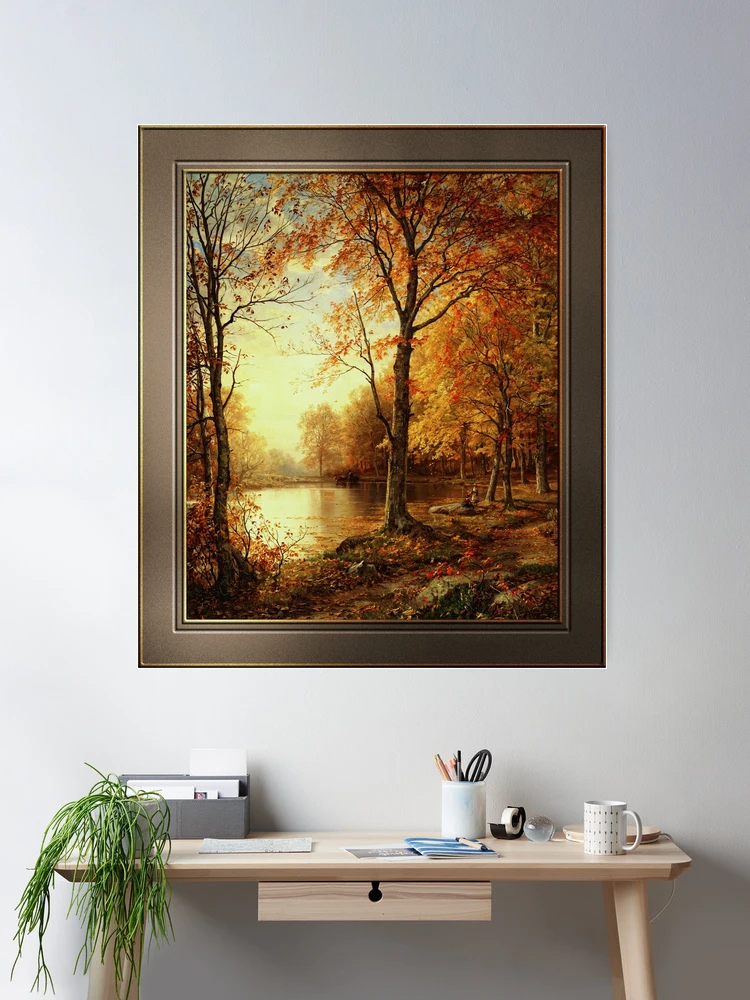
Samhradh Innseanach c1875 leis a’ pheantair Ameireaganach Uilleam Trost Richards (1833 – 1905), a sealladh-tìre agus neach-ealain mara-mara a bha co-cheangailte ri gach cuid Sgoil Abhainn Hudson agus na gluasadan Ameireaganach Ro-Raphaelite.
William Trost Richards was renowned for his exquisite landscape paintings, with a particular focus on the natural beauty of the American countryside; and this piece exemplifies his mastery of nature’s intricacies and his ability to capture fleeting moments of beauty in the landscape. This oil painting represents the serene and nostalgic feel of autumn, reflecting the gentle transition between seasons in a tranquil and detailed scene.
Clàr-innse
Stoidhle agus innleachd
Samhradh Innseanach is painted in a style rooted in the American Luminism movement, characterized by an emphasis on light, àile, and the fine details of nature. The work showcases the artist’s keen observation of light’s effects on the landscape and the subtle interplay of shadow and color. The luminous quality of the painting, with its soft and warm glow, highlights the fading summer warmth transitioning into the cooler tones of autumn.
The artist’s technique involves the meticulous layering of oil paints, creating depth and texture in the trees, uisge, agus speur. The palette used in Samhradh Innseanach is dominated by warm tones, from the deep oranges and yellows of the autumn leaves to the soft golds and browns of the landscape, all of which evoke the late afternoon light typical of an Indian summer day.
Prìomh chuspair agus sgrìobhadh
Prìomh chuspair na Samhradh Innseanach is a serene rural landscape with a focus on a calm body of water, surrounded by trees shedding their autumn leaves. The scene is bathed in the warm light of late afternoon, creating a peaceful yet subtly melancholic atmosphere. Tha co-dhèanamh an deilbh air a dheagh chothromachadh, with the large trees on either side framing the scene while the winding path and reflective water lead the viewer’s gaze into the distance. The stillness of the water adds a sense of tranquility, reflecting the trees and the soft sky above.
Na craobhan, mostly bare of their summer leaves but still holding onto the golden and orange foliage, stand tall and prominent in the composition. Their limbs reach skyward, bare yet delicate, allowing the artist to showcase their intricate details in contrast with the warm, golden leaves still clinging to them.
The branches intertwine and create a canopy of colors, evoking the fullness of autumn before the leaves fully drop. The small hints of green scattered among the autumn hues suggest the lingering vestiges of summer. The foreground and the bank of the stream are dotted with rocks and fallen leaves, showcasing nature’s delicate, fleeting transitions as the autumn season deepens.
Terrain and Natural Elements
An talamh a-steach Samhradh Innseanach is a representation of the rugged yet peaceful American landscape. The artist focuses on the earthy textures of the ground, the scattered rocks, and the thin blades of grass, which add a tactile sense to the composition.
An t-uisge, gentle and calm, provides a reflective surface that mirrors the colors of the trees and sky, enhancing the serenity of the scene. The artist’s attention to detail is apparent in the way the leaves float on the water’s surface, creating a delicate contrast against the stillness of the stream.
Air astar, a faint outline of a lone figure, likely a fisherman or wanderer, can be seen, adding a subtle human presence to the otherwise untouched natural environment. This figure is small, almost indistinguishable at first glance, yet the choice to include this solitary person suggests an intimate connection with nature and solitude, a theme that was common in American landscape painting during this era. The person seems to be absorbed in their surroundings, perhaps quietly enjoying the autumn landscape, further enhancing the mood of quiet contemplation that pervades the painting.
Mood agus faireachdainn
Faireachdainn de Samhradh Innseanach is one of quiet reflection and peaceful solitude, invoking the feeling of a tranquil autumn afternoon. Am blàth, golden tones of the foliage and the soft sunlight cast a sense of nostalgia, evoking memories of past seasons and moments of calm. The feeling of transition is palpable—the fading warmth of the summer season as it gently gives way to the cooler days of autumn. There is no rush or agitation in the scene; the slow drift of leaves on the water, the stillness of the trees, and the distant figure contribute to a sense of timelessness.
The light in the painting plays a significant role in setting the mood. The soft glow of the sun, filtering through the trees and creating long shadows on the ground, invites a sense of peacefulness. It suggests a day that is slowly coming to an end, with the promise of cooler, more introspective days ahead. The atmosphere is one of serenity, but also quiet sadness, as the year’s warmth slowly fades, leaving only the lingering beauty of autumn in its wake.
Co-dhùnadh
Samhradh Innseanach is a quintessential example of William Trost Richards’ ability to capture the subtleties of nature’s changing seasons. An cleachdadh aige de sholas, dath, and texture allows the viewer to step into a moment of peaceful reflection, allowing nature itself to tell the story of transition and quiet beauty. Tron pheantadh seo, Richards invites the viewer to experience the fleeting nature of autumn—a season that brings both the vibrancy of color and a hint of melancholy. The artwork stands as a celebration of the natural world in all its complexity, capturing a timeless, tranquil moment in nature.
Is e seo ath-riochdachadh seann mhaighstirean ealain didseatach ath-riochdachadh de ìomhaigh raon poblach.
Mu dheidhinn an Neach-ealain
Tha am fiosrachadh a leanas a’ tighinn bho Wikipedia.org
Rugadh Uilleam ann am Philadelphia, Pennsylvania san t-Samhain 14, 1833; agus aig aois 27 gus 1855 rinn e sgrùdadh pàirt-ùine leis a’ Pheantair Gearmailteach (1823 – 1916), fhad 'sa bha e cuideachd ag obair mar dhealbhaiche agus neach-dealbhaidh companaidh obair-mheatailt sgeadachail.
Ann an 1858 Am peantair Ameireaganach Albert Bierstadt (1830 – 1902) chuir air dòigh taisbeanadh ann am Bedford Ùr, Massachusetts, ris an do chuir Uilleam a’ chiad obair aige a-steach don phoball.
Dìreach 4 bliadhnaichean an dèidh sin 1862 Chaidh Uilleam a thaghadh mar bhall urramach den Acadamaidh Dealbhaidh Nàiseanta; agus 9 bliadhnaichean às deidh sin mar acadaimigeach.
Rè 1863 thàinig e gu bhith na bhall den Chomann airson Adhartachadh na Fìrinn ann an Ealain, agus an ceann tri bliadhna dh' fhalbh e do 'n Roinn-Eòrpa far an d' fhan e car bliadhna.
Às deidh dha tilleadh dha na Stàitean Aonaichte chuir Uilleam seachad na sia samhraidhean a leanas air costa an ear nan Stàitean Aonaichte.
Anns na 1870an bhiodh Uilleam a’ dol air adhart a’ toirt a-mach iomadh sealladh cliùiteach de dhathan-uisge de Bheanntan Geala New Hampshire; a tha nan sreath bheanntan a tha a’ còmhdach faisg air cairteal den stàit agus pàirt bheag de Western Maine.
Bho 1861 gu 1899 Thaisbean Uilleam an obair-ealain aige aig an Acadamaidh Dealbhaidh Nàiseanta, a bharrachd air Comann Ealain Brooklyn bho 1863 gu 1885; agus leanadh e air a' deanamh ealain as an tigh aige ann am Baile Sheumais, Rhode Island a thog e a-staigh 1881 gus a bhàs anns a' Ghiblean 17, 1905.