

Indian Summer
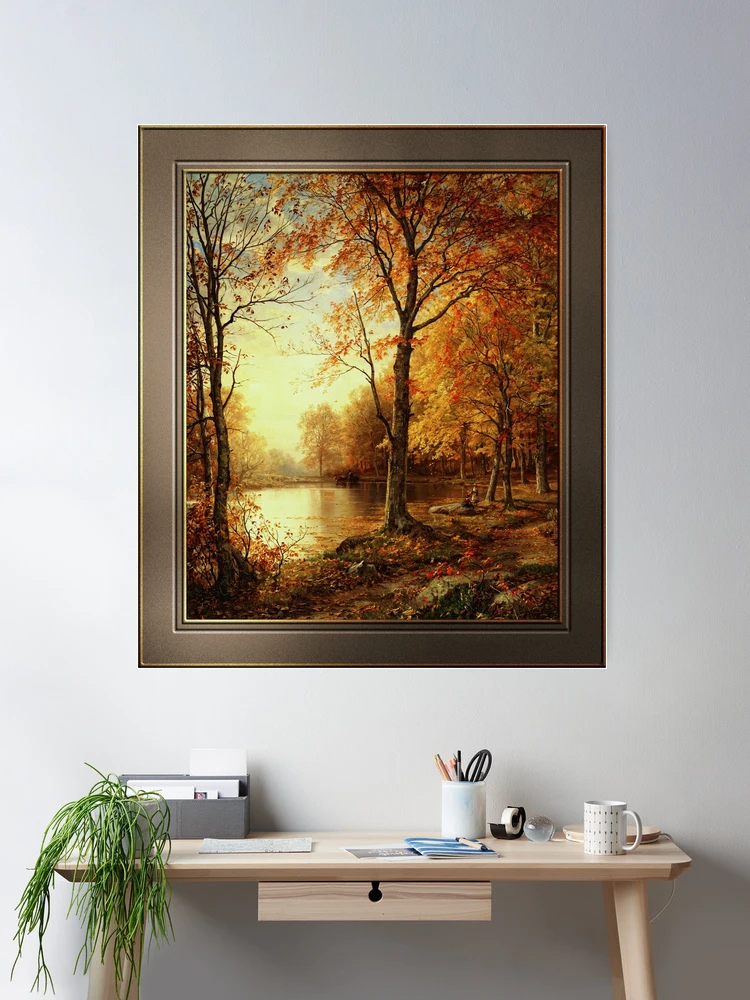
미국 화가 William Trost Richards의 Indian Summer c1875 (1833 – 1905), ㅏ 풍경 and seascape artist who was associated with both the Hudson River School and the American Pre-Raphaelite movements.
William Trost Richards was renowned for his exquisite landscape paintings, with a particular focus on the natural beauty of the American countryside; and this piece exemplifies his mastery of nature’s intricacies and his ability to capture fleeting moments of beauty in the landscape. This oil painting represents the serene and nostalgic feel of autumn, reflecting the gentle transition between seasons in a tranquil and detailed scene.
목차
스타일과 테크닉
Indian Summer is painted in a style rooted in the American Luminism movement, characterized by an emphasis on light, atmosphere, and the fine details of nature. The work showcases the artist’s keen observation of light’s effects on the landscape and the subtle interplay of shadow and color. The luminous quality of the painting, with its soft and warm glow, highlights the fading summer warmth transitioning into the cooler tones of autumn.
The artist’s technique involves the meticulous layering of oil paints, creating depth and texture in the trees, 물, 그리고 하늘. The palette used in Indian Summer is dominated by warm tones, from the deep oranges and yellows of the autumn leaves to the soft golds and browns of the landscape, all of which evoke the late afternoon light typical of an Indian summer day.
주요 주제 및 구성
의 중심 주제 Indian Summer is a serene rural landscape with a focus on a calm body of water, surrounded by trees shedding their autumn leaves. The scene is bathed in the warm light of late afternoon, creating a peaceful yet subtly melancholic atmosphere. The composition of the painting is masterfully balanced, with the large trees on either side framing the scene while the winding path and reflective water lead the viewer’s gaze into the distance. The stillness of the water adds a sense of tranquility, reflecting the trees and the soft sky above.
나무, mostly bare of their summer leaves but still holding onto the golden and orange foliage, stand tall and prominent in the composition. Their limbs reach skyward, bare yet delicate, allowing the artist to showcase their intricate details in contrast with the warm, golden leaves still clinging to them.
The branches intertwine and create a canopy of colors, evoking the fullness of autumn before the leaves fully drop. The small hints of green scattered among the autumn hues suggest the lingering vestiges of summer. The foreground and the bank of the stream are dotted with rocks and fallen leaves, showcasing nature’s delicate, fleeting transitions as the autumn season deepens.
Terrain and Natural Elements
의 지형 Indian Summer is a representation of the rugged yet peaceful American landscape. The artist focuses on the earthy textures of the ground, the scattered rocks, and the thin blades of grass, which add a tactile sense to the composition.
물, gentle and calm, provides a reflective surface that mirrors the colors of the trees and sky, enhancing the serenity of the scene. The artist’s attention to detail is apparent in the way the leaves float on the water’s surface, creating a delicate contrast against the stillness of the stream.
멀리서, a faint outline of a lone figure, likely a fisherman or wanderer, can be seen, adding a subtle human presence to the otherwise untouched natural environment. This figure is small, almost indistinguishable at first glance, yet the choice to include this solitary person suggests an intimate connection with nature and solitude, a theme that was common in American landscape painting during this era. The person seems to be absorbed in their surroundings, perhaps quietly enjoying the autumn landscape, further enhancing the mood of quiet contemplation that pervades the painting.
분위기와 분위기
분위기 Indian Summer is one of quiet reflection and peaceful solitude, invoking the feeling of a tranquil autumn afternoon. 따뜻한, golden tones of the foliage and the soft sunlight cast a sense of nostalgia, evoking memories of past seasons and moments of calm. The feeling of transition is palpable—the fading warmth of the summer season as it gently gives way to the cooler days of autumn. There is no rush or agitation in the scene; the slow drift of leaves on the water, the stillness of the trees, and the distant figure contribute to a sense of timelessness.
The light in the painting plays a significant role in setting the mood. The soft glow of the sun, filtering through the trees and creating long shadows on the ground, invites a sense of peacefulness. It suggests a day that is slowly coming to an end, with the promise of cooler, more introspective days ahead. The atmosphere is one of serenity, but also quiet sadness, as the year’s warmth slowly fades, leaving only the lingering beauty of autumn in its wake.
결론
Indian Summer is a quintessential example of William Trost Richards’ ability to capture the subtleties of nature’s changing seasons. His use of light, 색깔, and texture allows the viewer to step into a moment of peaceful reflection, allowing nature itself to tell the story of transition and quiet beauty. 이 그림을 통해서, Richards invites the viewer to experience the fleeting nature of autumn—a season that brings both the vibrancy of color and a hint of melancholy. The artwork stands as a celebration of the natural world in all its complexity, capturing a timeless, tranquil moment in nature.
이것은 공개 도메인 이미지의 수정 된 디지털 아트 오래된 마스터 복제입니다.
아티스트 소개
The following information is derived from Wikipedia.org
William was born in Philadelphia, Pennsylvania on November 14, 1833; 비토리오 마테오 코르코스의 Play Thing 27 up until 1855 그는 독일 화가와 파트 타임으로 공부했습니다. (1823 – 1916), 장식용 금속 세공 회사에서 디자이너이자 일러스트레이터로 일하기도 했습니다..
에 1858 미국 화가 Albert Bierstadt (1830 – 1902) New Bedford에서 전시회를 조직했습니다., 매사추세츠 주, William이 공개적으로 볼 수 있도록 첫 번째 작품을 제출했습니다..
단지 4 몇 년 후 1862 William은 National Academy of Design의 명예 회원으로 선출되었습니다.; 과 9 몇 년 후 Academician으로.
동안 1863 그는 예술의 진리 증진 협회의 회원이되었습니다., 그리고 3년 후 그는 유럽으로 떠났고 그곳에서 1년 동안 머물렀다..
미국으로 돌아온 후 William은 미국 동부 해안에서 다음 6개의 여름을 보냈습니다..
1870년대에 William은 계속해서 New Hampshire의 White Mountains에 대한 많은 찬사를 받는 수채화 작품을 제작했습니다.; 주의 거의 4분의 1과 웨스턴 메인의 작은 부분을 덮고 있는 산맥입니다..
에서 1861 NS 1899 William은 National Academy of Design에서 자신의 작품을 전시했습니다., 뿐만 아니라 브루클린 예술 협회에서 1863 NS 1885; Jamestown에 있는 그의 집에서 계속 예술 작품을 제작할 것입니다., 그가 세운 로드 아일랜드 1881 4월에 죽을 때까지 17, 1905.