

Interieur Vue vun der St Peters Basilika c1750
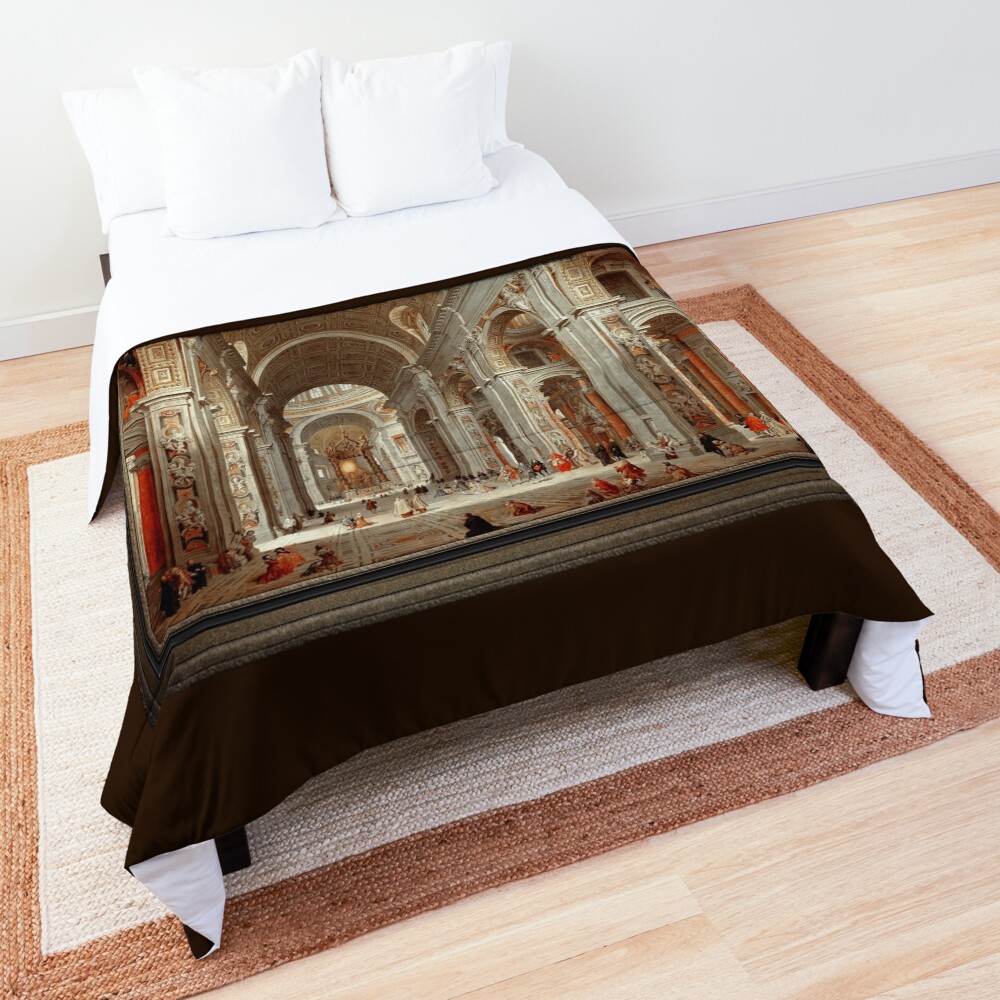
Interieur Vue vun der St Peters Basilika ass e wonnerschéint Bild erstallt an 1750 vum renomméierten italienesche Kënschtler Giovanni Paolo Pannini (1691 – 1765). Dëst Meeschterwierk illustréiert dem Pannini seng aussergewéinlech Fäegkeet fir d'Grandeur ze erfaassen Architektur an de Geescht vun der klassescher Antikitéit.
Duerch seng artistesch Visioun, Pannini bitt eng bannenzeg Vue vun enger vun den ikoneschen architektoneschen Strukturen op der Welt; St. Peter d'Basilika am Vatikan Stad. D'Zesummesetzung illustréiert net nëmmen d'architektonesch Wonner vum Raum, awer och den Zuschauer an eng detailléiert narrativ vum Alldag an der grousser Kathedral am 18. Joerhonnert..
Inhaltsverzeechnes
Haaptwiel a Zesummesetzung
The painting’s primary subject is the interior of St. Péitersbasilika, a symbol of both religious devotion and architectural excellence. Pannini presents a sweeping view of the basilica’s vast nave, with towering columns, intricate arches, and expansive ceilings, all rendered with great precision and grandeur.
The vaults and domes rise majestically toward the heavens, drawing the viewer’s gaze upward toward the light that seems to pour into the structure from above. Déi grouss, circular windows and the dome of the church create a contrast between the serene, soft illumination from the windows and the richly detailed interiors.
De Layout vum Bild spigelt de Layout vun der Basilika selwer, eng Perspektiv ubitt, déi dem Betrachter säin Ae vum Virdergrond guidéiert, mat Figuren gefëllt, Richtung wäitem Altor, déi mat gëllenen Liichtstrahlen dekoréiert ass. D'Gréisst vum Raum gëtt betount duerch d'Präsenz vu ville klenge Figuren, déi duerch d'Szene verspreet sinn, e puer am Gottesdéngscht, anerer am geleeëntleche Gespréich, an nach méi roueg engagéiert, reflektiv Aktivitéiten. Dës Zousatz vu mënschleche Figuren bréngt d'Konschtwierk Liewen, datt de monumentale Raum méi zougänglech fillt, nach ëmmer beandrockend.
Architektonesch Detailer
D'Komplexitéit an d'Herrlechkeet vum St. Dem Peter seng Basilika ginn duerch Pannini seng detailléiert Renderinge vun de strukturellen Elementer vun der Basilika ageholl. D'Schweesssäulen vum Schiff sinn mat schaarfer Präzisioun gemoolt, giving the illusion of depth and grandeur. The artist incorporates exquisite details of the marble textures, particularly in the columns’ rich reddish hues and creamy veins, contributing to the sense of luxury and permanence that pervades the building. Am Hannergrond, elaborate arches and coffered ceilings stretch endlessly, further emphasizing the vast scale of the space.
One of the most striking features in the painting is the dome designed by Michelangelo. Pannini captures the essence of the dome’s curvature and its sculptural form, which seems to soar beyond the limits of the canvas, filling the viewer with a sense of awe. The use of light and shadow in the painting gives a tangible texture to the surfaces, lending a three-dimensional quality to the architecture. The colors are rich yet subdued, mat Äerdtéin vu Steen a Marmer, déi schéin kontrastéieren mat de gëllene Akzenter vum Altor a reliéise Symboler.
Human Figures and Interaction
E bedeitende Aspekt vum Pannini senger Aarbecht ass d'Inklusioun vu mënschleche Figuren, déi e Gefill vu Skala an Aktivitéit zum soss statesche Raum addéieren. Dës Individuen sinn a verschiddene Posen duergestallt - e puer kneelen am Gebied, anerer hunn am Gespréich engagéiert oder duerch d'grouss Schiff trëppelen. Dem Pannini seng Opmierksamkeet op déi variéiert Gesten a Kleedung vun dëse Figuren beräichert d'Geschicht weider. Déi elegant gekleet Männer a Fraen am Virdergrond bidden en Abléck an d'Gesellschaftsliewen vum 18. Joerhonnert, d'Kleedung an d'Bräicher vun der Zäit ze weisen.
D'Interaktiounen tëscht de Figuren an der Szen suggeréieren eng friddlech Zesummeliewen am hellege Raum. Some figures seem to pause in contemplation before the altar, while others, perhaps tourists or pilgrims, look around with admiration. This human presence, though small in comparison to the vast architecture, serves to enhance the grandeur of the basilica. It also invites the viewer to reflect on the spiritual and cultural significance of the church as a gathering place for both the faithful and the curious.
Stëmmung an Atmosphär
The mood of the painting is one of reverence and awe. The grandeur of the basilica’s interior creates a sense of tranquility and solemnity, while the human figures add a feeling of warmth and human presence. The use of light and shadow contributes to the overall atmosphere, with rays of light streaming through the large windows and casting a gentle glow on the figures and columns. Déi waarm Faarwen vum Bild, kombinéiert mat de serene Figuren an der Rou, schafen eng friddlech, bal meditativ Ëmfeld.
Et gëtt och e Gefill vun Zäitlosegkeet an der Szen. D'Figuren am Bild, iwwerdeems kloer vum 18. Joerhonnert, schéngen an enger Aart éiwegt Ritual bannent den hellege Maueren vun der Basilika engagéiert ze sinn. D'Architektur, obwuel representéiert den Héichpunkt vum 17. Joerhonnert Barock Design, schéngt och d'Zäit ze iwwerschreiden, suggeréiert datt d'Kierch als Zeien fir eng Onmass Generatioune vu Verehrer stoungen. D'Stëmmung ass kontemplativ a respektvoll, den Zuschauer encouragéieren net nëmmen iwwer d'Grandeur vun der Basilika ze reflektéieren, mee och iwwer hir Bedeitung als Plaz vu reliéiser an historescher Wichtegkeet.
Conclusioun
Giovanni Paolo Pannini “Interieur Vue vun St. Péitersbasilika” ass eng atemberaubend Porträt vun engem vun de meescht gefeiert architektoneschen Wonner op der Welt. Duerch virsiichteg Opmierksamkeet op architektonesch Detailer, virsiichteg Rendering vu Liicht a Schied, an d'Inklusioun vu mënschleche Figuren, Pannini vermëttelt déi beandrockend Skala a spirituell Bedeitung vun der Basilika.
D'Molerei déngt souwuel als historesche Rekord an als Konschtwierk dat d'Essenz vum reliéise Liewen vum 18.. D'Gläichgewiicht tëscht Grandeur an Intimitéit, tëscht Architektur a Mënschheet, erlaabt dem Zuschauer St. Peter d'Basilika net nëmmen als monumental Struktur, mee als lieweg, Otemschwieregkeeten wou Konscht, Architektur, a Glawen konvergéieren.
Interieur Vue vun St. Peter's Basilica ass eng retouchéiert digital Konschtreproduktioun vun engem Public Domain Bild.
Kënschtler Bio ofgeleet vun Wikipedia.org
De Giovanni Paolo Panini oder Giovanni Paolo Pannini war e Moler an Architekt, deen zu Roum geschafft huet a virun allem als ee vun de Vedutisti bekannt ass. (“gesinn Moler”).
Als Moler, De Pannini ass bekanntst fir seng Vue op Roum, an deem hien sech besonnesch fir d'Antikitéite vun der Stad interesséiert huet.
Zu senge bekanntste Wierker sinn seng Vue op den Interieur vum Pantheon (am Numm vum Francesco Algarotti 1712 – 1764 – Venetian Polymath), a seng vedute Biller vu Billergalerien mat Vue op Roum.
Déi meescht vu senge Wierker, besonnesch déi vu Ruinen, hunn eng fantastesch an onrealistesch Dekoratioun charakteristesch fir capriccio Themen. An dësem ähnelen se d'Capricci vum italienesche Moler a Printmaker Marco Ricci (1676 – 1730).
De Panini huet och Portraite gemoolt, dorënner ee vum Poopst Benedikt XIV (gebuer de Prospero Lorenzo Lambertini 1675 – 1758 – Kapp vun der kathoulescher Kierch vun 1740 – 1758).
Zu Roum, De Panini huet sech en Numm als Dekorateur vu Palaise verdéngt. E puer vu senge Wierker enthalen d'Villa Patrizi c1719/25, de Palazzo de Carolis c1720, an de Seminario Romano c1721/22).
An 1719, Panini gouf an d'Kongregatioun vum Virtuosi al Pantheon opgeholl. Hien huet zu Roum an der Accademia di San Luca an der Académie de France geléiert, wou hie soll de Jean-Honoré Fragonard beaflosst hunn. An 1754, hien huet als Prënz gedéngt (Direkter) vun der Accademia di San Luca.