

ילדת האי
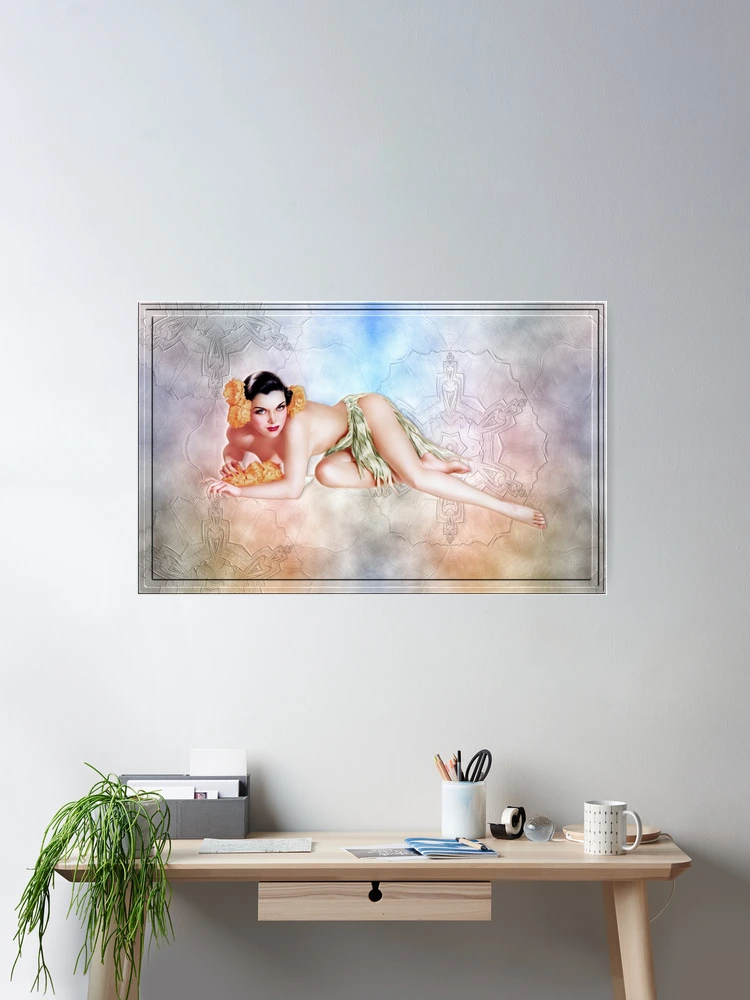
“ילדת האי” by the Peruvian artist תמונת מציין מיקום של אלברטו ורגאס (1896 – 1982), created in the 1930s, presents a striking image of femininity through the portrayal of a woman in an exotic, tropical setting. As an iconic work in Vargas’s oeuvre, it exemplifies his distinctive pin-up style, which became synonymous with the golden age of American illustration. ורגאס, known for his sultry depictions of women, was a key figure in the development of pin-up art during the 20th century. His work captured the essence of idealized beauty, combining elements of sensuality, תְמִימוּת, ופיתוי.
תוכן העניינים
נושא והרכב
הדמות המרכזית של “ילדת האי” is a woman, delicately posed in a languid yet alluring manner. התנוחה שלה, reclining on the ground, מעורר תחושה של רוגע וחיוניות כאחד. הדגם רך, עור חלק מנוגד לפלורה האקזוטית המעטרת אותה, במיוחד פרחי ההיביסקוס הצהובים והחיים שממסגרים את שערה. העור שלה, זוהר וללא רבב, הוא התגלמות של יופי אידיאלי, מה שמאפיין את הנושאים של ורגאס. היא מביטה ישירות בצופה, עיניה משדרות גם הזמנה וגם תחושת מסתורין. זווית גופה, עם זרוע אחת ממוקמת ממש מתחת לסנטרה וראשה מוטה בעדינות הצידה, מרמז על חושניות טבעית אך מבוימת שורגאס היה ידוע בה.
מבחינת הלבוש, היא לובשת לבוש טרופי מינימלי, מורכבת מחצאית פשוטה של מה שנראה כמו עלי דקל, מה שמוסיף נופך של טבע לסצנה. השימוש באלמנטים הטבעיים מדגיש את הנושא של אי גן עדן, further enhancing the sensual appeal of the composition. The artist carefully balances the portrayal of the figure with the environmental elements, using them as mere accents to frame the subject without overshadowing her beauty.
רקע והגדרה
The background of the piece is an abstract yet atmospheric blend of pastel colors, with soft blues and pinks merging to form an almost ethereal landscape. This choice of colors invokes a sense of warmth, typical of tropical settings, while also enhancing the softness of the scene. The blurred, faded background serves to keep the focus entirely on the subject, allowing the viewer to feel as though they are in a dreamlike world where the subject and her surroundings are intimately connected.
The geometry of the background, with its mirrored and kaleidoscopic shapes, suggests a sense of otherworldliness, where the boundaries between the figure and the space seem to dissolve. This effect heightens the surreal atmosphere of the painting, making the viewer feel as though the woman is not merely a subject of a painting, אלא פרנסה, breathing entity in a fantastical, secluded world.
סגנון אמנותי והשפעה
Alberto Vargas was heavily influenced by Art Deco, an aesthetic movement that emerged in the 1920s and flourished into the 1930s. “ילדת האי” displays several hallmarks of the Art Deco style: geometric patterns, stylized lines, and an overall focus on elegance and glamour. הנקי, sharp lines that define the model’s silhouette contrast beautifully with the softer, more fluid forms of the floral elements, highlighting Vargas’s ability to create a harmonious balance between realism and abstraction.
עבודתו של ורגס שואבת גם מניסיונו כמאייר עבור מגזינים כגון Esquire ו פלייבוי, שם הוא נודע ביצירת כמה מאיורי הפין-אפ המפורסמים ביותר של התקופה. התיאור החושני אך האלגנטי של הצורה הנשית הפך לנושא מרכזי ביצירתו, ו “ילדת האי” הוא דוגמה מובהקת לאופן שבו הוא מיזג ריאליזם עם יופי אידאלי. הפרופורציות של הנושא, תווי פניה העדינים, והזוהר החם של עורה משקף את השפעת הזוהר ההוליוודי שהייתה נפוצה במהלך התקופה.
השימוש באלמנטים טבעיים כגון פרחי ההיביסקוס ועלי הדקל קושר את הציור לשורשיו של ורגאס באמריקה הלטינית., להחדיר בו תחושה של אקזוטיות טרופית. This connection to Vargas’s Peruvian heritage also lends the painting a certain authenticity, grounding it in a cultural context while allowing it to transcend geographical boundaries through its universal themes of beauty and allure.
מצב רוח ואווירה
מצב הרוח של “ילדת האי” is one of serene yet inviting sensuality. The subject’s relaxed pose, combined with her soft, inviting expression, creates a sense of calm and intimacy. The combination of warm pastel colors in the background and the subtle floral accents imbues the scene with an aura of tropical beauty and quietude, evoking images of paradise and an idyllic escape from the mundane world. The gentle flow of the composition invites the viewer to linger on the image, absorbing the peaceful yet alluring atmosphere that Vargas masterfully created.
The overall tone of the painting is one of timeless femininity and grace. While the subject is undoubtedly depicted as a symbol of beauty and allure, there is also a sense of modesty in the way she is portrayed, reflecting Vargas’s skill in balancing sensuality with elegance. The composition evokes the idea of a mythical figure, one that belongs to a world both familiar and fantastical, where beauty reigns supreme, and nature complements the human form.
חומרים וטכניקות
Vargas employed traditional painting techniques to create the lush, polished aesthetic for which he became famous. החלק, almost flawless quality of the model’s skin suggests meticulous brushwork, carefully layering tones to achieve a lifelike yet idealized finish. The texture of the palm leaves, the delicate flowers in her hair, and the soft blending of the background colors all point to Vargas’s attention to detail and his commitment to creating an immersive visual experience for the viewer.
The juxtaposition of solid, tangible elements, like the leaves and flowers, against the soft and flowing background creates a contrast that keeps the viewer’s eye moving throughout the composition, ensuring that the image remains dynamic yet peaceful. Vargas’s ability to use light and shadow to define the contours of the model’s body gives the work a sense of depth, making the figure appear almost three-dimensional.
זהו רפרודוקציה של אמנות דיגיטלית מחודשת של אמן ישן של תמונה ברשות הרבים הזמינה בתור א הדפסת קנבס באינטרנט.
ביו אמן
מידע למטה מ Wikipedia.org
נולד בארקיפה, פרו, הוא היה בנו של הצלם הפרואני המפורסם מקס טי. ורגאס. אלברטו ורגאס עבר לארצות הברית 1916 לאחר לימודי אמנות באירופה, ציריך, וז'נבה לפני מלחמת העולם הראשונה.
בזמן שהותו באירופה הוא הגיע למגזין הצרפתי La Vie Parisienne, עם כריכה מאת רפאל קירשנר, שלדבריו הייתה השפעה רבה על עבודתו.
הקריירה המוקדמת שלו בניו יורק כללה עבודה כאמן עבור ה- Ziegfeld Follies ועבור אולפנים הוליוודיים רבים. זיגפלד תלה את הציור שלו של אוליב תומאס בתיאטרון, והיא נחשבה לאחת מבנות ורגאס המוקדמות ביותר.
ורגאס’ היצירה המפורסמת ביותר של עבודת הסרט הייתה עבור הפוסטר של ה 1933 הסרט "חטאה של נורה מורן"., אשר מציגה זיטה יוהאן כמעט עירומה בתנוחת ייאוש. הכרזה מכונה לעתים קרובות אחת מכרזות הסרטים הגדולות ביותר שנעשו אי פעם.
הוא זכה לציון נרחב בשנות ה-40 של המאה ה-20 כיוצר ה-pin-אפים האיקוניים של תקופת מלחמת העולם השנייה עבור מגזין Esquire הידוע בשם “בנות ורגאס.” בֵּין 1940 ו 1946 ורגאס מיוצר 180 ציורים למגזין.
אמנות האף של מטוסים רבים ממלחמת העולם השנייה של אמריקאים ובעלות הברית נוצרה בהשראת והותאמות מהסיכות הללו של Esquire, כמו גם אלה של ג'ורג' פטי, ואמנים נוספים.