

Joan of Arc Death at the Stake c1843
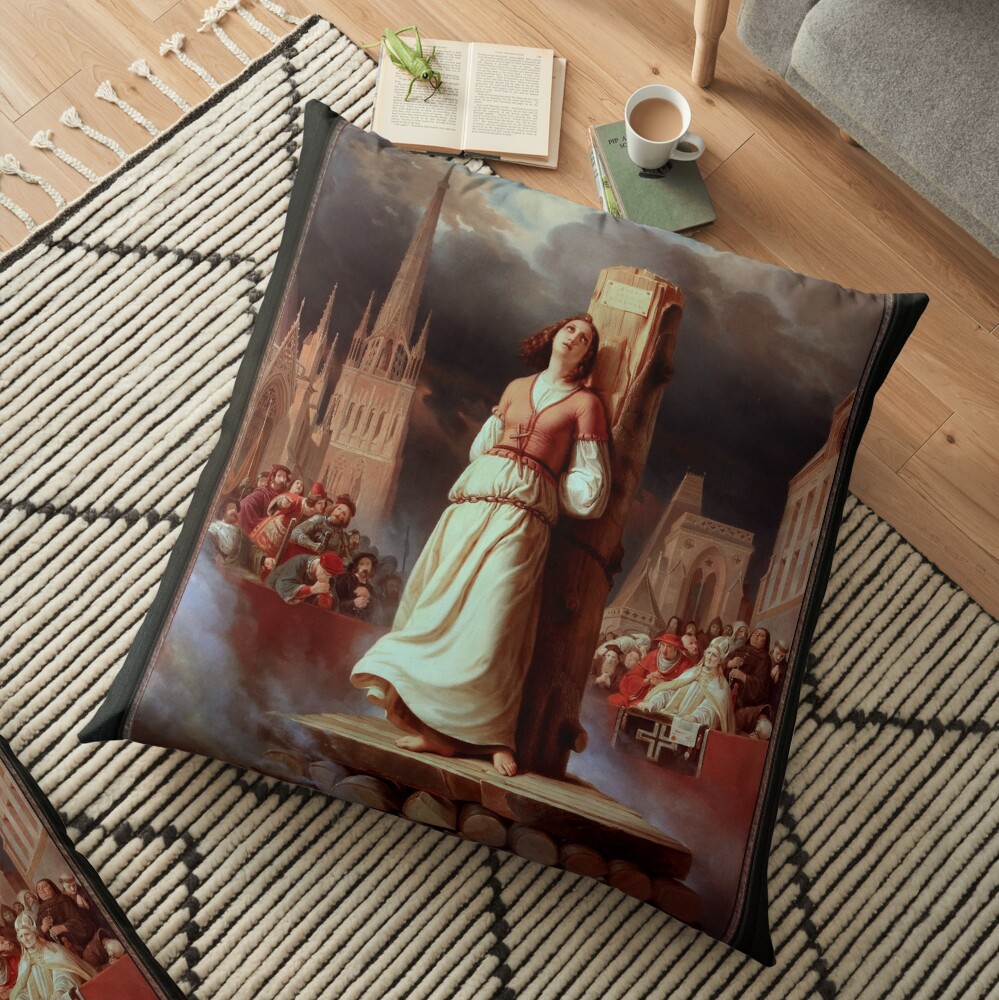
“화형에 처한 죽음의 잔다르크,” 다음에서 생성됨 1843 by the German painter 헤르만 스틸케 (1803 – 1860), depicts a pivotal moment in the life of one of history’s most courageous figures, 잔다르크. The painting is part of the larger cycle of works that capture the life of the French heroine. Stilke, known for his historical scenes and deep attention to detail, evokes a solemn atmosphere with his masterful treatment of light and texture, skillfully portraying the emotional gravity of Joan’s final moments. The artwork presents a dramatic and vivid scene, encapsulating the historical and religious significance of Joan of Arc’s martyrdom during the Hundred Years’ 전쟁.
목차
주요 주제
그림의 중심 인물은 Joan of Arc 자신입니다., portrayed in a moment of both physical and emotional distress. She stands bound to a wooden post, which is the execution stake, awaiting her fate. Her white gown, symbolic of purity and martyrdom, contrasts with the fiery setting that surrounds her. The way her arms are outstretched and bound with ropes is a stark reminder of her helplessness, yet there is an undeniable strength in her posture and gaze. Joan’s eyes are lifted towards the heavens, her expression a mixture of defiance and serenity, as though she is seeking solace or divine intervention.
Despite the imminent danger, her figure retains an aura of dignity and resilience. The facial features are finely rendered, showing a young woman who, despite the horror she faces, holds on to her faith and conviction. Joan’s expression and posture encapsulate the complex emotion of someone who, while suffering physically, holds a deep spiritual connection that transcends the earthly realm. She is both a victim of unjust persecution and a symbol of unwavering belief.
배경과 설정
The background of the painting is just as essential to the narrative as Joan’s figure. A dark and dramatic sky looms overhead, clouds swirling ominously above her, which heightens the tension and urgency of the scene. The cityscape in the distance reflects the historical context of the scene, Joan’s execution took place in Rouen, 프랑스, where she was burned at the stake. The architecture of the surrounding buildings, though slightly blurred and distant, is Gothic, with pointed arches and towering spires that lend a sense of grandeur and tragedy to the composition.
The presence of a large crowd gathered in the background serves to highlight Joan’s public execution. The people are shown as spectators, some in grim contemplation, others in various states of anger and mockery. A few figures stand out more prominently, dressed in religious or official attire, reflecting the power structures that sentenced her to death. Their presence adds to the somber tone of the painting, emphasizing the role of the church and political forces in her condemnation.
상징주의와 분위기
The mood of the painting is undeniably somber, evoking a sense of tragedy, helplessness, and moral complexity. 어둠, swirling clouds in the sky symbolize the tumultuous nature of the times and the inner turmoil of the conflict. The contrast between the bright, almost glowing figure of Joan and the dark background imbues the painting with a spiritual dimension. 그녀의 시선, directed upwards, is one of quiet resignation and spiritual transcendence, offering a glimmer of hope amid the overwhelming darkness surrounding her. The crowd, while varying in emotion, largely conveys the coldness and indifference of the world to her suffering.
The execution stake, itself an object of historical significance, is crafted with intense realism. The texture of the wood, the detail in the ropes binding Joan’s body, and the rough-hewn nature of the executioner’s platform all contribute to the realism of the scene. This stark representation of the wooden stake reinforces the brutality of Joan’s death while also making her ascension into martyrdom more poignant.
The painting’s color palette is subdued, dominated by browns, 회색, and dark blues. 부드러운, almost ethereal lighting that illuminates Joan’s figure contrasts with the heavy shadows surrounding the rest of the scene. This effect highlights the central figure in a way that directs the viewer’s attention entirely on Joan, placing her as the focal point of both the composition and the larger historical narrative.
Execution and Artistic Style
Stilke’s style in this painting aligns with the historical romanticism of the 19th century. The dramatic portrayal of Joan of Arc is characteristic of the movement’s emphasis on emotion, 역사, and the heroic. 세부 사항에 대한 그의 관심, particularly in the rendering of textures such as the fabric of Joan’s dress and the rough surface of the wooden stake, exemplifies his skill as a historical painter. His use of light and shadow creates a dynamic atmosphere that contrasts the divine serenity of Joan’s face with the tumultuous environment surrounding her.
Stilke’s brushwork, though meticulous, remains loose enough in the background to create a sense of movement, as if the scene is unfolding in real time. The figures in the crowd, while smaller and more indistinct, are rendered with enough detail to convey their various reactions to the event. Some are focused on Joan, while others seem indifferent, emphasizing the public nature of the execution and the apathy that surrounds it.
결론
Hermann Stilke’s “화형에 처한 죽음의 잔다르크” is a powerful, emotional portrayal of the final moments of a national hero and martyr. 그의 빛의 사용을 통해, 구성, 그리고 상징주의, Stilke encapsulates the themes of faith, 희생, and political injustice. The somber atmosphere of the painting invites the viewer to reflect on the broader historical and spiritual significance of Joan of Arc’s death and her unwavering belief in her divine mission, even in the face of death. The work stands as a testament to the courage of a young woman who, in her final moments, became an enduring symbol of bravery and conviction.
이것은 온라인에서 사용할 수 있는 퍼블릭 도메인 이미지의 수정된 디지털 아트 올드 마스터 복제품입니다. 압연 인쇄.
유래 된 아티스트 바이오 Wikipedia.org
Anton Hermann Stilke는 1월에 베를린 왕국에서 태어났습니다. 29, 1803 그는 베를린 미술 아카데미에서 공부한 독일 화가였습니다. 1821 뮌헨 미술 아카데미에서 독일 석사 Peter von Cornelius 밑에서 공부 (1783 – 1867).
그곳에서 그는 뒤셀도르프의 미술 아카데미에서 공부했습니다.; 그는 독일 화가 Karl Stürmer와 함께 그림을 그렸습니다. (1803 – 1881) 미완성 프레스코 코블렌츠 아시센잘의 최후의 심판.
에 1827 Anton은 연구 여행으로 북부 이탈리아를 여행했습니다., 에 로마에 도착 1828. 그런 다음 1833 그는 뒤셀도르프 아카데미로 돌아갔다., 그가 가르친 곳 1839 – 1843.
에서 1842 – 1846 Anton은 라인 강 유역에 있는 Koblenze 근처 Stolzenfels 성의 Knight's Hall에서 일했습니다.; 그리고 1850 그는 베를린에 정착하여 그곳에서 10세의 나이로 세상을 떠났습니다. 57 9 월 22, 1860.