

July Varga Girl
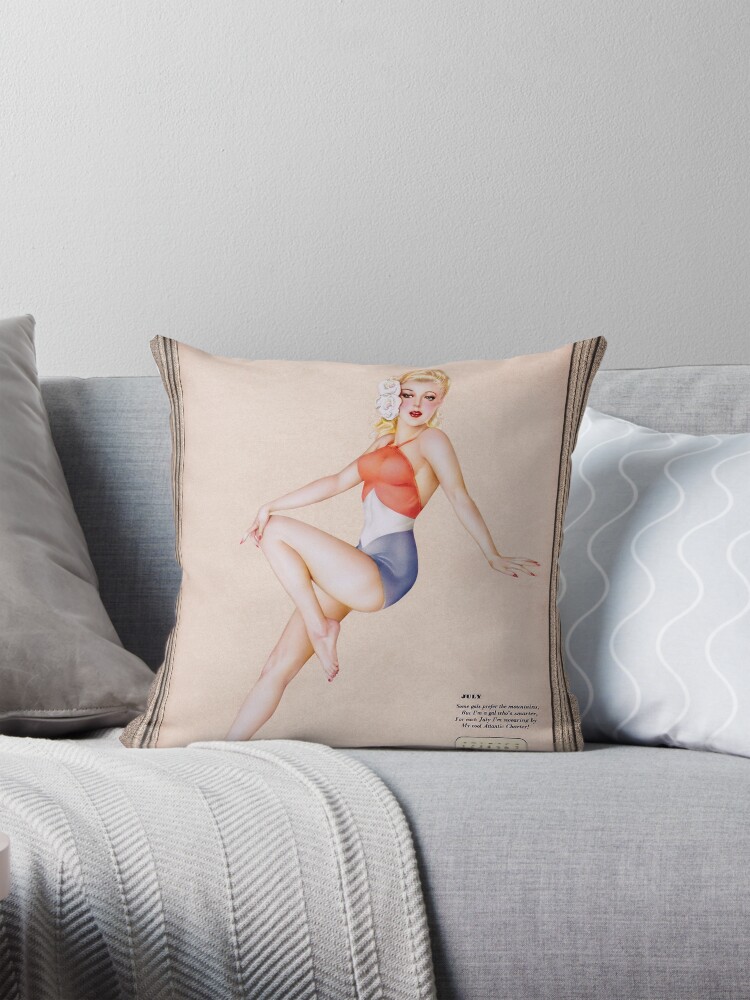
Alberto Vargas plassholderbilde‘ “July Varga Girl,” opprettet i 1945, is a stunning example of mid-20th-century pin-up art, an iconic period in American illustration. Vargas, born in Peru in 1896 og går bort i 1982, became famous for his glamorous depictions of women, blending sensuality with elegance. I akkurat dette stykket, Vargas captures a moment of carefree summer beauty, rendered in his signature soft yet striking style. The artwork depicts a glamorous young woman in a patriotic swimsuit, seated with poise and confidence, as if inviting the viewer into a world of playful sophistication.
Innholdsfortegnelse
Hovedfag: The Varga Girl
The subject of the piece is a beautiful woman, a recurring muse in Alberto Vargas’ extensive collection of pin-up art. She embodies the idealized female form of the 1940s, with carefully curated facial features that suggest both allure and innocence. Her bright red lipstick, well-groomed blonde hair, and elegant floral accessory in her hair create a sense of delicate femininity.
The woman is posed sitting gracefully, one leg crossed over the other, her hand resting lightly on the side. Her body is turned slightly away from the viewer, yet her head is turned towards the viewer with a soft but confident expression. Her posture is refined, and the image suggests a sense of casual leisure typical of the pin-up genre but with an added layer of sophistication.
The swimsuit she wears is a two-tone piece in red, hvit, and blue, a clear nod to the American flag and a sense of patriotism that was prevalent during the mid-1940s, especially as the U.S. was in the midst of World War II. The patriotic theme serves not only as a reflection of the times but also as a way to accentuate the woman’s sensuality by drawing attention to the lines of her form.
This swimsuit’s bold yet simple design mirrors the modern fashion of the era, allowing the female subject to remain both stylish and chic while contributing to the overall mood of nostalgia and playful charm. Her hand, elegantly placed on her knee, emphasizes the gracefulness of her pose, further reinforcing the image of an idealized beauty.
Den kunstneriske stilen: Soft and Dreamy Realism
Vargas’ artistic style is instantly recognizable. I “July Varga Girl,” he employs a blend of soft realism, idealized proportions, and atmospheric details that capture the essence of a glamorous moment. The use of delicate shading enhances the softness of the subject’s skin, creating an almost ethereal glow.
Den glatte, almost porcelain-like texture of the figure contrasts against the background, which is muted and neutral, allowing the woman to take center stage. There is an emphasis on smooth transitions between light and shadow, particularly on the skin, which highlights the model’s form while maintaining a gentle, drømmeaktig kvalitet.
The color palette chosen by Vargas is vibrant yet soft, with pastel hues dominating the composition. The swimsuit’s red, hvit, and blue tones pop with energy, but the artist ensures that these colors do not overwhelm the composition.
I stedet, the interplay between the warm and cool tones draws the eye to the figure and then gently leads it to the background and surrounding details, creating balance and harmony in the work. This technique is typical of Vargas’ nærme, wherein the interplay of light and color serves as a key feature in drawing out the subject’s allure and sophistication.
Stemningen og temaet: Playful Elegance
The mood conveyed in “July Varga Girl” is one of playful elegance, capturing the exuberance of summer and the carefree spirit of the mid-20th century. There is an undeniable charm to the woman in this piece, who, while confident and alluring, exudes an effortless grace that makes her appear approachable rather than distant.
The simple yet elegant background with soft hues contributes to the sense of serenity, providing a perfect contrast to the lively energy of the woman’s pose and expression. Her facial expression is coy but inviting, with a slight smile that suggests confidence, as if she knows her beauty is admired yet is unaffected by it.
The theme of the artwork centers on the celebration of femininity, skjønnhet, and the allure of the perfect pin-up girl. This genre of art flourished during the 1940s and 1950s, and Vargas, with his distinctive style, became one of the most celebrated artists of the era.
His women were not merely figures of sexual allure but were representations of idealized femininity, strong yet tender, graceful yet assertive. “July Varga Girl” fits squarely within this tradition, presenting a portrait of a woman who, while embodying the ideal of beauty, also reflects the spirit of her time.
Gjenstander og terreng
The only objects present in the piece are the woman’s attire, her accessories (such as the flowers in her hair), and the small, unobtrusive calendar in the bottom corner. This calendar shows the month of July, adding a sense of time and place to the artwork, further evoking the summer season.
The presence of the calendar provides a subtle contrast to the ethereal quality of the woman’s depiction, grounding the viewer in the temporal world while maintaining a sense of timeless beauty.
The terrain or setting of the artwork is deliberately understated. There is no specific landscape or detailed background; i stedet, the artist relies on soft gradients of color to suggest a neutral backdrop. This abstracted background ensures that the viewer’s attention remains firmly on the subject, without distraction. By removing elements of a specific physical setting, Vargas elevates the woman into a kind of idealized realm, where her beauty becomes the focus, rather than her environment.
Konklusjon: The Legacy of Alberto Vargas
“July Varga Girl” is a powerful example of Alberto Vargas’ ability to blend sensuality with sophistication. His skillful use of light, farge, and form elevates the pin-up girl from a mere symbol of sexual attraction to a figure of art and elegance. This artwork remains a testament to Vargas’ lasting influence on both the world of illustration and the broader cultural landscape of mid-20th-century America. His works continue to be admired for their beauty, their celebration of femininity, and their timeless appeal.
Dette er en retusjert digital kunst-reproduksjon av gamle mestere av et offentlig eiendomsbilde som er tilgjengelig som metall, akryl, ull og rullet lerretstrykk online.
Artistbio fra Wikipedia.org
Født i Arequipa, Peru, han var sønn av den anerkjente peruanske fotografen Max T. Vargas. Alberto Vargas flyttet til USA i 1916 etter å ha studert kunst i Europa, Zürich, og Genève før første verdenskrig.
Mens han var i Europa, kom han over det franske magasinet La Vie Parisienne, med et omslag av Raphael Kirchner, som han sa var en stor innflytelse på arbeidet hans.
Hans tidlige karriere i New York inkluderte arbeid som kunstner for Ziegfeld Follies og for mange Hollywood -studioer. Ziegfeld hang sitt maleri av Olive Thomas på teatret, og hun ble tenkt på som en av de tidligste Vargas -jentene.
Vargas’ det mest kjente filmverket var for plakaten av 1933 film The Sin of Nora Moran, som viser en nesten naken Zita Johann i en posering av desperasjon. Plakaten blir ofte kåret til en av de største filmplakatene som noensinne er laget.
Han ble mye kjent på 1940-tallet som skaperen av ikoniske pin-ups fra andre verdenskrig-æra for Esquire magazine kjent som “Vargas Girls.” Mellom 1940 og 1946 Vargas produsert 180 malerier til bladet.
Nesekunsten til mange amerikanske og allierte andre verdenskrigs fly ble inspirert og tilpasset fra disse Esquire pin-ups, så vel som George Petty, og andre artister.