

Jupiter v masce Diany, a Nymph Callisto
Jupiter v masce Diany, a Nymph Callisto c1759 od French Painter Francois Boucher (1703 – 1770); také známý jako kreslíř, rytec a dekoratér ve stylu francouzského rokoka, který byl dobře známý pro svou bohatou mytologii, alegorické a erotické motivy a byl dvorním malířem Ludvíka XV. a oblíbencem markýze de Pompadour.
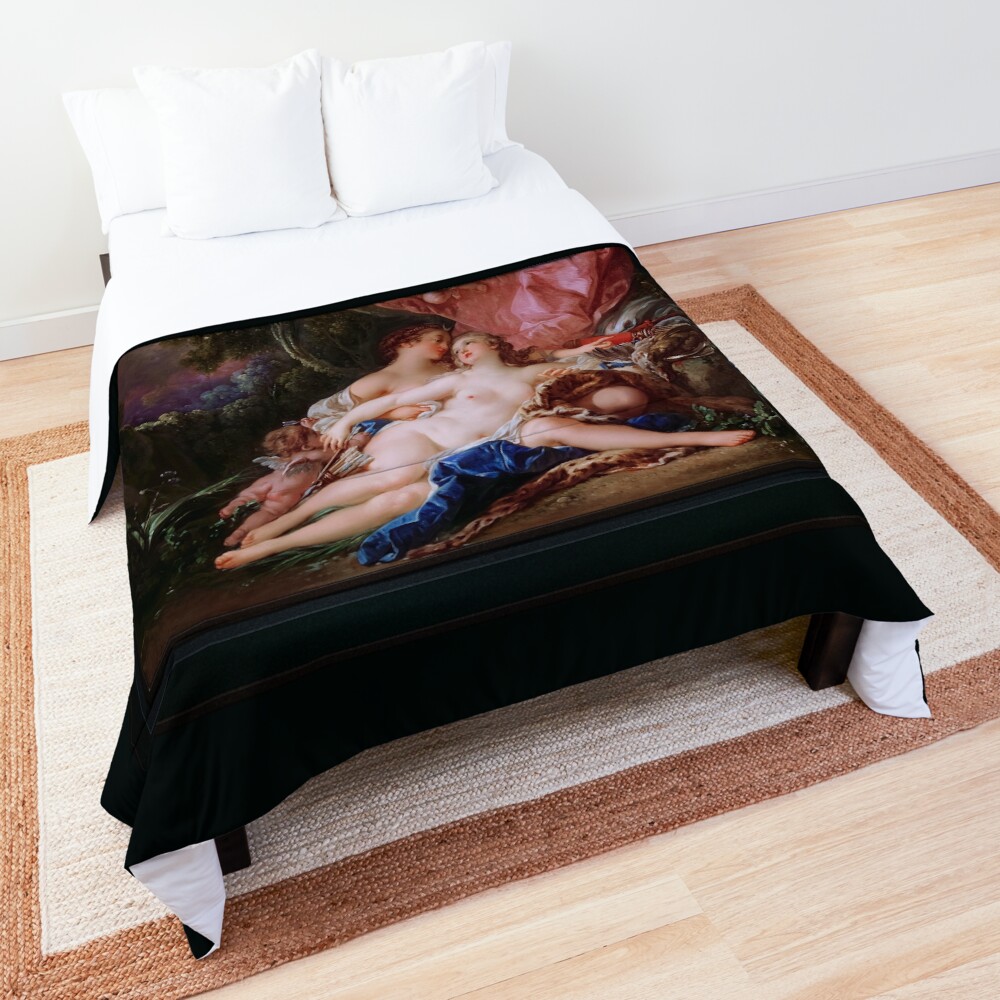
This is a beautiful scene depicting the characters from Roman mythology Jupiter (The Eagle), Diana (Goddess of the Hunt), and Callisto the favorite Nymph of Diana.
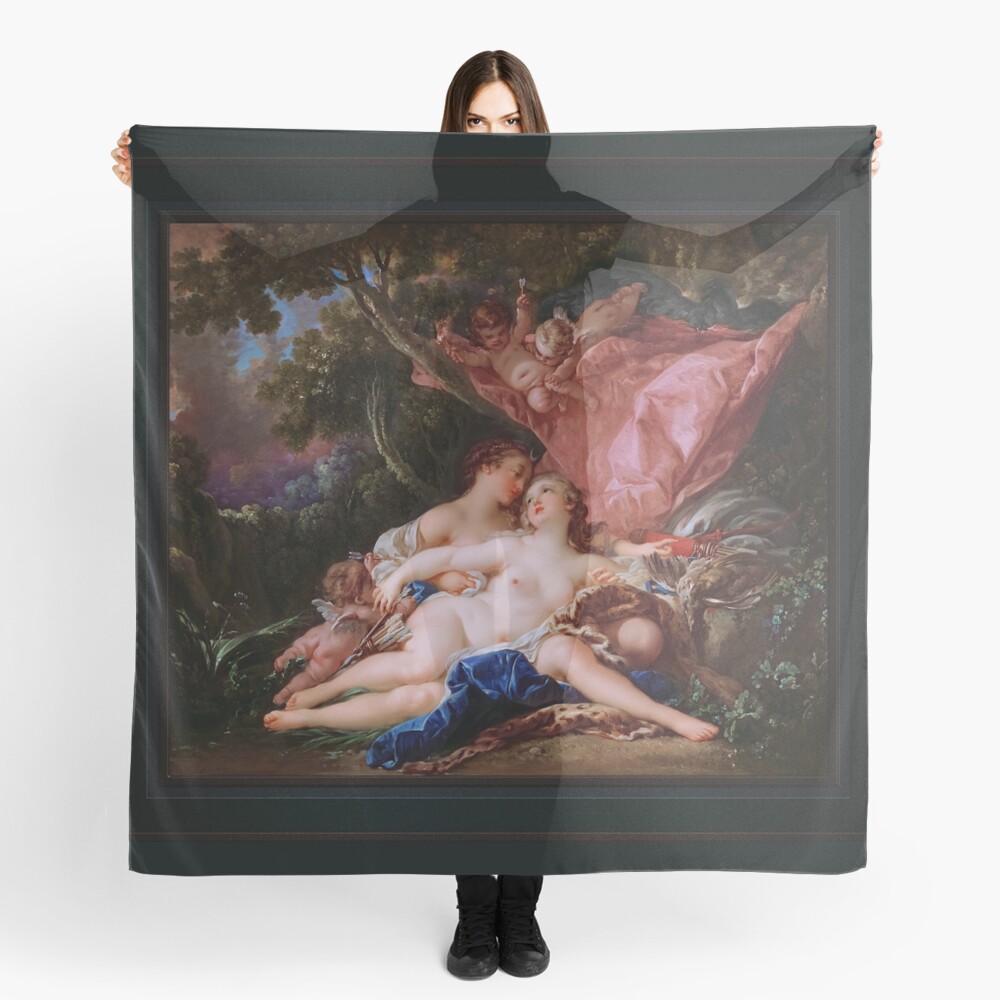
In this forest scene we can see six figures, two cherubs in a tree with a large rose drape hanging from one of its outstretched limbs, near the eagle Jupiter looking down on what appears to be Diana and her Nymph Callisto, with one holding an arrow in his left hand; with another on the ground by the pond that Diana and her Nymph Callisto are laying near with an arrow in its left hand and a quiver filled with arrows by its right side.
Jupiter, the King of the Gods taken by the beauty of Callisto, disguises himself as the huntress Diana to seduce her; embracing her while they relax by the pond on a cushion of leaves, a blue garment and leopard skin.
By the couple is a boulder that has on it a brown bird resting on the chest of light colored bird that has had its throat cut, with blood staining the rock.
Behind the birds is a red quiver filled with arrows and a bow and another wrapped up grey colored garment, that rest just under the pink drape and the eagle Jupiter.
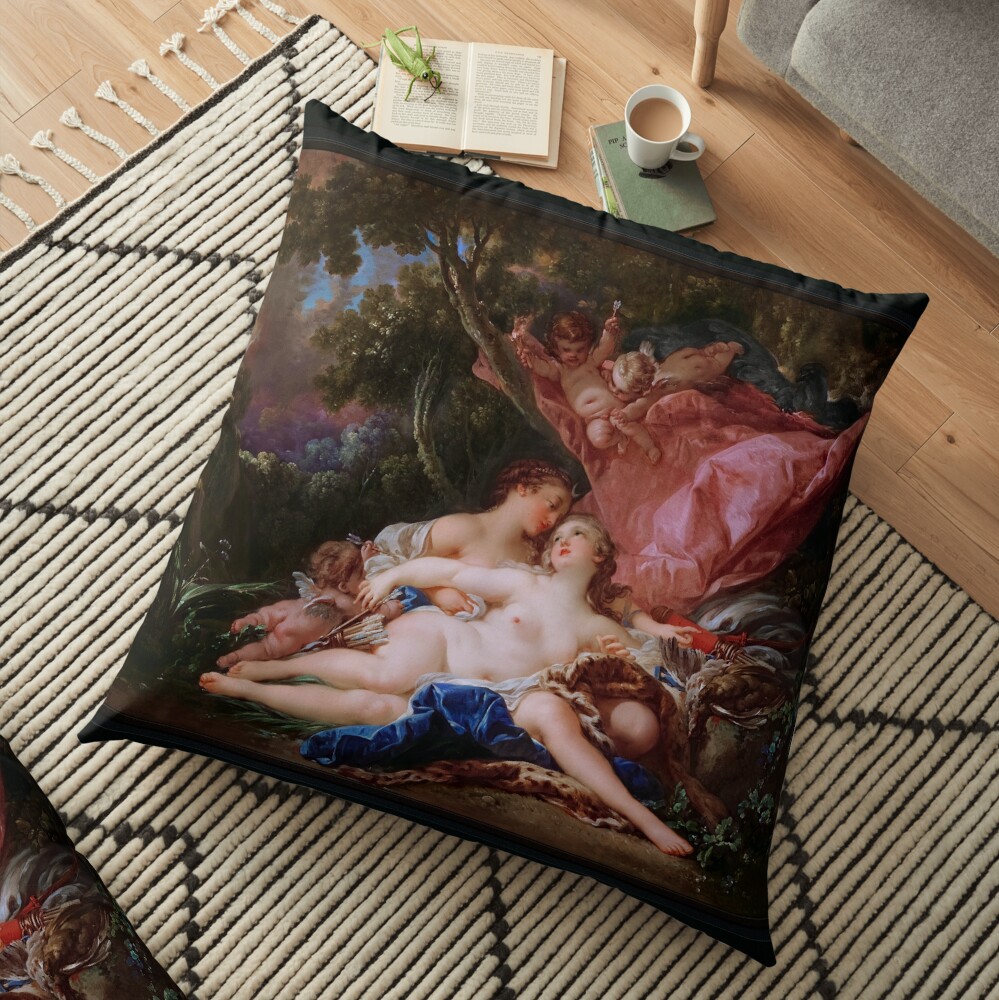
In the background is a colorful forest of many different hues and a light blue sky filled with many colored clouds, that seems to be illuminated by a setting sun.
Jupiter v masce Diany, and the Nymph Callisto is a remastered digital art old masters reproduction of a public domain image that is available as a tisk na plátno online.
Níže uvedené informace jsou odvozeny z Wikipedia.org
I když existuje několik protichůdných verzí mýtu, I když existuje několik protichůdných verzí mýtu, I když existuje několik protichůdných verzí mýtu. I když existuje několik protichůdných verzí mýtu, I když existuje několik protichůdných verzí mýtu. I když existuje několik protichůdných verzí mýtu, I když existuje několik protichůdných verzí mýtu, I když existuje několik protichůdných verzí mýtu.
v 1720, vyhrál elitní Grand Prix de Rome za malbu, vyhrál elitní Grand Prix de Rome za malbu, vyhrál elitní Grand Prix de Rome za malbu[1] Po návratu ze studia v Itálii byl přijat na refounded Académie de peinture et de sochařství na 24 listopad 1731. Jeho přijímací kus (přijímací kus) byl jeho Rinaldo a Armida z 1734.
Boucher si vzal Marie-Jeanne Buzeau v 1733. Pár měl spolu tři děti. Boucher se stal členem fakulty v 1734 a jeho kariéra se od tohoto okamžiku zrychlila, když byl povýšen na profesora, poté rektora akademie, stává inspektorem v Royal Gobelins Manufactory a nakonec Premier Peintre du Roi (První malíř krále) v 1765. Portrét Marie-Louise O'Murphyho c. 1752
Boucher zemřel dne 30 Smět 1770 v rodné Paříži. Jeho jméno, spolu s patronkou jeho madame de Pompadour, se stal synonymem pro francouzský rokokový styl, vede bratry Goncourty k psaní: “Boucher je jedním z těch mužů, kteří představují vkus století, kteří vyjadřují, personifikovat a ztělesnit to.”
Boucher je známý tím, že říká, že příroda je “příliš zelené a špatně osvětlené” (příliš zelené a špatně osvětlené).
Boucher byl spojován s rytec drahokamů Jacques Guay, kterého učil kreslit. Mentoroval také moravsko-rakouského malíře Martina Ferdinanda Quadala a neoklasického malíře Jacquese-Louis Davida v r. 1767.[4] Později, Boucher vytvořil sérii kreseb Guayových děl, které madame de Pompadour poté vyryl a distribuoval jako pohledně svázaný svazek oblíbeným dvořanům