

Pygmalion og Galatea av Jean-Léon Gérôme, og nymfen Callisto
Pygmalion og Galatea av Jean-Léon Gérôme, og nymfen Callisto c1759 av den franske maleren Francois Boucher (1703 – 1770); også kjent som tegner, graver og dekoratør i fransk rokokostil, som var kjent for sin overdådige mytologi, allegoriske og erotiske motiver og var hoffmaleren til Louis XV og en favoritt av Marquise de Pompadour.
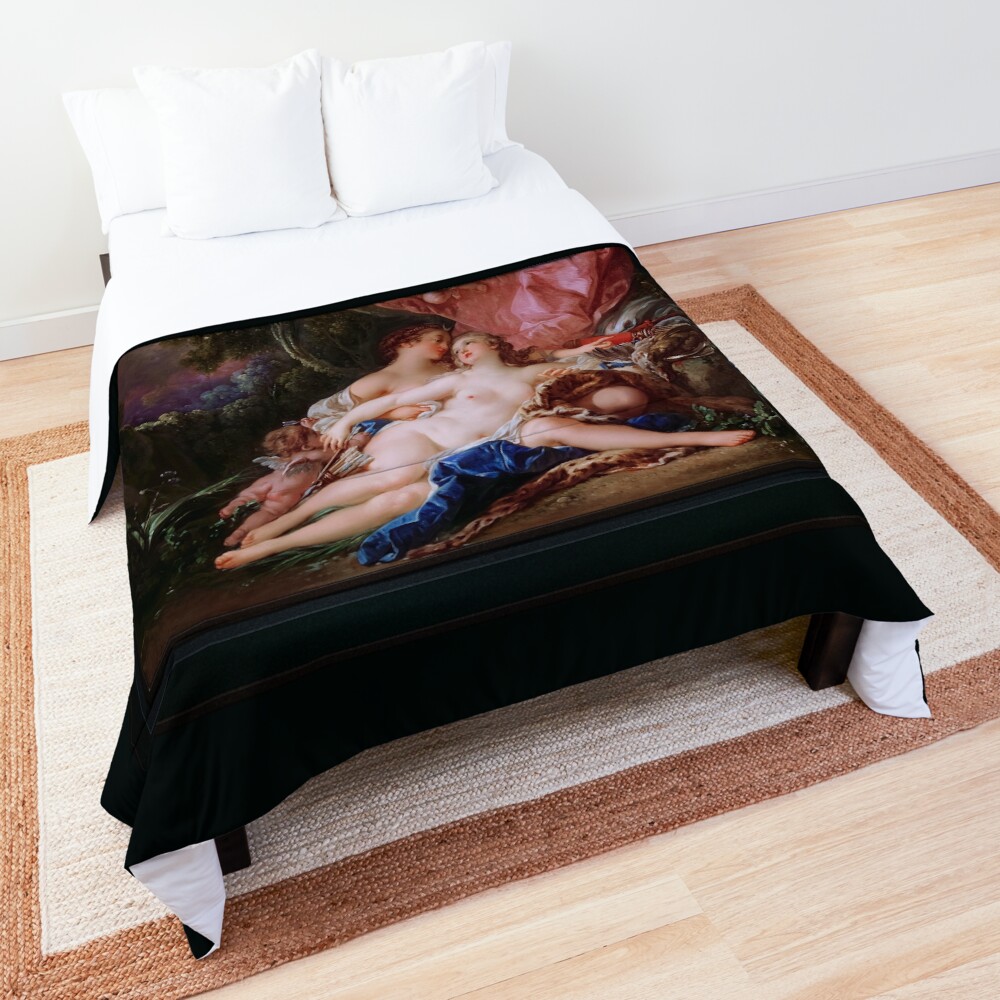
Dette er en vakker scene som skildrer karakterene fra den romerske mytologien Jupiter (Ørnen), Diana (Jaktens gudinne), og Callisto favorittnymfen til Diana.
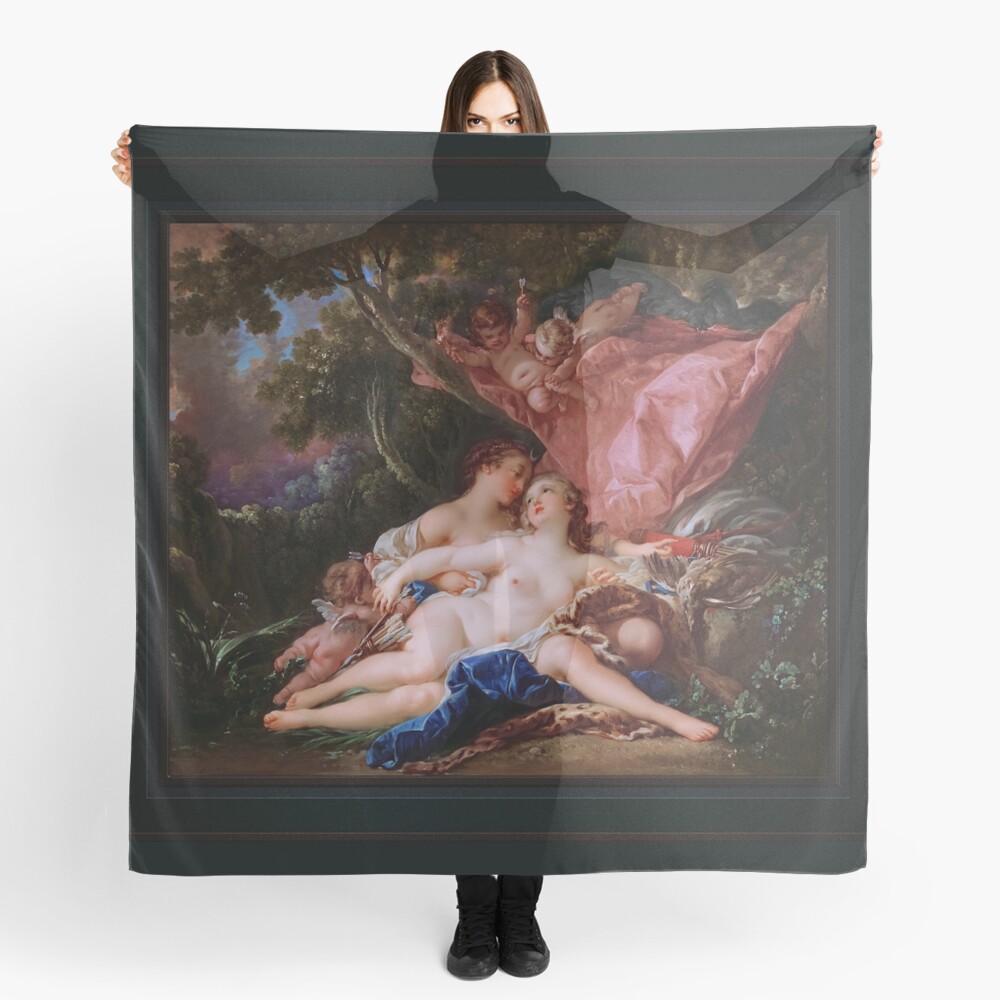
I denne skogscenen kan vi se seks figurer, to kjeruber i et tre med en stor rosedrapering hengende fra en av dens utstrakte lemmer, nær ørnen Jupiter som ser ned på det som ser ut til å være Diana og nymfen hennes Callisto, med en som holder en pil i venstre hånd; med en annen på bakken ved dammen som Diana og nymfen hennes Callisto ligger nær med en pil i venstre hånd og et kogger fylt med piler på høyre side.
Jupiter, gudenes konge tatt av skjønnheten til Callisto, forkler seg som jegeren Diana for å forføre henne; omfavner henne mens de slapper av ved dammen på en pute av løv, et blått plagg og leopardskinn.
Ved paret ligger en stein som har en brun fugl på brystet til en lys fugl som har fått halsen skåret over, med blod som farget steinen.
Bak fuglene er et rødt kogger fylt med piler og en bue og et annet innpakket grått plagg, som hviler like under den rosa draperingen og ørnen Jupiter.
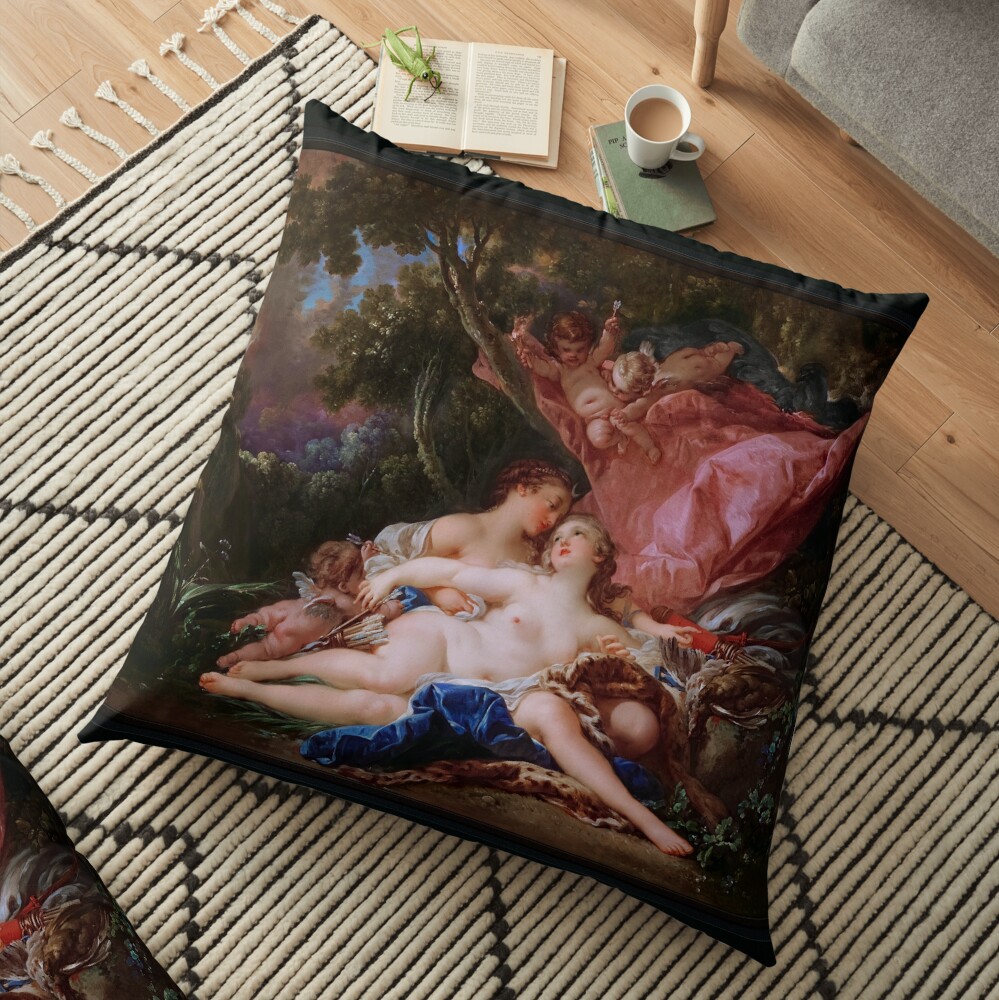
I bakgrunnen er en fargerik skog med mange forskjellige fargetoner og en lyseblå himmel fylt med mange fargede skyer, som ser ut til å være opplyst av en solnedgang.
Pygmalion og Galatea av Jean-Léon Gérôme, and the Nymph Callisto er en remastret digital kunst, gammel mesterreproduksjon av et offentlig domenebilde som er tilgjengelig som en lerretstrykk online.
Info nedenfor avledet fra Wikipedia.org
Innfødt i Paris, Boucher var sønn av en mindre kjent maler Nicolas Boucher, som ga ham sin første kunstneriske opplæring. I en alder av sytten, et maleri av Boucher ble beundret av maleren François Lemoyne. Lemoyne utnevnte senere Boucher som lærling, men etter bare tre måneder, han gikk på jobb for graveren Jean-François Cars.
I 1720, han vant eliten Grand Prix de Rome for maleri, men tok ikke den konsekvensene av å studere i Italia før fem år senere, på grunn av økonomiske problemer ved Royal Academy of Painting and Sculpture.[1] Da han kom tilbake fra studiet i Italia, ble han tatt opp på den refunderte Académie de peinture et de sculpture på 24 november 1731. Mottakelsen hans (mottaksbrikke) var hans Rinaldo og Armida av 1734.
Boucher giftet seg med Marie-Jeanne Buzeau i 1733. Paret hadde tre barn sammen. Boucher ble et fakultetsmedlem i 1734 og karrieren hans akselererte fra dette tidspunktet da han ble forfremmet til professor, da rektor for akademiet, blir inspektør ved Royal Gobelins Manufactory og til slutt Premier Peintre du Roi (Første maler av kongen) i 1765. Portrett av Marie-Louise O'Murphy c. 1752
Boucher døde den 30 Kan 1770 i hjemlandet Paris. Navnet hans, sammen med sin beskytter Madame de Pompadour, hadde blitt synonymt med den franske rokokostilen, ledet Goncourt -brødrene til å skrive: “Boucher er en av de mennene som representerer smaken av et århundre, som uttrykker, personifisere og legemliggjøre det.”
Boucher er kjent for å si at naturen er det “for grønt og dårlig opplyst” (for grønt og dårlig opplyst).
Boucher ble assosiert med edelstenens graver Jacques Guay, som han lærte å tegne. Han veiledet også den moravisk-østerrikske maleren Martin Ferdinand Quadal samt den nyklassisistiske maleren Jacques-Louis David i 1767.[4] Seinere, Boucher laget en serie tegninger av verk av Guay som Madame de Pompadour deretter graverte og distribuerte som et godt bundet bind til favoriserte hoffmenn.