

Lady Orr-Lewis, née Maude Helen Mary Booth c1917
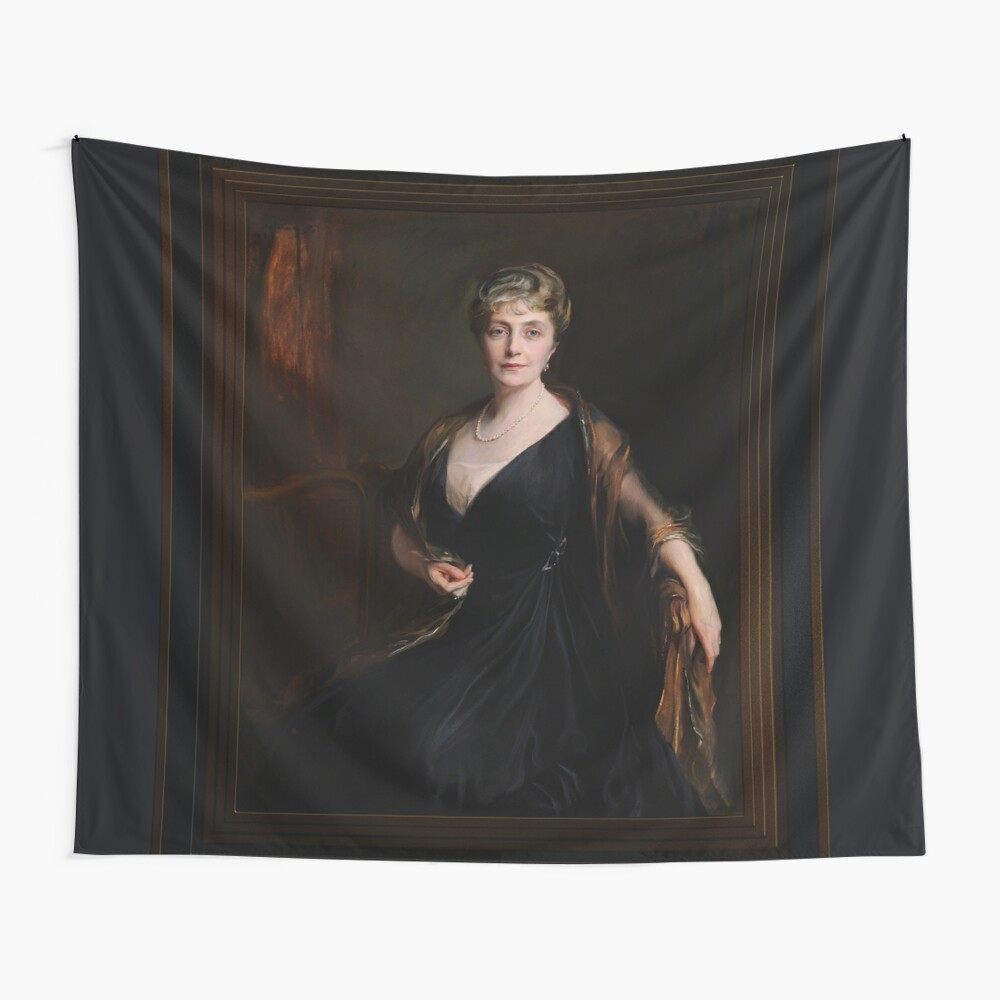
An phéintéireacht dar teideal “Lady Orr-Lewis, née Maude Helen Mary Booth (1869 – 1937) c1917,” by Hungarian painter Philip Alexius de László (1869 – 1937), captures the dignified elegance of a Canadian aristocrat from the early 20th century. An phortráid seo, cruthaithe timpeall 1917, exudes an air of refinement and strength, showcasing the sitter’s poise and the artist’s masterful technique.
Ábhar an phéintéireacht, Maude Helen Mary Booth, is depicted in a moment of quiet contemplation, her expression both serene and resolute. The artist’s meticulous attention to detail reveals not only the aristocratic grace of the sitter but also the prevailing atmosphere of high society during the period.
This is an elegant portrait of Lady Orr-Lewis At the age of 48; the wife of Canadian businessman Sir Frederick Orr-Lewis, 1st Baronet (1860 – 1921); who was instrumental in creating Canadian Vickers Limited, an aircraft and shipbuilding company that operated in Canada.
Clár na nÁbhar
The Subject and Her Expression
The central figure of the artwork is Lady Orr-Lewis, née Maude Helen Mary Booth, who was a prominent socialite and philanthropist during her lifetime. The portrait presents her with a calm, composed demeanor. She sits gracefully, her body slightly turned to the side, but her head facing forward, exuding a sense of confidence and aristocratic authority.
The subtlety in her facial expression reflects both the upper-class stoicism and an inner depth of character. A súile, while soft, appear to have a knowing intensity, suggesting a woman of intellect and influence.
She wears a dark gown, the fabric of which appears to catch the light in an almost palpable way. The deep hue of her dress contrasts beautifully with the delicate skin tone of her face and neck, highlighting her refined features. The use of light on her face is exquisite, emphasizing her high cheekbones and delicate jawline. Her pearl necklace, a timeless symbol of elegance and wealth, rests delicately around her neck, further emphasizing her high social standing.
Clothing and Accessories
Maude Booth’s attire is a key feature of the painting, reflecting the high fashion of the period. A gúna, made from what seems to be a luxurious fabric, possibly satin or silk, drapes elegantly over her figure. The garment is designed with a deep, neckline tumadh agus bodice atá struchtúrtha, ag cur béime ar chomhrianta a colainne. Tá sleeves sreafa a gúna maisithe le mionsonraí subtle, cosúil le bróidnéireacht mhín nó maisiúcháin fabraice, atá aibhsithe ag an solas bog ag titim orthu.
Chomh maith lena muince Pearl, caitheann sí bráisléad órga ar a caol láimhe clé, a lasann faoin solas, moladh saibhreas agus blas le haghaidh gabhálais scagtha. Tá codarsnacht idir teas an bhráisléid agus toin níos fuaire a gúna agus an chúlra, ag cur doimhneacht agus spéis amhairc leis an gcumadóireacht.
Súil nó ciseal seachtrach íogair, a drapes timpeall a guaillí, cuireann sí le saibhreas a ensemble. Dealraíonn sé go bhfuil sé déanta as ábhar a ghlacann an solas ar bhealach a thugann le tuiscint gur fabraic de chaighdeán mín é, perhaps velvet or silk.

The Background and Mood
The background of the portrait is characterized by a muted, darker color palette. The soft gradient of warm tones, donn domhain, burgundies, and soft golds, creates a subtle yet powerful contrast to the figure of Lady Orr-Lewis. The dark background suggests a sense of timelessness, ensuring that the viewer’s attention remains firmly on the subject. There are no overt distractions; the artist uses these neutral tones to highlight the lady’s attire and her serene expression.
The mood of the portrait is one of quiet dignity. There is no overt display of emotion or dramatic gesture in Lady Orr-Lewis’ pose or expression. Ina áit sin, the painting conveys a sense of reserved sophistication, a woman who embodies the ideals of her class: composed, dea-, agus poised. The subdued lighting further enhances the calm, almost contemplative mood of the painting, lending a quiet sense of intimacy to the viewer. The warm tones of the background seem to echo the soft light cascading from the upper left of the canvas, bathing her figure in a gentle glow.
Artistic Technique and Style
Philip Alexius de László was renowned for his portraits of high society, capturing not just the physical likeness of his subjects but their psychological depth as well. Tá a stíl fréamhaithe sa réalachas, and he was a master of rendering textures and light with incredible precision. Sa phortráid seo, his brushwork is smooth and refined, almost ethereal in some areas, particularly in the rendering of Lady Orr-Lewis’ face and skin. The subtle transitions of light and shadow on her face are skillfully done, giving the painting a sense of depth and vitality.
The overall color palette used in the piece is refined and muted, with warm earthy tones of browns, óir, and reds dominating the background and contrasting with the cool, dark tones of Lady Orr-Lewis’ gown. The soft transitions between light and shadow on her face create a lifelike quality, as if she could speak at any moment. An cúlra, although rich and detailed, does not compete for attention with the subject; in áit, it acts as a harmonious complement to the subject’s presence, enhancing the aura of grace that surrounds her.
Conclúid
“Lady Orr-Lewis, née Maude Helen Mary Booth (1869 – 1937) c1917” by Philip Alexius de László is a portrait that transcends mere representation. Léirítear ann bunbhrí bean a bhfuil seasamh sóisialta ard aici i dtús an 20ú haois, ach tugann sé níos doimhne freisin, léargas níos pearsanta ar a carachtar.
Trí úsáid shármhaith an tsolais ag László, dath, agus comhdhéanamh, ní hamháin go léiríonn an phortráid cosúlacht fhisiciúil an ábhair ach moltar freisin scéal sofaisticiúlachta, grásta, agus neart ciúin. Tá áilleacht na Baintighearna Orr-Lewis neamhbhásaithe sa phictiúr seo, ag cruthú íomhá gan am den áilleacht agus den dínit uaisle.
Seo atáirgeadh seanmháistrí ealaíne digiteach athmháistrithe d’íomhá fearainn phoiblí atá ar fáil mar a cló chanbhás ar líne.
Beathaisnéis Ealaíontóir
Faisnéis Thíos Díorthaithe ó Wikipedia.org
Rugadh László i gcúinsí humhal i mBúdaipeist mar Fülöp Laub, an mac is sine ag Adolf agus Johanna Laub, oiriúint agus seamstress de bhunadh Giúdach. D’athraigh Fülöp agus a dheartháir níos óige Marczi a sloinne go László i 1891.
Ag aois an-óg, Cuireadh printíseach ar Philip le grianghrafadóir agus é ag staidéar ealaíne, agus ghnóthaigh sé socrúchán sa deireadh san Acadamh Náisiúnta Ealaíne, áit a ndearna sé staidéar faoi Bertalan Székely agus Károly Lotz; agus leanfadh sé lena chuid staidéir i München agus i bPáras ina dhiaidh sin.
I 1900 Thug László cuairt ar an Vatacáin agus bhuail sé leis an bPápa Leo XIII atá ag dul in aois agus i rith na bliana sin phéinteáil sé portráid den Phápa Leo XIII a taispeánadh ag Taispeántas Idirnáisiúnta Pháras, ag gnóthú Bonn Grand Gold dó.
I 1903, Bhog László ó Bhúdaipeist go Vín; ansin isteach 1907, bhog sé go Sasana agus d’fhan sé i Londain an chuid eile dá shaol; cé go raibh sé ag taisteal go fairsing ar fud an domhain chun coimisiúin a chomhlíonadh.
I 1909, D'infheistigh Edward VII László i MVO, agus i 1912, spreag an Rí Franz Joseph ón Ungáir é; tháinig a shloinne ansin “László de Lombos”, ach ba ghearr go raibh an t-ainm á úsáid aige “de László”.