

Krajobraz W Wysokich Górach
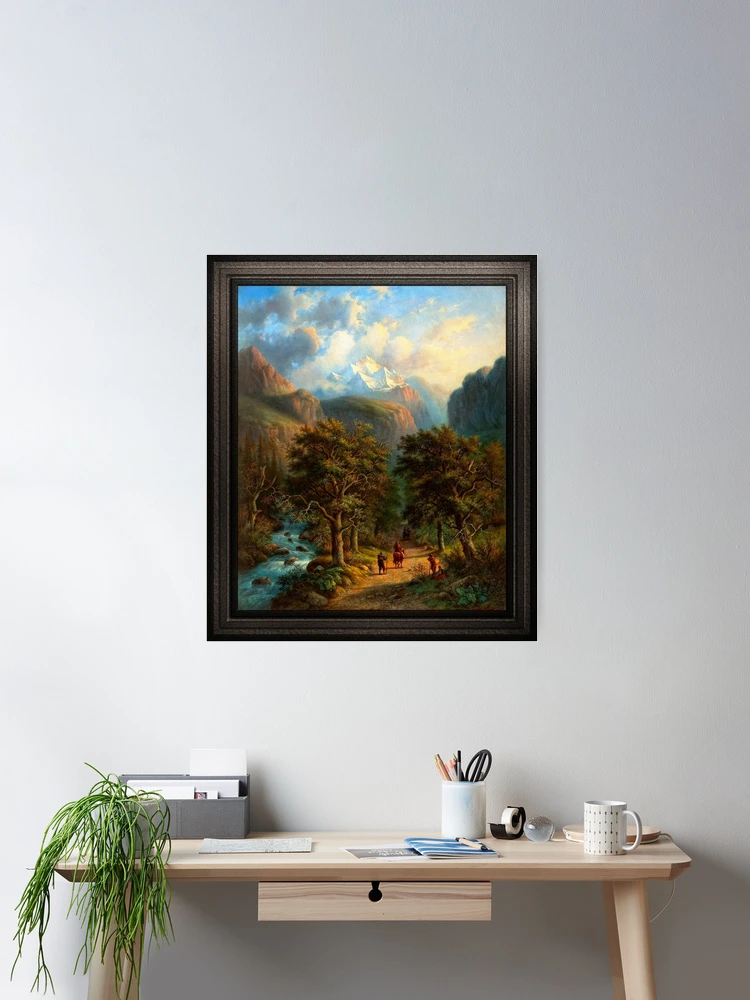
Obraz pt Krajobraz w wysokich górach przez holenderskiego malarza Aleksandra Józefa Daiwaille’a (1818 – 1888) zaprasza widza do spokojnej i ponadczasowej sceny rozgrywającej się na majestatycznych wyżynach alpejskiego świata. Powstał w połowie XIX wieku, to arcydzieło jest przykładem wyjątkowej zdolności Daiwaille do uchwycenia naturalnego piękna i atmosferycznej głębi terenów górskich, wywołując poczucie spokojnej wielkości i odległej izolacji.
Spis treści
Główny temat i kompozycja
W sercu tego obrazu leży rozległy górski krajobraz, z wysokimi szczytami skąpanymi w miękkości, złote światło. Wzrok widza przyciągają ośnieżone szczyty widoczne w tle, ich postrzępione krawędzie ostro kontrastują z gładkimi, rolling slopes below. These mountains stand like silent sentinels, guarding the verdant valley and lush forests that stretch beneath them. The artist masterfully uses atmospheric perspective, with the distant mountains rendered in paler tones, progressively fading into the horizon, creating a depth that is both striking and immersive.
Na pierwszym planie, the focus shifts to the path meandering through a forested area, leading the viewer’s eye from the bottom-left corner toward the distant peaks. Miękkie, winding road curves through the middle of the composition, inviting the viewer to follow the trail as it gently disappears around the bend, suggesting an unexplored world beyond. Along this road, two figures can be seen traveling on horseback, their forms small yet significant, perhaps signifying the quiet, humble passage of time within the vastness of nature. Their presence in the painting suggests a subtle narrative of journey or migration, enhancing the timelessness of the scene.
Szczegóły terenu i krajobrazu
Daiwaille’s attention to the terrain is meticulous and adds great realism to the landscape. Na pierwszym planie, a gently flowing stream runs parallel to the path, its water tumbling over smooth stones, reflecting the surrounding greenery. The clear water creates a reflective surface, which contrasts beautifully with the darker tones of the forest, further enhancing the visual depth of the painting. The presence of the stream also adds a sense of serenity and calm, inviting the viewer to imagine the gentle sounds of the babbling brook as they explore the landscape in their mind.
The surrounding forest, lush with trees, is a careful blend of oak and pine, their textured bark and vibrant green foliage contrasting against the golden hue of the sky. The trees are densely packed in some areas, their branches intertwining to create a natural canopy, while in others, the trees stand apart, allowing glimpses of the rocky terrain and the road below. The artist’s careful rendering of light and shadow within the forest creates an atmosphere of mystery, as if the forest holds secrets known only to the land and sky.
The presence of distant mountain ranges beyond the valley suggests a world that is vast and uncharted. The foreground serves as a small window into this grand and untamed wilderness, with the path and stream acting as symbolic routes into the unknown, encouraging exploration. This juxtaposition between the familiar and the distant is part of the charm of Daiwaille’s work, as it instills a sense of wonder and adventure.
Materiały i techniki
Daiwaille was known for his skillful use of oil paints, and this work is no exception. Bogaci, luminous quality of the paint brings an almost three-dimensional quality to the landscape, allowing the viewer to feel the textures of the trees, skały, and flowing water. The artist’s ability to manipulate light and color creates an ethereal atmosphere, particularly in the depiction of the sky and its soft interplay of warm, golden tones that gently blend into the cool blues of the higher altitudes. This use of color heightens the emotional depth of the painting, evoking a mood of peaceful solitude.
The brushwork in this piece is confident and refined, with broader strokes used in the depiction of the sky and mountains, while more detailed, intricate strokes are employed in the rendering of the foliage, figury, and the winding path. This technique contrasts the broad expanse of nature with the delicate presence of humanity, reinforcing the painting’s overarching theme of harmony between man and nature.
Nastrój i motyw
Nastrój Krajobraz w wysokich górach is one of tranquility and awe. There is a palpable stillness in the air, a quiet reverence for the natural world that envelops the entire composition. The colors and light in the painting evoke a sense of peace, yet there is also an undercurrent of grandeur, as the sheer scale of the mountains and the sweeping vistas provoke feelings of awe and humility. The figures traveling through the valley are small against the vast backdrop of nature, suggesting a theme of human insignificance in comparison to the enduring and timeless beauty of the natural world.
This theme of human solitude amidst the overwhelming power and beauty of nature is central to the Romantic movement, which sought to explore the relationship between humans and the sublime. Daiwaille, as a Romantic painter, captures not just the physical beauty of the landscape, but also its emotional and philosophical weight. The path through the forest is not just a route for the travelers; it symbolizes the journey of the soul, the personal quest for understanding and connection with the vast and mysterious world around us.
Jest to retuszowana reprodukcja starych mistrzów sztuki cyfrowej będąca własnością publiczną.
Bio artysty pochodzące z Wikipedia.org
Alexander was the son of portrait painter Jean Augustin Daiwaille (1786 – 1850) and was born in Amsterdam the Netherlands on January 21 z 1818.
Though like his father Alexander specialized in portraiture in the early part of his career; he would eventually transition to painting landscapes of the Netherlands and Germany.
He painted scenes in Netherlands, which included Hilversum from 1833 – 1834, the Hague from 1840 – 1848; then in Germany including Kleve from 1834 – 1835 i 1840 – 1848.
He also worked with his brother-in-law Barend Cornelis Koekkoek (1803 – 1862) a Dutch Landscape Painter and Lithographer.