

Landscape In The High Mountains
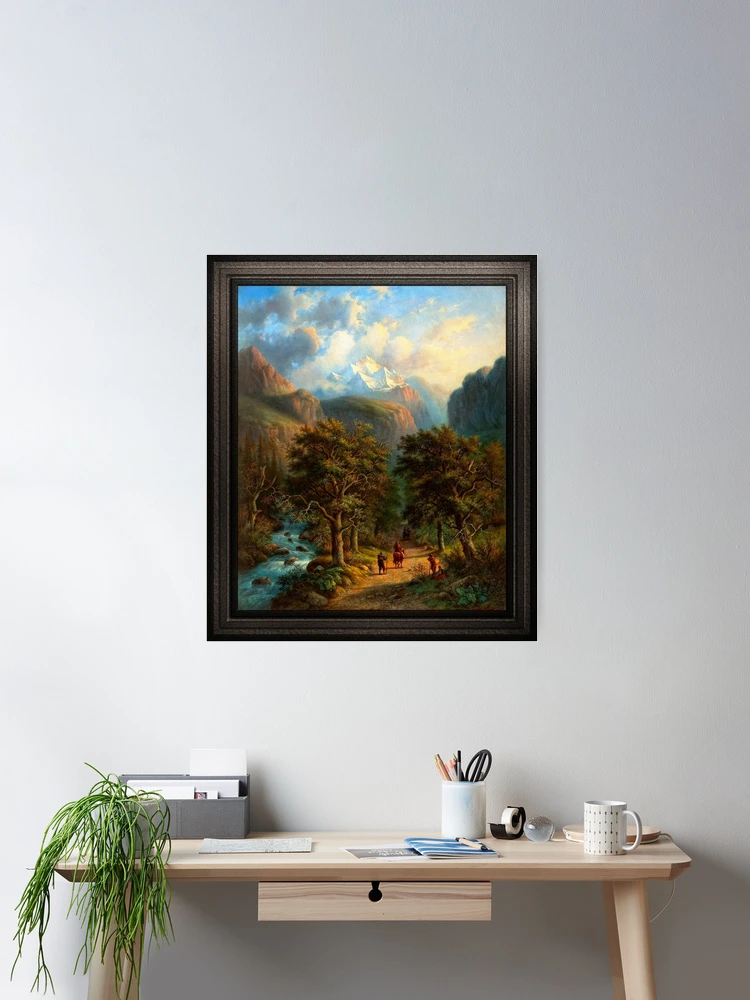
The painting titled Landscape in the High Mountains by Dutch painter Alexander Joseph Daiwaille (1818 – 1888) invites the viewer into a tranquil and timeless scene set in the majestic highlands of an alpine world. Created in the mid-19th century, this masterpiece exemplifies Daiwaille’s exceptional ability to capture the natural beauty and atmospheric depth of mountainous terrains, invoking a sense of serene grandeur and distant isolation.
Índice
O Assunto Principal e Composição
At the heart of this painting lies the expansive mountainous landscape, com picos imponentes banhados em suave, luz dourada. O olhar do espectador é atraído para os cumes cobertos de neve ao fundo, suas bordas irregulares contrastam nitidamente com a suavidade, encostas onduladas abaixo. Estas montanhas permanecem como sentinelas silenciosas, protegendo o vale verdejante e as florestas exuberantes que se estendem abaixo deles. O artista usa com maestria a perspectiva atmosférica, com as montanhas distantes em tons mais claros, desaparecendo progressivamente no horizonte, criando uma profundidade que é ao mesmo tempo impressionante e envolvente.
Em primeiro plano, o foco muda para o caminho que serpenteia por uma área florestal, conduzindo o olhar do observador do canto inferior esquerdo em direção aos picos distantes. O macio, curvas sinuosas da estrada no meio da composição, convidando o espectador a seguir a trilha enquanto ela desaparece suavemente na curva, suggesting an unexplored world beyond. Along this road, two figures can be seen traveling on horseback, their forms small yet significant, perhaps signifying the quiet, humble passage of time within the vastness of nature. Their presence in the painting suggests a subtle narrative of journey or migration, enhancing the timelessness of the scene.
The Terrain and Landscape Details
Daiwaille’s attention to the terrain is meticulous and adds great realism to the landscape. Em primeiro plano, a gently flowing stream runs parallel to the path, its water tumbling over smooth stones, reflecting the surrounding greenery. The clear water creates a reflective surface, which contrasts beautifully with the darker tones of the forest, further enhancing the visual depth of the painting. The presence of the stream also adds a sense of serenity and calm, inviting the viewer to imagine the gentle sounds of the babbling brook as they explore the landscape in their mind.
The surrounding forest, lush with trees, is a careful blend of oak and pine, their textured bark and vibrant green foliage contrasting against the golden hue of the sky. The trees are densely packed in some areas, their branches intertwining to create a natural canopy, while in others, the trees stand apart, allowing glimpses of the rocky terrain and the road below. The artist’s careful rendering of light and shadow within the forest creates an atmosphere of mystery, as if the forest holds secrets known only to the land and sky.
The presence of distant mountain ranges beyond the valley suggests a world that is vast and uncharted. O primeiro plano serve como uma pequena janela para esta grande e selvagem região selvagem, com o caminho e o fluxo agindo como rotas simbólicas para o desconhecido, encorajando a exploração. Essa justaposição entre o familiar e o distante faz parte do encanto da obra de Daiwaille, pois inspira uma sensação de admiração e aventura.
Materiais e Técnicas
Daiwaille era conhecido por seu uso habilidoso de tintas a óleo, e este trabalho não é exceção. Os ricos, qualidade luminosa da tinta traz uma qualidade quase tridimensional à paisagem, permitindo ao espectador sentir as texturas das árvores, pedras, e água corrente. A capacidade do artista de manipular luz e cor cria uma atmosfera etérea, particularmente na representação do céu e sua suave interação de calor, golden tones that gently blend into the cool blues of the higher altitudes. This use of color heightens the emotional depth of the painting, evoking a mood of peaceful solitude.
The brushwork in this piece is confident and refined, with broader strokes used in the depiction of the sky and mountains, while more detailed, intricate strokes are employed in the rendering of the foliage, the figures, and the winding path. This technique contrasts the broad expanse of nature with the delicate presence of humanity, reinforcing the painting’s overarching theme of harmony between man and nature.
O humor e o tema
O humor de Landscape in the High Mountains is one of tranquility and awe. There is a palpable stillness in the air, a quiet reverence for the natural world that envelops the entire composition. The colors and light in the painting evoke a sense of peace, no entanto, há também uma corrente subjacente de grandeza, à medida que a escala das montanhas e as vistas deslumbrantes provocam sentimentos de admiração e humildade. As figuras que viajam pelo vale são pequenas contra o vasto pano de fundo da natureza, sugerindo um tema de insignificância humana em comparação com a beleza duradoura e atemporal do mundo natural.
Este tema da solidão humana em meio ao poder e à beleza esmagadores da natureza é central para o movimento romântico., que procurou explorar a relação entre os humanos e o sublime. Daiwaille, como um pintor romântico, captura não apenas a beleza física da paisagem, mas também o seu peso emocional e filosófico. O caminho pela floresta não é apenas uma rota para os viajantes; simboliza a jornada da alma, a busca pessoal por compreensão e conexão com o vasto e misterioso mundo que nos rodeia.
Esta é uma reprodução retocada de arte digital de antigos mestres de uma imagem de domínio público.
Biografia do artista derivada de Wikipédia.org
Alexander era filho do pintor de retratos Jean Augustin Daiwaille (1786 – 1850) e nasceu em Amsterdã, Holanda, em janeiro 21 de 1818.
Embora, como seu pai, Alexander tenha se especializado em retratos no início de sua carreira; ele eventualmente faria a transição para pintar paisagens da Holanda e da Alemanha.
Ele pintou cenas na Holanda, que incluía Hilversum de 1833 – 1834, Haia de 1840 – 1848; depois na Alemanha incluindo Kleve de 1834 – 1835 e 1840 – 1848.
Ele também trabalhou com seu cunhado Barend Cornelis Koekkoek (1803 – 1862) um pintor paisagista e litógrafo holandês.