

Laundry Maid Ironing c1785
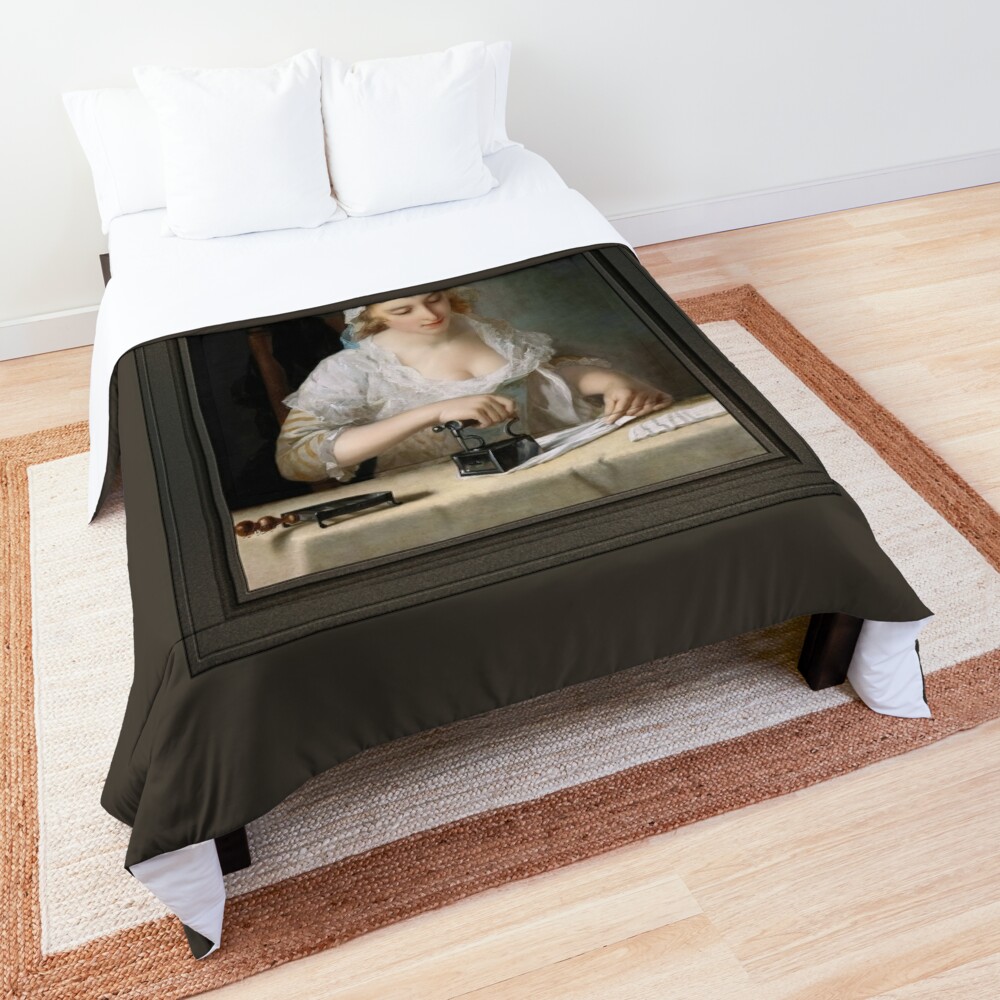
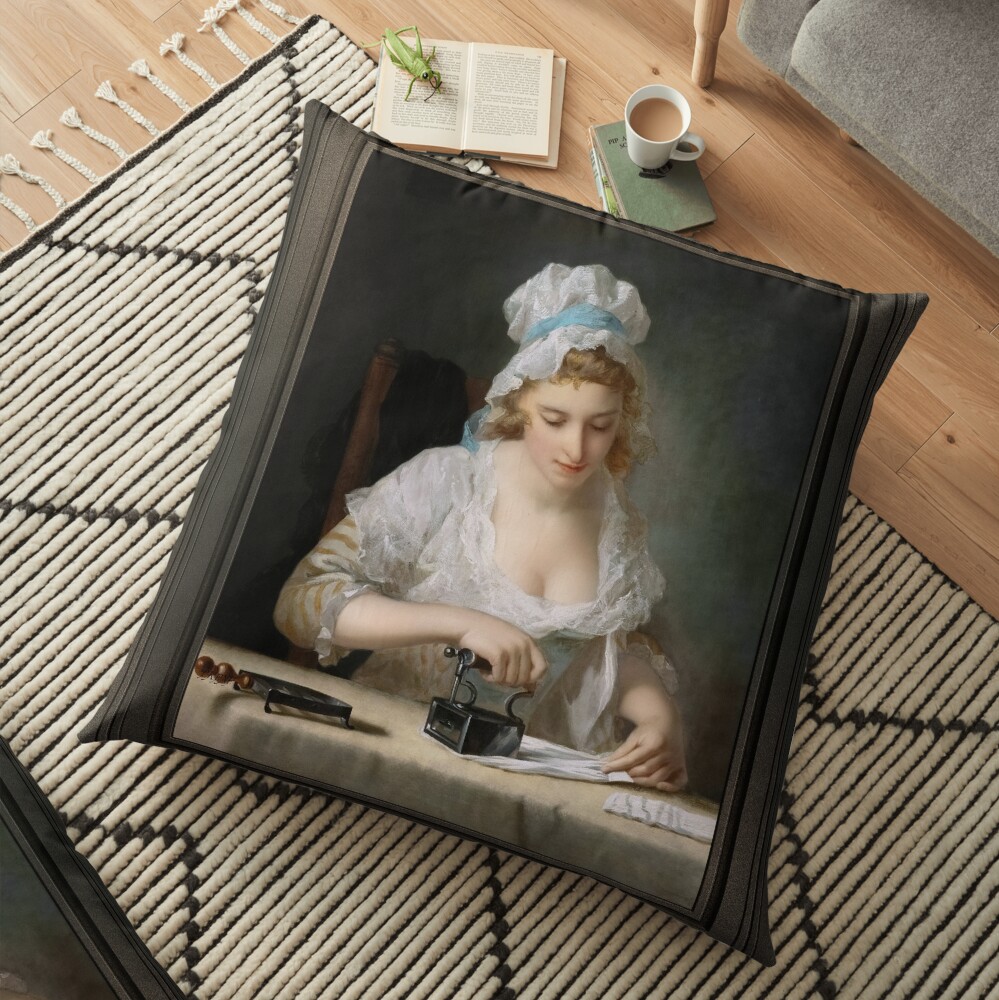
In the painting titled Laundry Maid Ironing c1785, British painter Henry Robert Morland (1716-1797) captures a serene and intimate moment in a domestic setting. The painting portrays a young woman, dressed in the simple yet functional attire of a maid, ironing a piece of linen. This piece embodies the themes of daily domestic labor, gender roles, and the quiet dignity found in everyday chores. The artist’s ability to infuse life into the scene through delicate use of light and shadow reveals both his technical mastery and his keen understanding of human behavior.
목차
Subject and Main Character
The central figure in the painting is a young woman, likely a domestic servant, who is carefully ironing a sheet or piece of cloth. She is portrayed with attention to detail, capturing her natural beauty and the softness of her facial features. Her gaze is directed downward, focused on her task with an expression of quiet concentration. The woman’s delicate features are framed by the lace cap she wears, and the slight blush on her cheeks adds warmth to her otherwise pale complexion. 그녀의 자세, while humble, conveys a sense of dignity in her task.
The maid’s attire is modest and functional, suggesting that she is part of the working class. Her white dress, made of light fabric, is complemented by a blue sash tied at her waist, 배경의 따뜻한 톤과 미묘한 대비를 만들어냅니다.. 가벼운 드레스와 파란색 띠의 선택도 그녀의 젊음과 순수함을 강조한다., 그녀의 머리 위의 레이스 모자는 그녀의 역할의 가정적이고 노동 집약적인 성격을 더욱 전달합니다..
The Setting and Atmosphere
그림의 배경은 친밀하고 가정적이다., 아마도 가정부가 자신의 임무를 수행하는 개인 주택이나 부지에 있을 것입니다.. 배경이 어둡고 다소 불분명함, 초점이 전적으로 하녀와 그녀의 임무에 있음을 시사. 어두운 톤을 은은하게 사용하여 분위기 있는 분위기를 연출합니다., 조용함을 강조, 하녀의 일의 고독한 성격. 어두운 배경과 하녀의 얼굴과 손에 떨어지는 은은한 빛의 대비는 관객의 시선을 중앙 피사체로 더욱 이끈다..
On the table in front of the maid, a piece of linen is laid out, freshly ironed. The small, delicate details of the fabric convey a sense of texture, with the folds and creases of the cloth contrasting against the smoothness of the iron. The simplicity of the setting adds to the quiet, peaceful atmosphere of the scene. There are no extravagant props or distracting elements; 대신에, the focus is on the maid and the humble task she is performing.
The Ironing Process and the Object of the Iron
The central object in the scene is the iron that the maid is using to press the fabric. The iron is a small, metal instrument typical of the 18th century, with a simple yet functional design. It sits on the table, its small handle held gently by the maid’s hand as she smooths the fabric. The artist has captured the reflective surface of the iron with such precision that it seems to gleam subtly in the light, adding depth and realism to the painting. The object itself is a symbol of domestic labor and the meticulous care that goes into household tasks.
The process of ironing is depicted with great attention to detail. The maid’s movements, though gentle and controlled, suggest a sense of practiced skill. The positioning of her body, with one hand on the iron and the other steadying the linen, reveals the ease with which she performs her task, as though it has become second nature. This portrayal of labor, though physically demanding, also conveys a sense of order and method, elevating the mundane chore into an act of quiet reverence.
스타일, 기술, 그리고 기분
Morland’s style in this piece is characterized by soft, almost glowing light, which creates a mood of tranquility and reflection. The use of light and shadow in the painting is masterful, with the light falling gently across the maid’s face and hands, highlighting her movements and expressions. This effect gives the work a certain intimacy, as if the viewer is a silent observer in the room, watching the maid as she goes about her daily routine.
The brushwork in the painting is delicate and detailed, lending the scene a lifelike quality. Morland’s technique allows for subtle variations in texture, from the smoothness of the maid’s skin to the delicate fabric of her dress and the rougher texture of the iron. The artist’s careful rendering of these textures conveys a sense of realism, while also adding a certain warmth to the piece. The mood of the artwork is calm and serene, reflecting the timeless nature of daily life and the simplicity of the task at hand.
결론
Laundry Maid Ironing c1785 by Henry Robert Morland is a beautifully crafted portrayal of domestic life in the 18th century. 세심한 배려를 통해, the artist elevates a simple, everyday task into a moment of grace and quiet dignity. 젊은 여자, with her modest attire and focused demeanor, embodies the virtues of patience and diligence. The painting’s soft lighting, 사실적인 질감, and intimate setting create a sense of tranquility, inviting the viewer to reflect on the beauty found in the ordinary moments of life. This work remains a testament to Morland’s skill in capturing the human experience with tenderness and authenticity.
이것은 공개 도메인 이미지의 리마스터링된 디지털 아트 올드 마스터 복제입니다. Boucher는 Guay의 작품으로 일련의 그림을 그리고 Madame de Pompadour가 조각하여 호의를 받는 궁정에게 잘 묶인 책으로 배포했습니다..
아티스트 약력
아래 정보 Wikipedia.org
Henry Robert Morland was an English portrait painter, best remembered for a portrait of King George III, and for being the father of the animal painter George Morland.
His father was the genre painter George Henry Morland, and Henry Robert followed an art career as well, becoming a painter of portraits and domestic subjects, in both oil and crayon.
He exhibited some 118 works from 1760 NS 1791 at the Society of Artists, the Free Society, and the Royal Academy. Morland also engraved in mezzotint, restored paintings, and sold artists supplies, including crayons that he made himself.
Morland was for a time very successful and even painted a portrait of George III, the king sitting in person.[2] Although he became quite wealthy for a time, he lost most of his money, and was often bankrupt in later years.