

שחיינים – בנות המקור (המתרחצים – בנות האביב)
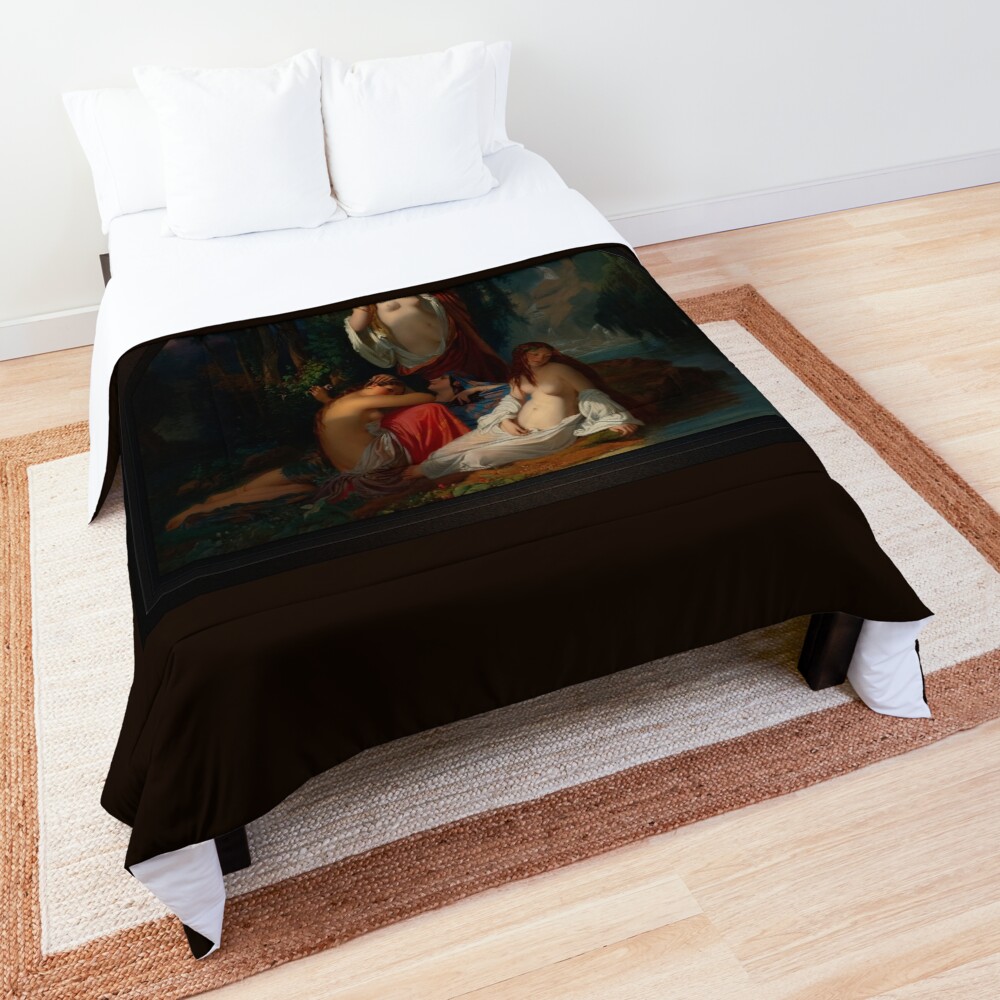
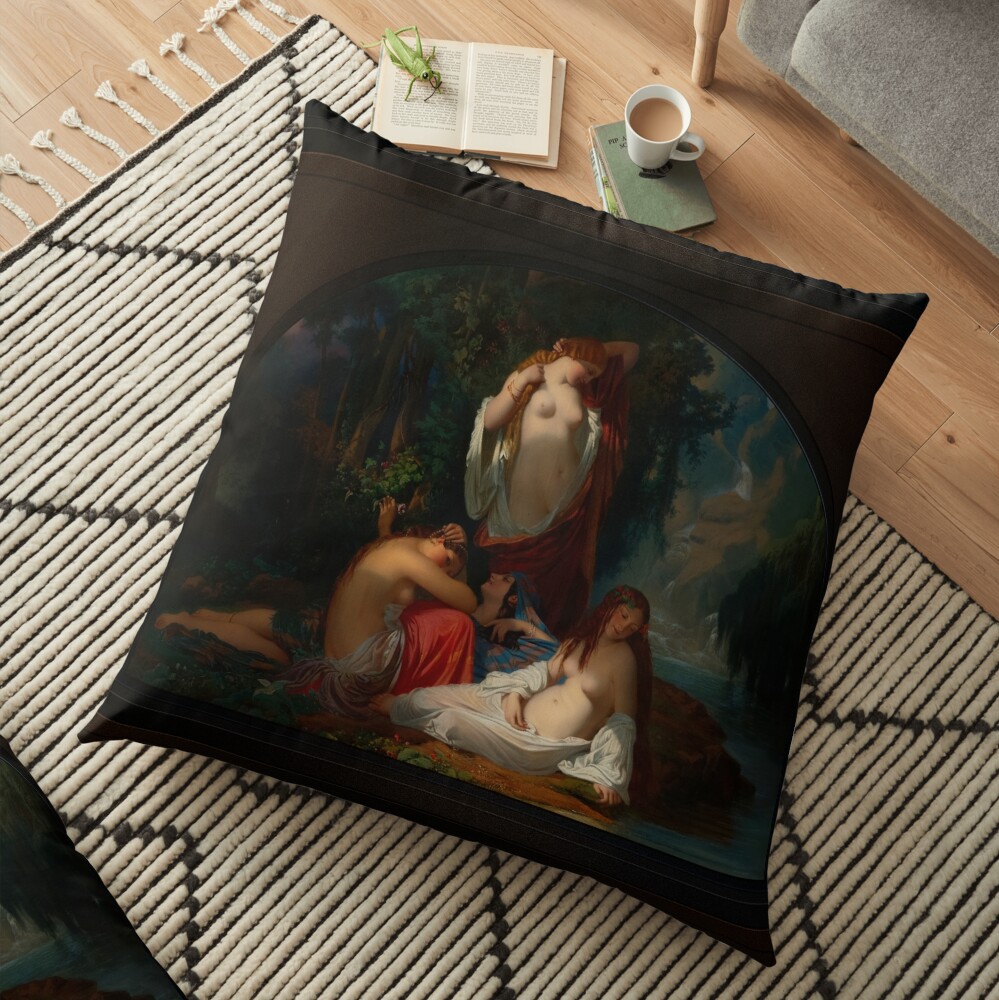
“שחיינים – בנות המקור,” צבוע ב 1855 מאת האמן הצרפתי Henri Lehmann (1814-1882), is an exquisite example of 19th-century Romanticism. The painting is filled with sumptuous detail and evokes a sense of sensuality, חן, ויופי טבעי. Through a delicate interplay of light and shadow, Lehmann captures the purity of nature and the feminine form, weaving a narrative around mythological and symbolic themes. This remarkable artwork showcases the idealized female body within a lush natural landscape, a reflection of the Romantic movement’s celebration of nature’s beauty and the human connection to the divine.
תוכן העניינים
הנושא המרכזי: בנות האביב
The central theme of the painting revolves around the mythological concept of the “daughters of the spring,” as described in the title. These women are depicted as ethereal bathers, seemingly immortal, as they engage with the waters of a spring, which symbolically represents both purification and renewal. בחזית, three women are positioned in a relaxed, almost meditative state, their bodies partially submerged in the water of a flowing river. Their poses are languid yet graceful, embodying a sense of serenity and beauty that transcends the mundane.
Each figure is portrayed with remarkable anatomical accuracy, as Lehmann carefully outlines the curves and contours of the human form. הדמויות’ naturalism is enhanced by their delicate positioning and interaction with their surroundings, which imbue them with a sense of tranquility. One figure reclines with her arm resting on her companion, whose form is partially obscured by the gentle ripples of the spring water. This intimate connection between the women suggests an almost sacred bond, as though they are in communion with nature itself.
The third figure, positioned at the far right of the composition, gazes into the distance with a serene expression. She wears a crown of flowers, an emblematic symbol of femininity and nature’s bounty, linking her to the Earth’s fertility. הרך, flowing drapery around her figure further highlights her divine nature, while the natural surroundings, in their richness and lushness, evoke a sense of fertility and vitality.
פְּנֵי הַשֵׁטַח: A Dreamlike Landscape of Lush Vegetation
The landscape surrounding the bathers plays a crucial role in setting the mood and theme of the artwork. The background features a dense, idyllic forest, where vibrant greenery blends with the soft glow of sunlight filtering through the trees. The stream around the bathers winds its way through the rocky terrain, its crystal-clear water flowing with a serene, yet forceful, motion. Lehmann expertly employs the use of light and shadow to highlight the reflective quality of the water, enhancing the mystique of the scene.
The surrounding foliage seems almost alive, with each leaf and vine meticulously rendered to convey both the richness and the exuberance of nature. The trees, though not overbearing, create a sense of shelter and enclosure, inviting the viewer to focus on the scene at the center while remaining immersed in nature’s embrace. המים, reflective and glimmering, creates a mirror-like surface that enhances the illusion of an otherworldly, untouched paradise.
במרחק, the natural elements merge to create a harmonious backdrop of craggy rocks and cascading waterfalls, their mist rising into the atmosphere, contributing to the scene’s dreamlike quality. This mystical environment draws on Romantic ideals, where nature is not only a setting but also a living, breathing force that is inseparable from the human experience.
חומרים וטכניקות: Rich Color Palette and Fine Detail
Henri Lehmann’s mastery of oil paint is evident in the meticulous brushwork and rich color palette he uses in “Les Baigneuses.” The skin tones of the figures are rendered with delicate layers of paint, highlighting the softness and warmth of the human body. The figures’ flesh is bathed in a warm, almost golden light, emphasizing their purity and connection to the natural world. The colors range from rich reds and earthy browns to serene blues and soft greens, all of which help to convey the harmony between the bathers and the lush environment.
The artist’s attention to detail is apparent in the fine rendering of the water, where Lehmann captures the subtle ripples and reflections with great precision. The surface of the water is not only a symbolic element of purity and rejuvenation but also an integral part of the composition that enhances the sense of depth and movement within the painting.
הרך, flowing fabrics of the bathers’ clothing further emphasize the delicate balance between nature and human form. Lehmann’s use of light to illuminate these figures is particularly striking, with natural light falling gently on their bodies, illuminating their contours while maintaining a soft, atmospheric quality. This interplay between light and shadow creates a palpable sense of space and dimension within the painting, inviting the viewer to linger over each exquisite detail.
נושא ומצב רוח: Sensuality, Purity, and Renewal
“שחיינים – בנות המקור” carries strong themes of sensuality, טוֹהַר, וחידוש. The bathers, with their flawless bodies and serene expressions, embody the timeless beauty of the female form, idealized yet deeply connected to nature. The scene evokes the Romantic belief in the restorative powers of nature, where the bathers are not only cleansing themselves physically but are also in the process of spiritual and emotional renewal.
The mood of the painting is one of tranquility and harmony, where the viewer is invited to pause and contemplate the connection between the human form and the natural world. הרך, glowing light and the lush, verdant surroundings create an atmosphere of peace and serenity, invoking feelings of calm and awe. במקביל, there is an underlying sense of mystery, as the bathers seem to exist outside of time and place, existing in a perfect, harmonious moment.
Lehmann’s choice to depict the bathers in this mythological context speaks to broader themes of transformation and rejuvenation. The figures seem to be caught in a moment of contemplation or introspection, perhaps awaiting a return to the purity and vitality they embody. This speaks to the Romantic notion of nature as a refuge from the turmoil of modern life, offering not only beauty but also the promise of renewal and transcendence.
שחיינים – Les Filles De La Source is a remastered digital art old masters reproduction of a public domain image that is available as an הדפסת אמנות באופן מקוון.
יצירת אמנות דיגיטלית זו, כמו כל יצירות האמנות שניתן למצוא באתר Xzendor7 זמין לרכישה אונליין במגוון פורמטים חומריים כולל הדפסי קנבס, הדפסי אקריליק, הדפסי מתכת, הדפסי עץ, הדפסים ממוסגרים, עמוד הבית של Xzendor7, וכהדפסי קנבס מגולגלים במגוון גדלים מ 12 אינצ'ים ל 72 אינצ'ים בהתאם לגודל הגרפיקה בפועל ולחנות ההדפסה לפי דרישה ממנה תבחר לקנות את האמנות.
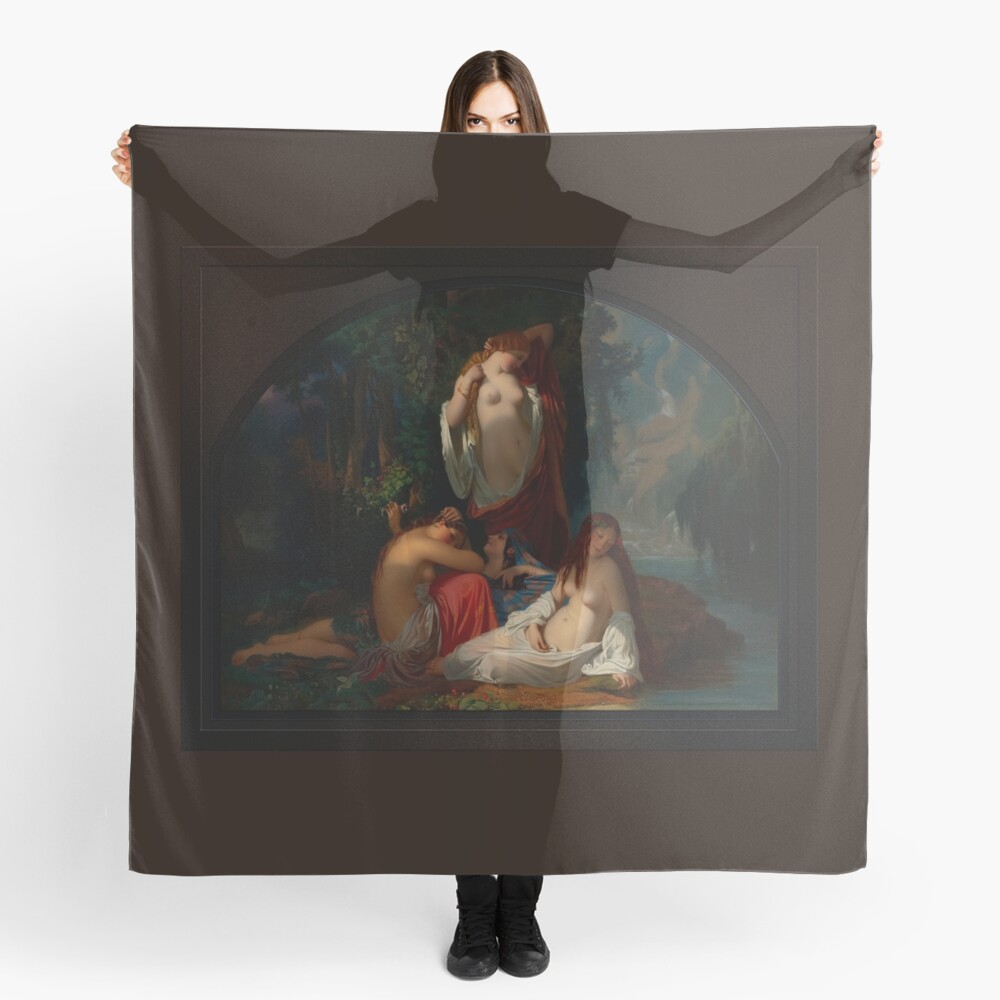
יצירות האמנות זמינות גם במגוון רחב של בגדי גברים ונשים, ספלים, טוטס, צעיפים, מחברות ויומנים ומוצרי עיצוב לבית רבים.
ביו אמן
המידע למטה נגזר Wikipedia.org
אנרי נולד בשם היינריך סאלם להמן בגרמניה באפריל 14, 1814 והוא חונך לראשונה על ידי אביו ליאו להמן (1782 – 1859) שהיה גם צייר, אחר כך על ידי ציירים אחרים בהמבורג.
כשהוא היה 17 בגיל שנים החליט לעבור לפריז, צרפת ללמוד אצל הצייר הצרפתי ז'אן אוגוסט דומיניק אינגרס (1780 – 1867) אמן ניאו-קלאסי ומזרחן; והפך לאחד מתלמידיו המצליחים ביותר ולמקורב.
אנרי הציג לראשונה את יצירות האמנות שלו בסלון אין 1835, והצליחה לזכות במדליית מקום שני, ומאותה נקודה ואילך היה מציג באופן קבוע את יצירות האמנות שלו; זכייה במדליות פרס ראשון ב 1840, 1848 ו 1855.
ב 1842 אנרי השתקע באופן קבוע בפריז והשיג עמלות ליצירת עבודות ציבוריות גדולות, שכללה את כנסיית סט-קלוהילדה, ארמון הצדק, פאלה דו לוקסמבורג והוטל דה ויל, כמו גם רבים אחרים.
ארבע שנים מאוחר יותר 1846 הוא קיבל את לגיון הכבוד ובשנה שלאחר מכן יהפוך לאזרח צרפתי; ובאותה שנה פתח את הסטודיו שלו לאמנות.
14 שנים מאוחר יותר הוא מונה לתפקיד מדריך באקול דה בוז-ארט המפורסם ועל ידי 1875 מונה לתפקיד פרופסור.
אנרי גם ימשיך לצייר פורטרטים של דמויות ידועות באותה תקופה, כולל הנסיכה האיטלקית כריסטינה טריוולציו בלגיוג'וסו (1808 – 1871), הסופרת הצרפתייה מארי-אנרי בייל (סטנדל 1783 – 1842), מלחין ופסנתרן וירטואוז פולני פרדריק פרנסואה שופן (1810 – 1849), המלחין ההונגרי פרנץ ליסט (1811 – 1886), הפילוסוף הצרפתי ויקטור קוזין (1792 – 1867), המלחין הצרפתי שארל גונוד (1818 – 1893) ועוד רבים אחרים.