

nadadores – Filhas da Fonte (The Bathers – The Daughters of the Spring)
“nadadores – Filhas da Fonte,” pintado em 1855 pelo artista francês Henri Lehmann (1814-1882), is an exquisite example of 19th-century Romanticism. The painting is filled with sumptuous detail and evokes a sense of sensuality, graça, e beleza natural. Through a delicate interplay of light and shadow, Lehmann captures the purity of nature and the feminine form, weaving a narrative around mythological and symbolic themes. This remarkable artwork showcases the idealized female body within a lush natural landscape, a reflection of the Romantic movement’s celebration of nature’s beauty and the human connection to the divine.

Índice
O assunto principal: The Daughters of the Spring
The central theme of the painting revolves around the mythological concept of the “daughters of the spring,” as described in the title. These women are depicted as ethereal bathers, seemingly immortal, as they engage with the waters of a spring, which symbolically represents both purification and renewal. Em primeiro plano, three women are positioned in a relaxed, almost meditative state, their bodies partially submerged in the water of a flowing river. Their poses are languid yet graceful, embodying a sense of serenity and beauty that transcends the mundane.
Each figure is portrayed with remarkable anatomical accuracy, as Lehmann carefully outlines the curves and contours of the human form. Os números’ naturalism is enhanced by their delicate positioning and interaction with their surroundings, which imbue them with a sense of tranquility. One figure reclines with her arm resting on her companion, whose form is partially obscured by the gentle ripples of the spring water. This intimate connection between the women suggests an almost sacred bond, as though they are in communion with nature itself.
The third figure, positioned at the far right of the composition, gazes into the distance with a serene expression. She wears a crown of flowers, an emblematic symbol of femininity and nature’s bounty, linking her to the Earth’s fertility. O macio, flowing drapery around her figure further highlights her divine nature, while the natural surroundings, in their richness and lushness, evoke a sense of fertility and vitality.
Terreno: A Dreamlike Landscape of Lush Vegetation
The landscape surrounding the bathers plays a crucial role in setting the mood and theme of the artwork. The background features a dense, idyllic forest, where vibrant greenery blends with the soft glow of sunlight filtering through the trees. The stream around the bathers winds its way through the rocky terrain, its crystal-clear water flowing with a serene, yet forceful, motion. Lehmann expertly employs the use of light and shadow to highlight the reflective quality of the water, enhancing the mystique of the scene.
The surrounding foliage seems almost alive, with each leaf and vine meticulously rendered to convey both the richness and the exuberance of nature. As árvores, though not overbearing, create a sense of shelter and enclosure, inviting the viewer to focus on the scene at the center while remaining immersed in nature’s embrace. A água, reflective and glimmering, creates a mirror-like surface that enhances the illusion of an otherworldly, untouched paradise.
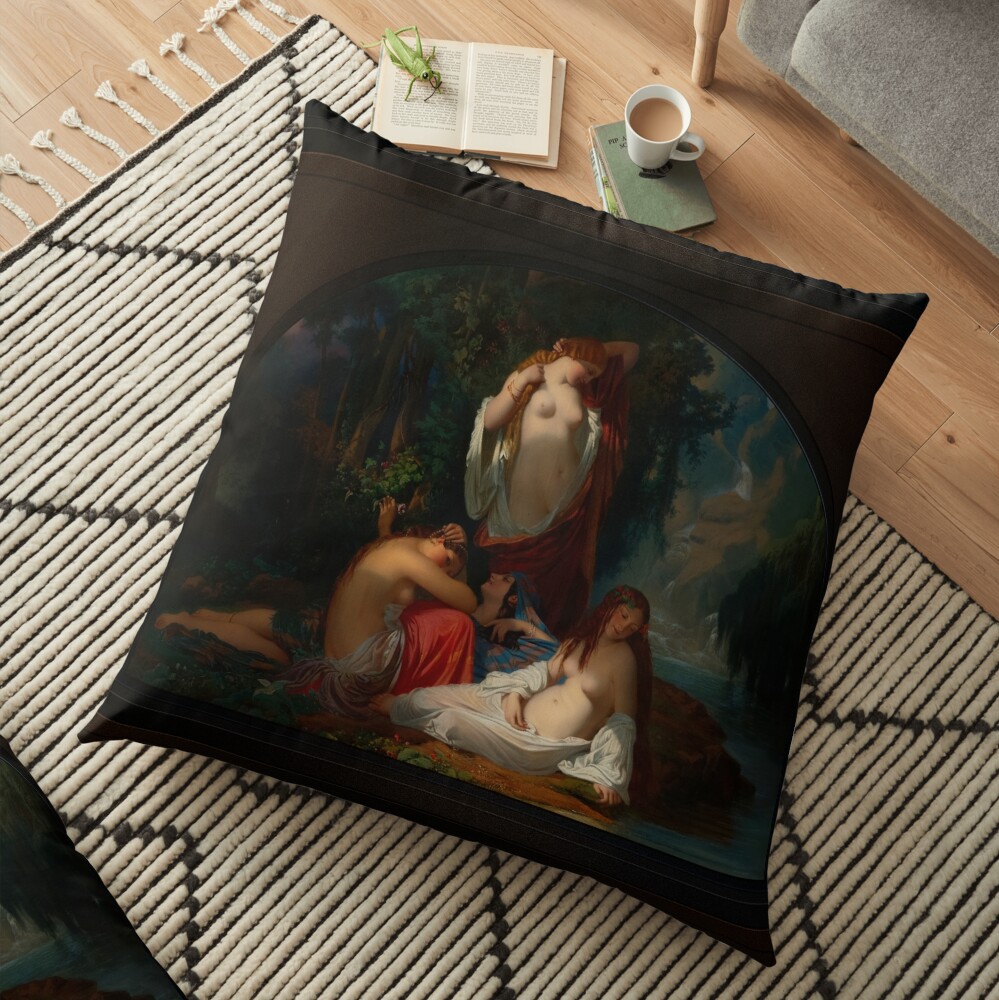
À distância, the natural elements merge to create a harmonious backdrop of craggy rocks and cascading waterfalls, their mist rising into the atmosphere, contributing to the scene’s dreamlike quality. This mystical environment draws on Romantic ideals, where nature is not only a setting but also a living, breathing force that is inseparable from the human experience.
Materiais e Técnicas: Rich Color Palette and Fine Detail
Henri Lehmann’s mastery of oil paint is evident in the meticulous brushwork and rich color palette he uses in “Les Baigneuses.” The skin tones of the figures are rendered with delicate layers of paint, highlighting the softness and warmth of the human body. The figures’ flesh is bathed in a warm, almost golden light, emphasizing their purity and connection to the natural world. The colors range from rich reds and earthy browns to serene blues and soft greens, all of which help to convey the harmony between the bathers and the lush environment.
The artist’s attention to detail is apparent in the fine rendering of the water, where Lehmann captures the subtle ripples and reflections with great precision. The surface of the water is not only a symbolic element of purity and rejuvenation but also an integral part of the composition that enhances the sense of depth and movement within the painting.
O macio, flowing fabrics of the bathers’ clothing further emphasize the delicate balance between nature and human form. Lehmann’s use of light to illuminate these figures is particularly striking, with natural light falling gently on their bodies, illuminating their contours while maintaining a soft, atmospheric quality. This interplay between light and shadow creates a palpable sense of space and dimension within the painting, inviting the viewer to linger over each exquisite detail.
Tema e humor: Sensuality, Purity, and Renewal
“nadadores – Filhas da Fonte” carries strong themes of sensuality, pureza, e renovação. The bathers, with their flawless bodies and serene expressions, embody the timeless beauty of the female form, idealized yet deeply connected to nature. The scene evokes the Romantic belief in the restorative powers of nature, where the bathers are not only cleansing themselves physically but are also in the process of spiritual and emotional renewal.
The mood of the painting is one of tranquility and harmony, where the viewer is invited to pause and contemplate the connection between the human form and the natural world. O macio, glowing light and the lush, verdant surroundings create an atmosphere of peace and serenity, invoking feelings of calm and awe. Ao mesmo tempo, there is an underlying sense of mystery, as the bathers seem to exist outside of time and place, existing in a perfect, harmonious moment.
Lehmann’s choice to depict the bathers in this mythological context speaks to broader themes of transformation and rejuvenation. The figures seem to be caught in a moment of contemplation or introspection, perhaps awaiting a return to the purity and vitality they embody. This speaks to the Romantic notion of nature as a refuge from the turmoil of modern life, offering not only beauty but also the promise of renewal and transcendence.
nadadores – Les Filles De La Source is a remastered digital art old masters reproduction of a public domain image that is available as an art print online.
Esta criação de arte digital, assim como todas as obras de arte que podem ser encontradas no site do Xzendor7 estão disponíveis para compra on-line em uma variedade de formatos de materiais, incluindo impressões em tela, impressões acrílicas, estampas de metal, gravuras de madeira, impressões emolduradas, cartazes, e como impressões em tela enrolada em vários tamanhos, desde 12 polegadas para 72 polegadas, dependendo do tamanho da obra de arte real e da loja de impressão sob demanda em que você escolher comprar a arte.
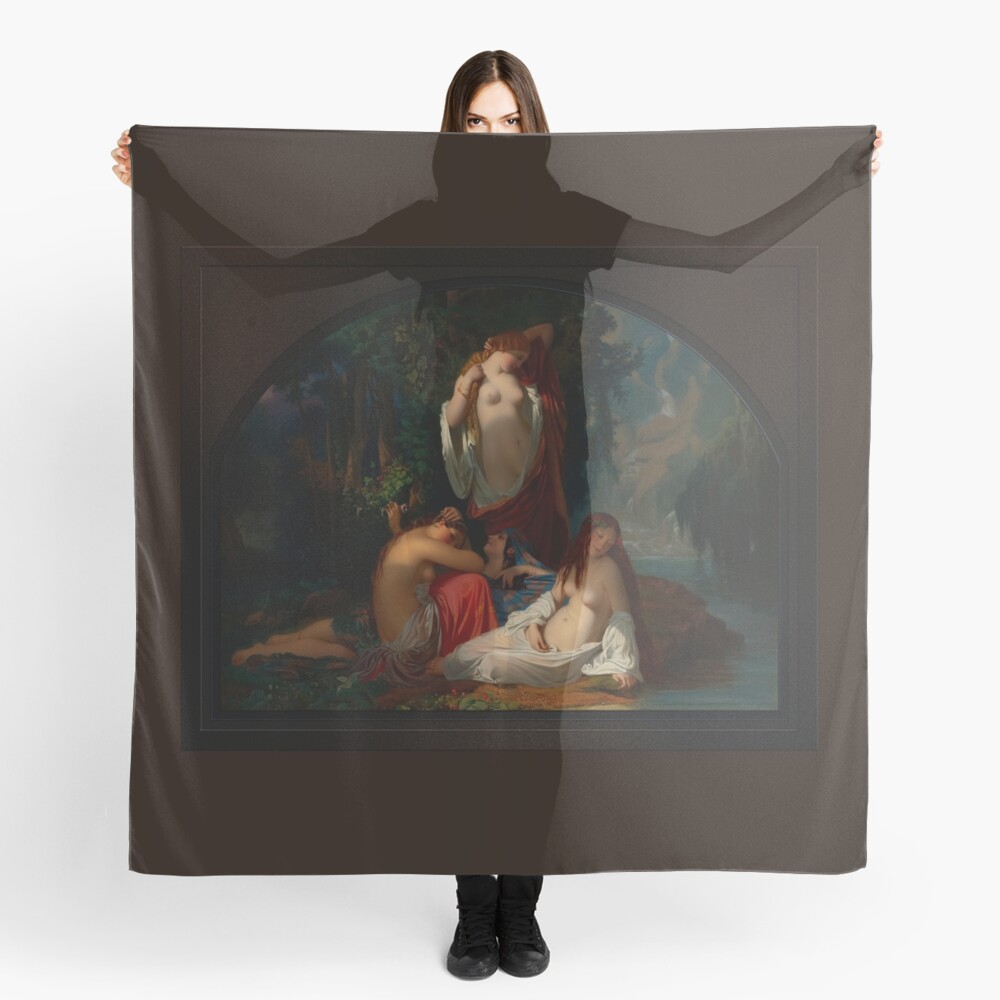
A arte também está disponível em uma ampla variedade de roupas masculinas e femininas, canecas, bolsas, lenços, cadernos e diários e muitos produtos de decoração para casa.
Biografia do artista
Informações abaixo derivadas de Wikipedia.org
Henri nasceu Heinrich Salem Lehmann na Alemanha em abril 14, 1814 e foi ensinado pela primeira vez por seu pai Leo Lehmann (1782 – 1859) que também era pintor, depois, mais tarde, por outros pintores em Hamburgo.
Quando ele era 17 anos de idade ele decidiu se mudar para Paris, França estudará com o pintor francês Jean-Auguste-Dominique Ingres (1780 – 1867) um artista neoclássico e orientalista; e se tornou um de seus alunos mais bem-sucedidos e um colaborador próximo.
Henri expôs pela primeira vez seu trabalho artístico no Salon em 1835, e conseguiu a medalha de segundo lugar, e a partir daí passou a expor regularmente suas obras; ganhando medalhas de primeiro prêmio em 1840, 1848 e 1855.
Dentro 1842 Henri estabeleceu-se permanentemente em Paris e obteve comissões para a criação de grandes obras públicas., que incluía a Igreja de Ste-Clotilde, o Palácio da Justiça, o Palais du Luxembourg e o Hôtel de Ville, assim como muitos outros.
Quatro anos depois em 1846 recebeu a Légion d'honneur e no ano seguinte se tornaria cidadão francês; e no mesmo ano abriu seu estúdio de arte.
Quatorze anos depois foi nomeado instrutor da famosa École des Beaux-Arts e pela 1875 foi nomeado para o cargo de professor.
Henri também pintaria retratos de figuras conhecidas da época, incluindo a princesa italiana Cristina Trivulzio Belgiojoso (1808 – 1871), A escritora francesa Marie-Henri Beyle (Stendhal 1783 – 1842), Compositor e pianista virtuoso polonês Frédéric François Chopin (1810 – 1849), Compositor húngaro Franz Liszt (1811 – 1886), Filósofo francês Victor Cousin (1792 – 1867), Compositor francês Charles Gounod (1818 – 1893) e muitos outros.