

Madame de Pompadour ina Staidéar c 1749-55
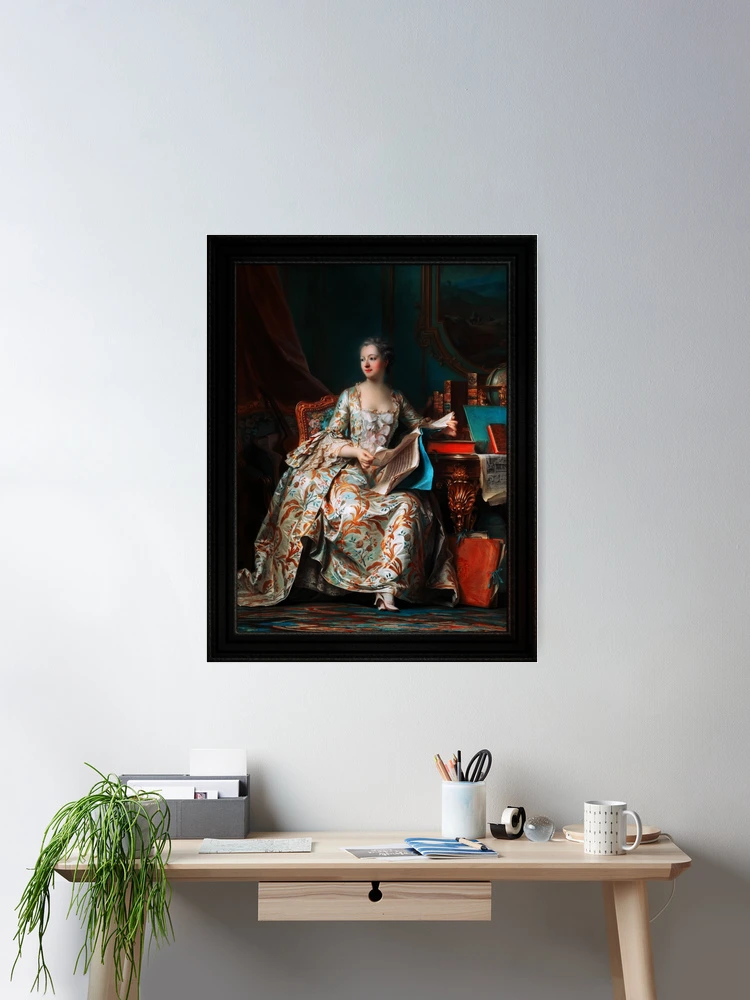
“Madame de Pompadour ina Staidéar” (c1749-55) leis an bpéintéir Francach Maurice Quentin de La Tour (1704 – 1788) is cáil portráid de bhean, a thugann léargas ar intleacht agus ar ghrásta duine de na mná is mó tionchair i gcúirt na Fraince, Jeanne-Antoinette Poisson, ar a dtabharfar níos déanaí Madame de Pompadour. Léiríonn an phéintéireacht seo ní hamháin idéil aeistéitiúla na tréimhse Rocócó ach freisin pearsa scagtha an ábhair, a áilleacht a chumasc lena hintleacht i gcomhdhéanamh íogair agus tuisceanach. Sa phíosa seo, Úsáideann de La Tour a scil mar phaistéalaí chun beoga a chruthú, léiriú mionsonraithe atá fós ina theist ar shárás na tréimhse, sofaisticiúlacht, agus tábhacht chultúrtha.
Clár na nÁbhar
An tÁbhar agus Comhdhéanamh
I gcroílár na portráide seo tá Madame de Pompadour, máistreás an Rí Louis XV, gafa i staidiúir phearsanta mheabhrach ina staidéar. Tá sí ina suí i gcathaoir uilleach atá cumhdaithe go saibhir, suite ar an taobh clé den chanbhás, a corp iompú beagán, ach tá a súil dírithe amach, ag tabhairt le fios nóiméad ciúin machnaimh. Tá a aghaidh maisithe le serene, léiriú beagnach enigmatic, ag cur in iúl don intleacht agus don staid ríofa a bhain lena ról sa chúirt.
Gléasta i ngúna extravagant a éadaigh go galánta timpeall uirthi, Madame de Pompadour’s attire is made from delicate fabrics and adorned with floral patterns, showcasing the finest materials of the time. The soft silks of her dress shimmer subtly in the light, their pale blues, uachtair, and golds capturing the essence of the Rococo period’s penchant for soft pastel shades and intricate designs. The bodice is delicately embellished, with the dress’ fine floral details spilling downward, contrasting with the richness of her other surroundings.
She holds a piece of paper in her right hand, suggesting that she may have been reading or writing, a gesture that points to her intellectual pursuits, as she was known for her patronage of the arts and letters. Her left hand is gently resting on the arm of the chair, holding the fabric of her dress in a refined gesture. The objects surrounding her emphasize her cultivated life—books, maps, and written correspondence are neatly arranged around her, reinforcing her image as an enlightened figure. These elements draw attention to her role in intellectual and artistic patronage, as well as her strong political influence during her time.
An Socrú: Staidéar ar Opulence agus Intleacht
The background of the portrait is as telling as the figure of Madame de Pompadour herself. Set in an opulent study, the surroundings reflect the luxury and refinement of 18th-century French aristocracy. Taobh thiar den ábhar, shelves of stacked books suggest both the wealth and intellectual engagement of Madame de Pompadour. The ornate furniture and accessories, such as the polished desk, the delicate globes, and the elegant map, underline her importance as a cultivated woman of the Enlightenment.
Comhlánaíonn pailéad dathanna an tseomra giúmar suaimhneach agus suaimhneach na portráide. Ton saibhir de emerald green, dearg domhain, agus líonann dathanna boga órga an spás, ag cruthú atmaisféar só agus suaimhnis. Tá ailtireacht an tseomra molta go bog ag línte cuartha bog na mballaí agus an múnlú galánta, ag atreisiú théama na sofaisticiúlachta aristocratic.
Tá léarscáil an domhain suite ar chúinne a deisce, léiriú caolchúiseach ach cumhachtach ar a ról i ngnóthaí idirnáisiúnta, toisc go raibh sí ina príomhchomhairleoir i mbeartas eachtrach le linn a cuid ama. Neartaíonn láithreacht na leabhar agus na n-ábhar scríbhneoireachta a léiriú mar phearsa intleachtúil, ní hé amháin leannán don rí, ach freisin bean a bhfuil infheistíocht mhór i saol cultúrtha agus polaitiúil na Fraince.
Teicníc agus Stíl an Ealaíontóra
Maurice Quentin de La Tour was known for his mastery of pastel, a medium that suited his delicate and detailed style. I “Madame de Pompadour ina Staidéar,” de La Tour’s pastel technique is evident in the soft blending of colors, the smoothness of the skin, and the delicate texture of the fabric. His skill in capturing light and shadow adds depth to the image, highlighting the subtle features of the subject’s face and the opulent textures of her attire.
De La Tour’s work in this portrait is quintessentially Rococo, marked by a focus on elegance, mionchoigeartú, and an emphasis on intimate and personal moments. The pastel medium allows for a softer, caighdeán beagnach ethereal, lending a dreamlike quality to the portrait that aligns with the Rococo interest in delicate, fleeting beauty and the pursuit of sensual pleasures.
The composition is meticulously balanced, with Madame de Pompadour positioned in the foreground, surrounded by items that reflect her personality and status. An bog, rounded forms of her figure and the furnishings contrast with the geometric precision of the books and writing materials, creating a harmonious balance between the organic and the structured. This subtle contrast mirrors the dual aspects of her life: her role as a woman of grace and beauty, and her active participation in intellectual and political affairs.
An Meon agus an Téama
An giúmar de “Madame de Pompadour ina Staidéar” is one of quiet dignity and thoughtful contemplation. Níl aon léiriú follasach ar mhothúchán; ina ionad, the subject’s serene expression and poised demeanor evoke a sense of calm intelligence. The soft lighting enhances this effect, ag caitheamh glow te thar a aghaidh agus ag tarraingt aird ar a gnéithe scagtha.
Díríonn téama na péintéireachta ar ról intleachtúil agus cultúrtha na mban san 18ú haois, go háirithe i gcomhthéacs na n-uasaicme agus shaol na cúirte. Léirítear Madame de Pompadour ní hamháin mar leannán nó máistreás ach mar phearsa lárnach i saol cultúrtha na Fraince, baint mhór leis na healaíona, litríocht, agus polaitíocht. Suíomh na portráide ina staidéar, timpeallaithe ag leabhair agus léarscáileanna, treisíonn sé an téama seo de intleacht agus tionchar cultúrtha.
Ní hamháin go bhfuil bunbhrí charachtar Madame de Pompadour ag gabháil leis an bpictiúr seo ach léiríonn sé freisin idéalacha cultúrtha níos leithne na tréimhse Rocócó., ag cur béime ar áilleacht, galánta, agus cothú intleachta agus blas.
Cé a bhí Madame de Pompadour
Jeanne Antoinette Poisson, Marquise de Pompadour (1721 – 1764), tugadh Madame de Pompadour air de ghnáth, Bhí sí ina ball tionchair de chúirt na Fraince chomh maith le príomh-máistir oifigiúil Louis XV ó 1745 – 1751, agus d’fhan sí ina ball tionchair de chúirt na Fraince go dtí gur bhásaigh sí i 1764.
Is é atá i gceist leis seo ná sean-mháistrí ealaíne digití atáirgeadh ar íomhá fearainn phoiblí.