

tytön muotokuva (Tytön muotokuva)
“tytön muotokuva (Tytön muotokuva)” on koskettava ja herkkä öljymaalaus, joka on luotu vuonna 1856 saksalainen taiteilija Samuel Baruch Ludwig Halle, jotka asuivat 1824 että 1889. Tämä teos on esimerkki 1800-luvun puolivälin eurooppalaisesta muotokuvatraditiosta, vangitsemassa sekä viattomuutta että eleganssia nuori tyttö hienostuneen tekniikan ja yksityiskohtien huolellisen huomion avulla.
Hallen valon ja tekstuurin hallinta näkyy hänen kuvauksessaan tytöstä, esittelee paitsi fyysistä ulkonäköään myös hienovaraista, melkein itsetutkiskelua, ilmaisua. Tytön ryhti, sävellyksen ympäröivät elementit parantavat, välittää ajattoman kauneuden tunteen, kun taas maalauksen rikas historiallinen konteksti kutsuu katsojan pohtimaan paikkaansa aikakauden laajemmassa kerronnassa.
Sisällysluettelo
Kohde ja koostumus
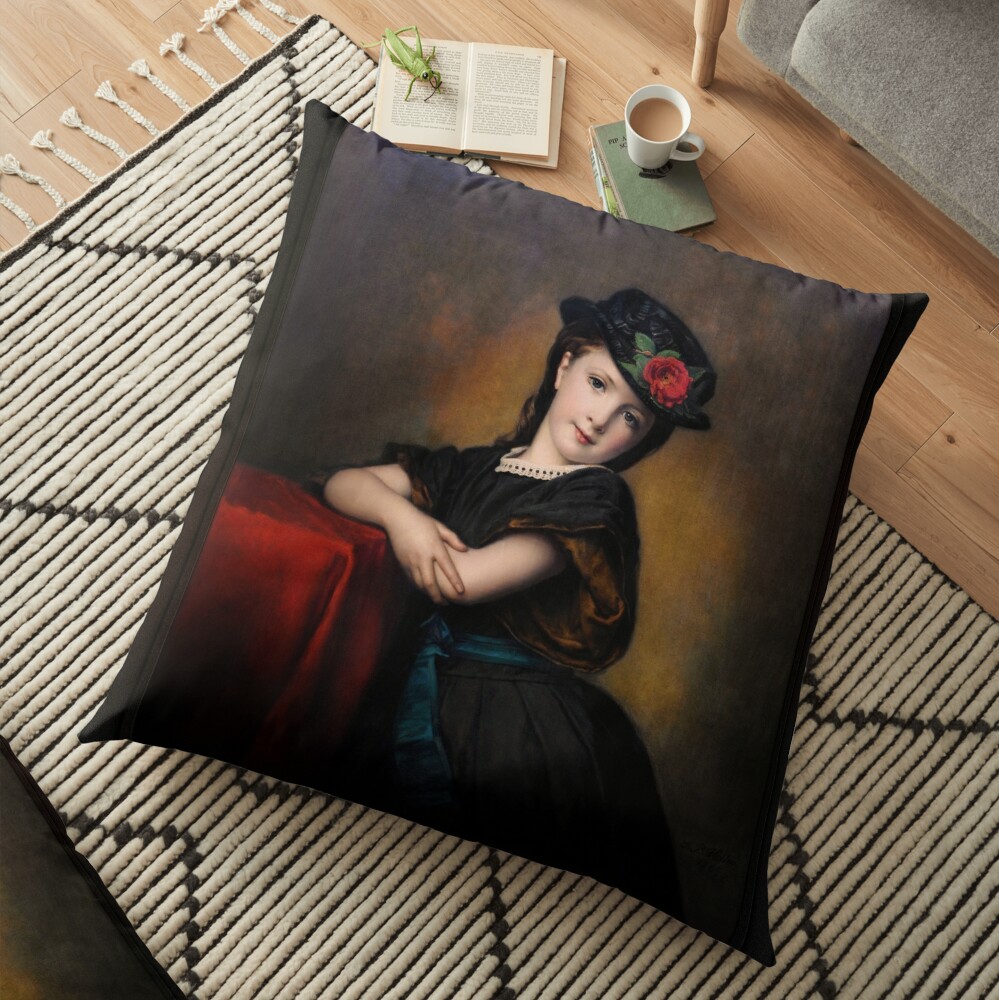
At the center of the composition, we are greeted by the portrait of a young girl, her youthful face framed by soft, virtaavat hiukset, and adorned with a stylish black hat. The hat, which features a large red rose, serves as a striking focal point, drawing attention to her delicate features and lending the portrait a sophisticated charm.
Hänen katseensa on pehmeä mutta suora, her slight smile hinting at a sense of calm and serenity. The girl is dressed in a dark, elegant dress, the fabric subtly highlighted with a vibrant turquoise sash that encircles her waist. The contrast of dark hues in her clothing with the pop of color in the sash accentuates her delicate features and reinforces the sense of refined grace.
The girl’s posture is composed, her right arm gently resting on the table in front of her, while her left hand is delicately placed across her body. This poised stance emphasizes the notion of etiquette and decorum, which was highly valued during this period in society. Her presence is one of quiet confidence, and yet there is an air of gentle reserve that suggests the artist’s intention to capture her personality in a moment of introspective stillness.
Background and Setting
The background of the painting is soft and undemanding, with muted tones of brown and purple that provide a serene backdrop for the subject. These tonal shifts in the background create a sense of depth and atmosphere, drawing attention back to the girl herself without overwhelming the viewer. The simplicity of the background reflects the conventions of portraiture during this period, where the focus was often placed solely on the sitter, and any distractions were kept to a minimum.
The table in front of the girl, rich with deep red tones, is another significant element in the composition. The textured surface of the tablecloth provides contrast to the smoothness of her skin and clothing, further directing the eye towards the girl’s face. Kokonaiskoostumus on tasapainoinen ja harmoninen, with careful attention given to the positioning of both the subject and the objects around her.
Taiteellinen tyyli ja tekniikka
Samuel Baruch Ludwig Halle was known for his detailed and realistic approach to portraiture, Ja tämä pala ei ole poikkeus. His use of oil paints is particularly effective in rendering the girl’s soft skin, the texture of her clothing, and the light interplay across her face and hands. The brushwork is delicate yet precise, allowing the artist to bring out the realism of the subject while maintaining a sense of idealized beauty. Halle’s ability to capture the sheen of fabric, the subtle play of light on the skin, and the reflective quality of her eyes demonstrates his expertise in oil painting.
The interplay of light and shadow is a critical aspect of Halle’s technique. Soft light seems to emanate from the upper left of the painting, subtly illuminating the girl’s face, her hand, and the folds of her dress. The soft transitions between light and dark create a naturalistic effect, enhancing the depth of the portrait while also imbuing it with a sense of three-dimensionality. The lighting also serves to soften the edges of the figure, creating a delicate halo effect around her, which further elevates the subject.
Teema ja mieliala
The mood of the painting is gentle and contemplative, evoking a sense of nostalgia and innocence. The girl’s expression is serene, and though she gazes directly at the viewer, there is a softness to her look that suggests quiet reflection. The choice of a young girl as the subject likely speaks to themes of youth, kauneus, ja ajan kuluminen, all of which were central to the emotional undercurrents of 19th-century portraiture. Tässä muotokuvassa, the girl is captured at the height of her innocence and grace, yet there is an unspoken understanding that such beauty is fleeting, further enhancing the painting’s subtle poignancy.
The contrast between the girl’s youthful appearance and the somber tones of the background evokes a sense of fragility, subtly underscoring the fleeting nature of life. Her direct gaze suggests an awareness beyond her years, as though she is both a participant in the world and a quiet observer of it. Tällä tavalla, the painting not only preserves her likeness but also captures the complex emotional layers that make up her persona.
Johtopäätös
“tytön muotokuva (Tytön muotokuva)” by Samuel Baruch Ludwig Halle is a masterful example of mid-19th-century portraiture that captures the innocence, eleganssi, and grace of youth while simultaneously conveying a sense of quiet reflection. Through his detailed execution, Halle herättää henkiin paitsi nuoren tytön ulkonäön myös pinnan alla piilevän tunnesyvyyden. Valon hienovarainen vuorovaikutus, pintakuvioiden tarkka toisto, ja huolellinen sommittelu toimivat harmoniassa luoden ajattoman kuvan, joka kutsuu katsojan pysähtymään ja pohtimaan kauneuden ohikiitävää luonnetta., aika, ja nuoriso.
Tämä on remasteroitu digitaalisen taiteen vanhojen mestareiden kopio julkisessa käytössä olevasta kuvasta, joka on saatavilla a rullattu kangasprintti verkossa.