

Mademoiselle de Lancey c1876
Mademoiselle de Lancey c1876 is an exquisite portrait painted by the renowned French artist Carolus-Duran (Шарль Огюст Эмиль Дюран – 1837 – 1917). The painting showcases the artist’s mastery of Портрета and his ability to capture the essence of 19th-century aristocratic life through his detailed representation of the subject. Duran, celebrated for his precise and lifelike depictions of his sitters, infuses this work with a rich sense of elegance and refinement that transports the viewer to the golden era of French high society.
Оглавление
Тема
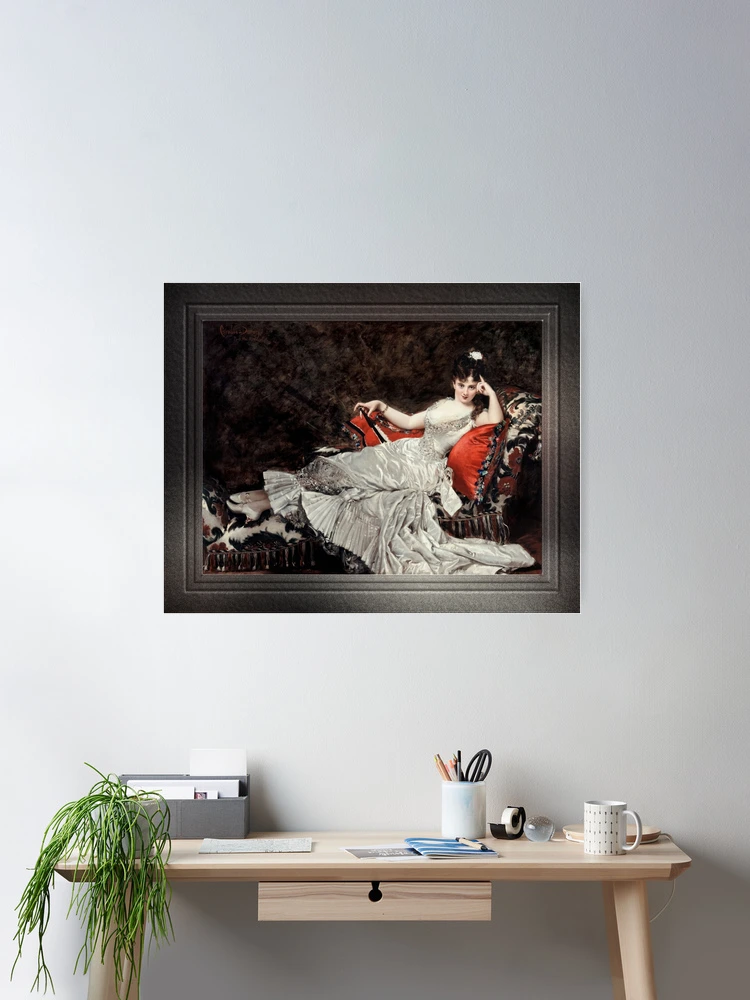
At the center of the composition is Mademoiselle de Lancey, the young woman whose captivating beauty and poised demeanor take center stage. The subject reclines casually on a luxurious, ornate sofa, her posture graceful yet relaxed, embodying the aristocratic confidence typical of women in the late 19th century. She gazes directly at the viewer, her expression one of thoughtful contemplation, which suggests a quiet, reserved intelligence. Ее взгляд, coupled with her subtle smile, creates a balance between openness and reserve, inviting the viewer into her world without fully revealing her innermost thoughts.
The woman’s attire is as much a reflection of her social standing as it is a key element of the painting. She is dressed in a sumptuous white gown adorned with delicate lace and shimmering embellishments, a testament to the fashion of the time. Платье, which seems to almost glow against the dark backdrop of the painting, perfectly complements her fair complexion. The layers of fabric, with their intricate folds and delicate texture, are rendered in a way that emphasizes the tactile nature of the materials. The artist has paid careful attention to the fine details, capturing the delicacy of the fabric and the way it clings to the body, showcasing Duran’s exceptional skill in portraying the human form.
Ее прическа, styled with elegant curls and soft waves, is topped with a small white flower that adds a subtle touch of femininity. The adornment, хоть и маленький, enhances her graceful appearance, further elevating her aristocratic charm. The overall effect of Mademoiselle de Lancey’s attire and appearance suggests a refined, cultivated woman, fully aware of her status and the expectations placed upon her by society.
Обстановка
The setting in which Mademoiselle de Lancey is portrayed is equally important in defining her character. She reclines on an opulent, plush sofa that is covered in rich, patterned fabric. The cushions are arranged with meticulous care, their colors—deep reds and golds—contrasting beautifully with the whiteness of her gown. The sofa serves as a symbol of wealth and luxury, its intricate patterns and rich textures suggesting the social status that the subject holds.
Позади нее, the dark background, painted in deep browns and blacks, contrasts with the brightness of her gown, creating a striking visual effect that draws the eye directly to her. The background is not overtly detailed, but rather serves as a backdrop that enhances the focus on the figure. It exudes a sense of timelessness, as though the setting itself is secondary to the woman’s presence. The simplicity of the background emphasizes the subject’s prominence in the composition, drawing the viewer’s attention solely to her and her attire.
Материалы и техника
Carolus-Duran’s technique in this portrait is remarkable for its precision and fluidity. The use of oil paints allows the artist to achieve the depth of color and fine detail for which he is known. The rich textures of the fabric, from the silk of the gown to the velvet of the cushions, are portrayed with remarkable accuracy. The play of light and shadow is masterfully handled, particularly in the way it falls across Mademoiselle de Lancey’s face and gown, giving the figure a sense of volume and presence. The folds of the gown, carefully painted to show the weight and texture of the fabric, demonstrate Duran’s ability to depict clothing with exceptional realism.
The brushwork is delicate, with soft transitions between light and shadow that create a sense of three-dimensionality. Гладкая, almost velvety texture of the skin, the sheen of the fabric, and the subtle reflections in the eyes are rendered with exquisite detail. The artist’s handling of light—both the highlights on the skin and the soft shadows under the chin—adds to the lifelike quality of the portrait. Duran’s ability to convey the softness of the skin and the detailed textures of the fabric speaks to his exceptional training and his understanding of the materials he was working with.
Настроение и тема
Настроение “"Девушка с жемчужным ожерельем" французского художника Жана Рау” is one of serene elegance and quiet sophistication. The subject’s calm and contemplative expression, combined with her luxurious surroundings, evokes a sense of aristocratic refinement. Мягкий, natural lighting enhances this mood, adding a warmth to the figure and making her appear approachable, despite her aristocratic attire. There is a subtle tension between the subject’s inner world—her contemplation—and the external world of high society, which is represented through her elaborate dress and the opulence of the setting.
The theme of the painting is closely tied to the social realities of 19th-century French aristocracy. It captures the cultural ideals of beauty, милость, и уравновешенность, embodying the expectations placed upon women of the upper classes during that period. The portrait speaks to the roles women were expected to play—elegant, reserved, and composed—while also hinting at the private world that lay beneath the public exterior. Таким образом, the painting subtly reflects the tension between outward appearances and inner lives, a theme that resonates with viewers even today.
Заключение
Carolus-Duran’s “"Девушка с жемчужным ожерельем" французского художника Жана Рау” (1876) is a masterful example of 19th-century portraiture, showcasing the artist’s skill in capturing both the physical likeness and the emotional depth of his subject. Благодаря тщательному вниманию к деталям, a refined sense of light and shadow, and an elegant composition, Duran succeeds in immortalizing the grace and beauty of Mademoiselle de Lancey. The portrait is not just a depiction of a young woman; it is a reflection of a specific moment in time—an era of elegance, изысканность, and societal expectations. The painting stands as a testament to the skill of its creator and the timeless allure of its subject.
"Девушка с жемчужным ожерельем" французского художника Жана Рау (1851 – 1913) "Девушка с жемчужным ожерельем" французского художника Жана Рау (Шарль Огюст Эмиль Дюран – 1837 – 1917); был одним из самых известных портретистов высшего общества во Французской Третьей республике..
Mademoiselle de Lancey - это ретушированная репродукция старых мастеров цифрового искусства изображения, являющегося общественным достоянием..
Художник биография от Wikipedia.org
Каролус-Дюран был сыном владельца отеля.. Его первые уроки рисования были у местного скульптора по имени Огюстен-Фидий Кадет де Бопре. (1800 – ?) в Академии Лилля; затем занялся живописью с Франсуа Сушоном,[2] ученик Жака Луи Давида. Он отправился в Париж в 1853, где он принял имя “Каролус-Дюран”.
В 1859, у него была первая выставка в салоне. В том же году, он начал посещать Швейцарскую Академию, где он учился до 1861. Одним из его ранних влияний был реализм Гюстава Курбе..
Из 1862 к 1866, он ездил в Рим и Испанию, благодаря стипендии, предоставленной его родным городом. В течение этого времени, он отошел от стиля Курбе и стал больше интересоваться Диего Веласкесом.. По возвращении во Францию, он был награжден своей первой золотой медалью на Салоне.
В 1867, он стал одним из девяти членов “Японское общество джингларов” (тип вина); группа, в которую входил Анри Фантен-Латур, Феликс Бракемон и Марк-Луи Солон. Они встречались раз в месяц в Севре за ужином. “японский стиль”.
Он женился на Полине Круазетт, пастеллист и миниатюрист, позировавший для своей картины “Дама в перчатках” в 1869.[6] У них было трое детей. Их старшая дочь, Мари-Анн, вышла замуж за драматурга Жоржа Фейдо.
После 1870, он почти полностью посвятил себя портретам. Его успех позволил ему открыть студию на бульваре Монпарнас., где он также давал уроки рисования. Он был назван рыцарем Почетного легиона в 1872; повышается до офицера в 1878, Командующий в 1889 и великий офицер в 1900.
В 1889 и 1900 он входил в состав жюри на Всемирных выставках. В 1890, он был одним из соучредителей второго Société Nationale des Beaux-Arts и был избран членом Académie des Beaux-Arts в 1904. В следующем году, он был назначен директором Французской академии в Риме, должность, которую он занимал до 1913.
Он был частым гостем на курорте во Фрежюсе., где он владел небольшой виллой. После его смерти, курорт назвал в его честь площадь и пляж.