

Baía Magdalena c1841
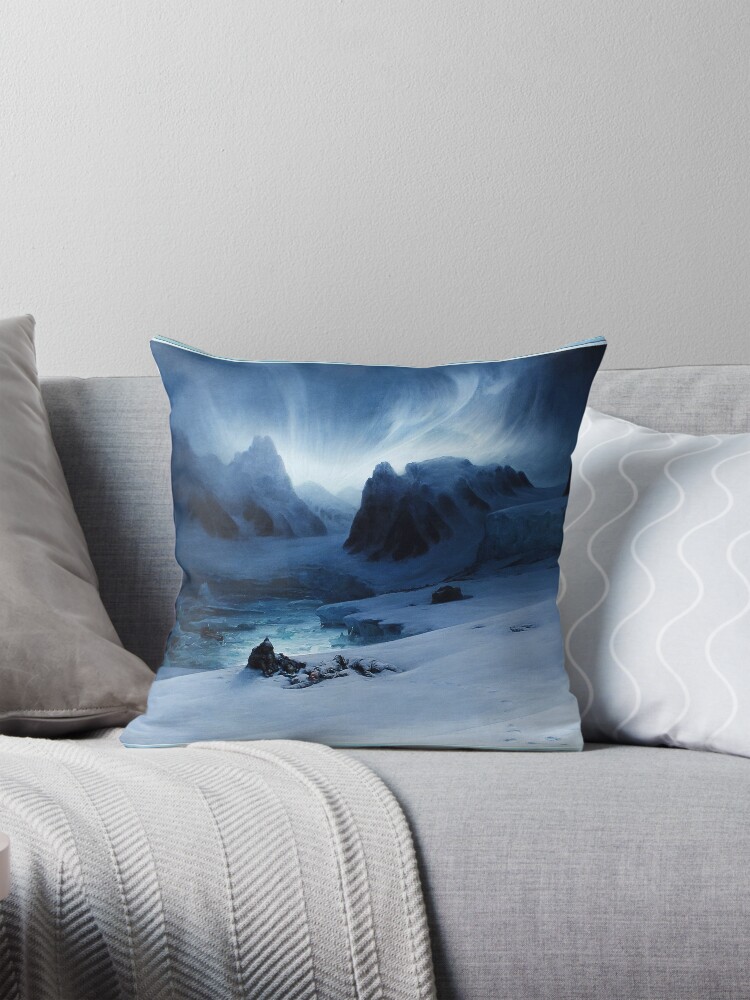
“Baía Magdalena c1841” do pintor francês François-Auguste Biard (1799 – 1882) é uma pintura a óleo cativante que mergulha os espectadores no dramático, paisagem congelada de um controle remoto, terreno gelado. O artista capturou com maestria a beleza misteriosa de um resfriado, baía desolada, banhado pelos tons azuis de um crepúsculo que se funde com as profundezas das montanhas. A obra de arte de Biard exemplifica sua profunda habilidade em representar a dureza da natureza, ao mesmo tempo que evoca um clima de isolamento e admiração.. Através do uso de cores profundas, contrastes sutis, e detalhes intrincados, a pintura oferece uma janela para um mundo implacável, longe do calor da civilização.
Índice
Composição e Terreno
O cenário é dominado por vastos, montanhas irregulares cobertas de gelo, seus picos imponentes envoltos em névoa e um brilho pálido de uma fonte de luz distante. A escolha do artista de representar as montanhas dessa maneira, parcialmente oculto, suas formas nítidas obscurecidas por nuvens rodopiantes de gelo, impregna a paisagem com uma qualidade quase etérea. As montanhas se erguem ao longe, seu acinzentado, neve-picos cobertos refletidos sutilmente nas águas geladas abaixo. As planícies cobertas de neve estendem-se em primeiro plano, onde rochas espalhadas e formações de gelo irregulares criam uma sensação de desolação e frio intenso.
A própria baía, visto de um ângulo ligeiramente elevado, é uma colcha de retalhos de gelo e águas congeladas. A superfície congelada, embora ainda, parece cantarolar com a presença silenciosa do poder bruto da natureza, a force that has subdued the landscape and left it in a moment of suspended animation. The cracked ice, thin enough to allow the faint shimmer of water beneath, highlights the fragility of the environment. The sense of harshness and untamed wilderness is further emphasized by the dark, overcast sky that stretches across the canvas, with swirling streaks of light hinting at a natural phenomenon, perhaps the northern lights, which adds to the painting’s otherworldly atmosphere.
Luz e humor
O humor de “Baía Magdalena c1841” is both serene and unsettling. O macio, cool light that permeates the scene casts an eerie glow over the icy terrain, infusing the composition with a sense of mystery. The dim, glowing sky creates an ethereal effect, enveloping the bay and making it seem as though the world beyond the painting’s frame is hidden from view. O efeito desta luz na neve e no gelo cria uma superfície cintilante que chama a atenção e sugere a impermanência da paisagem congelada.. A fonte de luz distante, possivelmente uma lua ou um evento reflexivo, como a aurora boreal, é enigmático e sugere o desconhecido da natureza, forças indomáveis.
A maestria de Biard em renderizar esta luz é evidente, especialmente na forma como interage com as texturas da neve e do gelo. O frio, o tom azulado que domina a peça fala da tranquilidade e quietude avassaladoras desta baía remota, Onde o tempo parece parado. O vasto vazio é palpável, e embora não haja presença humana na pintura, o espectador pode sentir uma profunda sensação de solidão e contemplação. O trabalho do artista sugere que esta terra, congelado e distante, is one of survival rather than comfort, a place where nature reigns supreme.
A influência do romantismo
As a prominent figure in the Romantic movement, François-Auguste Biard was deeply influenced by the ideals of exploration and discovery. Romantismo, known for its fascination with nature’s sublime power, plays a central role in “Magdalena Bay c1841.” The expansive, ice-covered landscape evokes feelings of awe and terror, two emotions central to the Romantic spirit. Nesta pintura, Biard conveys nature not just as a backdrop, but as a force capable of both beauty and destruction.
The Romantic theme of the sublime is clearly articulated in this painting, with the vast scale of the mountains and ice suggesting the insignificance of human beings in comparison to the overwhelming forces of nature. There is no trace of human life within the scene; em vez de, the untouched, icy wilderness exists in a state of isolation, providing a stark contrast to the bustling, industrial world of the 19th century. The empty bay acts as a metaphor for the unexplored and unknown territories, which, during Biard’s time, were often portrayed as both dangerous and beautiful, awaiting discovery.
Estilo e técnica
Biard employs classical techniques with a Romantic flair, using rich layers of paint to create depth and texture that allow the scene to come alive. The artist’s brushwork is evident in the way he builds the texture of the snow, the icy surface, and the tumultuous sky, making the landscape feel both tangible and ethereal. The figures of the mountains, nuvens, and frozen waters are executed with meticulous attention to detail, yet the overall composition retains a dreamlike quality due to the soft gradations of light and shadow.
The dark blues and grays dominate the palette, with occasional bursts of icy white or light blue highlighting the shapes of the rocks, gelo, and snow. The strategic use of light, almost as though the painting itself were a frozen moment of time, bathed in twilight, adds to the sense of mystery and melancholy. The interplay between light and shadow intensifies the dramatic impact of the natural forces portrayed, making the scene both beautiful and intimidating.
Conclusão
“Baía Magdalena c1841” by François-Auguste Biard is a striking depiction of nature’s sublime power, encapsulating the isolation and raw beauty of a frozen, untouched world. Through his skillful use of color, luz, e textura, Biard creates a sense of both awe and unease, evoking a profound respect for the natural world. Esta obra-prima, with its sweeping ice-covered mountains and distant, glowing light, reflects the ideals of Romanticism, the fascination with the sublime, the exploration of the unknown, and the portrayal of nature as both a magnificent and overwhelming force. The painting stands as a testament to Biard’s talent in capturing the raw beauty of a world far removed from human influence, yet forever etched in the viewer’s memory.
Magdalena Bay is a retouched digital art old masters reproduction of a public domain image.
Biografia do artista de Wikipedia.org
Although François-Auguste Biard parents intended for him to join the clergy, he spent most of his time learning to paint, beginning at a wallpaper factory in Lyon.
Eventually, he was able to attend the École des Beaux-Arts, where he worked with Pierre Révoil until 1818, then studied with Fleury François Richard, after he took over as Director.
His studies were, Contudo, sporadic and much was learned on his own. He is, therefore, often referred to as “self-taught”.
He also travelled to Italy, Greece and the Middle East. His first exhibition at the Salon in 1824 was well received.
That same year, the Archdiocese commissioned four paintings from Révoil’s former students, including Biard. Dentro 1827, he travelled again, visiting Malta, Cyprus and Egypt.
He later obtained the support of the July Monarchy, which acquired several of his works. Dentro 1838, he was decorated with the Legion of Honor.
Dentro 1839, he participated in a scientific expedition, led by Joseph Paul Gaimard, that went to Spitsbergen and Lappland.
He was joined by his fiancée, the writer Léonie d’Aunet, who published an account of the trip in 1854, entitled Voyage d’une femme au Spitzberg.
His sketches served as inspiration for four large panels at the National Museum of Natural History.
Around 1858, he spent two years in Brazil, where he worked at the court of Emperor Pedro II.
Using Rio de Janeiro as a base, he made several excursions into the countryside and to the Amazon, where he was one of the first painters to depict the indigenous people.
He was offered a teaching position at the Imperial Academy of Fine Arts, but declined in favor of continuing his travels.
Before returning to France, he detoured through North America and painted some scenes depicting slavery.
Dentro 1862, his account of his travels in Brazil, com 180 gravuras, was published by Hachette under the title Deux années au Brésil.