

Marie-Gabrielle Capet
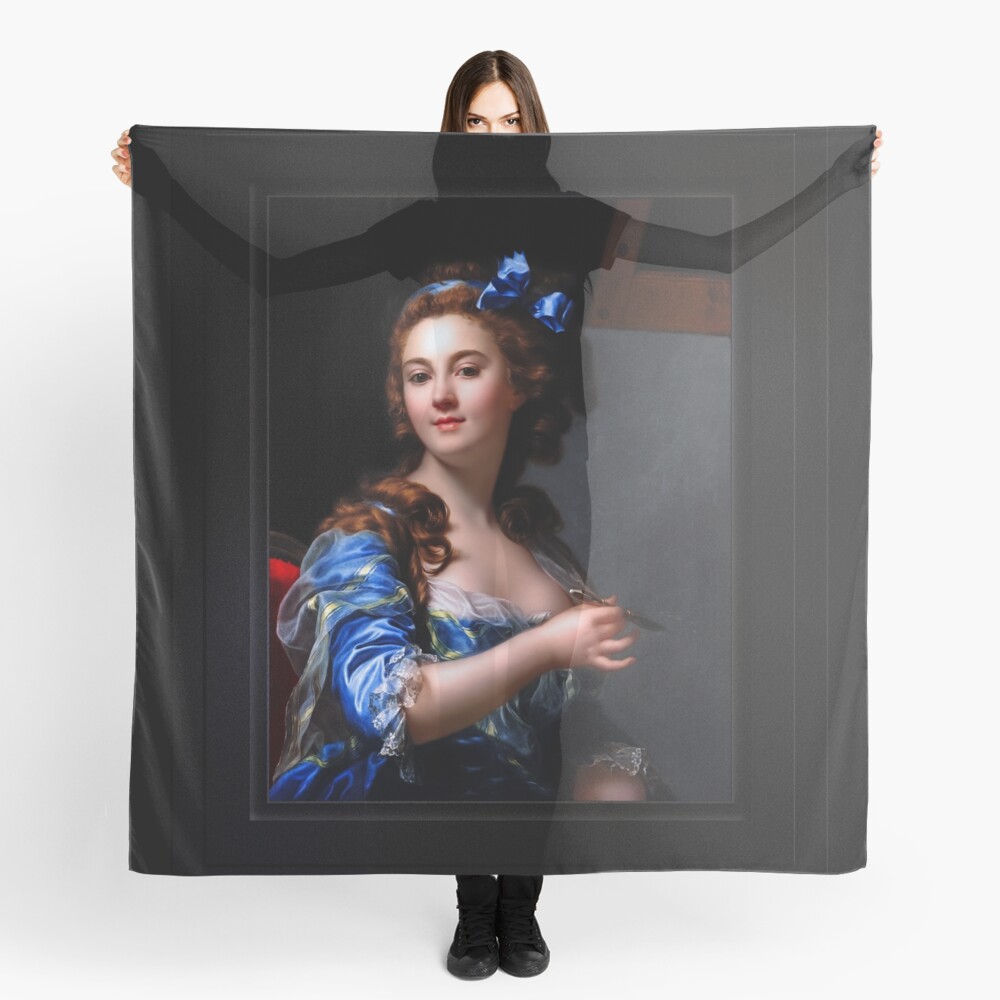
Marie-Gabrielle Capet (Autoritratto c1783) della pittrice francese Marie-Gabrielle Capet (1761 – 1818), che dipinse in stile neoclassico
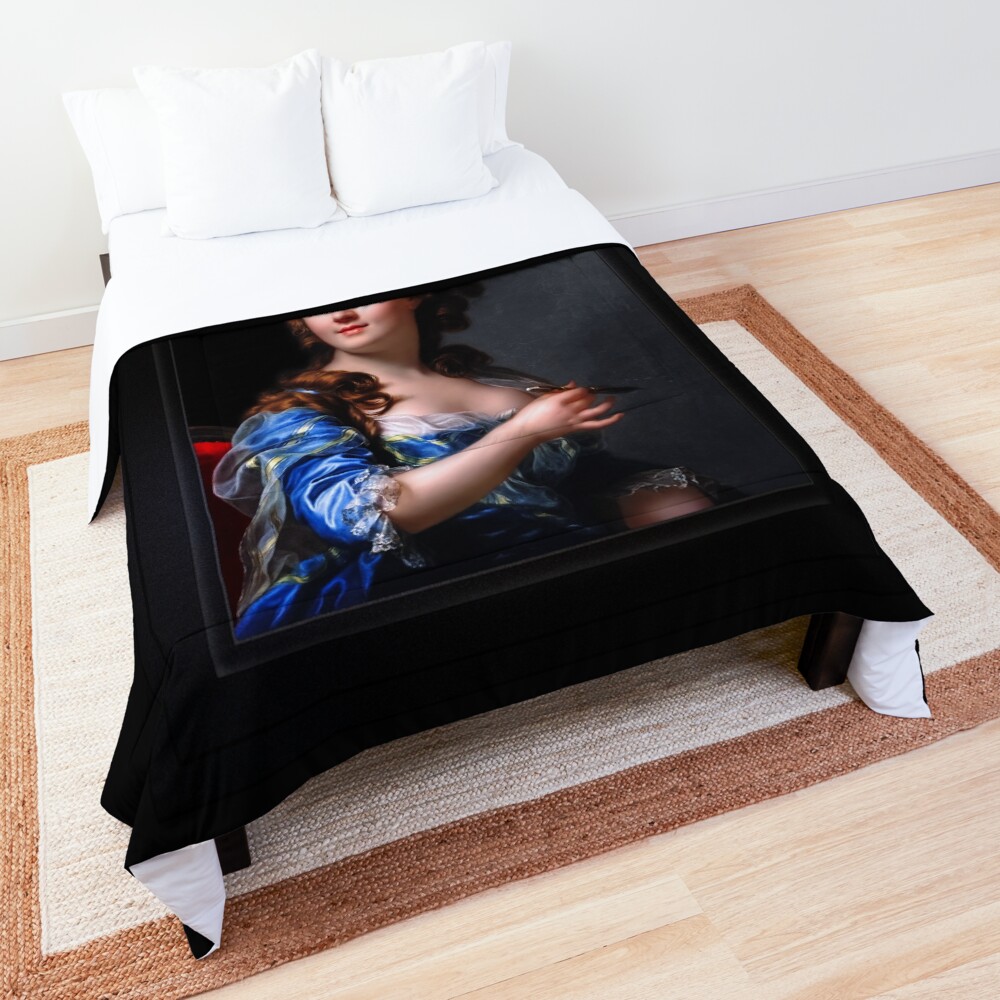
Questa è una bella ed elegante ritratto di signora; questo autoritratto di Marie-Gabrielle Capet la coglie in tutto il suo splendore giovanile.
She is sitting on a chair with red padding in front of a painting easels with light illuminating her form the left side of the painting, while holding a metal chalk holder in her right hand that has an eraser fitted into a slot on its back end; with a light outline of a figure she has drawn on the canvas placed on the easel.
She is wearing a wide blue ribbon around her hair, that is tied into a bow, just off to her left side, with her long curly hair flowing on her shoulders.
She is dressed in a matching blue dress that has sheer silk shawl like garment weaved into that has gold stripe patters throughout the shoulders, upper sleeves and front of the dress; as well as silk ruffles at the cuffs of the short sleeves.
Si tratta di una riproduzione artistica digitale ritoccata di un'immagine di pubblico dominio disponibile per l'acquisto online come file stampa su tela arrotolata.
Informazioni di seguito derivate da Wikipedia.org
Marie-Gabrielle proveniva da un ambiente modesto e in gioventù ha frequentato una scuola pubblica di disegno situata nella sua città. Nel 1781, twenty-year-old Capet moved to Paris to become the student of Adélaïde Labille-Guiard (1749–1803), a Neoclassical artist who was admitted to the Royal Academy of Art in 1783.
In 18th Century France, the Royal Academy of Art was responsible for training artists and exhibiting artworks at the Salon that glorified heroic values promoted by the Bourbon monarchy. Until the French Revolution, the Royal Academy of Art in Paris was the central institution for official artistic practice, e ha limitato il numero di studentesse a quattro alla volta.
Capet ha mostrato i suoi primi lavori all'Exposition de la jeunesse, e successivamente esposto al Salon quando fu aperto a tutti gli artisti dopo la Rivoluzione francese. Il suo corpus di lavori includeva dipinti in miniatura, dipinti ad olio, e pastelli, che sono stati elogiati per il loro virtuosismo nel disegno e l'uso del colore.
Molti dei suoi dipinti a pastello erano ritratti, anche se da 1808 era considerata una pittrice di storia a sé stante; e annoverava tra gli altri clienti diversi membri della famiglia reale, e altri membri della società parigina, come l'avvocato Pierre-Nicolas Berryer e il drammaturgo Joseph Chénier.
Capet e Labille-Guiard non solo hanno goduto di un rapporto professionale, ma erano anche amici intimi di famiglia. Capet si sarebbe trasferita con il suo insegnante al Louvre fino alla morte di Labille-Guiard. Anche dopo che Adélaïde Labille-Guiard sposò il pittore François Vincent in 1799, Capet ha continuato a vivere nella loro casa. After Adélaïde Labille-Guiard’s death, Capet lived with her husband until his death in 1816. Upon his death, Capet purchased Labille-Guiard and Vincent’s estate.
Among Marie-Gabrielle Capet best known works are those of Mesdames Adelaide and Victoire, Madame Vincent surrounded by her pupils, Mlle. Mars, and Jean-Antoine Houdon.