

Mater Dolorosa
“Mater Dolorosa-gravure naar een schilderij van een Italiaanse schilder Carlo Dolci (1616 – 1686)” is a deeply emotional and finely detailed reproduction of a religious theme, showcasing the profound sorrow of the Virgin Mary. Dolci’s masterpiece, originally painted in the 17th century, captures the essence of mourning in the figure of the Madonna, a central figure in Christian iconography. Het stuk, an engraving, draws its inspiration from Dolci’s original oil painting, and it exemplifies the artist’s ability to evoke intense emotional responses through meticulous artistry and controlled shading. Carlo Dolci’s work is known for its delicate precision, and this engraving follows suit, offering a visually captivating portrayal of sorrow.
Inhoudsopgave
Onderwerp en compositie
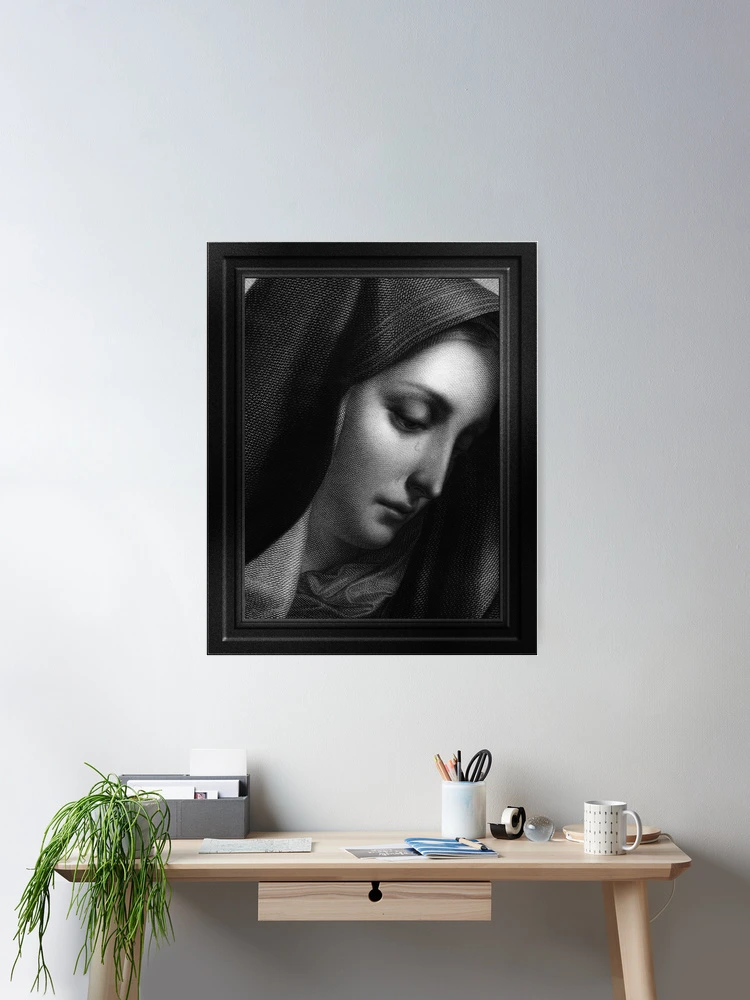
The central figure of this artwork is the Virgin Mary, presented in the traditional pose of “Mater Dolorosa,” a title referring to her sorrowful state as she contemplates the Passion of Christ. Dolci’s portrayal of the Madonna is intimate, drawing the viewer’s attention to her facial expression, which conveys profound grief. The Virgin Mary’s face, framed by her flowing veil, is marked by a soft, melancholic sorrow as a single tear escapes her eye, symbolizing her mourning for her son’s suffering and death.
Mary’s countenance is deeply expressive and serene, despite the obvious sorrow. Her gaze is turned slightly downward, and her eyes are heavy with emotion. The artist has captured her vulnerability through delicate, almost ethereal, features. The shading around her face is nuanced, highlighting her youthful yet sorrow-stricken visage. The detailed folds of her veil add to the composition’s depth and serve to create a sense of movement, as though the fabric is alive with emotion. The intricate patterns in the engraving give the impression of soft, flowing drapery, further emphasizing the stillness of the scene.
Technique and Style
The engraving, executed with incredible detail, reflects the high standard of 17th-century Italian engraving techniques. The use of fine lines and delicate shading gives the image a soft, bijna etherische kwaliteit. The composition is crafted using a series of thin, parallel lines that converge to form the shapes of Mary’s face, her veil, and the shadows around her. This technique of engraving, while precise and calculated, does not sacrifice the emotional depth of the subject. In plaats daarvan, it heightens the subject’s emotion, allowing the viewer to experience a quiet and solemn reflection on the theme of grief.
Dolci’s style, as depicted in this engraving, is emblematic of Baroque art, which was characterized by its focus on emotion, dramatische verlichting, and deep contrast. While this is an engraving rather than a painting, the artist’s ability to convey light and shadow in a similar fashion to his paintings is evident. The softness of Mary’s face contrasts with the sharpness of the lines in the background, drawing the eye to the subject’s vulnerability.
Stemming en emotionele impact
The mood of the artwork is one of intense sorrow, marked by a deep sense of reverence. The theme of grief is conveyed not only through Mary’s expression but also through the dark background and the delicate tear that slides down her cheek. The tear, a symbol of compassion and sorrow, serves as a poignant visual cue to the emotional weight of the piece. The viewer is invited into a meditative state, contemplating the pain that Mary must have felt as she endured the loss of her son, Jezus Christus.
Despite the sadness, there is a sense of tranquility in the composition. The posture of the Virgin, her body language conveying quiet acceptance, suggests a degree of inner peace amidst the external grief. The engraving does not overwhelm the viewer with excessive emotion; in plaats van, it allows the viewer to reflect on the sorrow in a more subdued, respectful way.
Materials and Medium
While the original painting by Dolci was created in oil, this particular piece is a reproduction in the medium of engraving. Engravings, by their nature, are made by carving into a surface—typically metal or wood—to create a design. The fine lines and deep contrasts inherent in the medium are skillfully employed in this work to create the illusion of depth and texture. The method used to produce the engraving allows for a highly detailed rendition of the artist’s original vision, preserving the delicate nuances of light and shadow present in the painting.
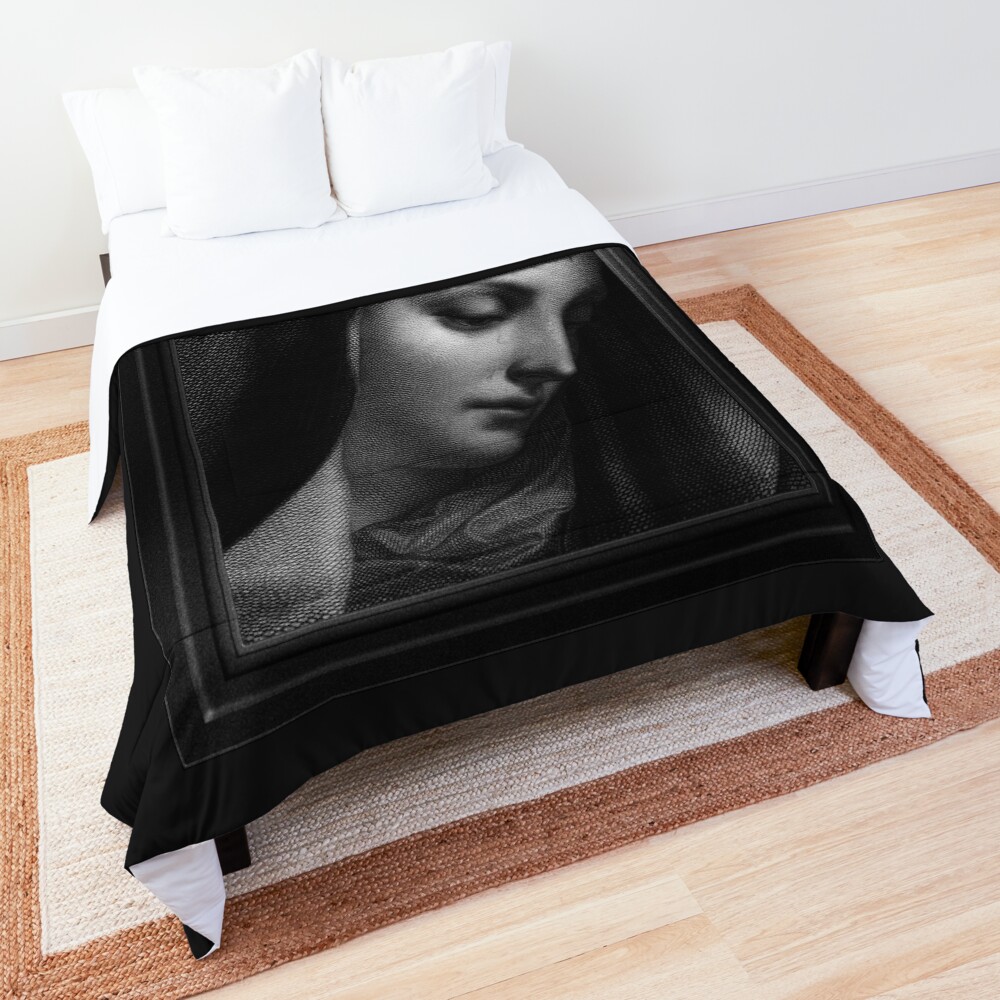
The engraving is presented within a framed context, and the dark background contrasts sharply with the lighter tones of Mary’s face, further emphasizing her sorrowful expression. This use of contrast between light and dark is a hallmark of Baroque art, underscoring the dramatic nature of the scene.
Conclusie
“Mater Dolorosa Engraving After A Painting by Italian Painter Carlo Dolci (1616 – 1686)” is a striking representation of religious grief and sorrow. Through his exceptional mastery of line and form, Dolci conveys not only the technical brilliance of his era but also the emotional depth of a moment of mourning. The piece evokes a sense of quiet reflection, allowing the viewer to experience both the grief and the serene beauty of the Virgin Mary’s sorrow. The engraving’s subdued, respectful tone offers an intimate connection to the sacred theme, providing a poignant visual expression of maternal grief.
Mater Dolorosa-gravure naar een schilderij van een Italiaanse schilder Carlo Dolci (1616 – 1686); was een schilder uit de barokperiode en stond bekend om zijn zeer afgewerkte religieuze kunstwerken.
Dit is een klassieke kunstportretgravure van de Maagd Maria als Onze-Lieve-Vrouw van Smarten (of van de zeven smarten); ook bekend als Onze Lieve Vrouw van Dolours
Mater Dolorosa is a retouched digital art old masters reproduction of a public domain image that is available for purchase as a canvas print online.
Info hieronder van Wikipedia.org
Carlo Dolci werd geboren in Florence, van moederskant de kleinzoon van een schilder. Hoewel hij vroegrijp was en op jonge leeftijd in de leer ging bij Jacopo Vignali, Dolci was niet productief. “Hij zou weken nodig hebben over een enkele voet”, volgens zijn biograaf Baldinucci. Zijn nauwgezette techniek maakte hem ongeschikt voor grootschalige frescoschilderingen.
Hij schilderde voornamelijk heilige onderwerpen, en zijn werken zijn over het algemeen kleinschalig, hoewel hij een paar levensgrote foto's heeft gemaakt. Vaak herhaalde hij dezelfde compositie in meerdere versies, en zijn dochter, Agnese Dolci, maakte ook uitstekende kopieën van zijn werken.
Dolci stond bekend om zijn vroomheid. Er wordt gezegd dat hij elk jaar tijdens de Passieweek een half figuur van de Verlosser schilderde die de doornenkroon droeg. In 1682, toen hij Giordano zag, bijgenaamd “haast je” (snelle werker), meer schilderen in vijf uur dan hij in maanden had kunnen voltooien, hij raakte in een depressie.
Dolci's dochter, Agnese (stierf ongeveer 1680), was ook een schilder. Dolci stierf in Florence in 1686.